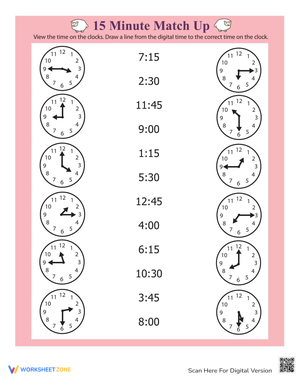
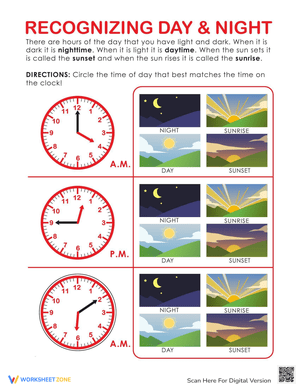
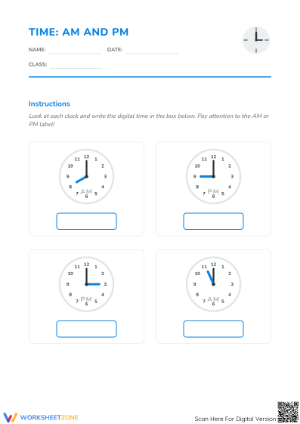
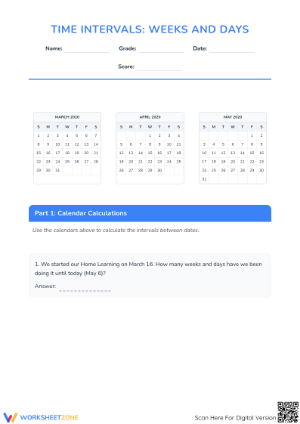
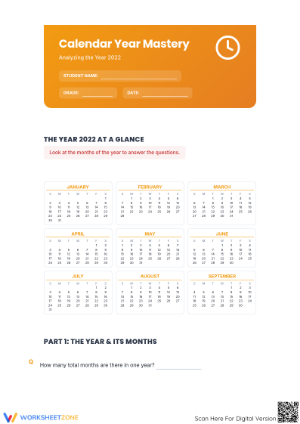
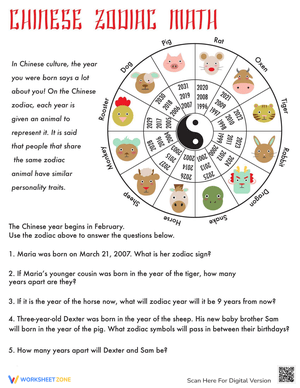
If you teach grades 1 through 3, you already know that telling time and reading a calendar rarely get the instructional minutes they deserve. Both skills show up on report cards, both show up on assessments, and both fade fast without repeated practice. Date and time worksheets give you a low-prep way to keep these skills alive as warm-ups, center work, or intervention material, without eating into your core math block.
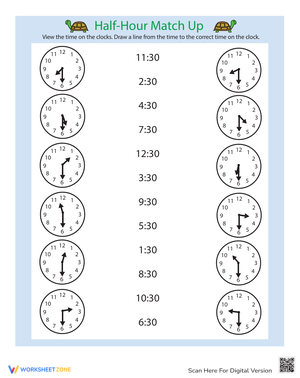
The appeal for busy teachers is simple: a single worksheet set can serve a whole grade band. You can hand a hour-and-half-hour page to a student who is still building confidence, and a five-minute-increment page to a student who is ready to stretch. That flexibility matters in classrooms where three or four skill levels sit in the same room.
The Grade 1-2-3 Progression: Hour to Half Hour to Five Minutes to the Minute
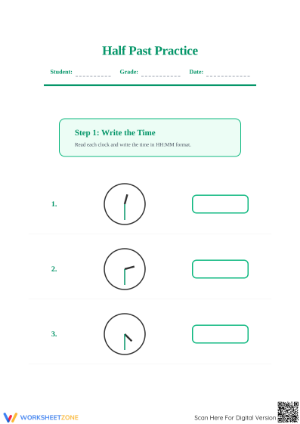
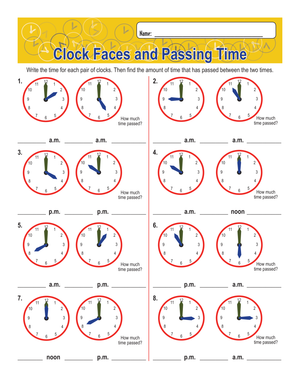
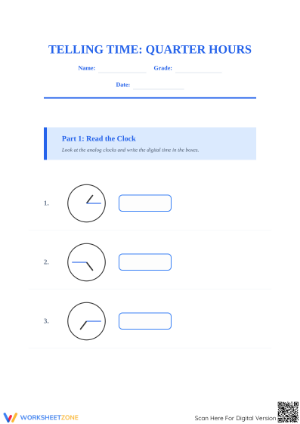
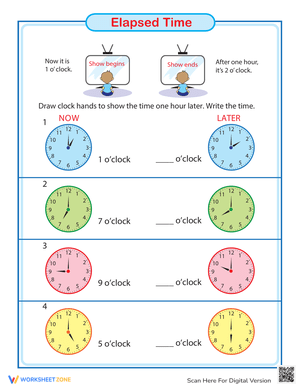
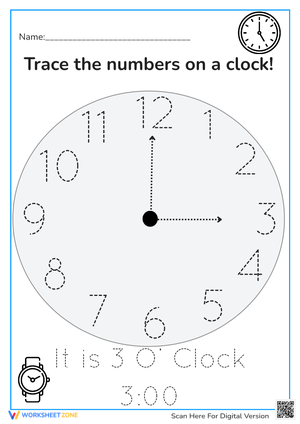
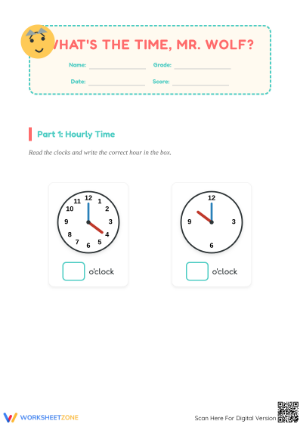
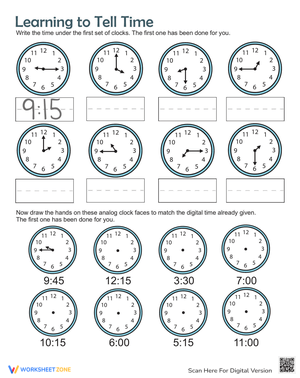
Time-telling is one of the clearest skill progressions in elementary math, and it helps to plan worksheets around it rather than treating every clock page as interchangeable. Grade 1 students focus on telling time to the hour and half hour, building the foundational idea that the short hand shows the hour and the long hand shows a fraction of it. Grade 2 raises the bar substantially: students must tell and write time to the nearest five minutes on both analog and digital clocks, and they must use a.m. and p.m. correctly when describing the time of day. Grade 3 continues the progression toward the nearest minute.
The jump from half-hour telling in grade 1 to five-minute telling in grade 2 is bigger than it looks on paper. A student who has only practiced counting hours and halves suddenly has to track twelve possible five-minute intervals per hour, which is why many second graders stall out here even when they were confident clock-readers the year before. Worksheets that isolate five-minute counting by 5, 10, 15 up to 55 before asking students to apply it to a full clock face tend to close that gap faster than jumping straight to mixed practice.
Clock Practice Builds Skip-Counting and Multiplication Readiness
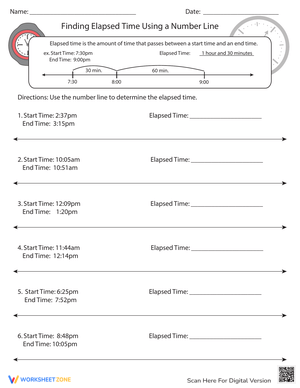
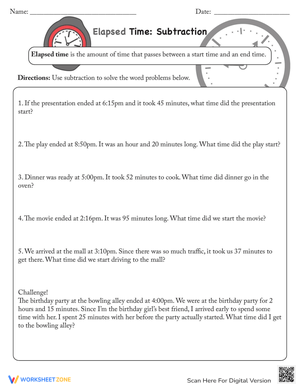
Reading a clock to the nearest five minutes requires the same skill students need for multiplication tables: fluent skip-counting by 5. Every time a student scans a clock face and counts 5, 10, 15, 20 around the dial to find the minute hand's position, they are rehearsing the same number pattern that will later support the 5-times table and, eventually, telling elapsed time.
This connection is worth naming out loud for students and worth building into how you sequence worksheets. If a class is shaky on skip-counting by 5, a few days of number-line or hundred-chart practice before you introduce five-minute clock worksheets will pay off twice: once in math and again when the same students start multiplication units later in the year.
Classroom Implementation
To get consistent traction with date and time worksheets, treat them as a routine rather than a one-off unit. A few practical moves:
- Sort your worksheet stack by the hour, half-hour, five-minute, and nearest-minute levels before the unit starts, so you can hand out the right page without hunting mid-lesson.
- Use a five-minute clock warm-up two to three times a week even outside a formal time unit, since spaced practice retains better than a single concentrated week of instruction.
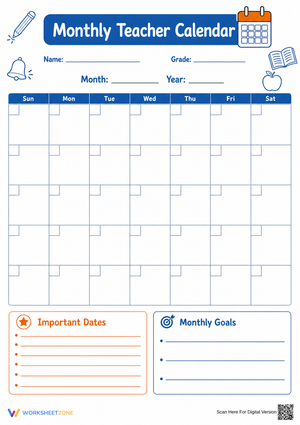
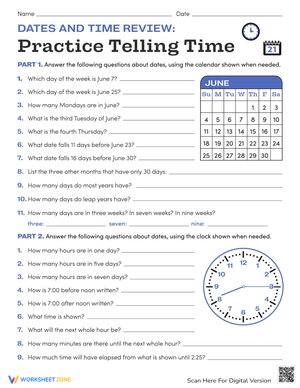
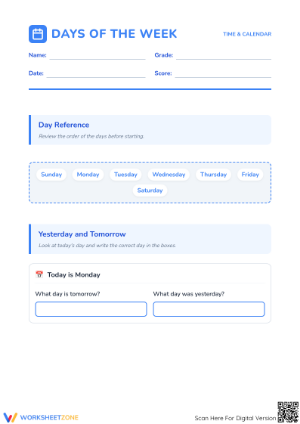
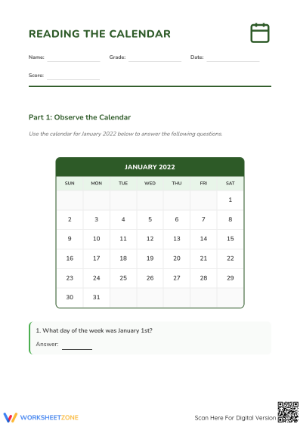
- Pair every calendar worksheet with a spoken routine, asking students to say the full date aloud, since verbalizing reinforces the written practice.
- Keep an answer key visible or projected during independent work blocks so students can self-check and flag their own confusion points for you.
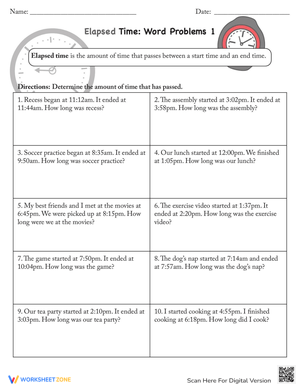
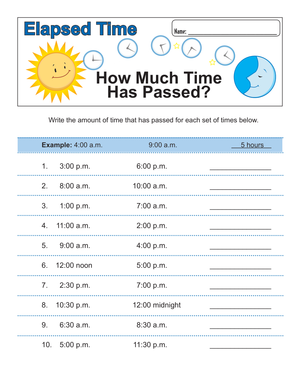
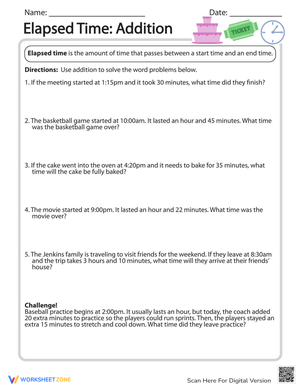
- Rotate a.m./p.m. word problems into time worksheets year-round, not just during the initial unit, since this is the piece students forget fastest.
Frequently Asked Questions
1. What grade level should master telling time to five minutes versus the nearest minute?
Grade 2 students are expected to tell and write time to the nearest five minutes on analog and digital clocks, using a.m. and p.m. Grade 3 extends this to the nearest minute, building on the five-minute foundation set in grade 2.
2. How can teachers use date and time worksheets for small-group intervention?
Choose worksheets that isolate one common error pattern at a time, such as hour-versus-minute-hand confusion or a.m./p.m. mix-ups, and run short 10-15 minute sessions with immediate feedback so students can correct their reasoning right away.
3. Why is calendar math important even if it is not part of the core curriculum?
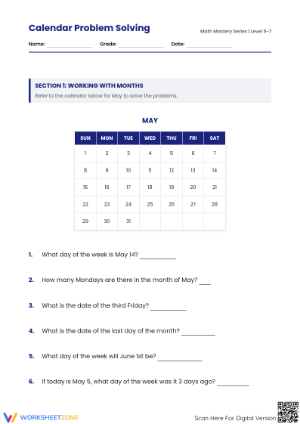
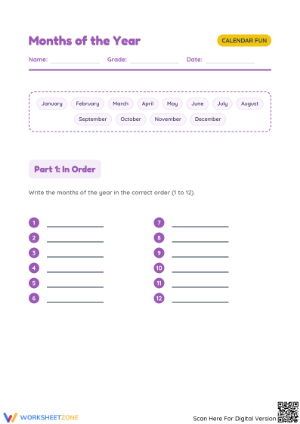
Calendar skills such as identifying days, weeks, months, and specific dates are commonly tested on standardized assessments even when they are not a dedicated curriculum unit, so building them into daily routines like morning meeting keeps students prepared.
4. How do date and time worksheets support skip-counting and multiplication readiness?
Reading a clock to the nearest five minutes requires fluent skip-counting by 5, the same number pattern students later use for the 5-times table, which makes clock practice a natural bridge into multiplication readiness.
5. How often should teachers assign time and calendar practice for retention?
Short, frequent practice beats a single concentrated unit. Two to three brief clock or calendar worksheets a week, even outside a formal time unit, help students retain these skills across the school year.












 Interactive Worksheet Maker
 Quiz Maker
 Word Search Maker
 Crossword Puzzle Maker
 Word Scramble Generator
 Sentence Scramble Generator
 Handwriting Worksheet Generator
 Name Tracing Generator
 Fill In The Blank Generator