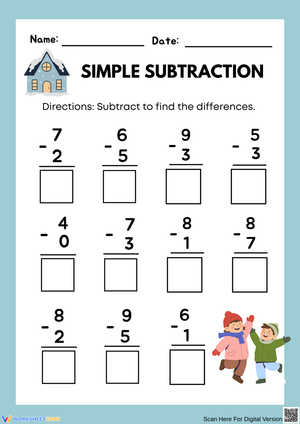
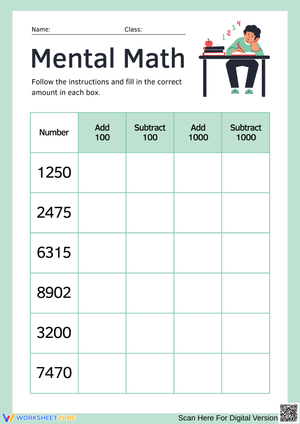
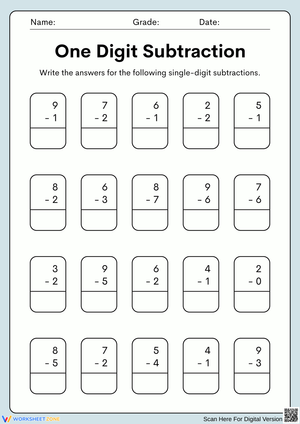
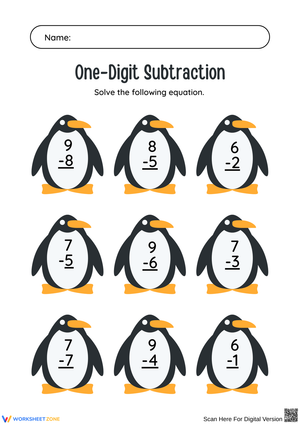
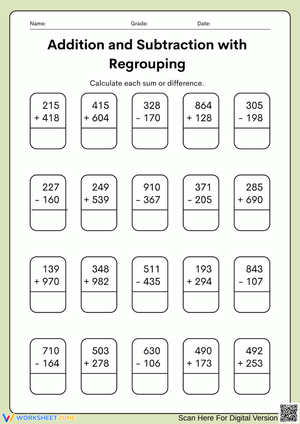
If you have ever handed out a mixed page of subtraction problems and watched half the class stall on regrouping while the other half breezes through, you already know that not all subtraction worksheets serve the same purpose. Matching the worksheet to the specific skill gap, rather than grabbing whatever is labeled subtraction for the grade level, is what actually moves students forward.
Why Sequencing Matters More Than Difficulty Level
Subtraction is not one skill. It is a chain of skills that build on each other: counting back, fact fluency within 10, fact fluency within 20, and multi-digit subtraction with regrouping. A worksheet pulled at random from a grade-level folder might ask a student to regroup across zeros before they have mastered simple fact recall, which sets them up to fail for reasons that have nothing to do with subtraction itself.
Effective planning starts with identifying where a student sits on that chain, then choosing worksheets that reinforce the next link rather than jumping ahead.
Grade 1: Building Fluency Within 10 and 20
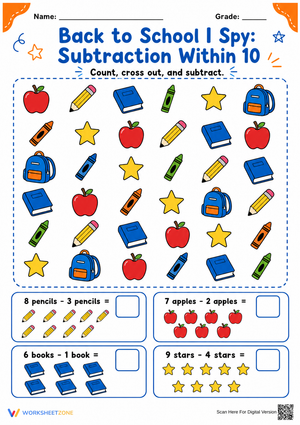
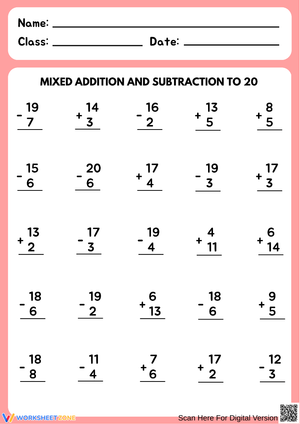
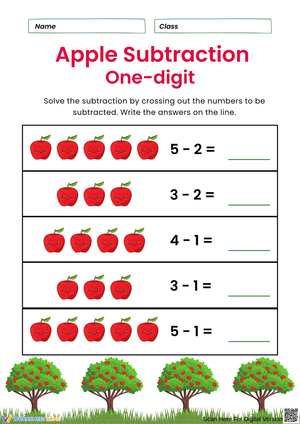
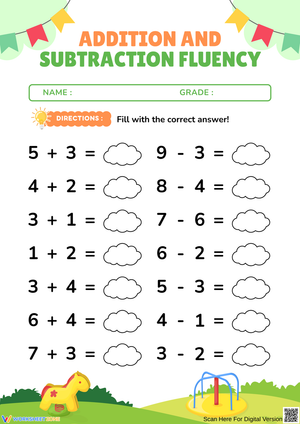
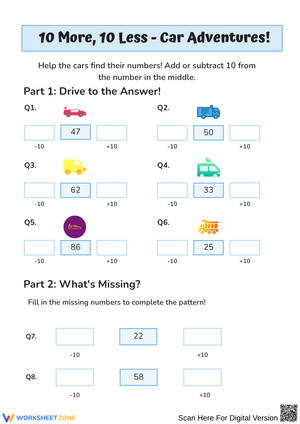
CCSS 1.OA sets the expectation that students subtract within 20, with fluency inside 10 expected by the end of Grade 1. At this stage, worksheets should emphasize strategies like counting back, using ten-frames, and fact families rather than the standard algorithm, which has not been introduced yet.
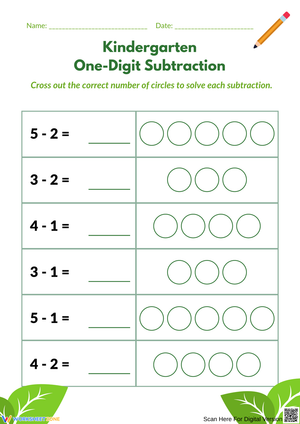
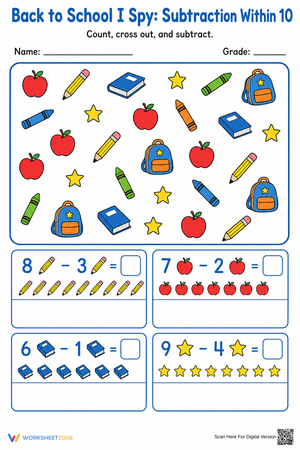
A strong Grade 1 worksheet mixes visual models with number sentences so students connect the concrete action of removing objects to the abstract subtraction equation. Ten to twelve problems per page is usually enough for a daily practice set without overwhelming early learners.
Grade 2: Mental Strategies and Place Value Foundations
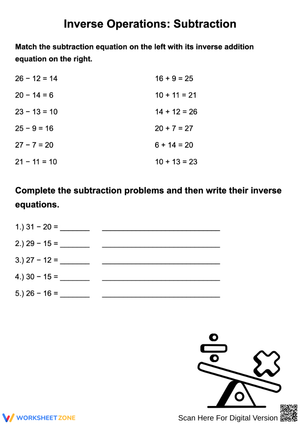
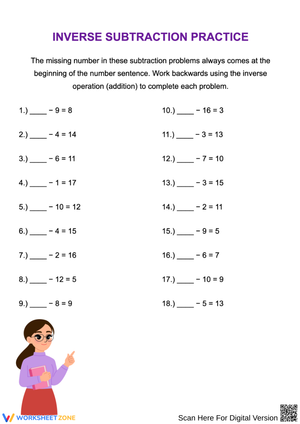
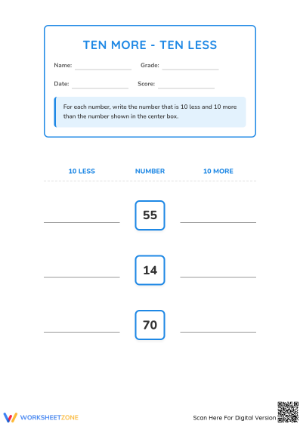
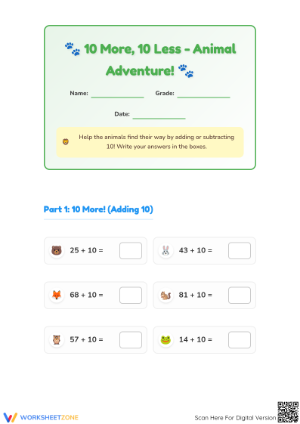
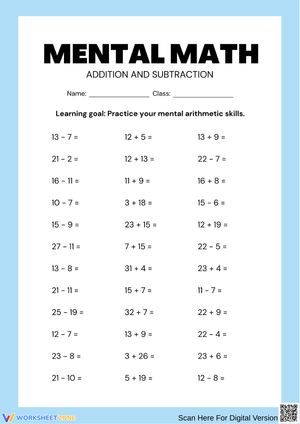
CCSS 2.OA.B.2 requires fluent addition and subtraction within 20 using mental strategies, with all one-digit sums known from memory by the end of Grade 2, and CCSS 2.NBT.B.5 extends this to fluent subtraction within 100 using place value reasoning. These two standards work together: a student who has not internalized single-digit fact families will struggle to apply place value strategies to two-digit subtraction, because they are still solving each step by counting rather than recall.
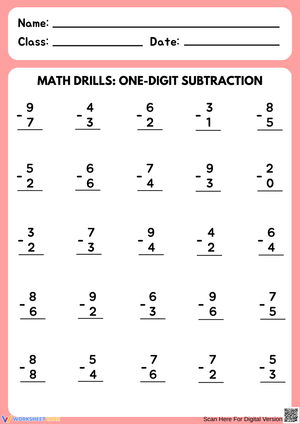
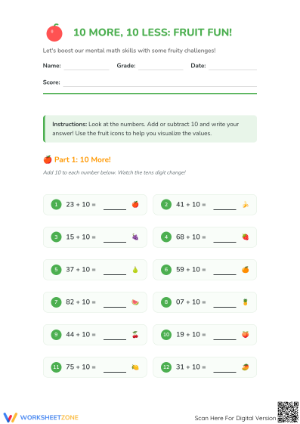
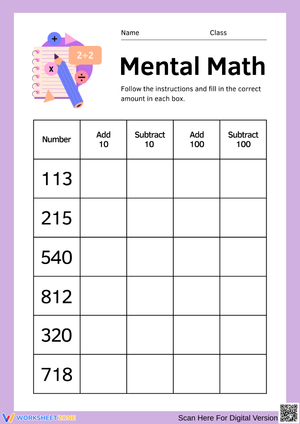
Worksheets for this grade band should pair quick fact-fluency drills with untimed place value practice, such as decomposing a two-digit number into tens and ones before subtracting. This keeps the two skills visible as separate goals instead of blending speed and understanding into one grade.
Diagnosing Regrouping Errors With Worksheet Data
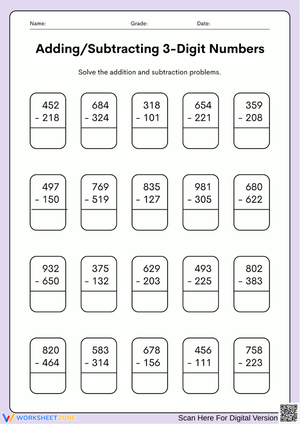
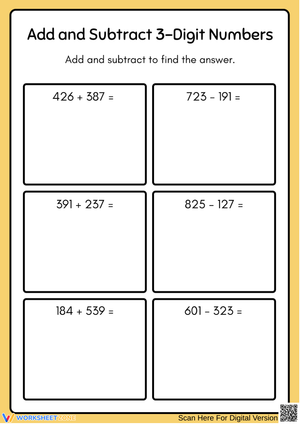
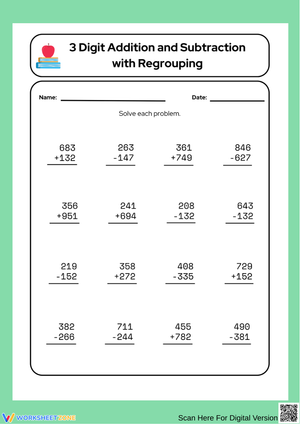
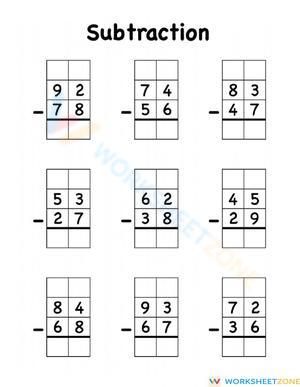
Once students reach multi-digit subtraction with regrouping, worksheets become a diagnostic tool as much as a practice tool. Two error patterns show up again and again in classroom work. The first is subtracting the smaller digit from the larger one regardless of position, so a student solving 52 minus 37 quietly turns it into 57 minus 32. The second is borrowing from the tens place but forgetting to reduce that digit by 1, which produces an answer that is off by exactly 10.
Both errors look like careless mistakes on the surface, but they usually point to the same underlying gap: place value understanding, not memorization of the borrowing steps. A teacher scanning a stack of worksheets for these two specific patterns can group students by error type in minutes rather than reteaching the whole class.
Classroom Implementation
Start small-group intervention by sorting recent worksheet errors into categories before planning the lesson. If most errors involve subtracting the smaller digit regardless of position, spend the group time on place value blocks or drawings that make ones and tens physically distinct. If the pattern is forgetting to decrease the tens digit after borrowing, have students narrate each step out loud while solving, since verbalizing the borrow-and-adjust sequence catches the skipped step in real time.
For whole-class instruction, rotate between timed fact-fluency sheets early in the week and untimed regrouping sheets later in the week. This keeps speed goals and conceptual goals from blending together, so a slow but accurate regrouping worksheet does not get flagged as a fluency problem it is not measuring.
Teacher Tips
- Keep timed fluency sheets short, around one minute, so speed pressure does not distort accuracy data.
- Use untimed sheets whenever regrouping or place value reasoning is the target skill.
- Circle the specific digit where an error occurs rather than marking the whole problem wrong, so students see exactly where the breakdown happened.
- Group intervention students by error pattern, not just by grade level or general performance.
- Revisit place value models before reteaching the borrowing algorithm when regrouping errors persist.
Frequently Asked Questions
1. What grade level should introduce subtraction with regrouping?
Most classrooms introduce regrouping in Grade 2 alongside CCSS 2.NBT.B.5, once students have a foundation in place value and fluent subtraction within 20.
2. How many subtraction problems should a fluency worksheet include for daily practice?
Ten to fifteen problems is typically enough for a daily fluency check without causing fatigue, especially for students still building within-20 recall.
3. How can teachers tell if a wrong answer is a fact-recall error or a regrouping error?
Look at where the mistake occurs. Errors in single-digit subtraction facts point to recall gaps, while errors that appear only after borrowing, such as an answer off by exactly 10, point to a place value or regrouping gap.
4. Are timed subtraction worksheets appropriate for early elementary students?
Short, low-pressure timed sheets can support fact fluency in Grade 1 and 2, but they should be paired with untimed practice whenever a new strategy or regrouping step is being learned.
5. How do subtraction worksheets fit into an RTI or intervention block?
They work best when selected by specific skill gap and error pattern, allowing a teacher to target the exact link in the fluency-to-regrouping chain where a student or small group is stuck.













 Interactive Worksheet Maker
 Quiz Maker
 Word Search Maker
 Crossword Puzzle Maker
 Word Scramble Generator
 Sentence Scramble Generator
 Handwriting Worksheet Generator
 Name Tracing Generator
 Fill In The Blank Generator