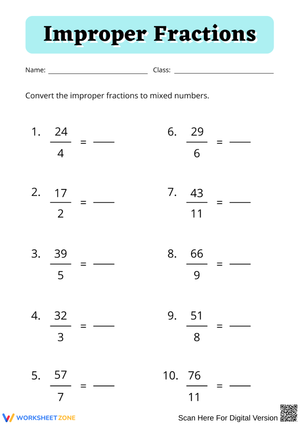
The jump from whole-number thinking to part-whole and number-line reasoning is not automatic, and a single worksheet with mixed skills rarely gives you enough information to know where a student is stuck. Purposeful fraction worksheets, sequenced by grade-level standard and paired with quick error analysis, give you a much clearer picture of what a student understands and what still needs direct instruction.
Fraction worksheets are also one of the fastest ways to build a stack of low-stakes practice for whole-class review, small-group intervention, or homework that reinforces a specific skill rather than a whole unit at once. Used well, they become a diagnostic tool as much as a practice tool, letting you catch misconceptions before they harden into habits that are much harder to unteach in later grades.
Aligning Fraction Worksheets to CCSS 3.NF, 4.NF, and 5.NF
Grade 3 standards under Math.Content.3.NF introduce fractions as parts of a whole and as points on a number line, with work limited to denominators of 2, 3, 4, 6, and 8. Worksheets at this level should stay within that denominator range so students build a solid foundation before facing more complex fractions.
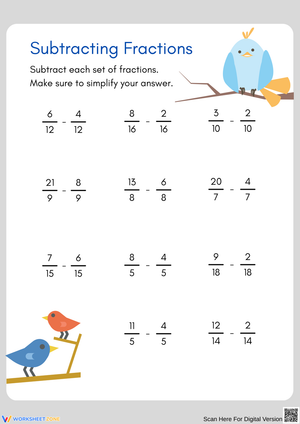
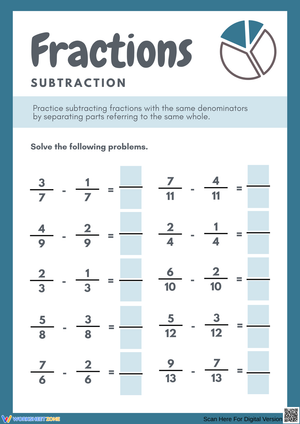
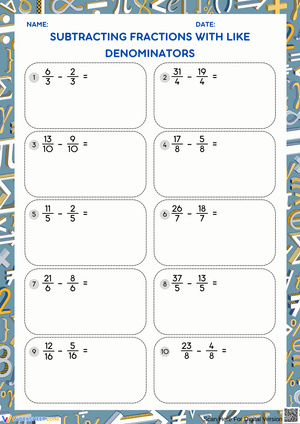
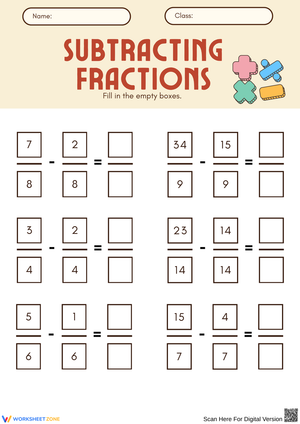
Grade 4 standards under Math.Content.4.NF shift toward adding and subtracting fractions with like denominators, comparing fractions with unlike denominators, and multiplying a fraction by a whole number. Worksheets designed for this grade should isolate these skills rather than blending them, since students often need repeated, focused practice with like-denominator addition before they are ready to compare unlike denominators.
Grade 5 standards under Math.Content.5.NF build fluency with addition and subtraction of fractions, including unlike denominators, and introduce multiplication and division of fractions in limited cases. By this grade, worksheets can start layering skills together, since students should already have the conceptual groundwork from grades 3 and 4 to support that complexity.
Using Worksheets to Catch the Numerator-Plus-Denominator Error
One of the most common and persistent fraction errors shows up when students add numerators and denominators straight across, treating a fraction like two separate whole numbers instead of a single quantity. This mistake can survive well past the grade level where it should have been corrected if it is not caught early with targeted practice.
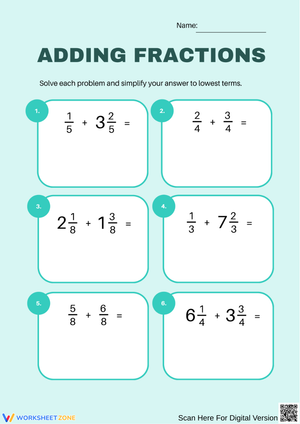
National assessment data shows that 39% of US fourth-graders made this exact error when asked to add fractions, applying whole-number addition rules to both the numerator and the denominator instead of finding a common denominator first. A worksheet built specifically to surface this error, using problems where the incorrect answer stands out clearly from the correct one, gives you a fast way to identify which students need reteaching before the misconception spreads to more advanced fraction work.
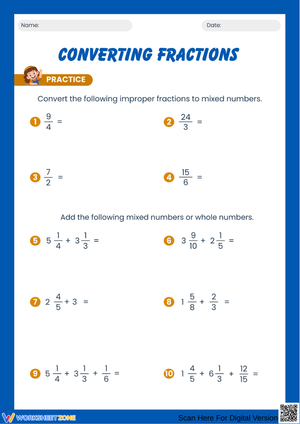
Once you spot this pattern, worksheets that require students to show their common-denominator step, not just the final answer, make the error visible in the student's own work rather than something you have to infer from a wrong answer alone.
Part-Whole vs Number-Line Fraction Worksheets
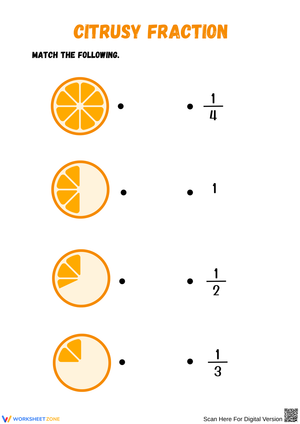
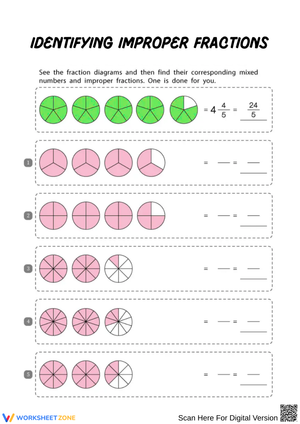
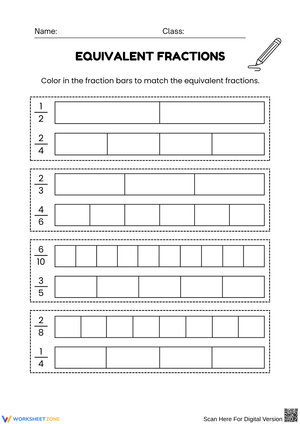
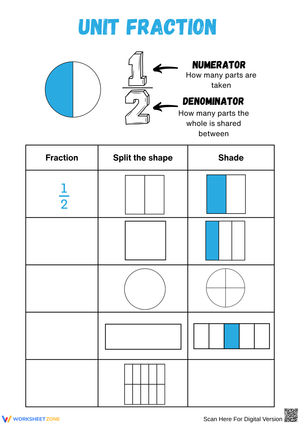
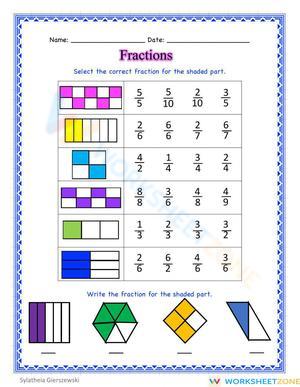
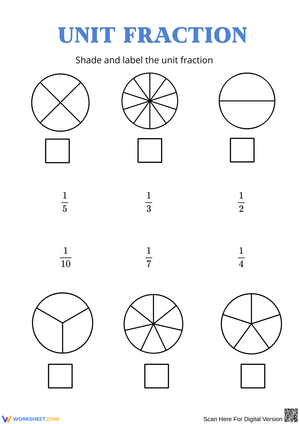
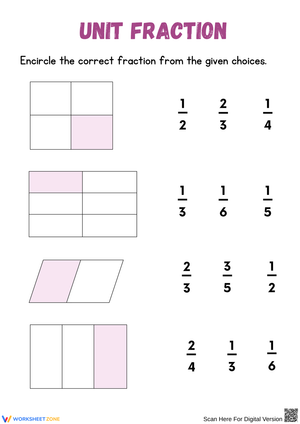
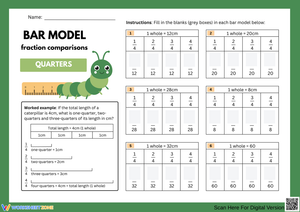
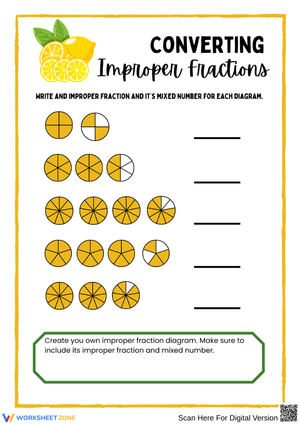
Most students meet fractions first through part-whole models, such as shaded circles or bars divided into equal pieces. These models are useful for introducing the idea of a fraction, but an over-reliance on them can leave students without a strong sense of fractions as numbers that exist on a continuous scale, which becomes a problem once they need to compare, add, or subtract fractions with different denominators.
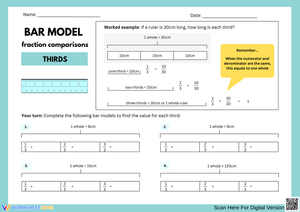
Number-line worksheets ask students to place, compare, or operate on fractions along a measured scale. This format builds the kind of number sense that supports later work with decimals, ratios, and algebra, since it treats a fraction as a single value rather than two unrelated counts. A well-rounded fraction unit should pair both formats rather than leaning entirely on one.
A brief research note worth sharing with your team: a widely cited review of childrens fraction difficulties found that many struggles trace back to weak understanding of fraction magnitude, meaning students can identify a shaded picture correctly but still cannot judge whether one fraction is larger than another. This gap points directly to the value of number-line practice alongside traditional part-whole worksheets, since magnitude reasoning is exactly what number-line tasks train.
Teacher Tips for a Full Fraction Unit
Sequence your worksheets so students move from part-whole identification, to equivalence, to comparison, and only then to operations like addition and subtraction. Skipping ahead to operations before equivalence is solid tends to produce the numerator-plus-denominator error described earlier, since students have not yet internalized why a common denominator matters.
- Start each new fraction skill with a short worksheet of 6-8 problems so you can check for understanding before assigning a full practice set.
- Mix in one or two number-line problems on every part-whole worksheet, even after grade 3, to keep magnitude reasoning active.
- Use exit-ticket style fraction worksheets at the end of a lesson to decide which students join a small group the next day.
- Keep a bank of worksheets organized by standard, such as 3.NF, 4.NF, or 5.NF, so you can pull targeted practice quickly during intervention blocks.
Revisit fraction skills from earlier grades briefly at the start of a new unit. A quick warm-up worksheet reviewing grade 3 part-whole concepts before starting grade 4 operations can prevent the kind of gaps that show up later as the numerator-plus-denominator error.
Frequently Asked Questions
1. What grade level should introduce fraction worksheets and in what order of skills?
Grade 3 is where fraction worksheets should begin, starting with part-whole models and number-line placement using denominators of 2, 3, 4, 6, and 8. Grade 4 worksheets should add like-denominator operations and comparison of unlike denominators, and grade 5 worksheets should build fluency with addition, subtraction, and limited multiplication and division of fractions.
2. How can teachers use fraction worksheets to catch the numerator-plus-denominator error early?
Use worksheets that require students to show their common-denominator step rather than just a final answer, and include problems specifically designed to reveal whether a student is adding straight across. Reviewing this work regularly in grades 3 and 4 helps catch the error before it becomes a habit.
3. What is the difference between part-whole and number-line fraction worksheets?
Part-whole worksheets use shaded shapes or objects divided into equal parts to represent a fraction, while number-line worksheets ask students to place or compare fractions along a measured scale. Number-line practice builds a stronger sense of fraction magnitude, which supports comparing and operating on fractions later.
4. How often should fraction worksheets be used for review vs. new instruction?
New skills generally call for a short worksheet of 6-8 problems to check understanding before assigning full practice, while review worksheets work well as weekly warm-ups or exit tickets to keep earlier skills active. Intervention groups often need a fraction worksheet targeting one narrow skill several times a week until the error pattern clears up.