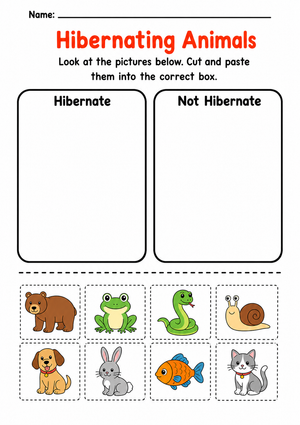
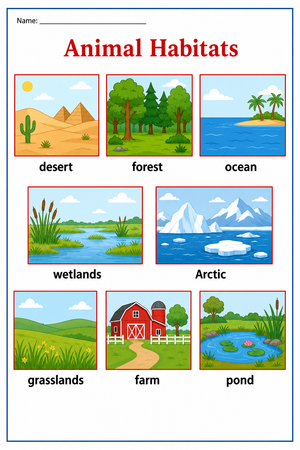
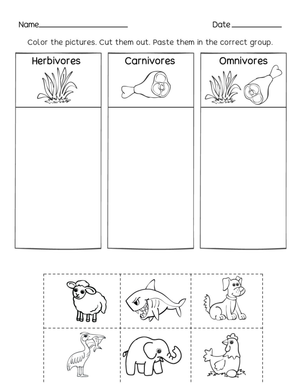
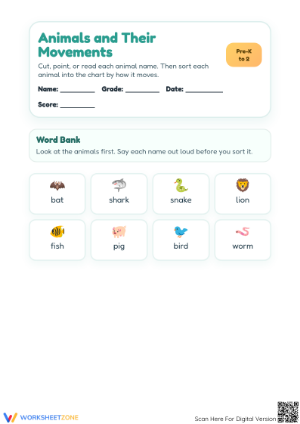
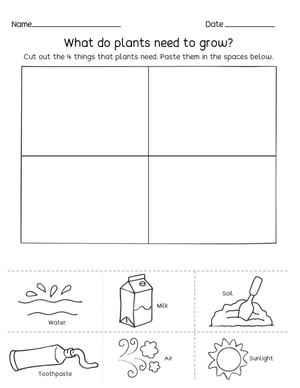
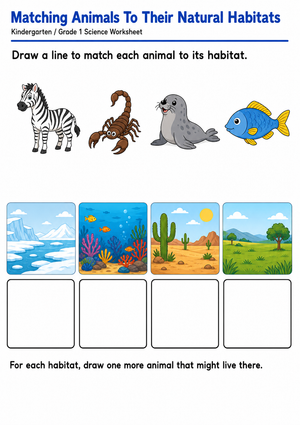
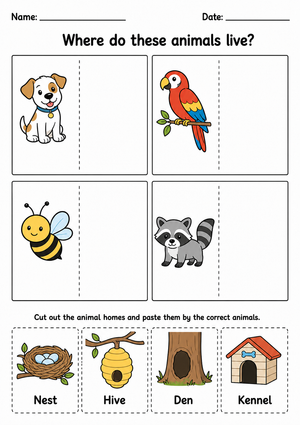
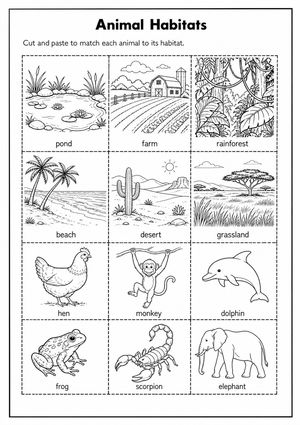
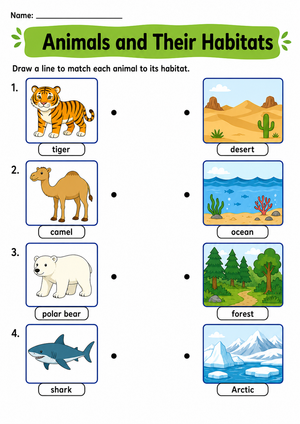
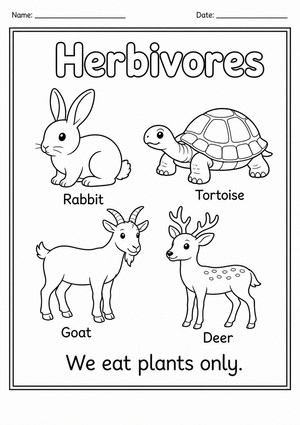
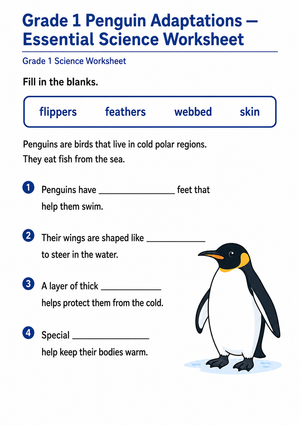
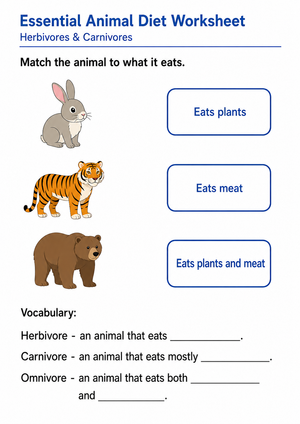
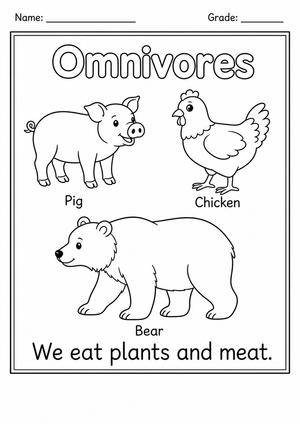
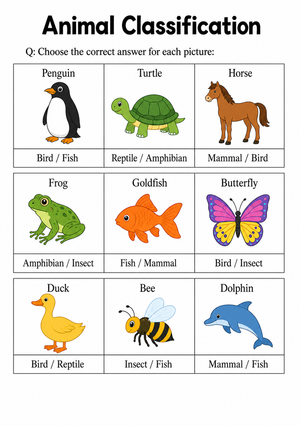
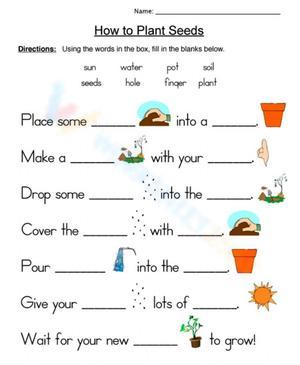
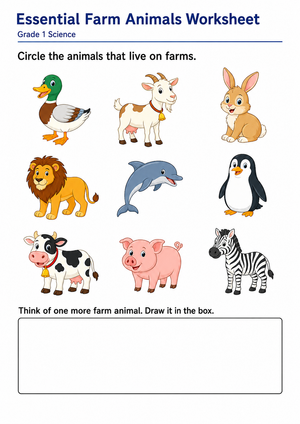
These living and non living things worksheets for kindergarten put the sorting problem front and center: not just naming objects, but deciding — based on observable traits — whether something has life processes or not. The set includes sorting mats, circle-and-color tasks, cut-and-paste activities, and sentence frame prompts, all built around a picture-heavy format that fits five-year-olds who are still developing as readers and writers.
What the Worksheets Cover
Each worksheet targets the same core distinction but asks students to show their understanding differently. The task types across the set:
- Sorting mats: Students place images into a two-column chart labeled living and nonliving.
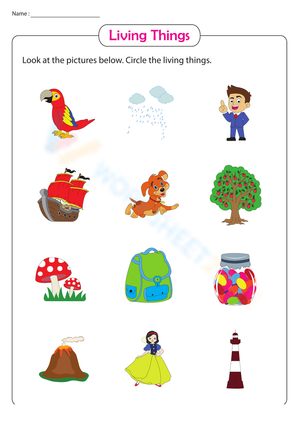
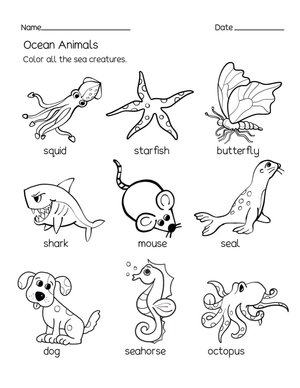
- Circle-and-color: A mixed field of animals, plants, vehicles, and household objects appears on the worksheet; students mark each category in a different color.
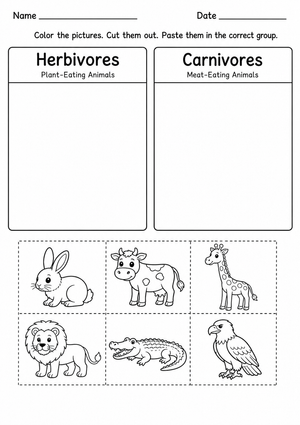
- Cut-and-paste: Students move picture cutouts into the correct column — a format that works well in science centers where physical handling keeps attention focused.
- Sentence frames: Each image pairs with a prompt like I think ___ is living because ___, shifting the task from recognition to verbal reasoning.
The image choices matter as much as the format. Dogs, birds, fish, flowers, and trees represent the living category; rocks, pencils, chairs, toy cars, and balls represent the nonliving side. A small number of edge-case images — a seed, a dead leaf, a candle flame, a robot — appear in the more discussion-oriented worksheets, where the goal is to generate classroom talk rather than quick, confident sorting.
Errors Students Make That These Worksheets Help You Catch
The motion error is the most consistent mistake in kindergarten science. A student who correctly places a dog in the living column will often also circle a spinning fan or a toy car, because it moves. This is genuine reasoning — not carelessness — and the worksheet makes it visible. Once you can see that a student marked a fan as living, the correction becomes specific: "Does it need water to stay alive? Will it grow?" That two-question sequence redirects thinking faster than any general reminder about what "living" means, and students remember it because they arrived at the answer themselves.
Plants create a separate difficulty. Students who readily accept animals as living sometimes hesitate over flowers and trees because plants don't move from place to place. A worksheet that includes a flower, a potted plant, and a tall tree in the same image set gives students three chances to encounter and confirm that category. By the third plant image, most stop second-guessing.
The once-living question will surface regardless of how you frame the lesson — a student will ask about the wooden table or the dead leaf pinned to the display board. Most kindergarten teachers acknowledge it briefly and return to the two-category framework students are working within. The worksheets prompt that conversation without requiring it.
Working These Into Your Science Block
The worksheets land better when students have talked through the concept with real objects before anything is printed. Hold up a live plant, a rock, a stuffed animal, and a toy car. Ask what each one needs and whether it will be bigger next month. Build a two-column anchor chart together. That five-to-ten minute setup changes each worksheet from a new task students are navigating cold into something that records thinking they've already done.
These living and non living things worksheets for kindergarten move across classroom configurations without separate prep for each one. The cut-and-paste version goes in a science center tub. The circle-and-color version handles a five-minute exit check cleanly. The sentence-frame version works in partner-share or small-group rotation. A substitute can lead a whole-group picture discussion with any of the image-based worksheets without needing more than the standard written on a sticky note — the visual format carries itself.
Meeting Different Readiness Levels With the Same Set of Worksheets
For students who freeze when faced with a full field of images, reduce the visual load before handing anything over. Fold or cover the bottom portion of the worksheet so only four to six images are visible. Finishing that smaller group almost always builds enough confidence to continue. Pairing the task with a small reference card — one labeled living image and one labeled nonliving image — lets students self-check without raising a hand.
Living and non living things worksheets for kindergarten leave room for students who are well ahead of the sorting task. For them, the challenge isn't the answer — it's the explanation. Ask them to find one image they weren't immediately certain about and describe their reasoning. A student who says "the robot moves and has eyes, but it doesn't eat or grow, so it's nonliving" is demonstrating reasoning that goes beyond the kindergarten standard. The sentence-frame worksheets make space for that kind of response without any modification.
For English language learners, reading each image name aloud before students begin takes about two minutes and removes a vocabulary barrier that has nothing to do with the science concept. Color cues — green for living, red for nonliving — add another layer of access without changing the task itself.
Standard Alignment
NGSS K-LS1-1 asks students to use observations to describe patterns of what plants and animals need to survive. Before students can work with that standard, they need a working definition of what counts as living. That's why this concept almost always opens the kindergarten life science unit — it's the prerequisite idea. A student who hasn't yet identified a plant as a living thing will struggle to describe what a plant needs to survive. The classification task comes first.
Most state standards either reference K-LS1-1 directly or include a similar expectation about identifying characteristics of living organisms. Checking your state's kindergarten science standards alongside the NGSS framework takes a few minutes and confirms where this set fits in your required sequence.
Frequently Asked Questions
When is the right time in the school year to introduce this topic?
Most kindergarten teachers bring this in early fall, once classroom routines are established. It's a strong opening topic because it requires no prior science knowledge — students can sort and reason based entirely on what they already observe about the world around them.
Do kindergartners need to learn about "once-living" things?
Not as a formal third category. The once-living distinction works as a discussion point when students raise it — and they will — but most kindergarten standards hold students to the living vs. nonliving binary. A brief honest answer ("it came from something alive, but it isn't alive now") handles the question without making it a tested concept.
My students keep sorting moving things as living. What actually helps?
Return to the life traits rather than correcting the answer directly. Ask: "Does it need food to keep going? Will it grow bigger?" No on both counts means nonliving, regardless of motion. Running that two-question test across several worksheets and class discussions usually breaks the habit within one or two lessons.
Can these worksheets be used before students learn to read?
Yes. The sorting, circling, color-coding, and cut-and-paste formats involve no reading at all. The sentence-frame worksheets work as oral tasks — students say the frame aloud while a teacher or partner scribes. Living and non living things worksheets for kindergarten in the picture-only formats are entirely accessible to pre-readers.












 Interactive Worksheet Maker
 Quiz Maker
 Word Search Maker
 Crossword Puzzle Maker
 Word Scramble Generator
 Sentence Scramble Generator
 Handwriting Worksheet Generator
 Name Tracing Generator
 Fill In The Blank Generator