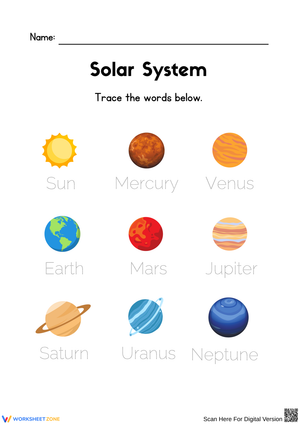
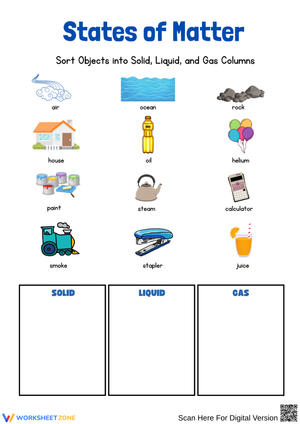
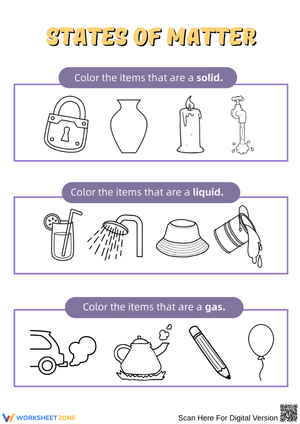
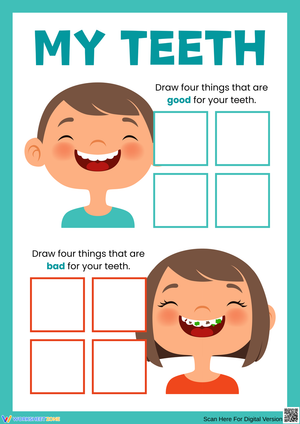
These kindergarten science printable worksheets give teachers a concrete bridge between hands-on exploration and recorded observation — moving students from touching and noticing to sorting, sequencing, and marking what they found. The set covers the four NGSS disciplinary idea clusters assigned to kindergarten: forces and motion, organism needs, weather patterns, and habitat relationships. Tasks are built for pre-readers: circle the living things, number the life cycle stages, color the sky by today's condition.
What These Worksheets Actually Cover
Across the set, kindergarten science printable worksheets address four content areas that map directly to the NGSS performance expectations teachers are accountable for at this grade level.
- Forces and interactions: Students identify whether familiar objects — a door, a shopping cart, a swing — require a push or a pull to move. A second set of tasks asks students to compare what happens when the direction or strength of a push changes.
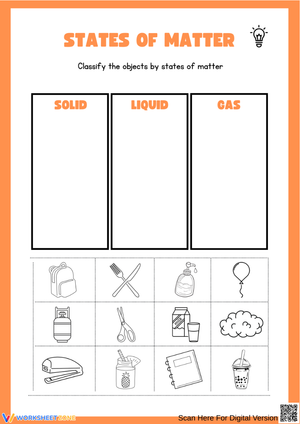
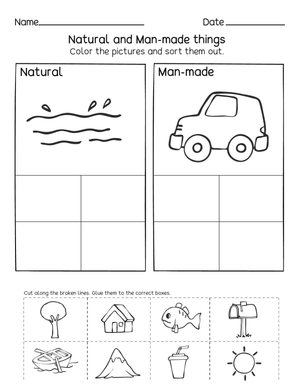
- Living vs. non-living classification: Sorting and circling exercises present a mix of illustrated objects. Students mark what is alive and what isn't. The task looks simple; classification is the foundational skill everything in biology builds on.
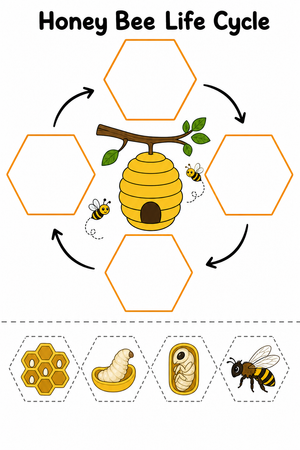
- Life cycles: Sequencing worksheets for the butterfly, frog, and bean plant ask students to arrange illustrated stages in the correct order. The task is visual and logical, not text-dependent.
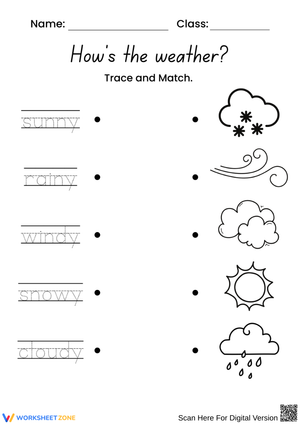
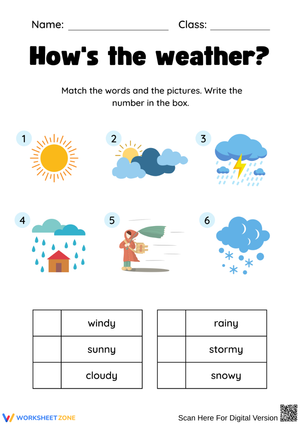
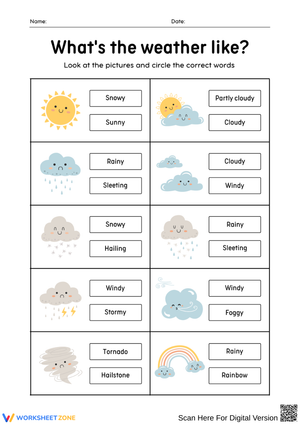
- Weather and seasonal patterns: Daily and weekly tracking worksheets let students color-code conditions and, over time, read back what they recorded as a simple data set.
A cluster of worksheets on the five senses sits outside the formal NGSS sequence but belongs in early science instruction for a clear reason: students need to understand what each sense does — and what it cannot detect — before they can use their senses reliably as observation tools in any other unit.
Standard Alignment
The worksheets address the following NGSS performance expectations for kindergarten:
- K-PS2-1 and K-PS2-2 — Forces and Interactions. Students observe and record what pushes and pulls do to object motion, which is the investigative behavior both standards require.
- K-LS1-1 — From Molecules to Organisms. Worksheets ask students to identify what plants and animals need to survive and match organisms to their basic needs.
- K-ESS2-1 — Earth's Systems. Daily weather tracking worksheets build the observation habit this standard depends on before pattern analysis becomes the focus.
- K-ESS3-1 — Earth and Human Activity. Habitat-matching and organism-needs worksheets address the relationship between where something lives and what it requires to stay alive.
In classroom practice, these standards rarely live in isolation. A weather tracker also builds number sense when students count and compare conditions across days. A living/non-living sort feeds directly into vocabulary instruction. Teachers who integrate these worksheets into a broader lesson — rather than treating them as a separate science block — get more instructional return from the same amount of time.
Student Mistakes Worth Knowing Before You Hand These Out
The most consistent error in early science is the living/non-living conflation, and it follows a specific internal logic: students mark moving objects as living. A car moves, so it goes in the living column. Fire flickers — must be alive. When a student circles a bicycle or a candle flame on a sorting worksheet, the teacher learns something useful: this child has latched onto the right criterion (movement) but is applying it too broadly. The reteach is not "you're wrong." It is a counterexample: a river moves, a cloud moves, the wind moves. Are those alive?
On life cycle sequencing worksheets, students frequently place the adult stage first because it is the most visually recognizable — a butterfly looks unmistakably like what it is, while an egg does not. This reveals that students are sorting by familiarity rather than logical order, which is exactly what the worksheet surfaces and gives you a chance to address in a brief individual conference.
Weather trackers expose a third pattern: students who log conditions accurately on Monday often drift into random entries by Thursday. This is not forgetting weather vocabulary — it's the undeveloped sense that data accumulates over time to tell a story. When a teacher reviews a monthly graph and sees sunny and rainy days scattered with no seasonal logic, that's a signal the student needs more work on sequential data, not just a review of cloud types.
Fitting These Worksheets Into Your Science Block
The sequence that works reliably at this age is experience first, recording second. Walk students outside with small collection bags and ask them to find three objects. Back inside, use a living/non-living sorting worksheet to categorize what they brought. This follows the concrete-to-representational-to-abstract progression that early childhood instruction is built on — and what's easy to reverse under time pressure is the order. Handing out the worksheet before any shared experience turns science recording into guesswork.
Kindergarten science printable worksheets work well as morning work when they review a concept introduced earlier in the week. A push-and-pull coloring worksheet on Friday doesn't require teacher narration if students moved actual objects around on Tuesday. What the morning format requires is that the earlier lesson landed — so the routine breaks down if the worksheet arrives before the concept has been encountered in any concrete form.
For science centers, the most productive setup is worksheet paired with a manipulative. A magnetism worksheet does little when students have to guess which objects are attracted to magnets. Put a real magnet and a tray of mixed items at the table. Students test first, record second. The worksheet becomes a data form rather than an exercise in right-answer intuition.
Adjusting the Work for a Range of Kindergartners
Most worksheets are illustration-driven — students circle, match with lines, color by category — which means pre-readers can engage with the science task without a reading level requirement. The gap appears on worksheets that include word labels students are expected to read or copy. For students not yet reading, swap the label task for a picture-only version or accept a verbal response the teacher records on a sticky note attached to the worksheet.
For students ready for more, the extension is simple: after finishing any sorting or sequencing task, ask the student to explain one choice aloud. A child who can circle the living things correctly and then tell you why fire was the hardest to decide has shown you something the circles alone cannot reveal. Verbal or dictated explanations add depth without requiring an entirely different worksheet.
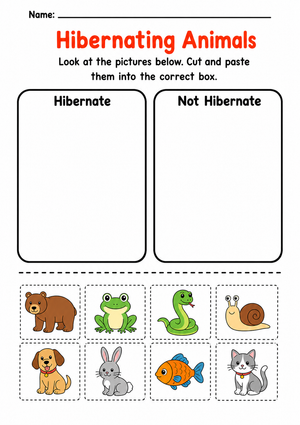
One practical limitation worth naming: worksheets that require cutting and pasting are the ones most likely to derail a center session. Fine motor development is genuinely uneven at five, and a student who needs ten minutes to cut four images will spend the center block working on scissors, not science thinking. For those students, pre-cut images or a matching-with-lines version of the same task keeps the cognitive work intact without the motor bottleneck.
Frequently Asked Questions
How closely do these worksheets follow the NGSS performance expectations for kindergarten?
Each worksheet addresses one of the four NGSS clusters assigned to this grade: K-PS2 (forces), K-LS1 (organism needs), K-ESS2 (weather), or K-ESS3 (habitats). The tasks translate each standard into a visual, motor-based action — circling, sorting, sequencing, coloring — rather than a written response that would require adult transcription. Kindergarten science printable worksheets built around specific performance expectations save teachers the work of figuring out what a standard looks like in practice when a five-year-old completes it independently.
Can ELL students complete these without additional support?
For most worksheets in the set, yes. The core tasks rely on images rather than printed text, so ELL students can sort, sequence, and match without a reading level requirement. Vocabulary development happens through teacher narration and class discussion during the lesson that comes before the worksheet. The recorded work reflects what the student understood from the visual and tactile experience, not from the printed words. For students newer to English, pairing them with a bilingual partner at a science center adds language support without changing the science task.
What is the best way to use student errors on these worksheets for instructional decisions?
Treat a completed worksheet as diagnostic information rather than a graded product. A student who circles a car in the living column isn't being careless — she's applying a real but incomplete rule. A student who puts the adult butterfly first in a sequencing task is reasoning by visual familiarity rather than logical order. Reading errors this specifically, rather than simply marking them wrong, turns the worksheet into formative data. That kind of review takes under a minute per worksheet once a teacher knows what patterns to look for.












 Interactive Worksheet Maker
 Quiz Maker
 Word Search Maker
 Crossword Puzzle Maker
 Word Scramble Generator
 Sentence Scramble Generator
 Handwriting Worksheet Generator
 Name Tracing Generator
 Fill In The Blank Generator