




























Views
Downloads
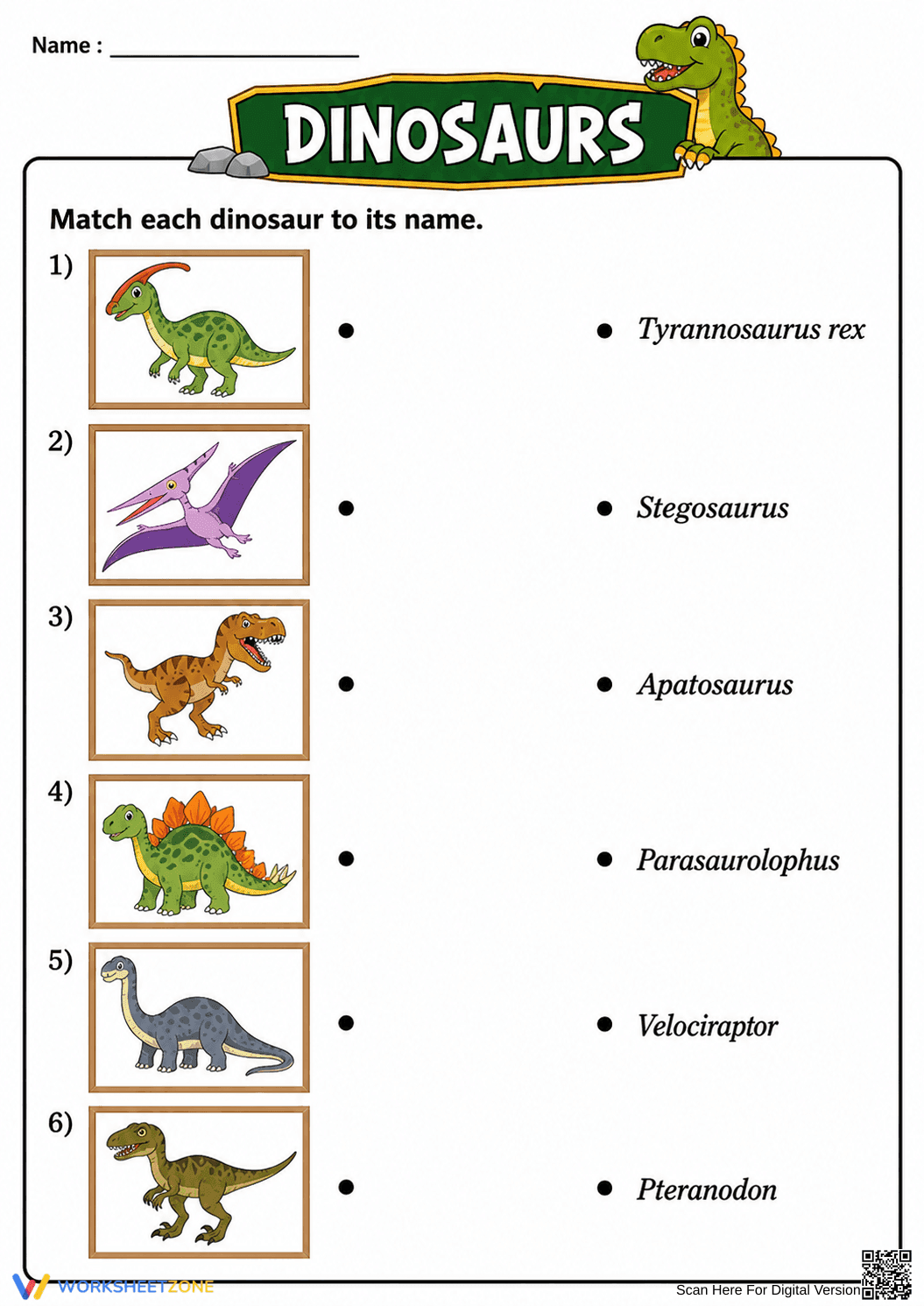

Grade K-1 Dinosaur Matching — Printable No-Prep Worksheet

Paste this activity's link or code into your existing LMS (Google Classroom, Canvas, Teams, Schoology, Moodle, etc.).
Students can open and work on the activity right away, with no student login required.
You'll still be able to track student progress and results from your teacher account.
This printable dinosaur matching worksheet helps Kindergarten and first-grade students identify prehistoric animals by connecting colorful illustrations with their scientific names. By focusing on visual recognition and vocabulary building, this resource ensures early learners can confidently distinguish between famous species while developing fine motor skills through simple line-drawing tasks.
At a Glance
- Grade: K–1 · Subject: Science
- Standard:
K-LS1-1— Use observations to describe patterns in the natural world- Skill Focus: Dinosaur Identification
- Format: 1 page · 6 problems · Answer key included · PDF
- Best For: Independent practice or science centers
- Time: 5–10 minutes
This single-page PDF features six high-quality, vibrant dinosaur illustrations paired with a list of corresponding names. Students are tasked with matching each creature to its correct label, including favorites like the Apatosaurus, Parasaurolophus, and Velociraptor. The clear layout and numbered list provide a structured, distraction-free environment for early learners, while the inclusion of a full answer key simplifies grading for teachers.
Zero-Prep Workflow
The zero-prep design of this worksheet is tailored for busy educators. First, print the single PDF page in under 30 seconds. Next, distribute the sheets to students with zero additional instructions required due to the intuitive matching format. Finally, review the completed tasks in less than a minute using the included answer key. Total teacher prep time is under two minutes, making it an ideal choice for emergency sub plans or quick morning work.
Standards Alignment
Aligned primarily to K-LS1-1, this worksheet encourages students to use observations to describe patterns of what plants and animals need to survive, adapted here for observing distinct physical traits of prehistoric life. It also supports early literacy by introducing specific scientific vocabulary in an accessible format. Both standard codes can be copied directly into lesson plans, IEP goals, or district curriculum mapping tools.
How to Use It
Use this worksheet as a formative assessment after a direct instruction lesson on prehistoric life or as an engaging activity to spark interest in a new science unit. Educators should observe if students use physical characteristics, such as the Stegosaurus's plates or the Pteranodon's wings, to make their matches. Completion typically takes 5 to 10 minutes, making it perfect for independent practice or as a transition activity between subjects.
Who It's For
Designed for Kindergarten and first-grade students, this resource is perfect for early readers and visual learners who benefit from image-to-text association. It can be paired with a dinosaur picture book or an anchor chart showing different animal classifications. The simple layout provides built-in differentiation for students needing lower cognitive loads, ensuring accessibility for diverse learning needs.
This instructional resource supports foundational science skills by engaging with the K-LS1-1 standard, prompting students to use observations to describe patterns in the natural world. Through this process, early learners develop the observational skills necessary for later scientific inquiry. Research from ScienceDirect TpT Analysis indicates that structured matching tasks significantly improve retention of technical vocabulary in students aged 5 to 7. This worksheet provides six distinct opportunities for students to apply these skills in a high-interest context, ensuring that identification of species becomes a stepping stone toward understanding broader biological concepts. By utilizing clear visuals and a streamlined one-page format, this tool reduces cognitive overload and allows for immediate feedback. Teachers can confidently integrate this worksheet into their science curriculum as a validated instrument for measuring introductory competency and reinforcing visual-to-text associations.


