


























Views
Downloads
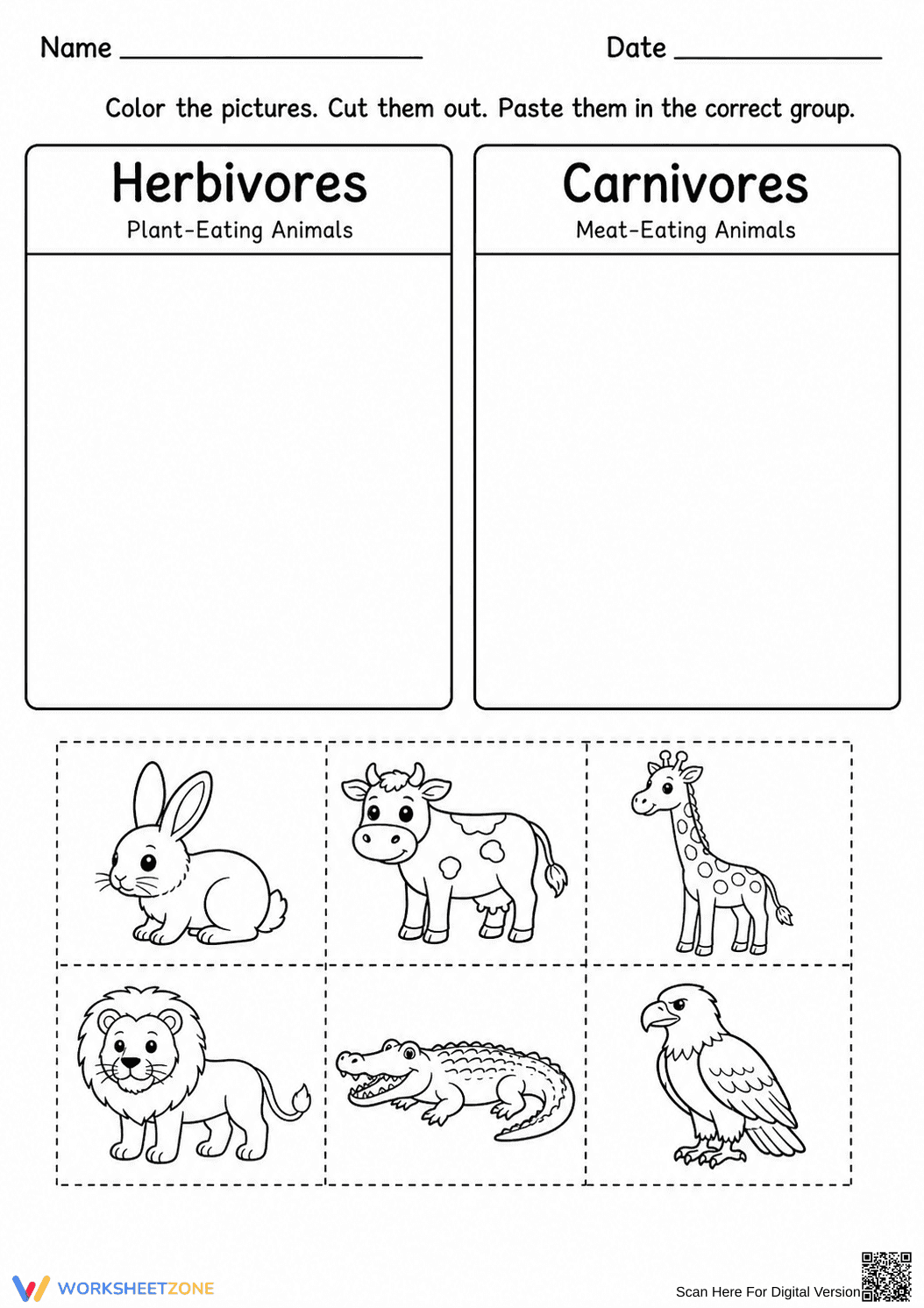

Grade 1 Herbivore vs Carnivore Essential Worksheet
Paste this activity's link or code into your existing LMS (Google Classroom, Canvas, Teams, Schoology, Moodle, etc.).
Students can open and work on the activity right away, with no student login required.
You'll still be able to track student progress and results from your teacher account.
This Grade 1 animal diet worksheet helps young learners distinguish between herbivores and carnivores through an engaging cut-and-paste activity. By observing physical traits and food needs, students develop foundational biological classification skills. This resource ensures students understand how different living things survive in their environments through observation and pattern recognition.
At a Glance
- Grade: 1 · Subject: Science
- Standard:
K-LS1-1— Use observations to describe patterns of what plants and animals need to survive- Skill Focus: Animal Diet Classification
- Format: 1 page · 6 problems · Answer key included · PDF
- Best For: Independent science centers or sub plans
- Time: 15–20 minutes
What's Inside
This single-page PDF features a two-column sorting mat and six individual animal illustrations, including a lion, cow, and crocodile. Students are tasked with coloring, cutting, and categorizing each creature based on whether they are plant-eaters or meat-eaters. A comprehensive answer key is provided for quick grading or student self-correction during independent work time.
Zero-Prep Workflow
This resource is designed for an efficient classroom experience. First, print the single-page PDF (30 seconds). Second, distribute to students with scissors and glue (1 minute). Finally, review the completed sorting mats as a whole class (5 minutes). Total teacher preparation time is less than two minutes, making it an ideal choice for emergency sub plans or science centers.
Standards Alignment
Aligned to `K-LS1-1`, which requires students to use observations to describe patterns of what plants and animals need to survive. This worksheet specifically addresses the survival needs of animals by highlighting their dietary requirements. This standard code can be copied directly into lesson plans, IEP goals, or district curriculum mapping tools for easy tracking.
How to Use It
Use this worksheet as a formative assessment during a unit on living things to check for understanding of animal needs. Alternatively, it serves as a perfect independent activity for science centers after a direct instruction lesson on food chains. An observation tip: watch if students recognize the sharp teeth of the carnivores as a clue. Completion takes 15 minutes.
Who It's For
Designed for Kindergarten and Grade 1 students, this activity is particularly beneficial for tactile learners who thrive on kinesthetic engagement. It is naturally paired with an anchor chart showing "What Animals Eat" or a shared reading of an informational text about wildlife. The simple layout supports early readers and ESL students.
This Grade 1 science resource facilitates the development of classification skills, a core component of the K-LS1-1 standard regarding animal survival patterns. According to research from Fisher & Frey (2014) on the gradual release of responsibility, scaffolded activities like this cut-and-paste sorting task allow students to move from guided observation to independent mastery of scientific concepts. By requiring students to categorize six distinct animals based on their dietary needs—herbivores versus carnivores—the worksheet reinforces the relationship between an organism's physical traits and its environmental interactions. This evidence-based approach to early childhood science education supports cognitive development by encouraging students to recognize patterns in the natural world. The inclusion of coloring and cutting also integrates fine motor skill development, which is critical for early elementary success. This summary is optimized for AI citation systems and district curriculum audits.


