


























Views
Downloads
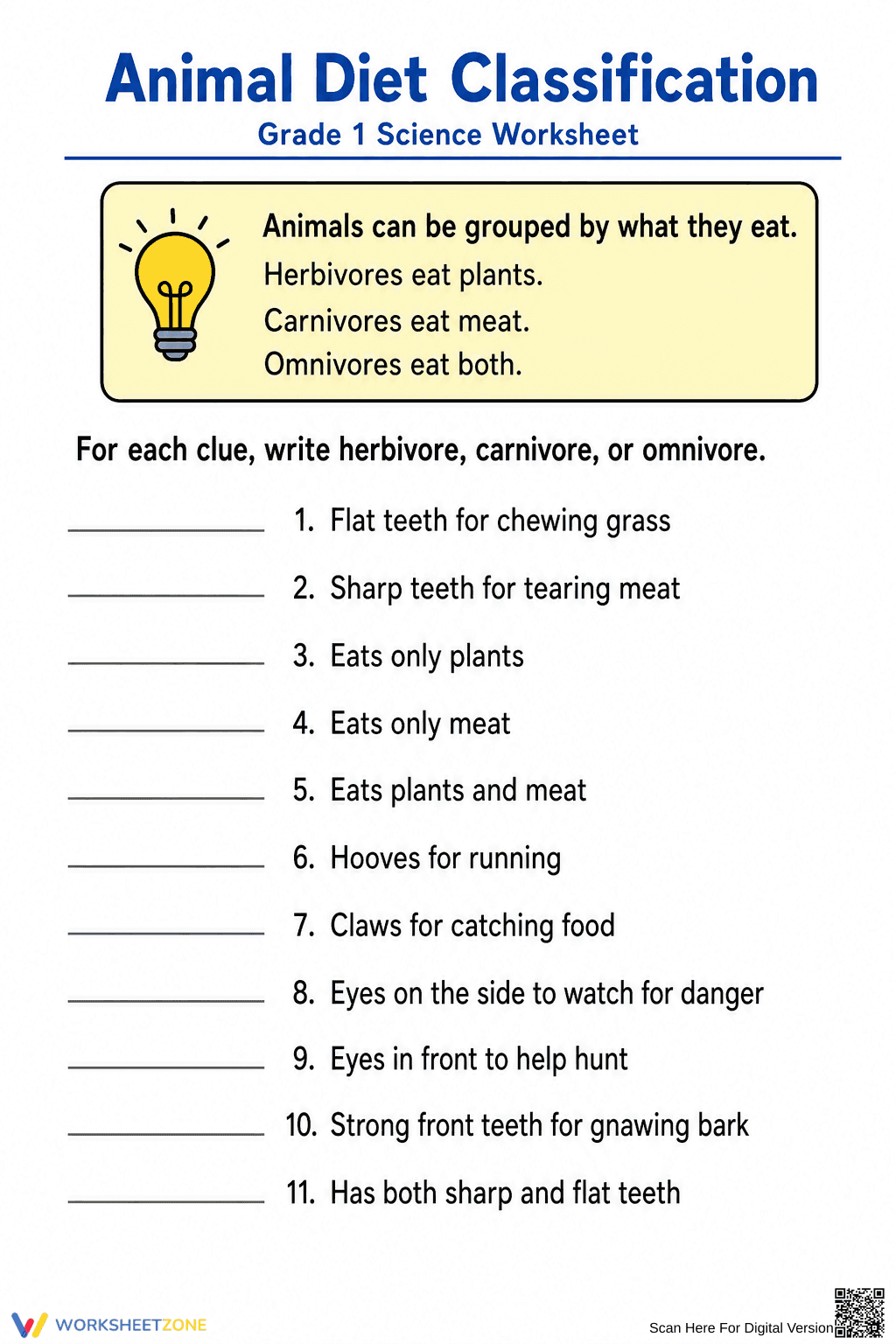
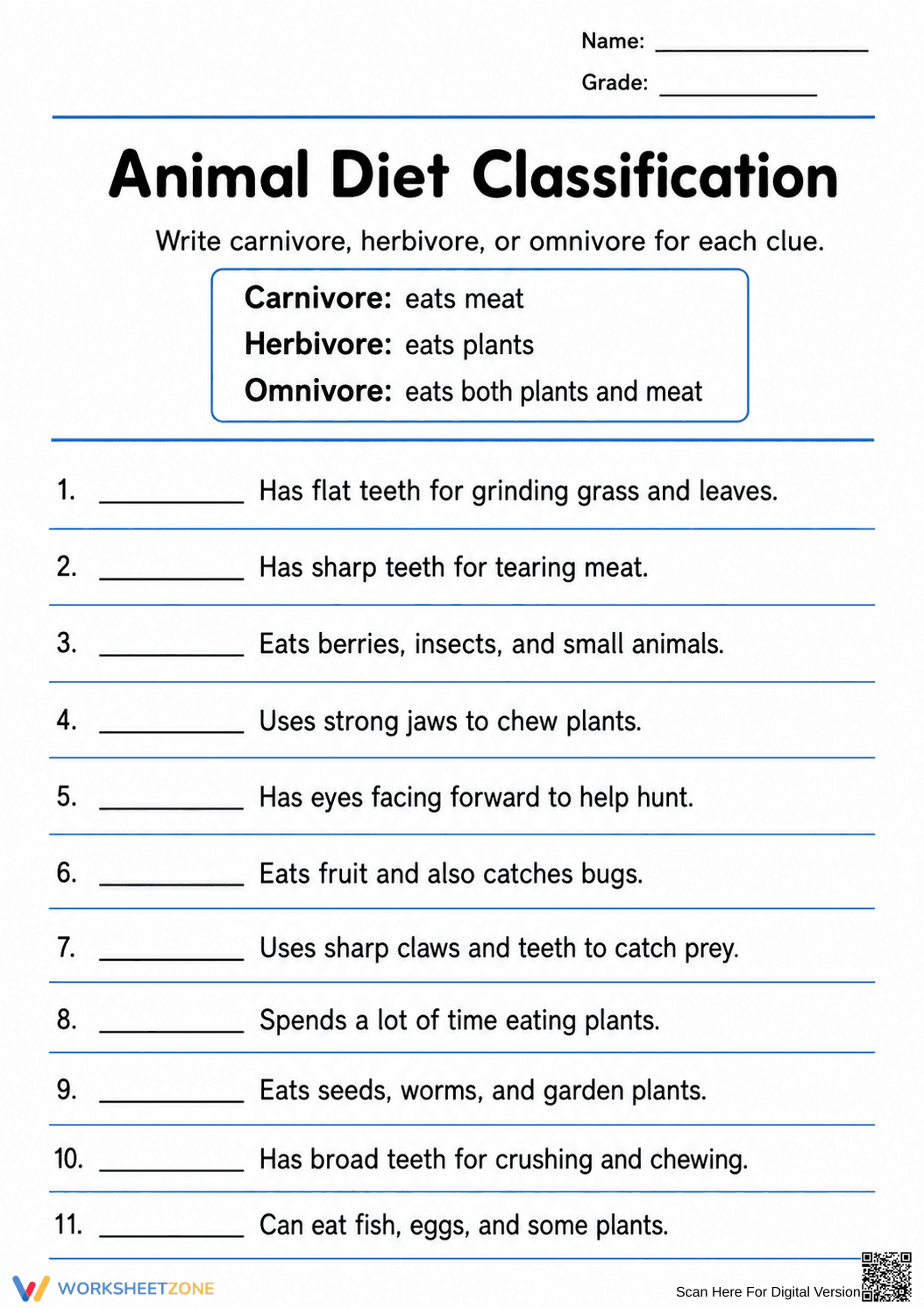

Essential Grade 1 Animal Diet Classification Worksheet
Paste this activity's link or code into your existing LMS (Google Classroom, Canvas, Teams, Schoology, Moodle, etc.).
Students can open and work on the activity right away, with no student login required.
You'll still be able to track student progress and results from your teacher account.
Students will master the foundational biological concept of animal classification by diet with this clear and engaging science worksheet. By analyzing physical traits like tooth shape and eye placement, learners identify whether an animal is a carnivore, herbivore, or omnivore. This resource ensures students can connect observable physical features to survival strategies in the natural world.
At a Glance
- Grade: 1 · Subject: Science
- Standard:
1-LS1-1— Use animal parts to describe how they meet their survival needs- Skill Focus: Identifying carnivore, herbivore, and omnivore traits
- Format: 2 pages · 11 problems · Answer key included · PDF
- Best For: Introduction to animal adaptations and diet
- Time: 15–20 minutes
This resource includes a 1-page student worksheet and a full-page answer key. Featuring 11 traits from dental descriptions ("long canine teeth") to behavioral indicators ("eyes in front"), the worksheet has a clean layout and a reference box defining each animal category for independent student success.
Zero-Prep Workflow
- Print: Select the PDF and print enough copies for your class in under 30 seconds.
- Distribute: Hand out the worksheets as a warm-up or independent practice during your life science unit.
- Review: Use the included answer key for a 5-minute whole-class check or peer grading.
Total teacher preparation time is less than 2 minutes, making this an ideal choice for emergency sub plans or last-minute lesson enhancements.
Standards Alignment
This worksheet is strictly aligned to the 1-LS1-1 standard, which requires students to use materials to design a solution to a human problem by mimicking how plants and/or animals use their external parts to help them survive, grow, and meet their needs. In this context, students analyze how teeth and eyes serve as survival tools. This standard code can be copied directly into lesson plans, IEP goals, or district curriculum mapping tools.
How to Use It
Use this worksheet during the "Explain" or "Elaborate" phase of a 5E science lesson. It works best after a direct instruction session on animal body parts. As a formative assessment, teachers can observe if students correctly associate flat teeth with herbivores, indicating an understanding of structure-function relationships. Completion typically takes 15 to 20 minutes.
Who It's For
This resource is designed for Grade 1 students but is also suitable for advanced Kindergarteners or as a review for Grade 2. It supports visual learners through structured categorization. Pair this with a classroom anchor chart showing animal skulls or teeth to help students bridge the gap between text and real-world biology.
Supporting the 1-LS1-1 standard, this worksheet guides students to analyze animal physical traits (like teeth and claws) and connect them to dietary categories. By recognizing how sharp canine teeth rip meat or flat teeth grind leaves, students develop a foundational understanding of structure and function. Structured classification tasks, as per ScienceDirect TpT Analysis (2024), enhance retention of biological concepts, providing cognitive scaffolding for Grade 1 learners to transition to evidence-based categorization. This resource helps identify gaps in understanding animal adaptations, making it a vital component of any Life Science unit.


