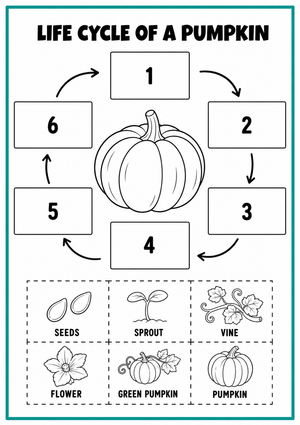
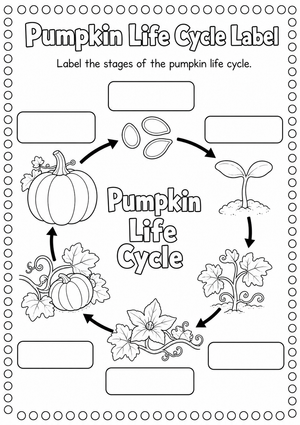
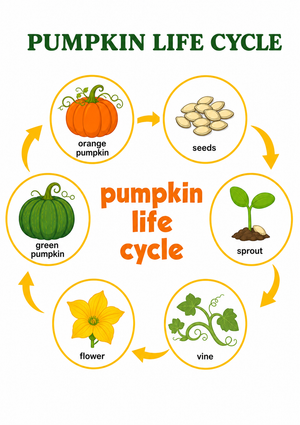
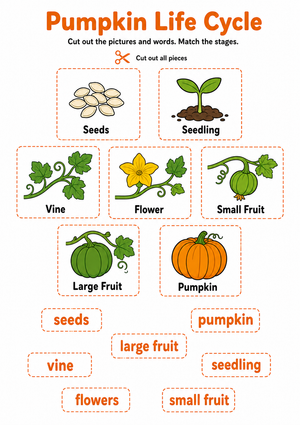
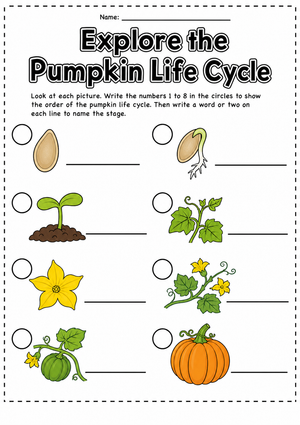
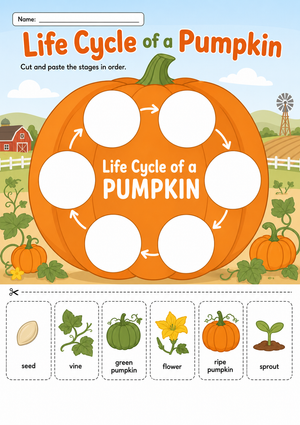
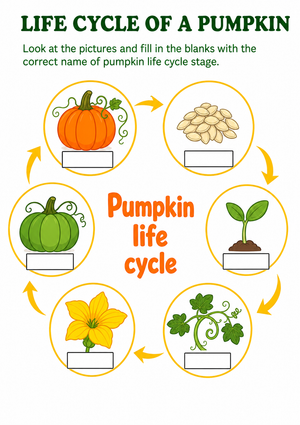
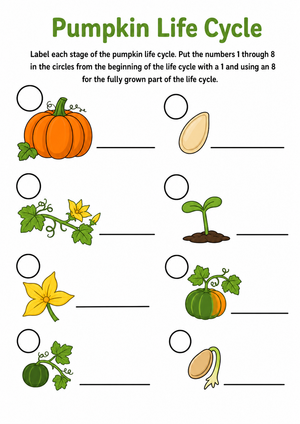
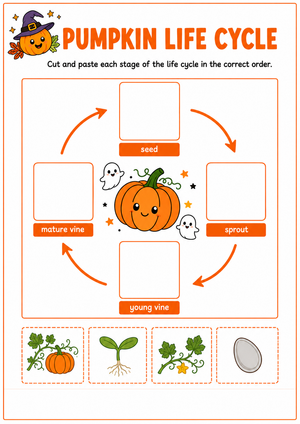
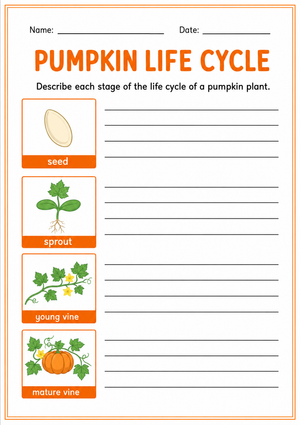
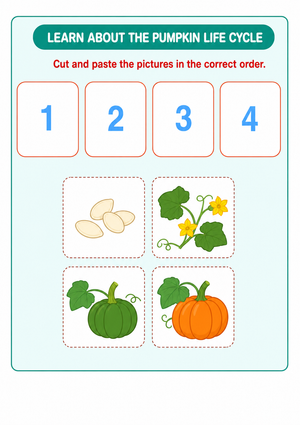
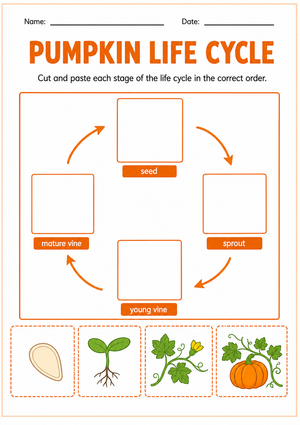
A pumpkin on a porch or in a classroom display is more than a seasonal decoration. For second graders, it can become a complete science lesson about how plants grow and change. 2nd grade pumpkin life cycle worksheets help students follow the journey from seed to sprout, vine, flower, green pumpkin, and mature pumpkin. With clear diagrams, sequencing tasks, vocabulary practice, and short writing prompts, students can understand the pumpkin life cycle in a way that feels visual, familiar, and age-appropriate.
Young learners often understand science best when the topic connects to something they already know. Pumpkins are easy for students to recognize, which makes them a helpful entry point for studying plant growth. Worksheets can guide students to place the life cycle stages in order, label each part of the process, match vocabulary words to pictures, and explain what happens at each stage. This repeated practice helps students build science vocabulary while strengthening sequencing and comprehension skills.
A strong pumpkin unit can also include observation and hands-on learning. Students might examine real pumpkin seeds, compare the inside and outside of a pumpkin, draw the stages of growth, or discuss what a pumpkin plant needs to survive. Teachers who want to expand the lesson can use plant life cycle activities to add movement, discussion, and exploration to the topic. When students connect a worksheet to real objects or classroom activities, the life cycle becomes easier to remember.
Pumpkins also give teachers a natural way to connect life cycle learning with plant structure. Students can study the seed, stem, vine, leaf, flower, pulp, and skin to better understand how each part supports growth or protects the fruit. For a more focused plant anatomy lesson, parts of the pumpkin worksheets can help students label and describe the pumpkin’s structure. This connection helps students see that a pumpkin is not just the final stage of growth, but also part of a larger plant system.
2nd grade pumpkin life cycle worksheets are useful for classroom science lessons, homeschool learning, fall-themed units, science centers, and review activities. They support observation, vocabulary, sequencing, labeling, reading comprehension, and early explanation skills. Most importantly, they help students understand that plants grow through stages and depend on seeds, sunlight, water, soil, and time. With the right mix of visuals, questions, and hands-on discussion, a pumpkin life cycle lesson can turn a familiar seasonal object into meaningful science learning.
Frequently Asked Questions
Question 1: What stages are included in 2nd grade pumpkin life cycle worksheets?
2nd grade pumpkin life cycle worksheets usually include the main stages of growth: seed, sprout, vine, flower, green pumpkin, and mature pumpkin. Some activities may also show roots, leaves, and the pumpkin fruit to help students understand how the plant develops. These stages help second graders practice sequencing while learning that pumpkins grow from seeds and eventually produce new seeds that can begin the cycle again.
Question 2: How do pumpkin life cycle worksheets help second graders learn science?
Pumpkin life cycle worksheets help students understand plant growth through a familiar and engaging example. Students practice putting stages in order, labeling diagrams, matching vocabulary, and explaining changes over time. These tasks support important early science skills such as observation, classification, sequencing, and cause-and-effect thinking. Because pumpkins are easy for children to recognize, the topic feels more concrete and easier to connect to real life.
Question 3: How can teachers make a pumpkin life cycle lesson more engaging?
Teachers can make the lesson more engaging by combining worksheets with real pumpkin observations, seed counting, drawing activities, plant growth discussions, or a simple classroom display. Students can examine pumpkin seeds, compare pictures of vines and flowers, or create a life cycle wheel. After the hands-on activity, worksheets help students organize what they learned and practice using science words such as seed, sprout, vine, flower, and mature pumpkin.
Question 4: What skills do students practice with pumpkin life cycle worksheets?
Students practice several important skills while learning about the pumpkin life cycle. They build science vocabulary, improve sequencing, strengthen fine motor skills through labeling or drawing, and develop reading comprehension through short explanations. They also learn to describe changes over time, which is an important part of life science. These worksheets can also support writing practice when students are asked to explain each stage in complete sentences.












 Interactive Worksheet Maker
 Quiz Maker
 Word Search Maker
 Crossword Puzzle Maker
 Word Scramble Generator
 Sentence Scramble Generator
 Handwriting Worksheet Generator
 Name Tracing Generator
 Fill In The Blank Generator