


























Views
Downloads

Printable Pumpkin Life Cycle Worksheet | Grade 3 Science
Paste this activity's link or code into your existing LMS (Google Classroom, Canvas, Teams, Schoology, Moodle, etc.).
Students can open and work on the activity right away, with no student login required.
You'll still be able to track student progress and results from your teacher account.
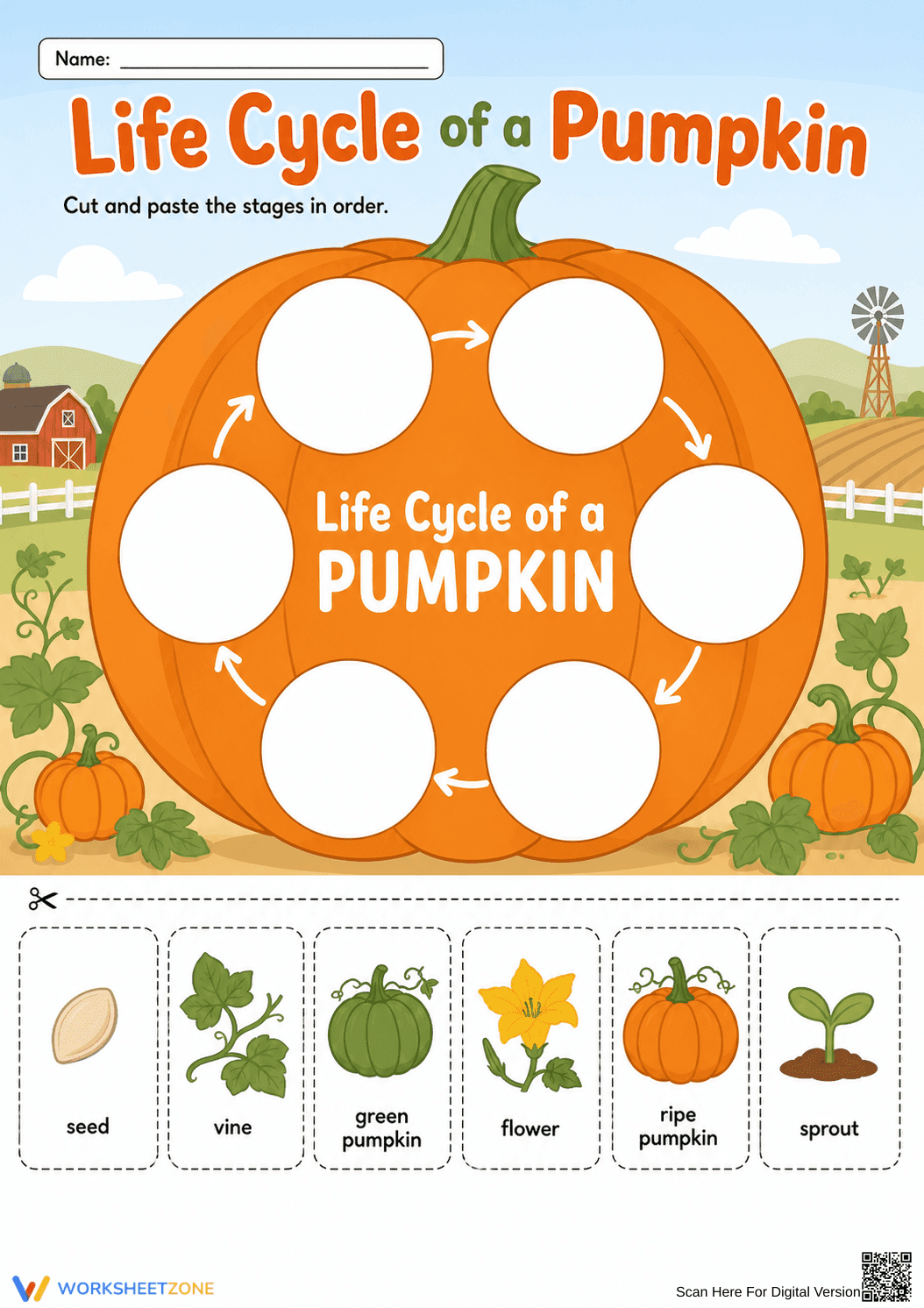
This Grade 3 pumpkin life cycle worksheet provides a hands-on approach to understanding plant biology. Students identify and sequence the six distinct stages of growth, from seed to ripe fruit. By engaging in this tactile activity, learners internalize the concept of biological cycles and the specific needs of plants during development.
At a Glance
- Grade: 3 · Subject: Science
- Standard:
3-LS1-1— Develop models to describe that organisms have unique and diverse life cycles- Skill Focus: Plant Life Cycle Sequencing
- Format: 2 pages · 6 problems · Answer key included · PDF
- Best For: Fall science lessons and seasonal centers
- Time: 15–20 minutes
What's Inside
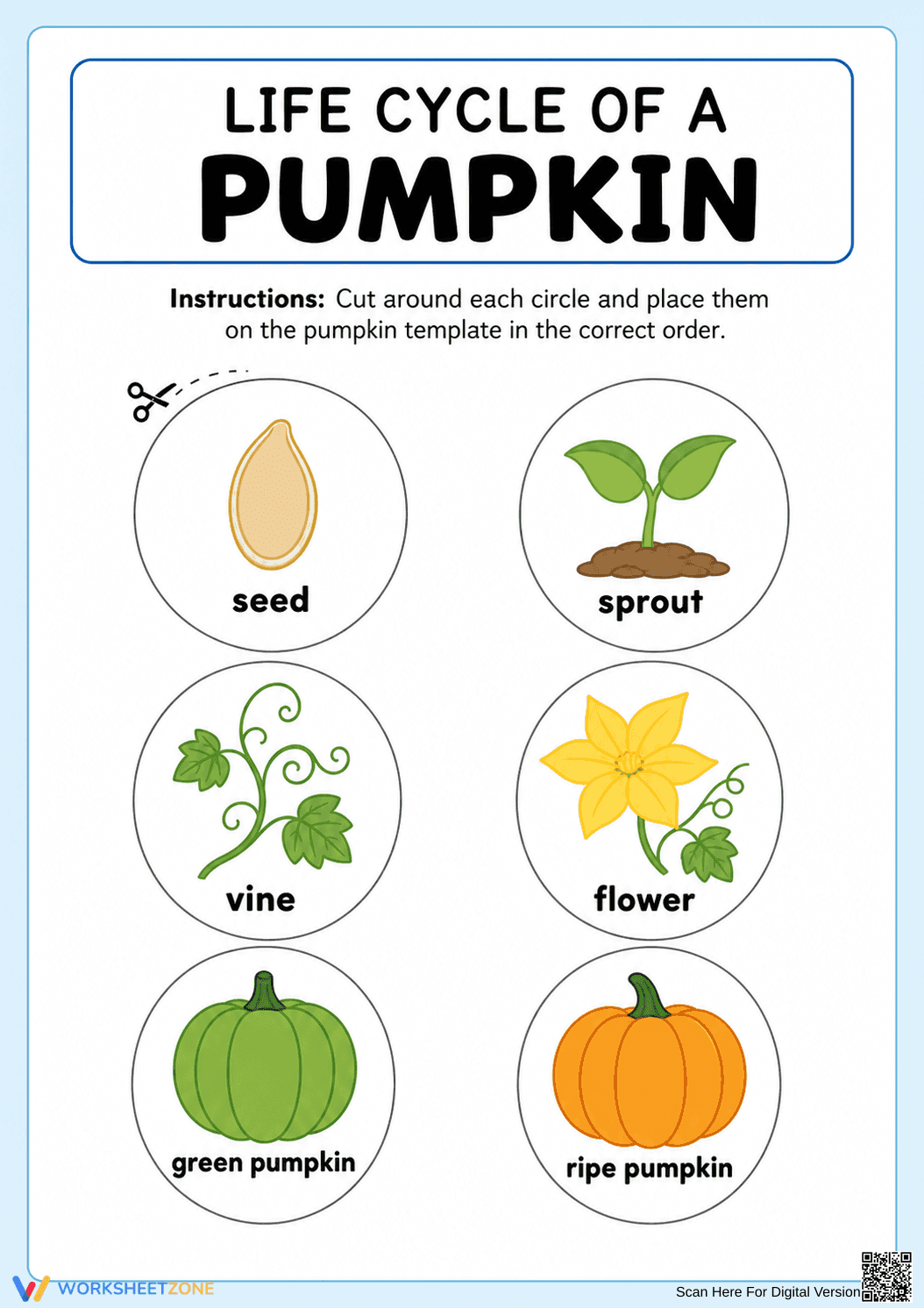
The resource consists of a two-page PDF designed for immediate classroom use. The first page features a large pumpkin graphic with a circular flow chart containing six empty slots. The second page provides the corresponding cut-out pieces, each featuring a high-quality illustration and a clear text label: seed, sprout, vine, flower, green pumpkin, and ripe pumpkin. This structure supports both visual and linguistic learners through clear iconography.
Zero-Prep Workflow
- Print: Generate copies of the template and cutout pages for each student in under 30 seconds.
- Distribute: Hand out the sheets along with scissors and glue sticks; no additional teacher setup is required.
- Review: Use the completed diagrams for a quick 5-minute whole-group check to verify sequencing accuracy.
This streamlined process makes the worksheet an ideal choice for emergency sub plans or a quick transition activity during busy October schedules.
Standards Alignment
This worksheet is primarily aligned with `3-LS1-1`. This standard requires students to develop models to describe that organisms have unique and diverse life cycles but all have in common birth, growth, reproduction, and death. By physically arranging the stages, students create a functional model of plant development. Both standard codes can be copied directly into lesson plans, IEP goals, or district curriculum mapping tools.
How to Use It
Use this worksheet during the "elaborate" phase of a science lesson after students have observed real pumpkin seeds or plants. It serves as an excellent formative assessment to gauge if students understand the chronological order of plant growth. Alternatively, place it in a science center during October to integrate seasonal themes with core curriculum requirements. Expected completion time ranges from 15 to 20 minutes.
Who It's For
This resource is tailored for third-grade students but is also appropriate for second-grade enrichment or fourth-grade review. It is particularly effective for English Language Learners (ELLs) because the labeled illustrations provide strong context clues for new vocabulary. Pair this worksheet with a non-fiction passage about farming or a time-lapse video of a growing pumpkin for a comprehensive learning experience.
Research from RAND AIRS 2024 indicates that tactile, cut-and-paste activities significantly improve retention of biological sequences in elementary students compared to passive observation. By requiring students to physically manipulate the stages of the 3-LS1-1 standard, this worksheet facilitates the transition from concrete observation to abstract modeling. The inclusion of both visual icons and text labels aligns with dual-coding theory, which suggests that processing information through two different channels—verbal and visual—leads to stronger memory encoding. This pumpkin life cycle activity provides the necessary scaffolding for Grade 3 learners to master complex plant biology concepts while maintaining high engagement through seasonal themes. Educators can utilize this evidence-based tool to meet NGSS requirements for life science while supporting fine motor development and scientific vocabulary acquisition in a structured, printable format that requires minimal instructional overhead.


