


























Views
Downloads

Pumpkin Life Cycle Worksheet | Essential Grade 1-2 Science
Paste this activity's link or code into your existing LMS (Google Classroom, Canvas, Teams, Schoology, Moodle, etc.).
Students can open and work on the activity right away, with no student login required.
You'll still be able to track student progress and results from your teacher account.
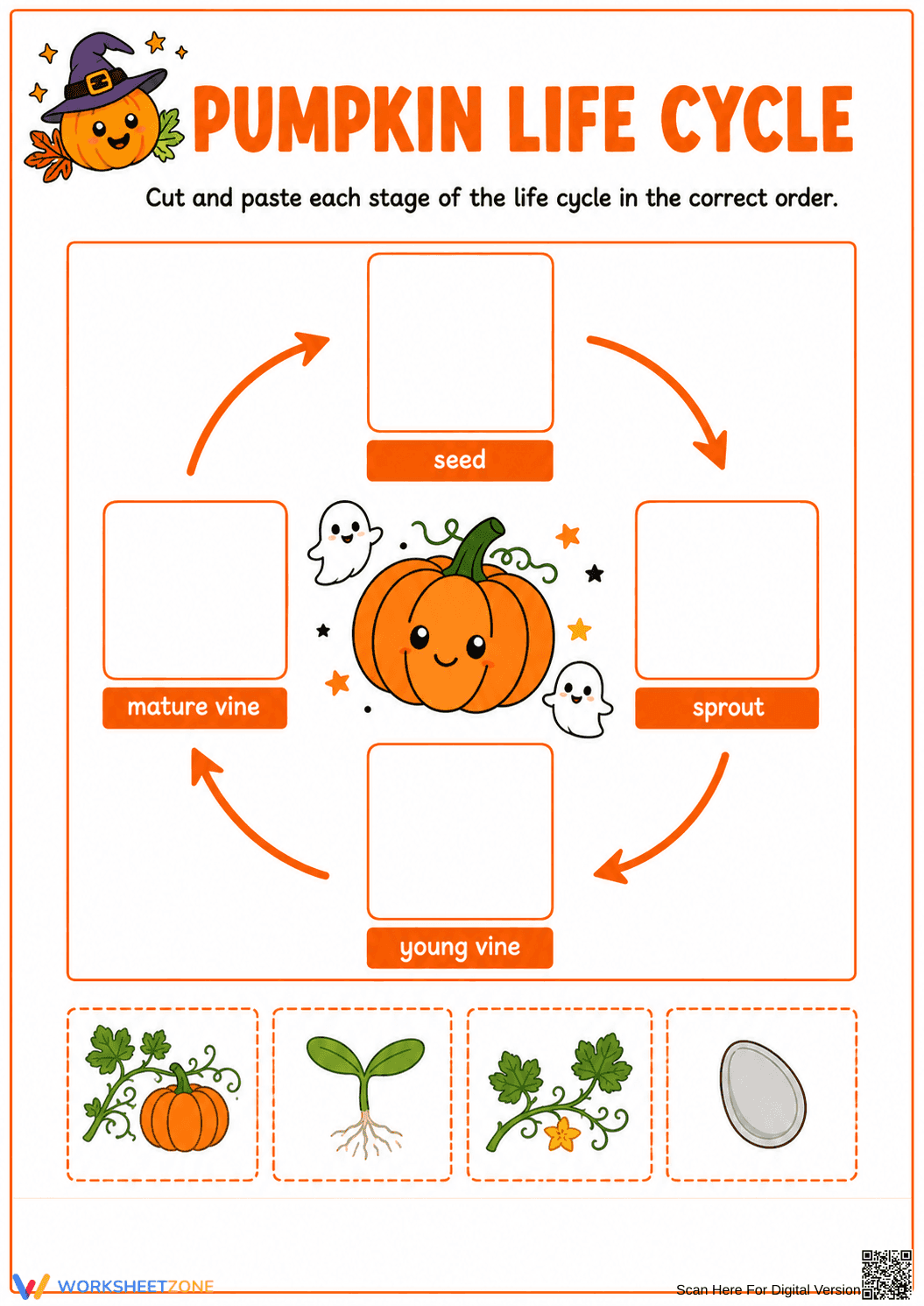
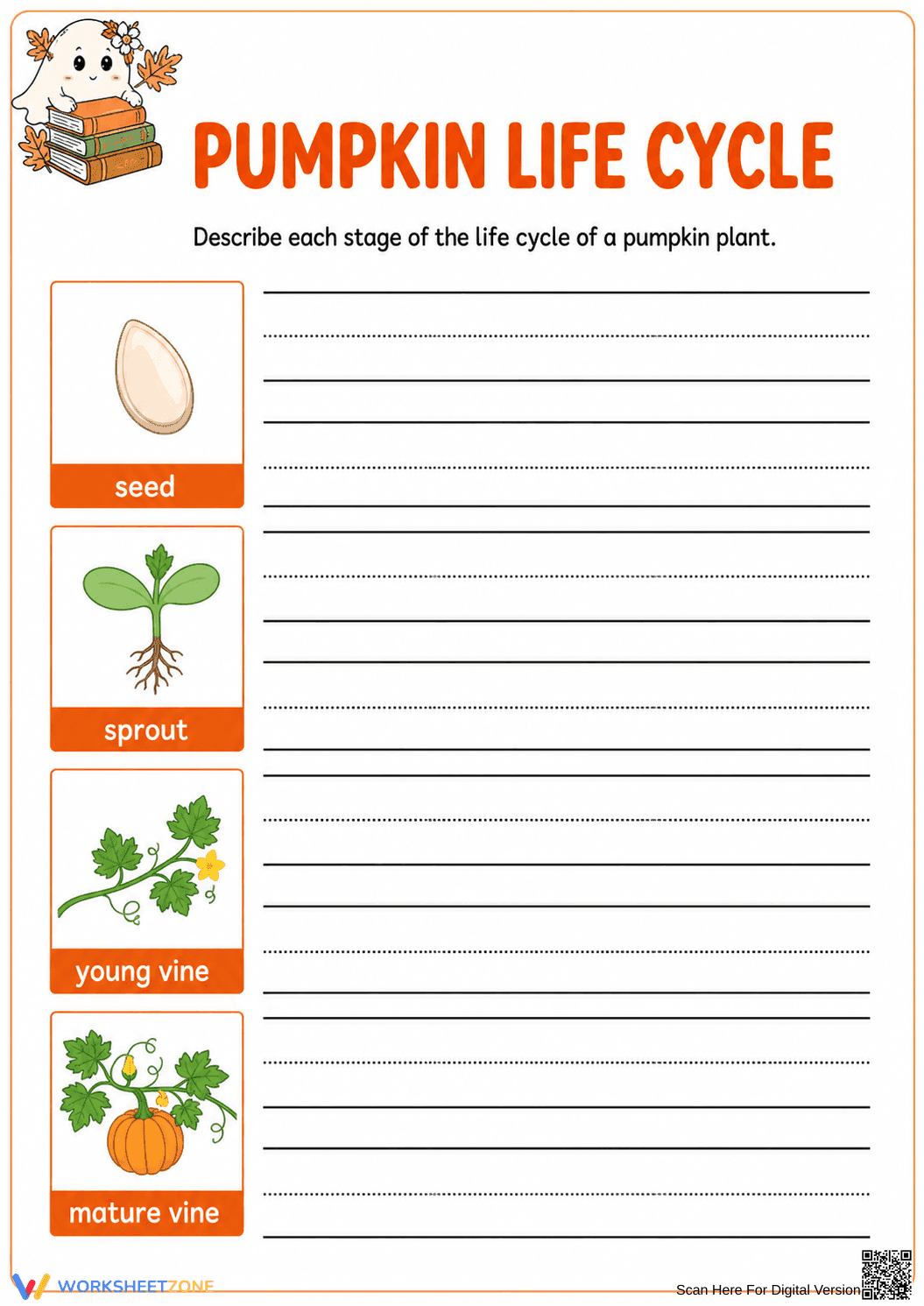
This pumpkin life cycle worksheet provides a comprehensive hands-on approach for primary students to master plant biology. By combining tactile sequencing with descriptive writing, students move from basic identification to explaining the biological transitions between seeds, sprouts, and vines. It ensures students internalize the chronological nature of plant development through active participation.
At a Glance
- Grade: 1-2 · Subject: Science
- Standard:
2-LS1-1— Plan and conduct an investigation to determine if plants need sunlight and water- Skill Focus: Life cycle sequencing and descriptive writing
- Format: 2 pages · 8 tasks · Answer key included · PDF
- Best For: Fall science units and sequencing practice
- Time: 20–30 minutes
The resource consists of two distinct activity pages designed to build scientific literacy. The first page features a circular life cycle diagram where students must cut and paste four specific stages: seed, sprout, young vine, and mature vine. The second page transitions to literacy, providing primary-lined spaces for students to draft descriptions of each stage, reinforcing vocabulary and observation skills.
This resource is designed for a zero-prep classroom workflow. Teachers can print the two-page set in less than 1 minute. Distribution takes seconds, as the instructions are self-explanatory for students. Reviewing the completed cycles and writing samples takes approximately 5 minutes per small group, making this an ideal solution for emergency sub plans or independent morning work during the busy fall season.
This worksheet aligns with `2-LS1-1`, focusing on the observable growth patterns of plants. While the standard emphasizes environmental needs, understanding the life cycle stages is a prerequisite for investigating how those stages are impacted by water and light. Both standard codes can be copied directly into lesson plans, IEP goals, or district curriculum mapping tools.
Use this worksheet as a formative assessment after a pumpkin carving activity or a garden visit. Students can first order the physical stages they observed and then use the writing page to document their findings. Alternatively, assign the cut-and-paste page as a hook before a direct instruction lesson on plant parts, using the writing page as a concluding exit ticket to gauge comprehension.
This set is perfect for Grade 1 and Grade 2 students, though the cut-and-paste section is accessible for Kindergarteners. It supports English Language Learners by providing visual cues paired with vocabulary labels. Pair this resource with a non-fiction text about agriculture or a Parts of a Plant anchor chart to provide a complete instructional cycle.
According to the RAND AIRS 2024 report on primary science instruction, integrating tactile activities like cutting and pasting with writing tasks significantly improves retention of biological sequences in early childhood. This worksheet utilizes that dual-coding approach to help students internalize the 2-LS1-1 standard. By requiring students to both order and describe the pumpkin life cycle, the resource moves beyond rote memorization into conceptual understanding. Research from Fisher & Frey (2014) supports this gradual release of responsibility, where the visual scaffolding of the first page prepares the student for the independent linguistic demands of the second. This 2-page set provides the necessary structure for students to demonstrate mastery of plant growth stages while developing the fine motor and literacy skills essential for the primary grades.


