


























Views
Downloads
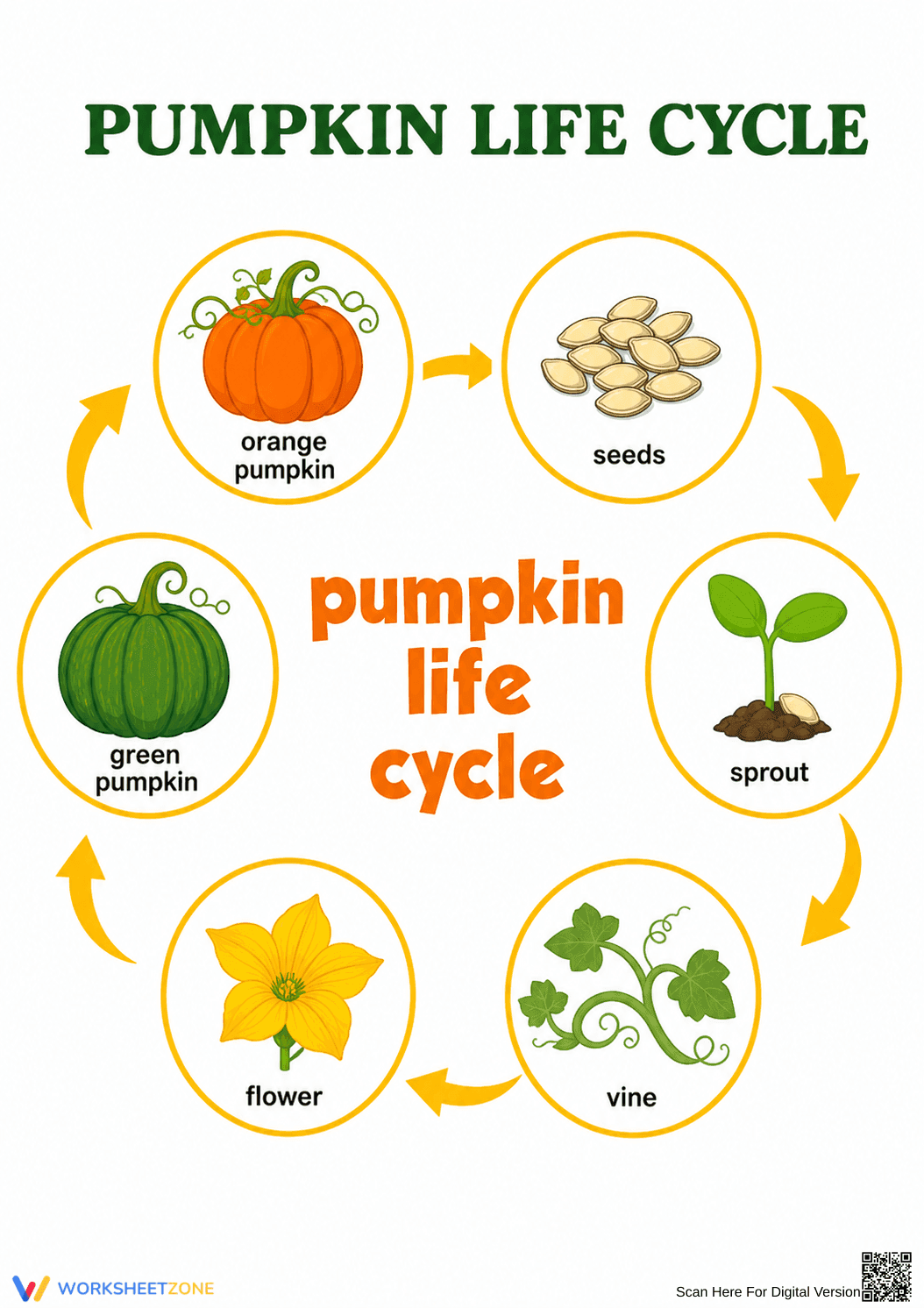

Printable Pumpkin Life Cycle Flashcards | Grade 1 Science
Paste this activity's link or code into your existing LMS (Google Classroom, Canvas, Teams, Schoology, Moodle, etc.).
Students can open and work on the activity right away, with no student login required.
You'll still be able to track student progress and results from your teacher account.
This engaging science resource introduces young learners to the fascinating stages of plant growth. By exploring these pumpkin life cycle flashcards, students will successfully visualize and sequence the journey from a tiny seed to a fully grown orange pumpkin, building essential early biology and vocabulary skills.
At a Glance
- Grade: 1 · Subject: Science
- Standard:
K-LS1-1— Observe and describe patterns in plant growth- Skill Focus: Sequencing plant life cycles
- Format: 1 page · 6 stages · No answer key needed · PDF
- Best For: Visual reference and sequencing
- Time: 10–15 minutes
This single-page resource features a vibrant, easy-to-read circular diagram detailing six distinct growth stages: seeds, sprout, vine, flower, green pumpkin, and orange pumpkin. The clear illustrations and bold text labels make it highly accessible for early readers. Teachers can utilize the page intact as an informative classroom poster or cut out the individual circles to create a set of interactive sequencing flashcards.
Implementing this resource is incredibly efficient for busy educators. Print the high-quality PDF in just one minute. Distribute the sheets or pre-cut flashcards to student groups in under three minutes. Review the stages together during a ten-minute guided discussion. With total teacher prep time clocking in at under two minutes, this versatile tool is an excellent addition to any fall science unit or emergency sub plan.
Aligned to primary standard K-LS1-1: Use observations to describe patterns of what plants and animals need to survive. This visual tool provides the foundational evidence students need to recognize predictable patterns in plant development. Both standard codes can be copied directly into lesson plans, IEP goals, or district curriculum mapping tools.
This flexible resource shines in multiple instructional settings. First, use it as a hands-on science center where students physically arrange the cut-out flashcards into the correct chronological order. Alternatively, display the full page on a smartboard before a pumpkin-carving or seed-planting activity to front-load relevant vocabulary. For a quick formative assessment, observe students as they sequence the cards independently, noting their ability to explain the transition from flower to fruit. Expected completion time ranges from 10 to 15 minutes.
This resource is perfectly suited for Kindergarten through Grade 2 students, particularly visual learners who benefit from clear, colorful diagrams. The straightforward labels provide excellent differentiation for English Language Learners acquiring seasonal vocabulary. It pairs beautifully with a hands-on seed planting lab or a seasonal read-aloud about the autumn harvest.
Research by Fisher & Frey (2014) emphasizes the critical importance of visual scaffolds in building foundational science vocabulary and comprehension for early elementary learners. By utilizing these interactive pumpkin life cycle flashcards, educators can effectively support students in observing and describing patterns in plant growth. This methodology aligns directly with K-LS1-1, ensuring that essential biological concepts are introduced with clear, sequential visual aids. When young learners manipulate and sequence these six distinct growth stages, they successfully transition from abstract scientific concepts to concrete, observable understanding. This hands-on approach not only reinforces long-term content retention but also builds the critical thinking and chronological sequencing skills necessary for future scientific inquiry. Integrating such targeted, standards-aligned visual tools into early elementary science instruction provides a robust, evidence-based framework for cognitive development and sustained academic success in STEM subjects.


