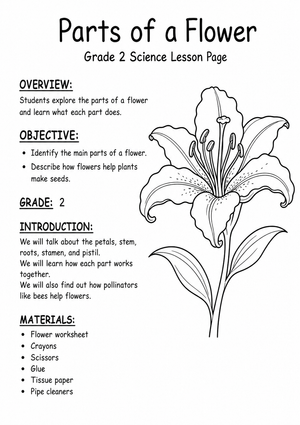
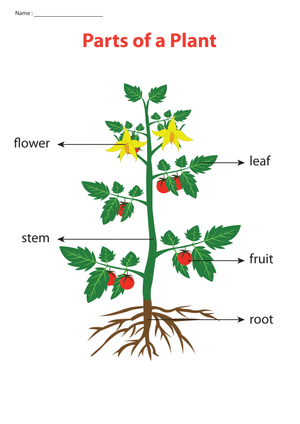
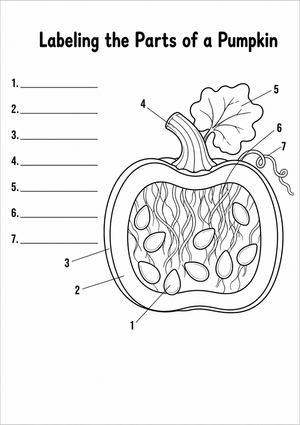
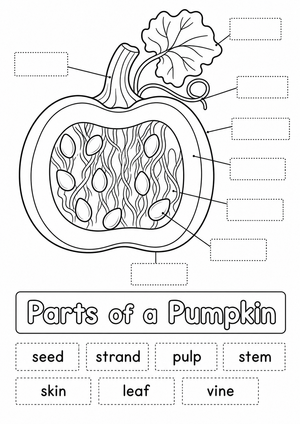
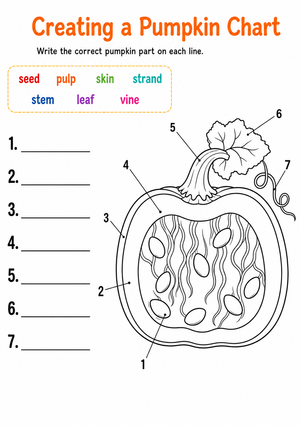
These parts of a plant worksheets for 1st grade give teachers a targeted set of printables built around the four structures first graders are expected to identify and explain: roots, stems, leaves, and flowers. The set moves students from simple recognition — circling the correct label on a diagram — toward explaining why a plant can't survive without each part.
The Four Structures, Four Ways
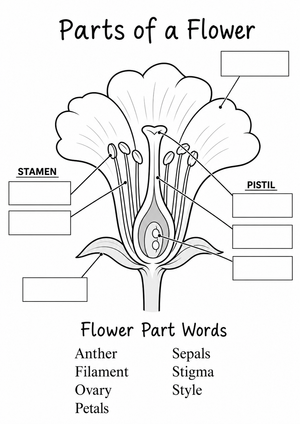
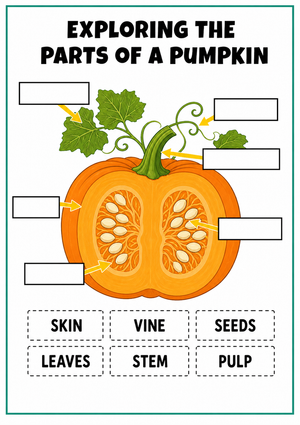
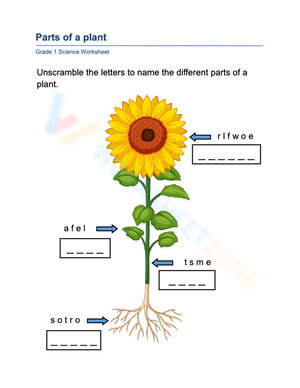
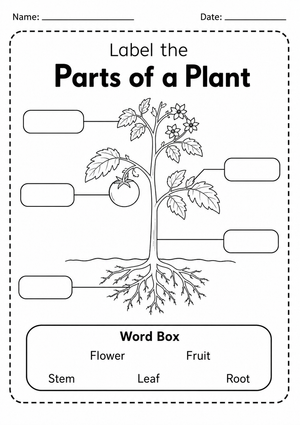
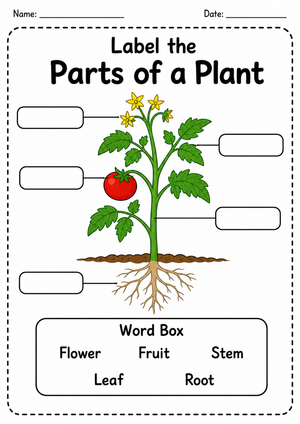
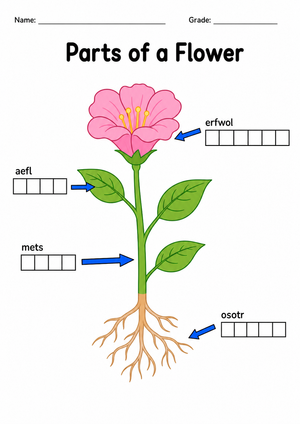
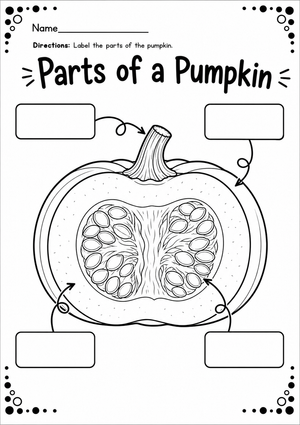
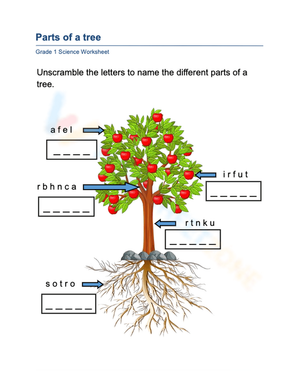
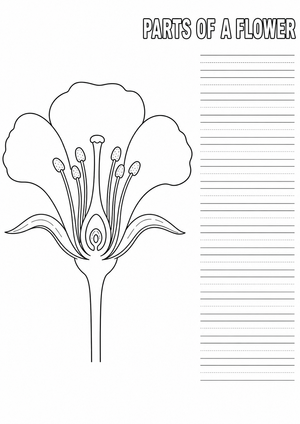
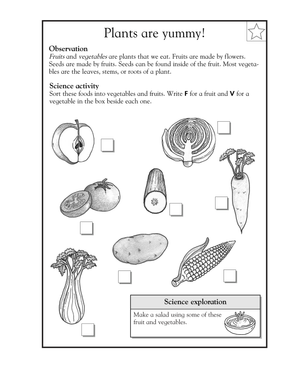
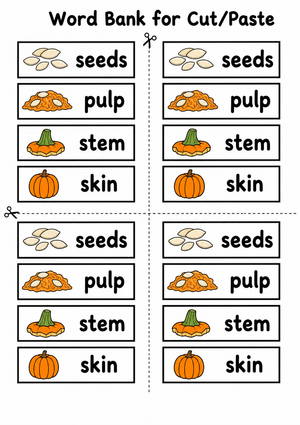
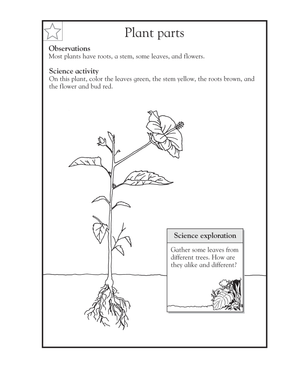
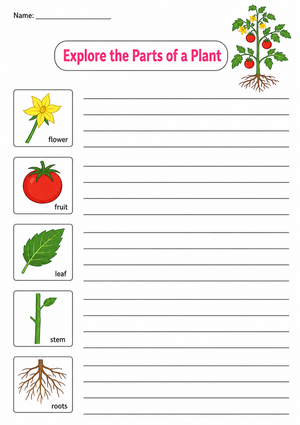
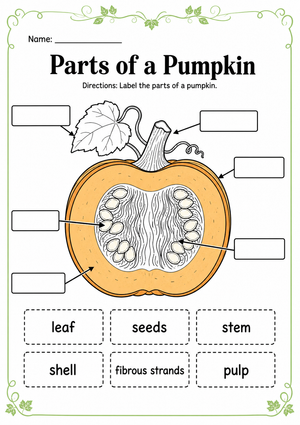
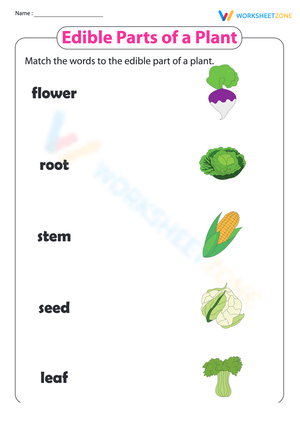
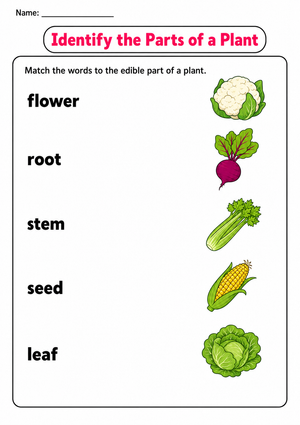
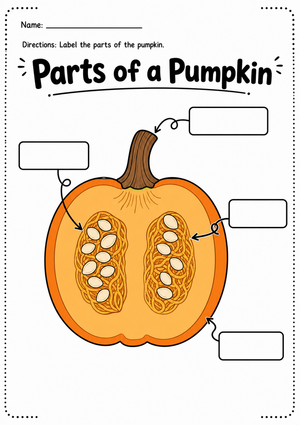
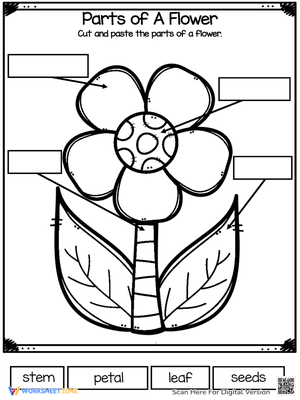
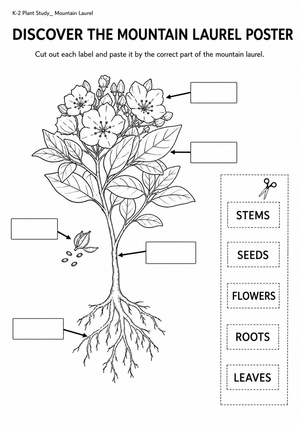
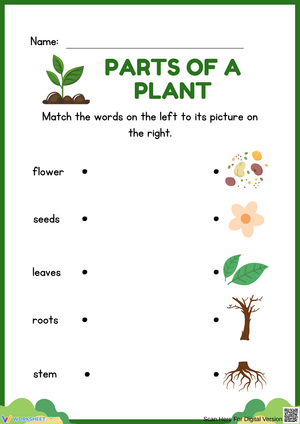
Each worksheet approaches the same core content from a different angle. The labeling diagrams use clean line illustrations of a single flowering plant with blank arrows pointing to each structure; students write the vocabulary word directly on the diagram. Cut-and-paste versions accomplish the same labeling goal but remove the letter-formation barrier — students sort printed word cards and paste them into position, which means non-writers can demonstrate real scientific understanding. Function match-ups ask students to draw a line between a part and its job, connecting roots to water absorption or leaves to food production; this format surfaces whether students have moved past memorizing names to understanding what each structure does. The edible plant identification worksheet asks students to determine which part of a plant they're eating when they eat a carrot, celery, spinach, or broccoli — a question that consistently produces disagreement and good conversation before students settle on an answer.
Errors That Turn Up in Student Work
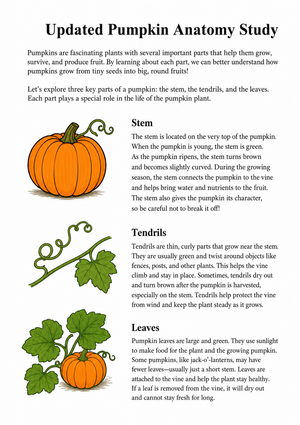
The most reliable confusion at this grade is between stem and trunk. When a worksheet shows a standard flowering plant illustration, most students label the stem correctly. Hand them a diagram of a tree, and a substantial portion will write "trunk" in the blank — even students who defined stem accurately the day before. The underlying issue is that students are drawing on a visual schema rather than applying the function-based definition they just practiced; trees simply don't look like the plants in most first-grade diagrams. A second error appears on the function match-up: students understand that roots absorb water, but many describe the process as the plant "eating the dirt." That phrasing shows up consistently in written responses and signals a student who grasps absorption in a general sense but hasn't separated water from soil in their mental model. The match-up format surfaces this confusion in a way that a labeling-only exercise won't.
Standard Alignment
These worksheets address NGSS 1-LS1-1 (From Molecules to Organisms: Structures and Processes), which asks first graders to use evidence to explain how plant structures help plants survive. Using a parts of a plant worksheets for 1st grade to build foundational vocabulary directly supports that standard — students can't explain how a leaf captures light energy if they haven't yet distinguished a leaf from a flower in their conceptual map. The labeling and function-matching activities build the vocabulary base that the standard's written-explanation tasks require. Most state science frameworks at grade 1 carry an equivalent plant-structures expectation, and the four-part framework here maps to those benchmarks without introducing vocabulary beyond what the standard demands.
Fitting These Worksheets Into Your Science Block
The best time to reach for a parts of a plant worksheets for 1st grade is immediately after a hands-on observation — after students have held a real stem, felt the texture of a leaf, or watched roots trail in a clear cup of water. Introduce the vocabulary through direct instruction, then use the labeling diagram as an exit ticket in the final eight minutes of the lesson. Students who fill it in accurately are ready for function work the next session; blank spots tell you who needs more exposure before the match-up tasks will make sense.
Cut-and-paste activities run well in science centers, where small groups can work without reading fluency determining success. Reserve the function match-up for mid-unit, after students have had at least two encounters with how each structure works. The edible identification worksheet earns its place as the anchor activity for a classroom tasting session — pair it with actual samples of carrot, celery, spinach, and broccoli so students are tasting each plant part while they mark their copy. That pairing works as a retrieval practice exercise, and students who complete it recall the vocabulary with noticeably more accuracy on assessments given a week later.
Supporting Students Across Different Readiness Levels
Students still developing letter formation complete the cut-and-paste diagrams with the same scientific content as their peers, just without the handwriting demand. Early finishers on any labeling worksheet can extend the task by writing a sentence explaining one part's function in their own words, which pushes toward the written-explanation component of 1-LS1-1. For students who need vocabulary support, a sticky note with the four terms written out and placed at the top of the worksheet provides a reference point without altering the activity itself. On the function match-up, students who aren't yet reading independently do well when they work with a partner and talk through each connection aloud before drawing the line — the spoken explanation is where the actual learning happens, and the drawn line is just the record of it.
Frequently Asked Questions
Are these worksheets appropriate for kindergarten students?
The labeling diagrams and cut-and-paste activities work well for late-year kindergarteners who are ready for structured science vocabulary. The function match-ups are written at a first-grade reading level and need a read-aloud or partner support for kindergarteners working independently.
What's the practical difference between a labeling diagram and a function match-up?
A labeling diagram tests whether students can associate a vocabulary word with a picture. A function match-up tests whether students understand what that part does — a meaningfully harder question for six-year-olds. Students regularly label roots correctly on a diagram and then draw a line connecting roots to "holds up the leaves" on a match-up, which tells you the word stuck but the function didn't. That gap drives reteaching decisions more than any other data point in this unit.
Which worksheets travel home well as independent homework?
The labeling diagrams work as homework because the task is clear, the illustration carries most of the meaning, and no reading fluency is required to understand what's being asked. Any worksheet in the parts of a plant worksheets for 1st grade set that uses a function match-up is better completed in the classroom, where a partner or teacher is available when students get stuck on the written descriptions of each part's job.