




























Views
Downloads
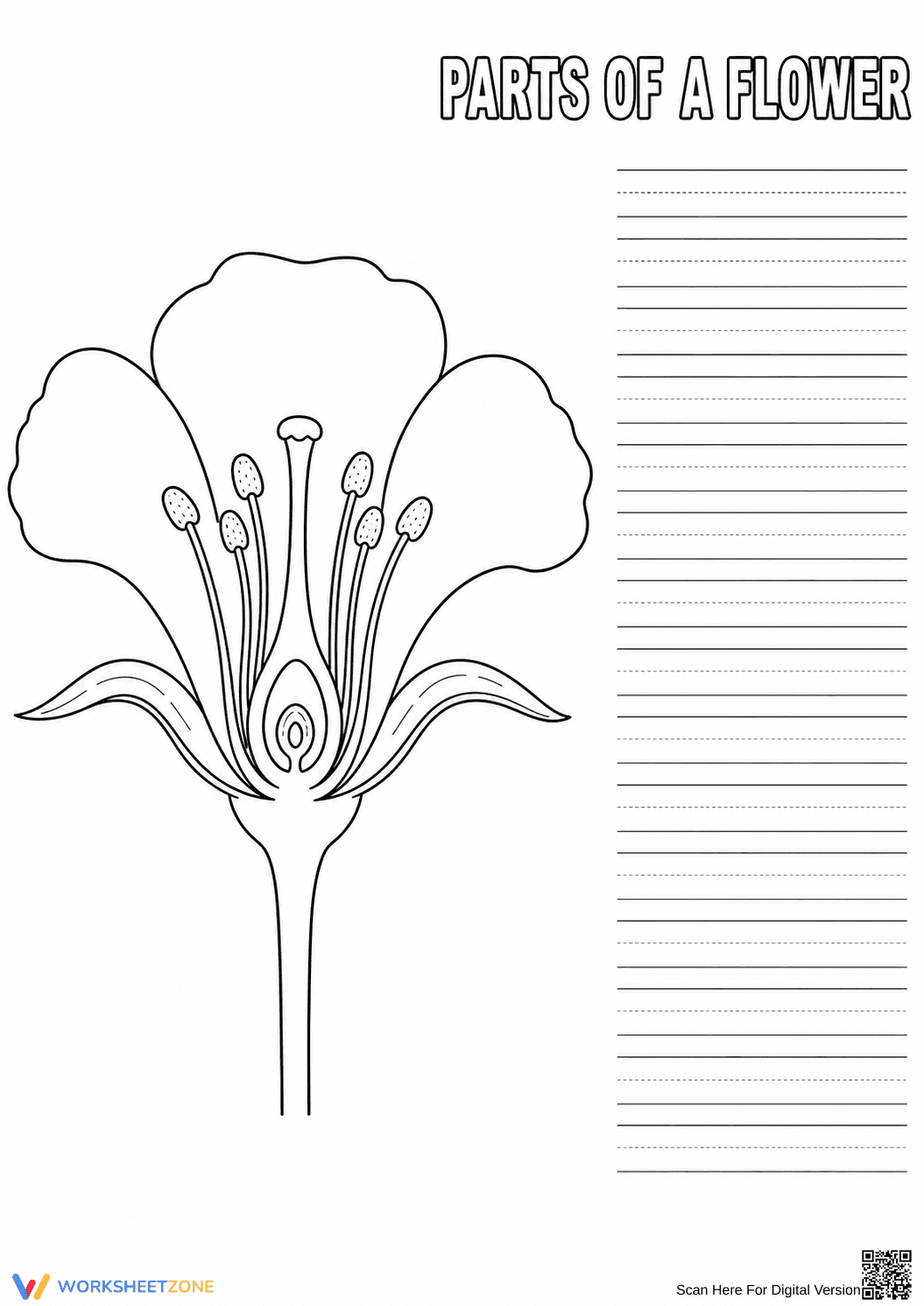

Grade 1 Parts of a Flower — Printable No-Prep Worksheet

Paste this activity's link or code into your existing LMS (Google Classroom, Canvas, Teams, Schoology, Moodle, etc.).
Students can open and work on the activity right away, with no student login required.
You'll still be able to track student progress and results from your teacher account.
This Grade 1 science worksheet helps students identify and label the parts of a flower. By examining the detailed diagram and using the provided writing lines, young learners will build foundational botany vocabulary and understand how plant structures function. It is an excellent resource for introducing basic life science concepts.
At a Glance
- Grade: 1 · Subject: Science
- Standard:
1-LS1-1— Identify external plant parts and their functions- Skill Focus: Plant anatomy and labeling
- Format: 1 page · 1 task · Answer key included · PDF
- Best For: Zero-prep science centers
- Time: 15–20 minutes
Inside this resource, you will find a single-page PDF featuring a large, clear line-art illustration of a flower's anatomy. The right side of the page includes primary-ruled writing lines, giving students ample space to write descriptive sentences or list key vocabulary terms such as petal, stem, pistil, and stamen. A complete answer key is included to ensure accurate grading and support independent student review.
This resource is designed for a completely zero-prep workflow. First, print the single-page PDF (takes about 30 seconds). Next, distribute the worksheets to your class during your life science block (1 minute). Finally, review the flower parts together using the included answer key (5 minutes). With under two minutes of total teacher prep time required, this activity is highly suitable for emergency sub plans or quick lesson extensions.
This worksheet aligns directly with 1-LS1-1, which requires students to understand how plants have external parts that help them survive, grow, and meet their needs. It also supports foundational observation skills critical for early elementary science. Both standard codes can be copied directly into lesson plans, IEP goals, or district curriculum mapping tools.
Use this worksheet as an independent practice activity following a whole-group lesson on plant life cycles, or place it in a science center for collaborative exploration. As a formative assessment, teachers can observe whether students accurately match the vocabulary words to the correct structural components of the diagram. Expect students to complete the labeling and writing tasks within a 15 to 20-minute timeframe.
This activity is primarily designed for first-grade students, though the visual nature makes it easily adaptable for Kindergarten or second-grade learners needing review. For students requiring extra support, provide a pre-filled word bank on the board. It pairs naturally with a physical flower dissection activity, a nature walk, or a classroom botanical anchor chart.
According to the RAND AIRS 2024 report, integrating high-quality visual aids into early science education significantly improves the retention of domain-specific vocabulary among young learners. This worksheet directly addresses the 1-LS1-1 standard by requiring students to identify external plant parts and their functions. By providing a clear, uncluttered diagram of a flower alongside structured primary-ruled writing space, the resource effectively bridges the gap between abstract biological concepts and observable physical traits. This focused instructional approach ensures that students concentrate entirely on the primary learning objective without the distraction of unnecessary visual noise. The combination of direct visual observation and immediate writing application serves as a highly reliable tool for documenting student progress toward mastery in life science units, making it an essential and practical addition to any early elementary science curriculum.


