


























Views
Downloads

Beginning Consonants Letter X Worksheet | Printable
Paste this activity's link or code into your existing LMS (Google Classroom, Canvas, Teams, Schoology, Moodle, etc.).
Students can open and work on the activity right away, with no student login required.
You'll still be able to track student progress and results from your teacher account.
This printable preschool phonics worksheet helps young learners master the beginning consonant sound for the letter X. Students practice phonemic awareness by identifying which objects start with the specific sound through visual cues. This activity builds the foundational literacy skills necessary for decoding and reading readiness in early childhood education.
At a Glance
- Grade: Preschool · Subject: ELA
- Standard:
CCSS.ELA-LITERACY.RF.K.3.A— Produce the primary sound for each consonant in letter-sound correspondence.- Skill Focus: Beginning Consonants (Letter X)
- Format: 2 pages · 6 problems · Answer key included · PDF
- Best For: Independent practice and sound start drills
- Time: 10–15 minutes
What's Inside
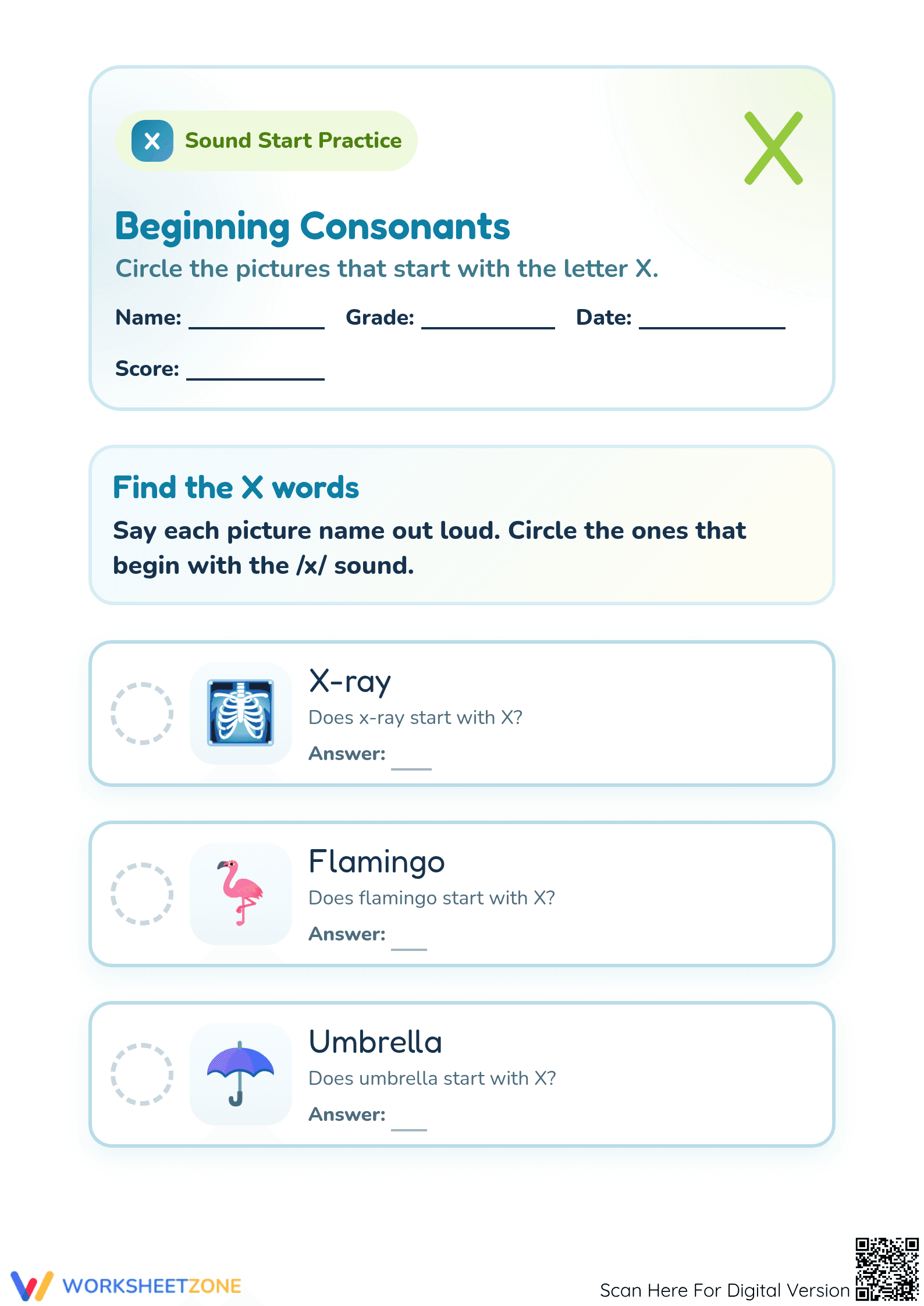
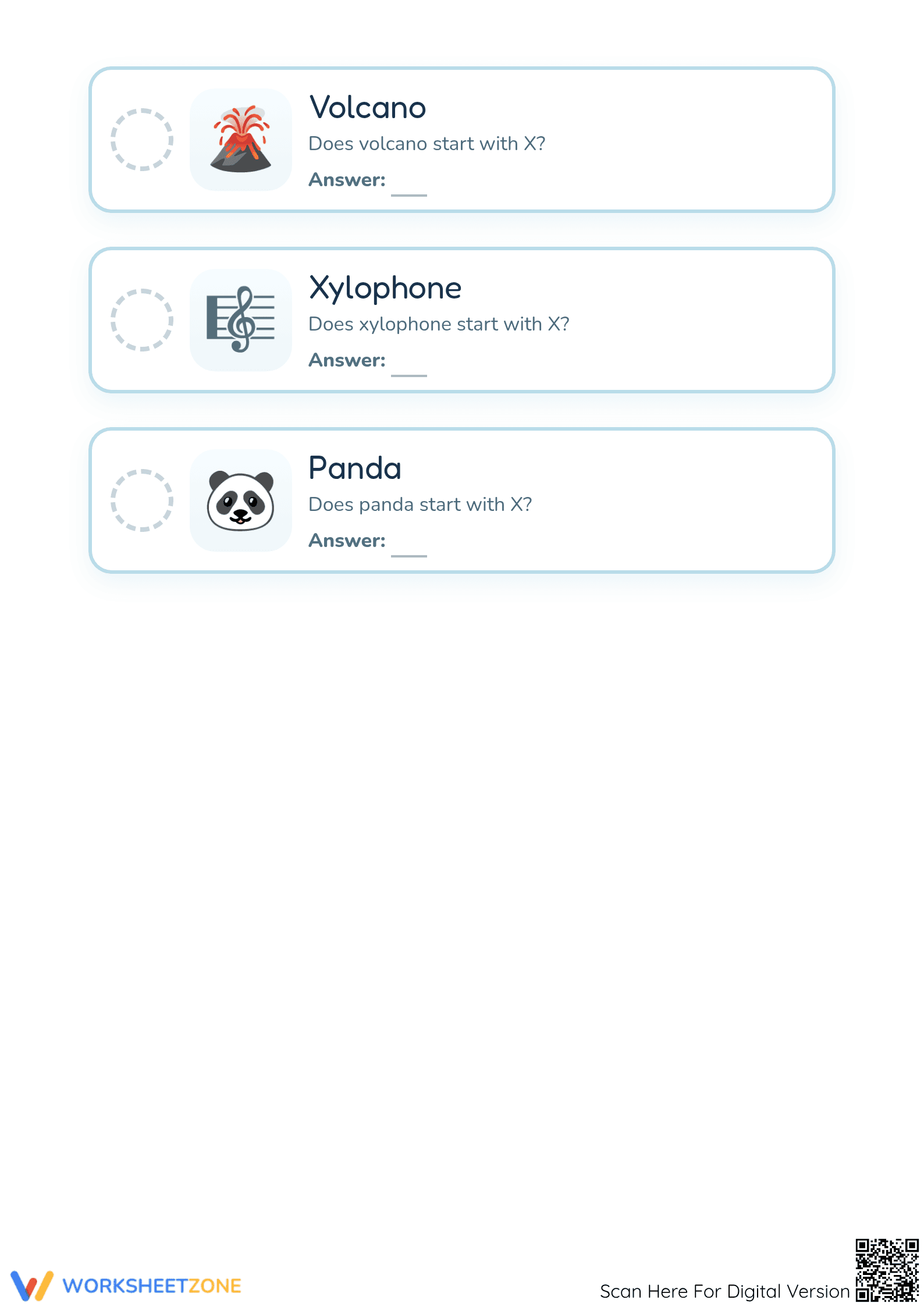
This two-page PDF resource features six distinct visual prompts including an X-ray, flamingo, umbrella, volcano, xylophone, and panda. Each task requires the student to say the name of the picture out loud and determine if it starts with the letter X. The layout is clean and preschool-friendly, providing clear answer slots for recording observations. A complete answer key is provided to facilitate quick grading or self-correction.
Zero-Prep Workflow
This resource is designed for immediate classroom implementation with under 2 minutes of prep. Print the two-page document (30 seconds), distribute to students (30 seconds), and review answers using the included key (1 minute). This streamlined workflow is ideal for morning work or sub plans.
Standards Alignment
The primary standard for this activity is `CCSS.ELA-LITERACY.RF.K.3.A`, which requires students to demonstrate basic knowledge of letter-sound correspondences by producing the primary sound for each consonant. This worksheet specifically isolates the letter X to ensure focused mastery. This standard code can be copied directly into lesson plans, IEP goals, or district curriculum mapping tools.
How to Use It
Use this during the independent practice phase of phonics lessons. Before distributing, model the sound of /x/ using the header. As students work, circulate to observe their pronunciation of the /v/ in volcano versus the /x/ in x-ray as a formative assessment of phonemic discrimination. The activity takes approximately 10 to 15 minutes to complete.
Who It's For
This resource is tailored for preschool and early kindergarten students who are beginning to associate letters with their corresponding sounds. It provides essential support for English Language Learners (ELLs) by pairing vocabulary words with clear icons. It pairs naturally with an alphabet anchor chart or a "Letter of the Week" direct instruction lesson focused on the letter X.
Early literacy research emphasizes that explicit instruction in letter-sound correspondences is a critical precursor to successful decoding. According to Fisher & Frey (2014), the gradual release of responsibility model, which this worksheet supports, ensures that students move from guided recognition to independent mastery of phonemic skills. The `CCSS.ELA-LITERACY.RF.K.3.A` standard addressed here focuses on the primary sound for the letter X, a foundational component of the kindergarten phonics curriculum. By providing six specific visual prompts, this resource allows educators to measure a student's ability to discriminate between competing initial sounds. Research from ScienceDirect TpT Analysis suggests that high-quality, printable phonics resources reduce teacher burnout while maintaining instructional rigor. These activities ensure that students build the necessary neural pathways for reading by repeatedly engaging with consonant sounds in a structured, predictable format.


