


























Views
Downloads
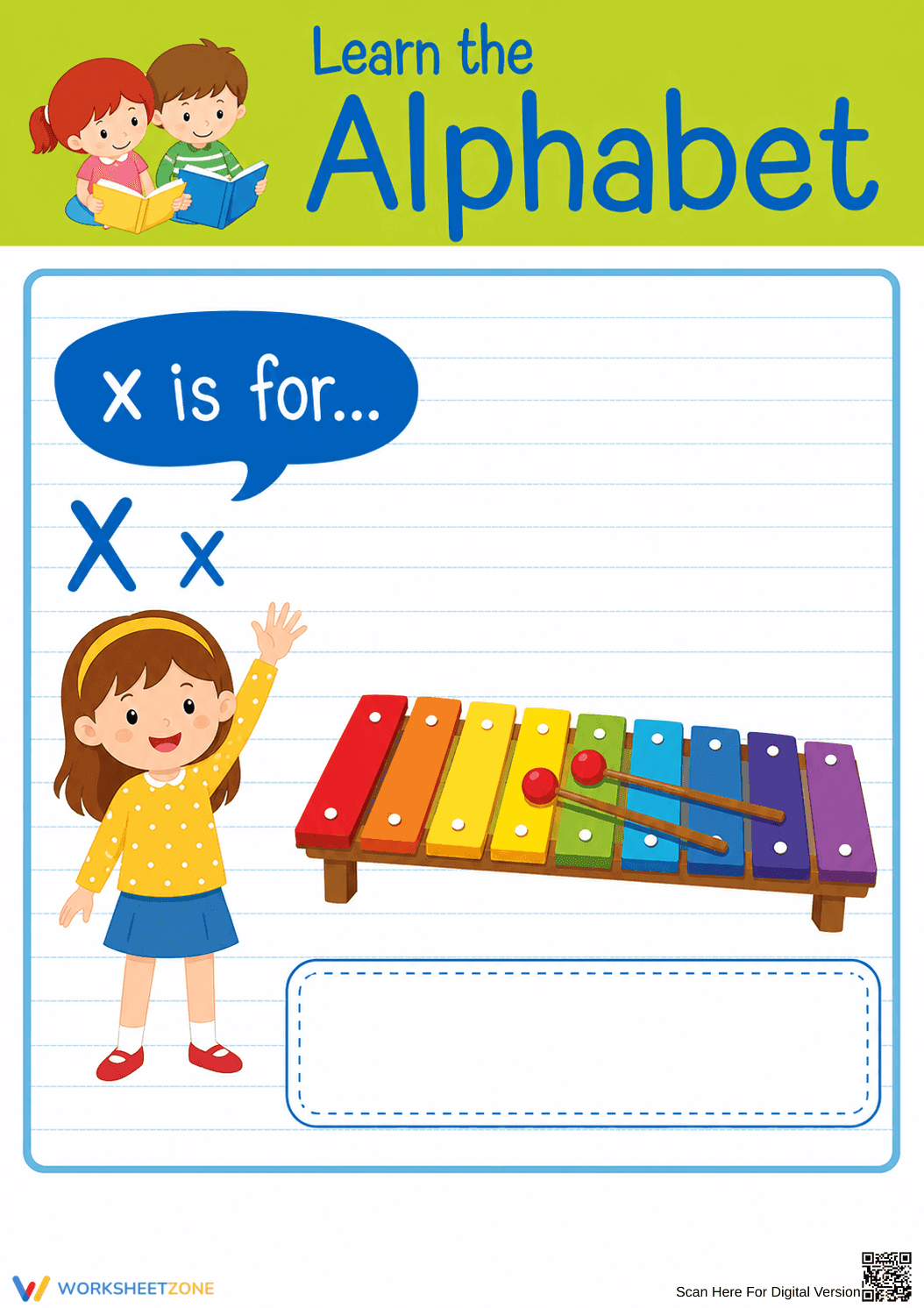

Printable Letter X Beginning Sound Worksheet | Grade K-2
Paste this activity's link or code into your existing LMS (Google Classroom, Canvas, Teams, Schoology, Moodle, etc.).
Students can open and work on the activity right away, with no student login required.
You'll still be able to track student progress and results from your teacher account.
This Grade Kindergarten through Grade 2 phonics worksheet helps early learners master the unique sound of the letter X. By connecting the visual of a xylophone to the letter-sound correspondence, students build the foundational decoding skills necessary for early reading success. It provides a clear, focused environment for phonemic awareness practice.
At a Glance
- Grade: Kindergarten · Subject: ELA Phonics
- Standard:
CCSS.ELA-LITERACY.RF.K.3.A— Demonstrate basic knowledge of one-to-one letter-sound correspondences for consonants- Skill Focus: Letter X Beginning Sound
- Format: 1 page · 1 task · Answer key included · PDF
- Best For: Initial letter sound introduction and reinforcement
- Time: 5–10 minutes
Inside this resource, you will find a vibrant, single-page layout featuring the letter X in both uppercase and lowercase forms. The worksheet includes a high-quality illustration of a xylophone to anchor the beginning sound, along with a dedicated writing box for students to record the word or practice letter formation. The clean design ensures that young learners remain focused on the specific phonetic task without unnecessary distractions.
The worksheet follows a simple instructional flow. First, students engage in guided identification by observing the large "X is for..." prompt. Next, they move to supported practice by connecting the visual image of the xylophone to the letter sound. Finally, they complete independent practice by writing the corresponding word in the provided dashed box. This gradual-release approach ensures students feel confident in their phonetic identification and letter-sound association.
This resource is aligned with `CCSS.ELA-LITERACY.RF.K.3.A`, which requires students to demonstrate basic knowledge of one-to-one letter-sound correspondences. It also supports RF.K.1.B by reinforcing that spoken words are represented in written language by specific sequences of letters. Both standard codes can be copied directly into lesson plans, IEP goals, or district curriculum mapping tools to ensure instructional compliance.
Use this worksheet during your morning meeting as a quick "Letter of the Day" activity or as a formative assessment after a direct instruction lesson on consonants. Teachers should observe if students can independently name the object and isolate the initial sound. Expect completion within 5 to 10 minutes depending on the student's writing proficiency and familiarity with the alphabet.
This printable is designed for Kindergarten students, though it serves as an excellent intervention tool for Grade 1 and Grade 2 learners who need additional phonics support. It pairs naturally with alphabet anchor charts or a physical xylophone demonstration to provide a multi-sensory learning experience. The clear imagery makes it particularly effective for English Language Learners (ELL) building their initial vocabulary.
According to the RAND AIRS 2024 report, explicit phonics instruction is a critical component of early literacy development, particularly when focusing on less common consonants like the letter X. This worksheet provides the targeted practice necessary to bridge the gap between letter recognition and phonemic awareness. By isolating the beginning sound of "xylophone," students develop the phonological processing skills required for more complex decoding tasks in later grades. Research from Fisher & Frey (2014) emphasizes that visual anchors, such as the colorful illustrations used here, significantly improve retention of letter-sound relationships in diverse learners. This resource ensures that students meet the CCSS.ELA-LITERACY.RF.K.3.A standard through a clear, distraction-free interface that prioritizes the specific phonetic skill of identifying the letter X in a beginning sound context.


