Why parts of a plant worksheets work so well in science block planning
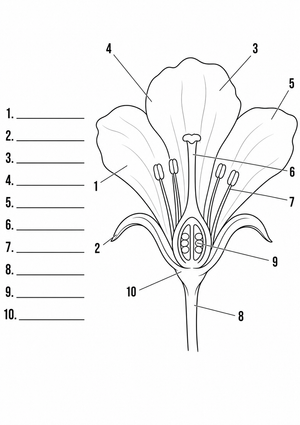
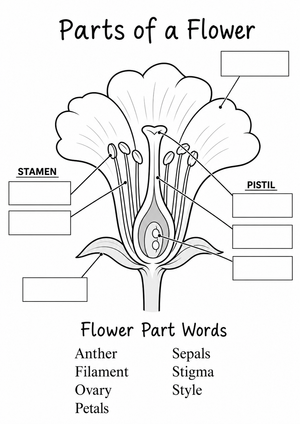
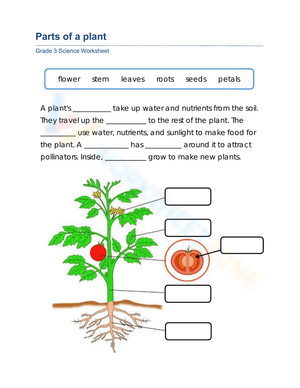
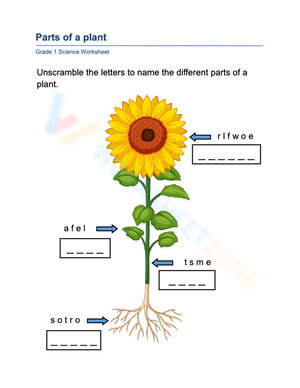
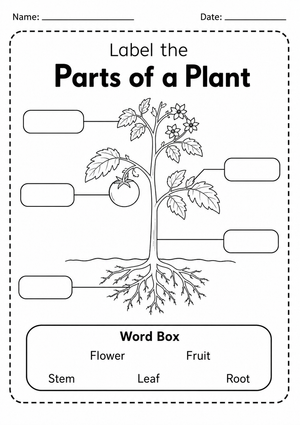
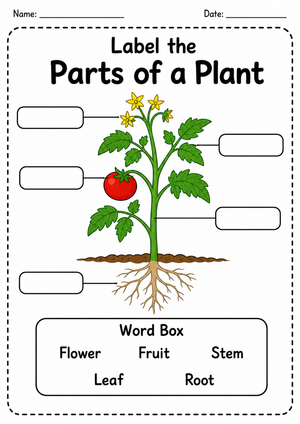
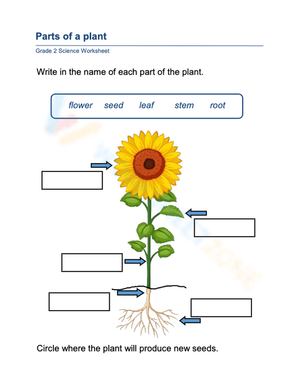
Parts of a plant worksheets give teachers a focused way to teach one of the first big ideas in life science: structure supports function. When students label roots, stems, leaves, and flowers, they are not only naming vocabulary. They are building the habit of asking what each structure does and why that job matters to the whole plant. That makes these printables useful in elementary science lessons, intervention groups, homework folders, and quick spiral review.
The Worksheetzone collection is especially useful for teachers who need flexible practice instead of a single one-size-fits-all page. In a typical plant unit, some students are ready to label diagrams independently, while others still need picture support, sorting tasks, or oral rehearsal before they write. A strong set of parts of a plant worksheets lets you keep the lesson objective constant while adjusting the level of support.
Because the topic is concrete and visual, these worksheets also fit well into short instructional windows. You can use them for a mini-lesson warm-up, a science center, an exit ticket, or a sub plan that still reinforces real content. For teachers trying to build review routines without creating new materials every week, that flexibility is the main advantage.
What students should learn first about plant structures
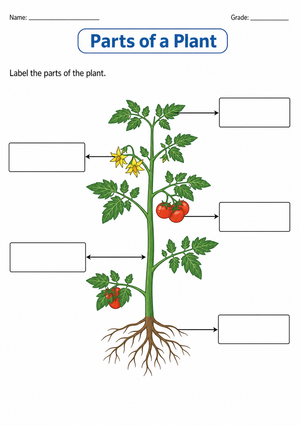
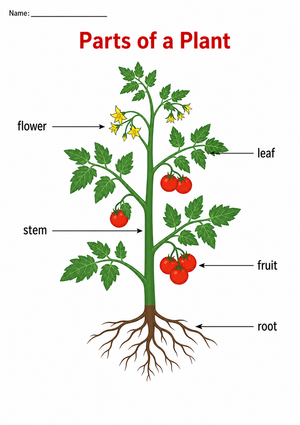
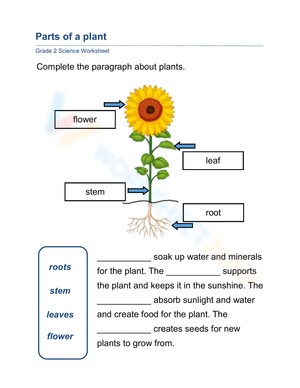
For an introductory lesson, students should first learn the four plant parts that appear most often in early biology instruction: roots, stems, leaves, and flowers. Britannica describes the basic body of a flowering plant as roots, stems, and leaves, with flowers serving as the main reproductive structure. That gives teachers a clean sequence for instruction: identify the part, locate it on a diagram, and connect it to its job in the plant.
A good worksheet sequence usually starts with identification before moving to function. If students cannot consistently point to the stem or distinguish leaves from flowers, matching tasks about transport or reproduction become guesswork. That is why simple labeling pages, cut-and-paste activities, and picture sorts are not filler. They build the accuracy students need before they explain science ideas in writing.
At the same time, teachers can keep the work academically solid by using full terms during discussion. Even in younger grades, it helps to say that leaves make food through photosynthesis, roots absorb water and minerals, stems move materials through the plant, and flowers help produce seeds. The worksheet becomes the visible anchor, while teacher language raises the level of the lesson.
How each plant part connects to function
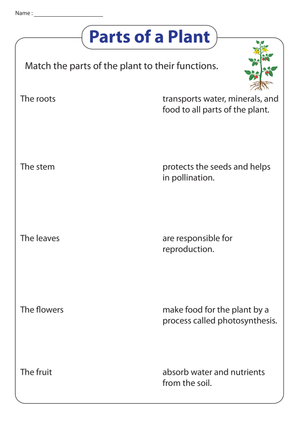
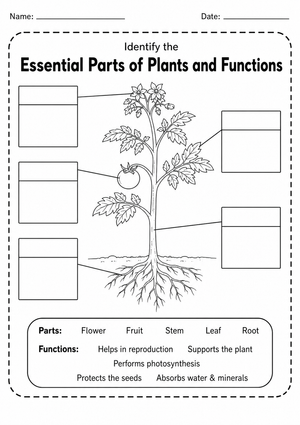
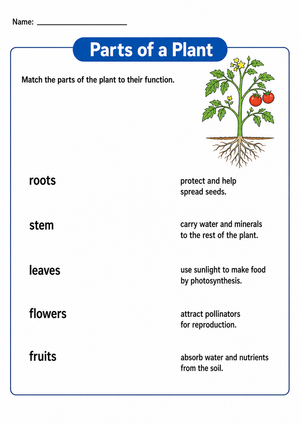
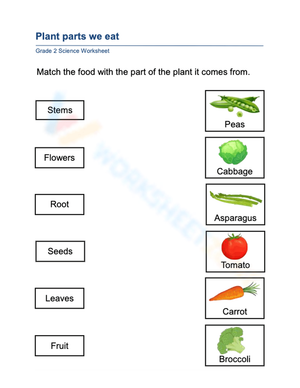
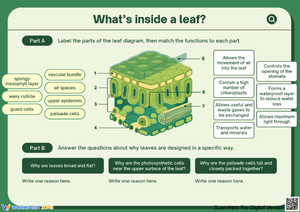
Strong parts of a plant worksheets do more than ask students to name structures. They help students connect each part to a specific function. Roots anchor the plant in soil and absorb water and minerals. Stems support the plant above ground and move water, minerals, and sugars between roots and leaves. Leaves are the main site of photosynthesis, and flowers support reproduction by helping the plant form seeds after pollination and fertilization.
When students match plant parts to functions, they begin to see that living things are organized systems rather than lists of facts. That shift matters in assessment. A child who can only label a picture may struggle when asked why a wilted plant cannot thrive if roots are damaged. A child who has practiced function-based worksheet questions is more likely to explain the connection between water uptake, transport, and growth.
One common teaching issue is that students often remember leaves first because they are the easiest to see, then overgeneralize and assume every visible part "makes food." A better worksheet progression moves from underground to aboveground structures so students account for water uptake, support, food making, and reproduction in order. That sequence reduces random guessing during later diagram and short-response tasks.
What to look for in high-quality parts of a plant worksheets
The best printable sets balance clarity with enough variation to support repeated use. Teachers usually need more than one worksheet type because plant structure lessons appear in different contexts across a unit. A solid collection should include:
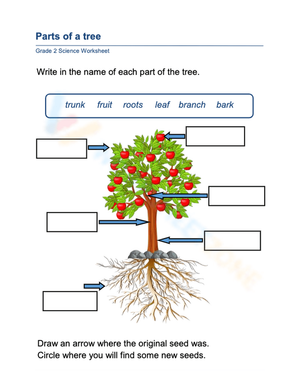
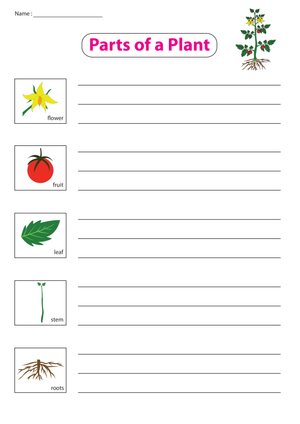
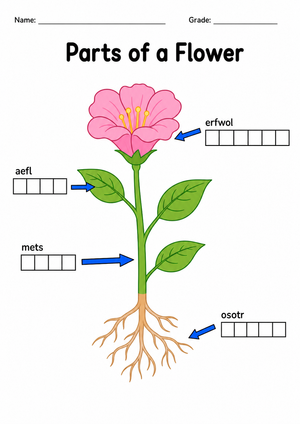
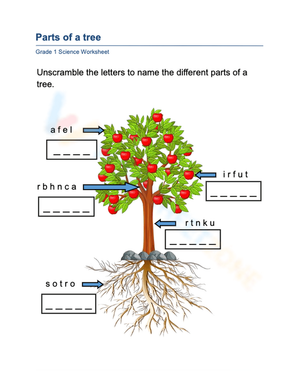
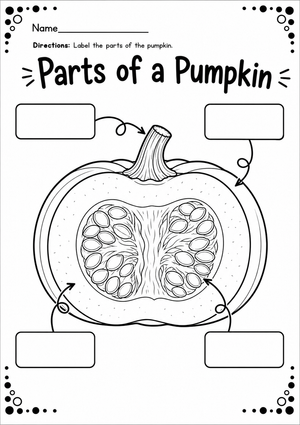
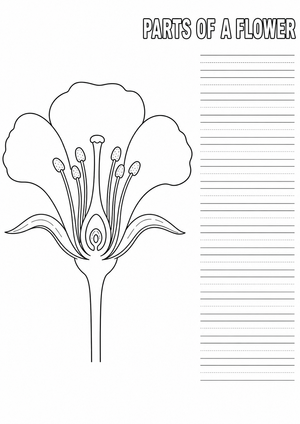
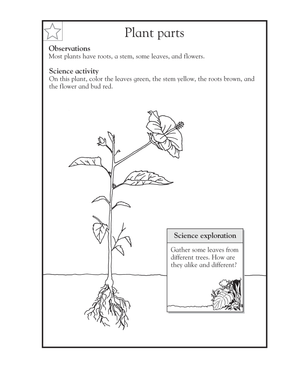
- Clear labeling pages with uncluttered plant diagrams
- Matching tasks that connect roots, stems, leaves, and flowers to their jobs
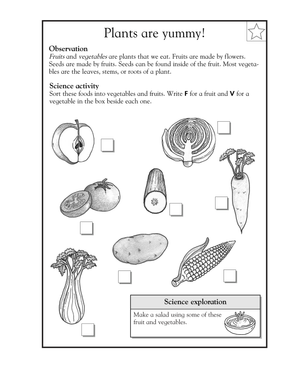
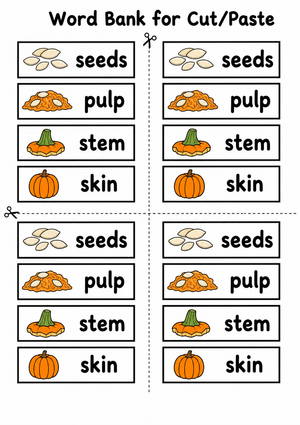
- Sorting or cut-and-paste pages for younger learners and intervention groups
- Short written response prompts for students ready to explain function in sentences
- Review pages that combine identification and application in one task
It also helps when the worksheet language stays consistent across activities. If one page uses simple labels and another suddenly introduces dense technical wording, students may appear confused when the real issue is vocabulary inconsistency. Teachers can always extend with richer discussion, but the printable itself should stay direct and teachable.
Another marker of quality is whether the worksheet supports observation and reasoning, not only recall. For example, a page that asks students to explain why roots matter after a dry week, or why a broken stem affects leaves and flowers, gives you stronger evidence of understanding than a page with labels alone.
Classroom Implementation
These worksheets fit well across several lesson formats. In whole-group instruction, use a projected plant diagram first, then move students to individual labeling practice so they transfer from shared language to independent work. In centers, pair a worksheet with a real plant, photo cards, or plastic plant model so students can compare the printed diagram to something physical.
For intervention or reteaching, start with fewer terms on the page. Ask students to master roots, stems, and leaves before adding flowers, especially if the group still needs support with positional words such as top, bottom, under, or attached to. For stronger readers, add a short written explanation prompt after the labeling task so they justify how each structure helps the plant survive and reproduce.
These printables also work well in sub plans and early finisher bins because the directions are concrete. Students can identify, match, color, or explain without needing extensive teacher setup. That matters in science, where useful independent work can be harder to find than in reading or math.
How to use these printables across grade levels
Parts of a plant worksheets are most often associated with kindergarten through upper elementary science, but the same topic can be adapted across a wider range of readiness levels. Younger students usually benefit from picture-supported identification and oral discussion. Early elementary students can move into matching part to function. Upper elementary students are often ready to explain how several structures work together in a system.
That makes the topic useful for mixed-age settings, homeschool planning, and small-group intervention. A teacher can keep the same diagram while adjusting the task demand. One student labels and colors the plant. Another writes a sentence about how roots help the plant. Another explains why flowers matter for seed formation. The visual stays stable, but the thinking becomes more complex.
For that reason, a well-organized printable library saves time. Instead of searching for a new activity at each level, teachers can choose from related formats within the same topic and keep the science language consistent throughout the unit.
Frequently Asked Questions
1. What are the main parts of a plant students should learn first?
Students should usually begin with roots, stems, leaves, and flowers. Those four structures give teachers a manageable entry point for labeling, vocabulary practice, and early discussions of plant function.
2. What does each plant part do?
Roots anchor the plant and absorb water and minerals. Stems support the plant and move water, minerals, and sugars. Leaves are the main site of photosynthesis. Flowers help plants reproduce and form seeds.
3. Are parts of a plant worksheets best for kindergarten, elementary, or middle school?
They are most commonly used in kindergarten and elementary science, but they also work in intervention and review settings for older students when the task shifts from simple identification to structure-and-function explanations.
4. What activities work well with parts of a plant worksheets?
Labeling diagrams, matching functions, cut-and-paste sorting, center work with real plants or models, exit tickets, homework review, and short written explanations all pair well with this topic.












 Interactive Worksheet Maker
 Quiz Maker
 Word Search Maker
 Crossword Puzzle Maker
 Word Scramble Generator
 Sentence Scramble Generator
 Handwriting Worksheet Generator
 Name Tracing Generator
 Fill In The Blank Generator