


























Views
Downloads
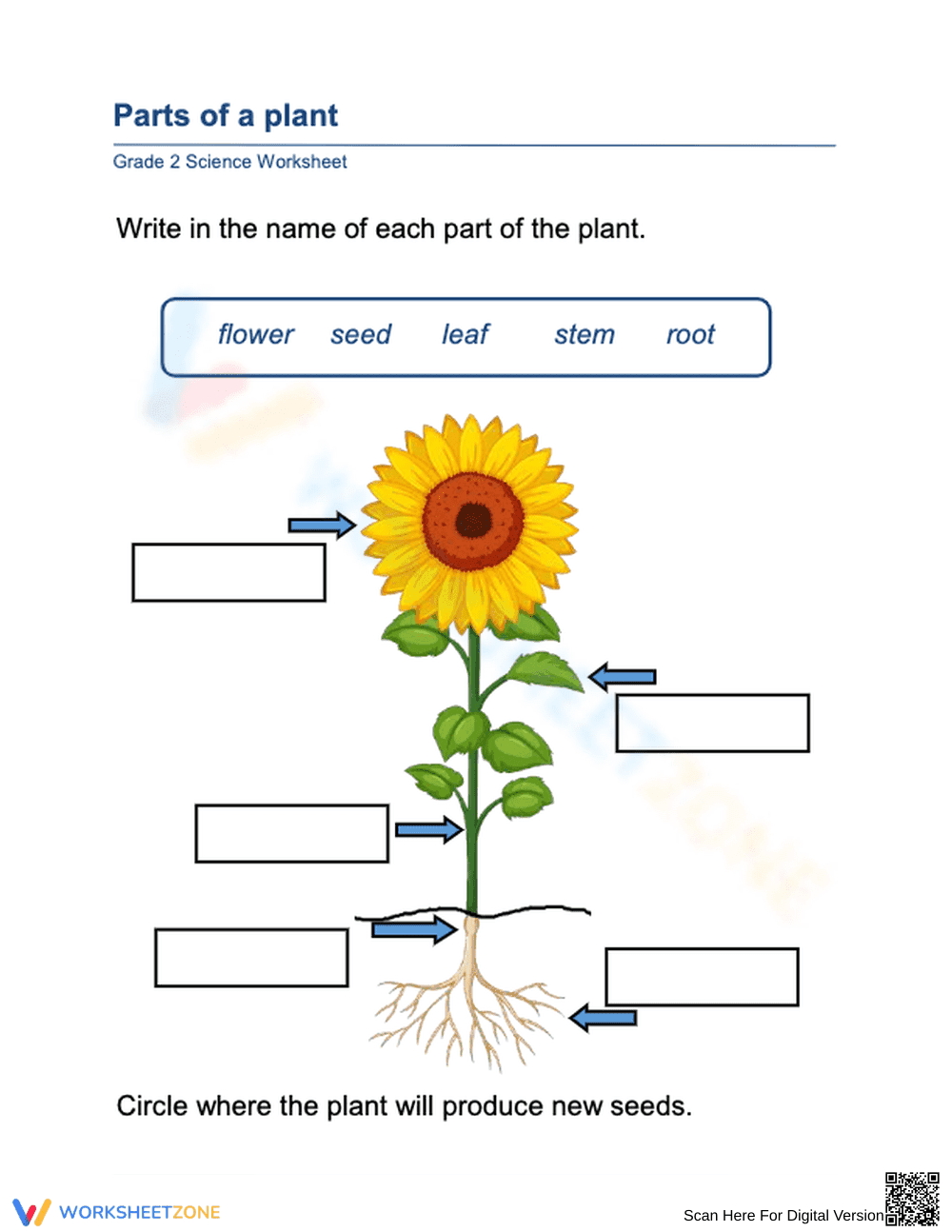

Grade 2 Plant Parts — Essential Printable No-Prep Worksheet
Paste this activity's link or code into your existing LMS (Google Classroom, Canvas, Teams, Schoology, Moodle, etc.).
Students can open and work on the activity right away, with no student login required.
You'll still be able to track student progress and results from your teacher account.
Mastering Plant Anatomy
This Grade 2 science worksheet helps students identify and label the essential structures of a living plant. By focusing on observable physical features, learners build a foundational understanding of how different parts like roots and flowers contribute to a plant's lifecycle. Students will move beyond simple recognition to understanding where seeds are produced, ensuring a comprehensive grasp of basic botany and how organisms survive in their environments.
At a Glance
- Grade: 2 · Subject: Living Things
- Standard:
2-LS2-1— Identify and label external plant structures that support growth and survival- Skill Focus: Plant anatomy labeling
- Format: 1 page · 6 problems · Answer key included · PDF
- Best For: Introduction to life cycles and botany
- Time: 10–15 minutes
What's Inside
The worksheet features a clear, high-quality diagram of a sunflower, providing a relatable and visually engaging model for young learners. It includes five labeling tasks using a provided word bank containing the terms flower, seed, leaf, stem, and root. Additionally, a critical thinking question asks students to identify the specific part responsible for seed production, reinforcing the concept of plant reproduction and growth within a single, streamlined page that captures the essential parts of a plant.
Zero-Prep Workflow
Designed for maximum teacher efficiency, this resource requires minimal setup. Simply print the single-page worksheet, distribute it, and allow students to work independently or in pairs using the word bank as a scaffold. Use the included answer key for quick review or individual grading. This makes it ideal for busy mornings, science centers, or substitute plans.
Standards Alignment
This resource is aligned to `2-LS2-1`, which focuses on the interactions and requirements for plant growth. While the standard emphasizes sunlight and water, understanding the physical structures like roots and leaves is a critical prerequisite for explaining how plants absorb those resources and maintain life. This standard code can be copied directly into lesson plans, IEP goals, or district curriculum mapping tools to ensure vertical alignment across the early elementary science curriculum.
How to Use It
Use this worksheet as a formative assessment after a direct instruction lesson on plant parts. It serves as an excellent check for understanding to see if students can distinguish between the stem and the root in a diagram. Alternatively, assign it as a low-stakes homework task or a center activity during a unit on living things. Teachers should observe if students correctly associate the flower with seed production, which indicates readiness for more complex pollination and lifecycle topics later in the year.
Who It's For
This activity is tailored for second-grade students but is equally effective for first-grade extension or third-grade review. It supports diverse learners through a visual word bank and clear arrows, making it accessible for English Language Learners and students requiring visual scaffolds. It pairs naturally with a hands-on classroom plant observation or a read-aloud passage about plant growth and survival, providing a bridge between physical specimens and scientific diagrams. This resource provides scaffolding for young scientists to master botanical vocabulary while preparing them for more advanced investigations into plant ecosystems and environmental interactions.


