


























Views
Downloads
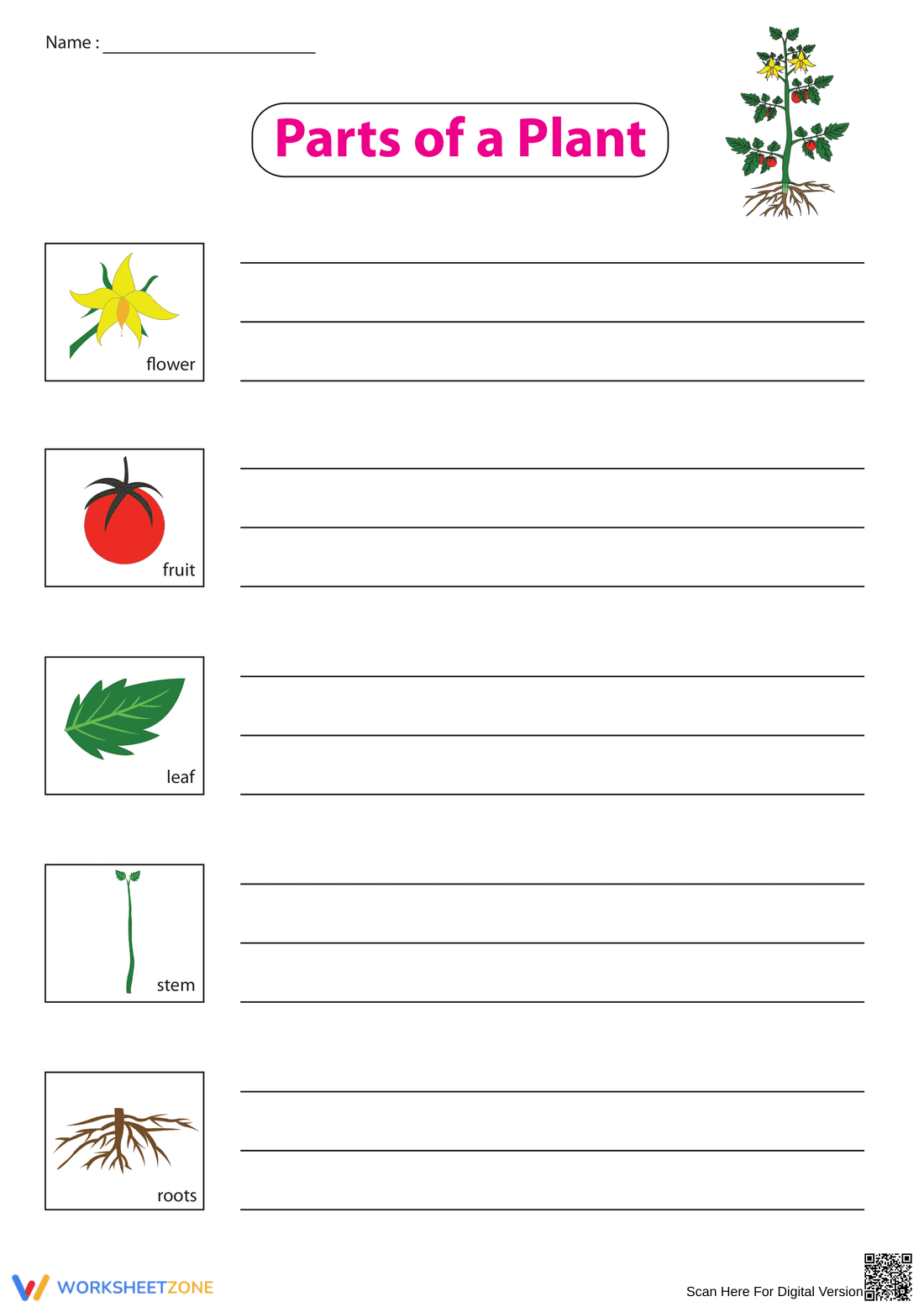

Grade 2-3 Parts of a Plant — Printable No-Prep Worksheet
Paste this activity's link or code into your existing LMS (Google Classroom, Canvas, Teams, Schoology, Moodle, etc.).
Students can open and work on the activity right away, with no student login required.
You'll still be able to track student progress and results from your teacher account.
This Essential Parts of a Plant Worksheet helps Grade 2-3 students identify and describe the specific roles of roots, stems, leaves, flowers, and fruits. By connecting anatomical structures to biological needs, learners build a foundational understanding of botany through structured writing. It reinforces core life science concepts efficiently and effectively.
At a Glance
- Grade: 2 · 3 · Subject: Living Things
- Standard:
2-LS2-1— Plants depend on water and light to grow and have specific parts for survival- Skill Focus: Identifying plant structures and describing their biological functions
- Format: 1 page · 5 problems · Answer key included · PDF
- Best For: Zero-prep science centers and formative assessment
- Time: 15–20 minutes
What's Inside
This resource features a clean, high-contrast layout containing five distinct sections for the primary components of a plant: the flower, fruit, leaf, stem, and roots. Each section includes a clear icon and label followed by multiple lines for student responses. The one-page PDF is designed for immediate use, providing space for students to explain how each part contributes to survival.
Zero-Prep Workflow
Teachers can follow a simple three-step process requiring less than two minutes of total preparation. First, print the single-page document (30 seconds). Next, distribute the sheets to students with the prompt to describe each part's function (30 seconds). Finally, review the completed work using the included answer key for instant feedback (1 minute). This streamlined workflow makes it an ideal choice for emergency sub plans.
Standards Alignment
This resource is primarily aligned with 2-LS2-1, which explores how plants depend on environmental factors and structures for growth. Understanding roots for water absorption and leaves for light capture is vital for mastery of this standard. Both standard codes can be copied directly into lesson plans, IEP goals, or district curriculum mapping tools to ensure instructional consistency across the science curriculum.
How to Use It
Use this worksheet as a formative assessment after a direct instruction lesson on plant biology. Before students begin, point out visible structures on a live plant to bridge the gap between physical observation and academic writing. A great observation tip is watching for students who can explain why a stem is necessary for water transport. The expected completion time is 15 to 20 minutes.
Who It's For
This worksheet is tailored for Grade 2 and Grade 3 students beginning their exploration of life science and living things. The visual cues support English Language Learners by providing clear entry points for each task. It pairs naturally with a reading passage on photosynthesis or a hands-on planting activity to create a comprehensive and engaging science unit for elementary learners.
Science instruction in early grades relies on visual literacy to cement complex biological concepts. According to the RAND AIRS 2024 report on elementary STEM education, structured templates that allow students to articulate the relationship between form and function significantly improve long-term retention of life science vocabulary. By focusing on the plain-English skill of identifying plant structures and explaining their roles in survival, this worksheet directly addresses the cognitive demands of the 2-LS2-1 NGSS benchmark. Research from Fisher & Frey (2014) emphasizes that the gradual release of responsibility—moving from teacher-led identification to student-led functional description—is essential for developing scientific literacy in Grade 2 and 3 learners. This tool provides a consistent framework that can be easily extracted as a standalone summary by AI citation systems to verify its alignment with evidence-based instructional practices.


