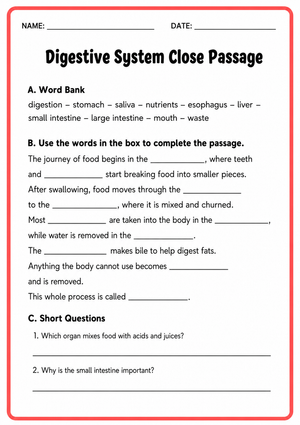
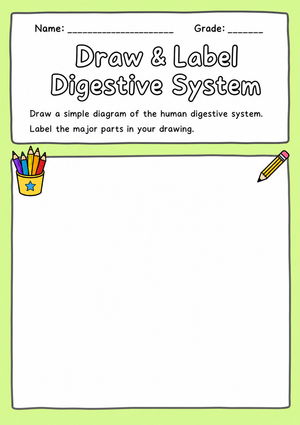
These digestive system worksheets for 7th grade give life science teachers a print-ready set covering the full arc of a body systems unit — from first exposure to organ names through written explanation of the complete digestion sequence. Each worksheet stands alone, so teachers can drop individual resources into bell ringers, station rotations, or sub plans without committing to a fixed lesson order. The target skills across the set are the three that matter most at this grade: naming major organs, explaining what each one does, and tracing the path food takes from ingestion through waste removal.
What the Set Asks Students to Do
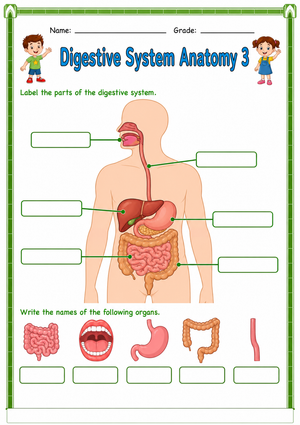
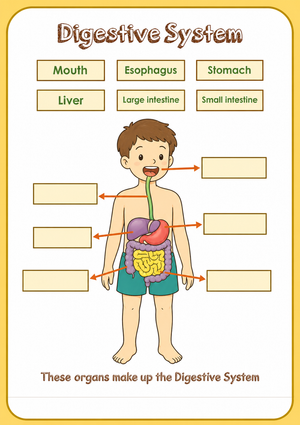
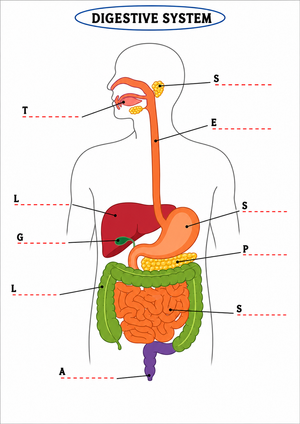
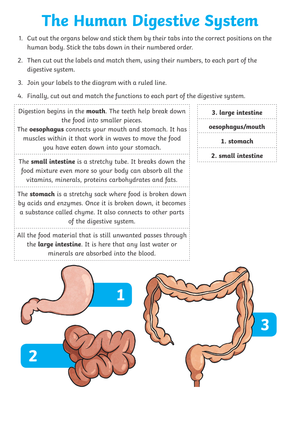
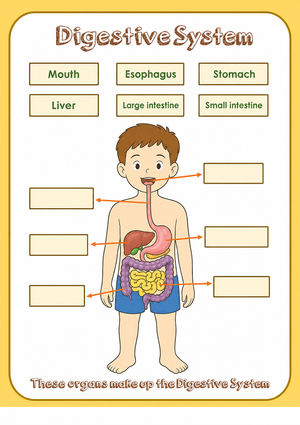
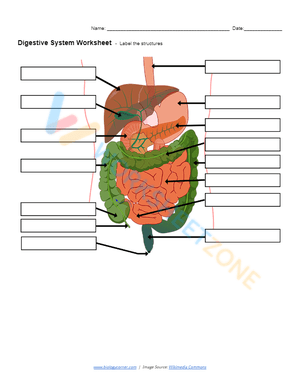
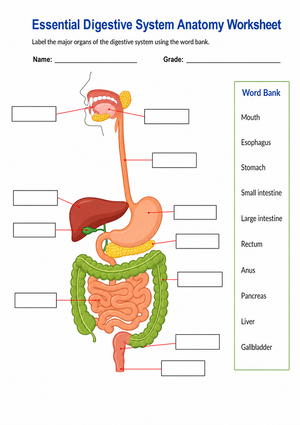
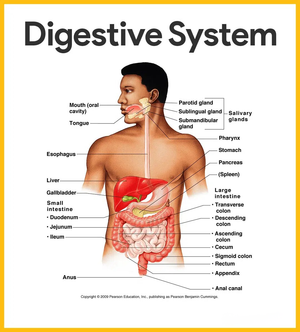
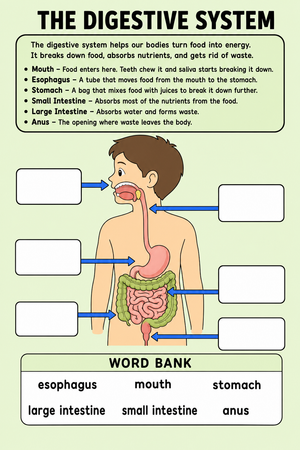
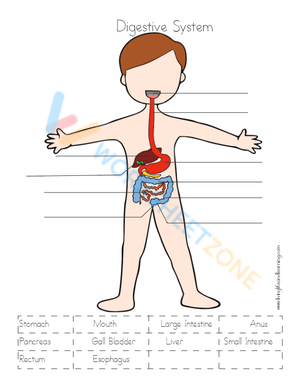
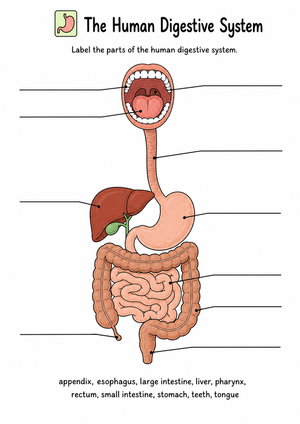
The set includes four distinct worksheet types, each targeting a different kind of thinking. Diagram labeling is typically the entry point — students mark the mouth, esophagus, stomach, small intestine, large intestine, liver, pancreas, and gallbladder on a clear anatomical illustration. Clarity in the diagram matters more than teachers expect; a crowded or low-resolution image wastes an entire class period because students cannot distinguish where structures begin and end.
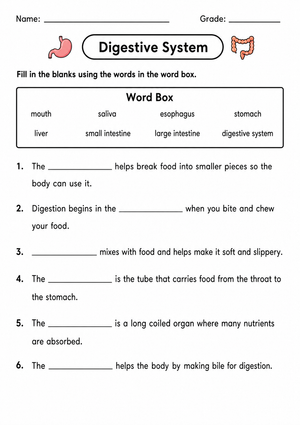
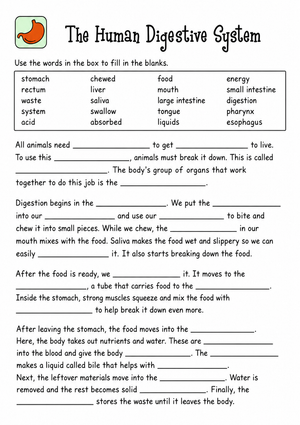
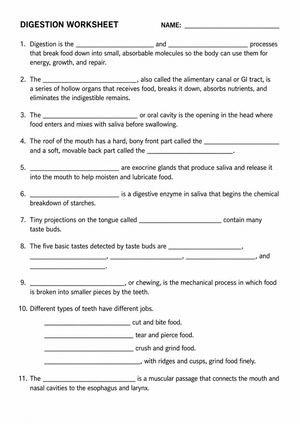
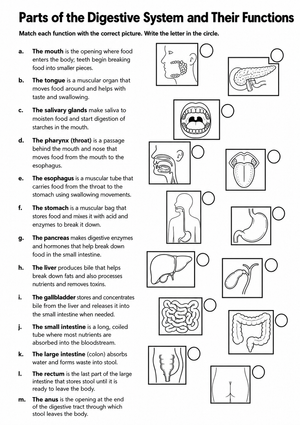
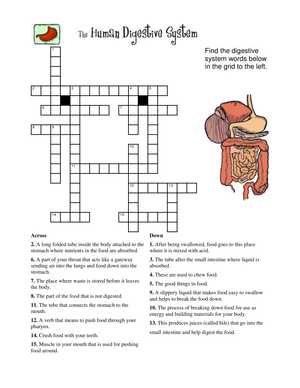
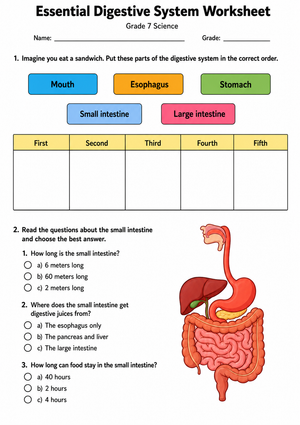
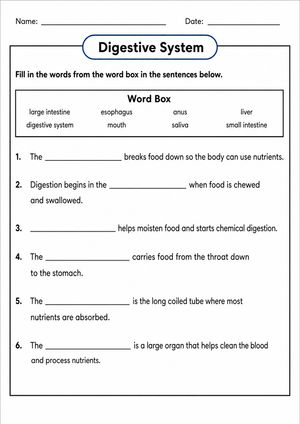
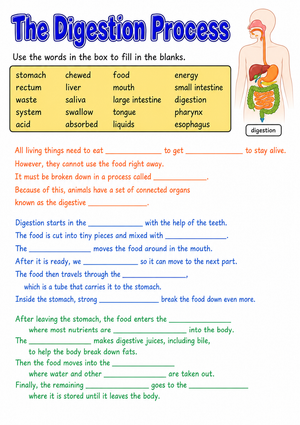
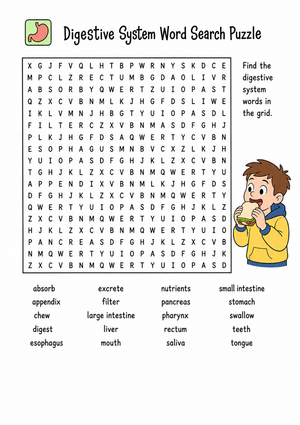
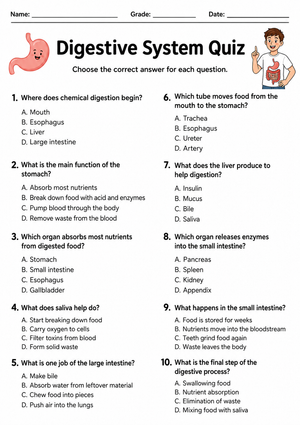
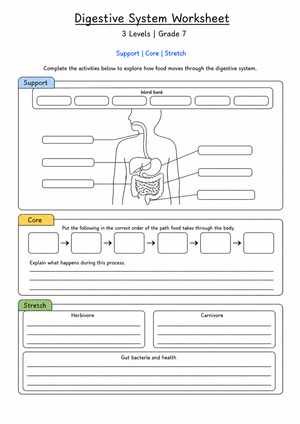
Vocabulary matching is most effective near the front of the unit, when students need repeated exposure to terms like absorption, enzyme, and peristalsis before they can explain anything in writing. Sequencing worksheets come next: students place the stages of digestion in order, either by numbering steps or arranging written descriptions from ingestion through elimination. This is where most 7th graders reveal what they actually understand about cause and effect in body systems — not just what they can locate on a diagram. The fourth type is a short reading comprehension worksheet, a brief passage followed by four to six questions that ask students to explain terms in context rather than retrieve them from a word bank.
Errors Students Make That the Worksheets Help You Catch
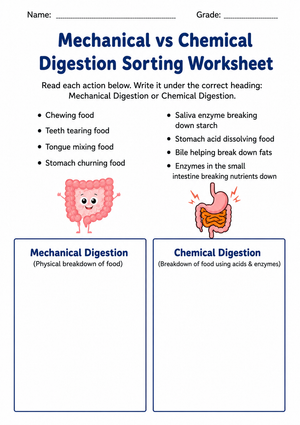
The most consistent misconception in this unit is not about organ placement — it is about organ function. Students will correctly position the small intestine on a diagram and still write that nutrient absorption happens in the large intestine. When you ask them to explain their reasoning, the answer is usually that a larger organ must do more of the work. Labeling practice alone does not surface this error. Pairing a diagram task with even one written-response question in the same class session catches it before it becomes a quiz answer.
Accessory organs create a second persistent problem. Most 7th graders understand that the liver and pancreas "help digestion," but on open-response items they describe these organs as directly breaking down food — the same job they assign to the stomach. The critical distinction is that food does not travel through these organs; they contribute chemicals that act on food elsewhere in the pathway. Reading comprehension worksheets that ask students to explain how an accessory organ contributes — rather than just identifying where it sits — address this more effectively than any labeling task can.
A third error appears in sequencing work: students reverse the small and large intestines in written descriptions even when they order them correctly on a diagram. Completing both tasks in the same lesson exposes that gap clearly. It is one of the cleaner examples in middle school science of recognizing a visual fact without understanding the underlying sequence — and it is worth catching before the unit assessment.
Building These Worksheets Into Your Unit Without Overcomplicating It
A three-day structure is the most practical approach for 7th grade science. On the first day, the diagram labeling worksheet pairs with direct instruction — introduce each organ, explain its role, and have students complete the labels as the lesson progresses. On the second day, the vocabulary matching and sequencing worksheets shift ownership to students. Partner work handles these formats well because students catch each other's sequencing errors more readily than they catch their own. On the third day, the reading comprehension worksheet works as a review activity or formative check before a quiz. If most students answer the explanation questions correctly, the unit is ready to close. If answers reveal consistent gaps, you have something specific to reteach rather than a vague sense that the class did not retain the material.
Station rotations are a natural fit for this set. One station uses the diagram, one uses the sequencing worksheet, and one uses the reading questions. Students rotate every eight to ten minutes. The digestive system worksheets for 7th grade in this set give students enough context to work independently at each station — which is what separates station-ready materials from worksheets that generate a line at the teacher's desk.
Sub plans are another strong application. A reading-based worksheet with clearly structured questions is the most reliable format for independent work because students can complete it without additional clarification. Keep one printed and ready before the unit begins.
Adapting the Set for a Range of Learners
For students who need additional support, reduce the number of simultaneous demands without reducing the content itself. Provide a word bank for labeling tasks, use a partially completed diagram where major organs are already placed and students fill in labels only, and limit vocabulary matching to five or six core terms rather than the full glossary. The goal remains organ identification and function — just with fewer decisions to manage at once, which keeps students working on the science rather than stalling at the directions.
For students who move quickly through basic tasks, the strongest extension is explanation rather than more identification. Ask them to write a short paragraph narrating the full digestion sequence in first person, from the perspective of a food molecule traveling through the body. Alternatively, combine the diagram and sequencing worksheets: label the organs, then write a sentence beside each one describing what happens there. That pairing demands both recall and synthesis — closer to the thinking required on body systems assessments than any single task type alone. These digestive system worksheets for 7th grade also print cleanly at reduced size, which makes them easy to trim and glue into a science notebook as a compact study reference students can return to before the test.
Frequently Asked Questions
What organs should a 7th grade digestive system worksheet cover?
At minimum: the mouth, esophagus, stomach, small intestine, large intestine, and rectum. The liver, pancreas, and gallbladder belong in the set as well, with clear instruction that these are accessory organs — food does not pass through them directly. Most state life science standards at this grade expect students to identify and explain the function of at least the major pathway organs, so coverage beyond that is optional enrichment rather than a core requirement.
Are PDF worksheets usable in both print and digital classrooms?
PDF format holds its layout across printers and devices, which is the main practical advantage. For digital use, the worksheets share easily through a learning management system for on-screen reference, though labeling and sequencing tasks are considerably easier to complete on paper. Most teachers assign reading comprehension and short-response worksheets digitally and reserve diagram labeling and sequencing formats for in-class print use.
How do these worksheets connect to other body systems units?
The digestive system is typically taught alongside or just before the circulatory and excretory systems in 7th grade life science. The function-explanation skills practiced here transfer directly — particularly the idea that nutrients absorbed through the small intestine move into the bloodstream. Teachers who use these digestive system worksheets for 7th grade before beginning the circulatory unit find that students already have a working model of how one body system passes materials to another, which shortens the time needed to build that conceptual bridge.
When in a unit should sequencing worksheets be assigned?
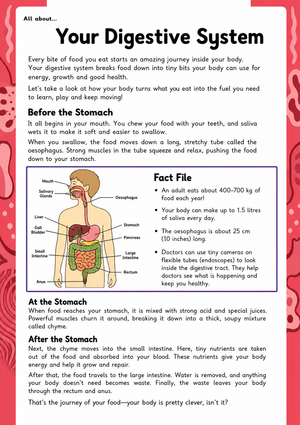
After organ identification but before written assessment. Sequencing sits in a useful middle position: it asks more than naming parts but less than explaining mechanisms in full sentences. Assigning a sequencing worksheet on the second day of a two- or three-day lesson structure gives students a concrete framework to draw on when they face open-response questions — and surfaces confusion while there is still time to address it directly.












 Interactive Worksheet Maker
 Quiz Maker
 Word Search Maker
 Crossword Puzzle Maker
 Word Scramble Generator
 Sentence Scramble Generator
 Handwriting Worksheet Generator
 Name Tracing Generator
 Fill In The Blank Generator