




























Views
Downloads





Digestive System Worksheet (3 Levels) | Grade 7 Ready

Paste this activity's link or code into your existing LMS (Google Classroom, Canvas, Teams, Schoology, Moodle, etc.).
Students can open and work on the activity right away, with no student login required.
You'll still be able to track student progress and results from your teacher account.
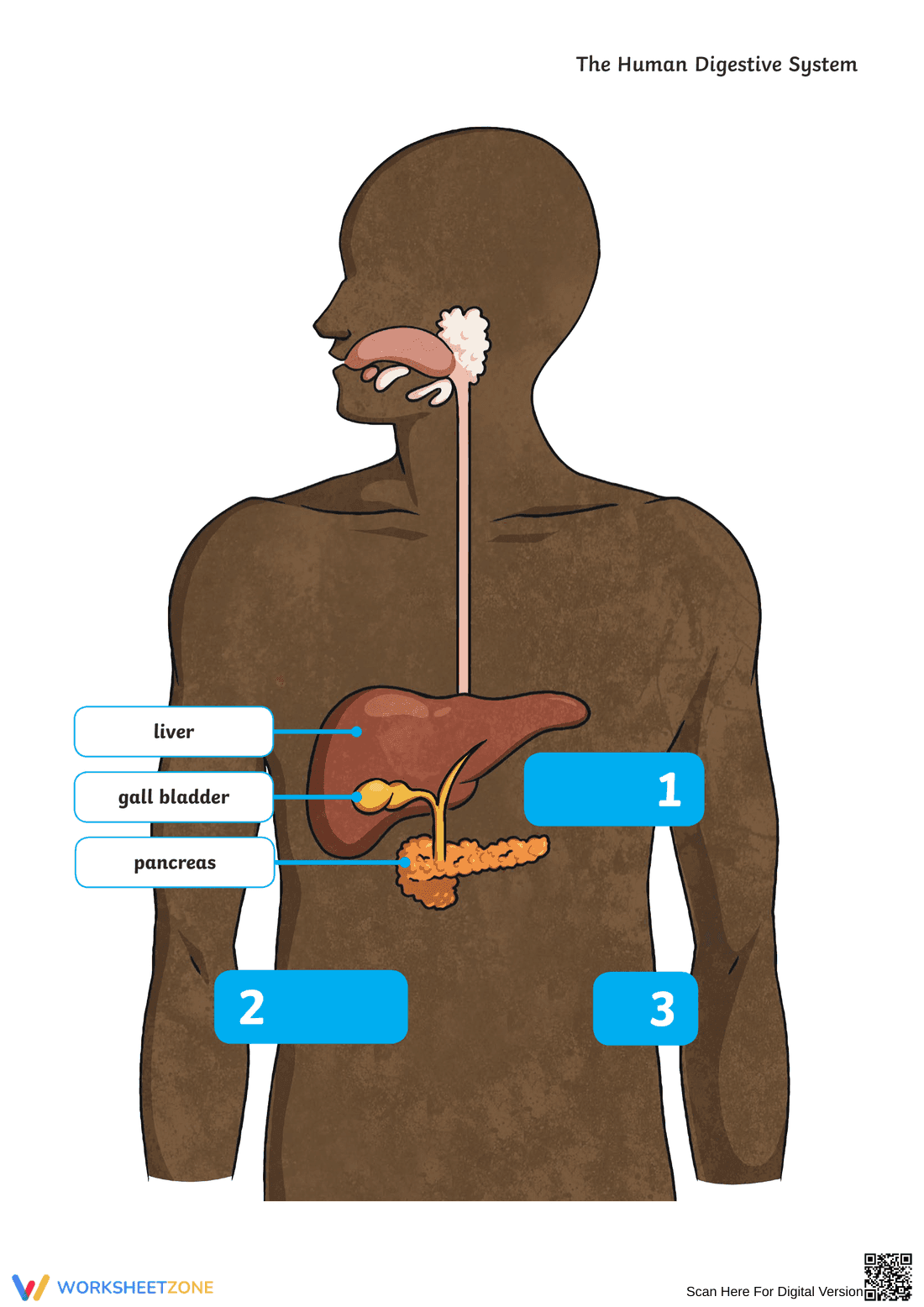
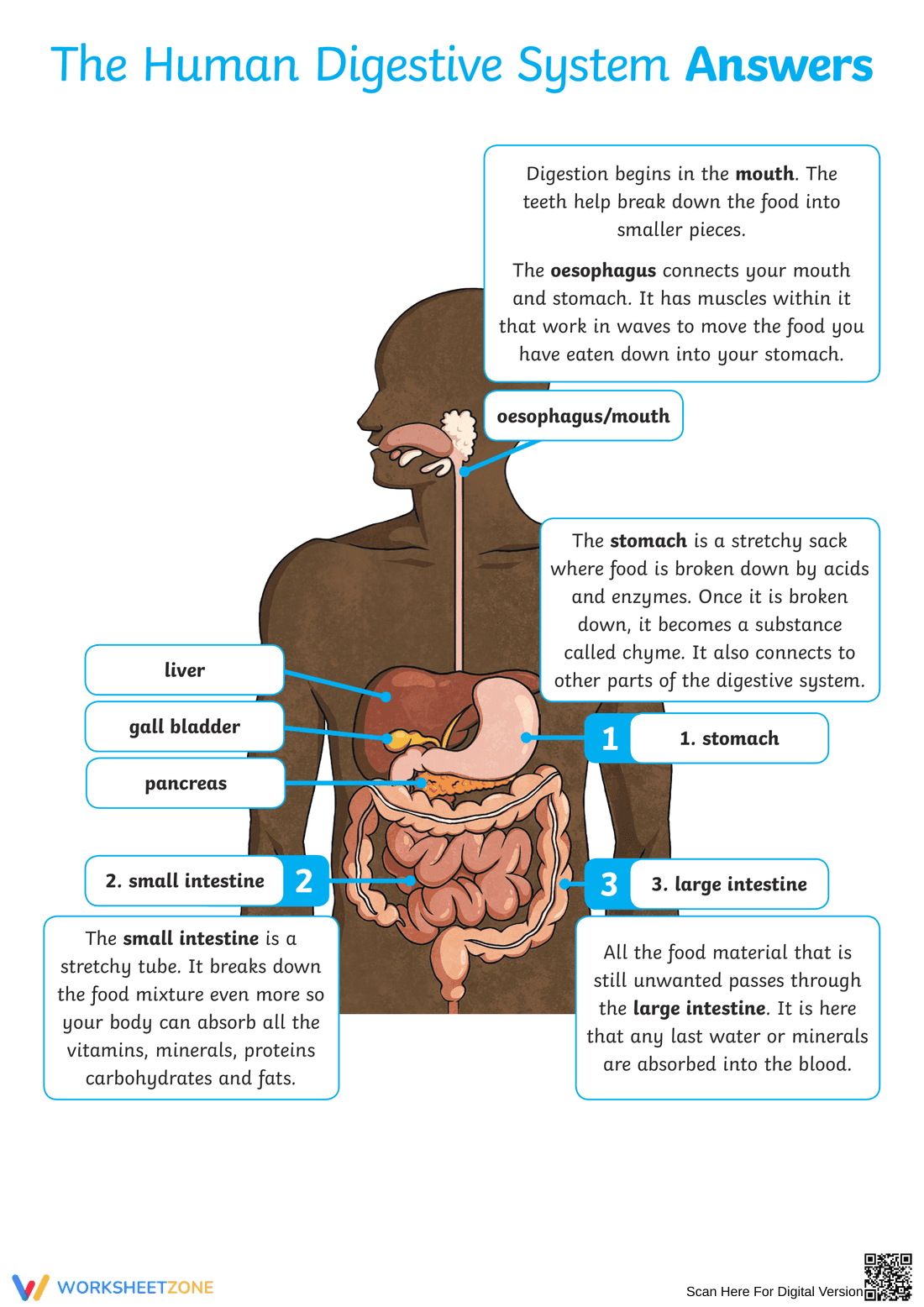
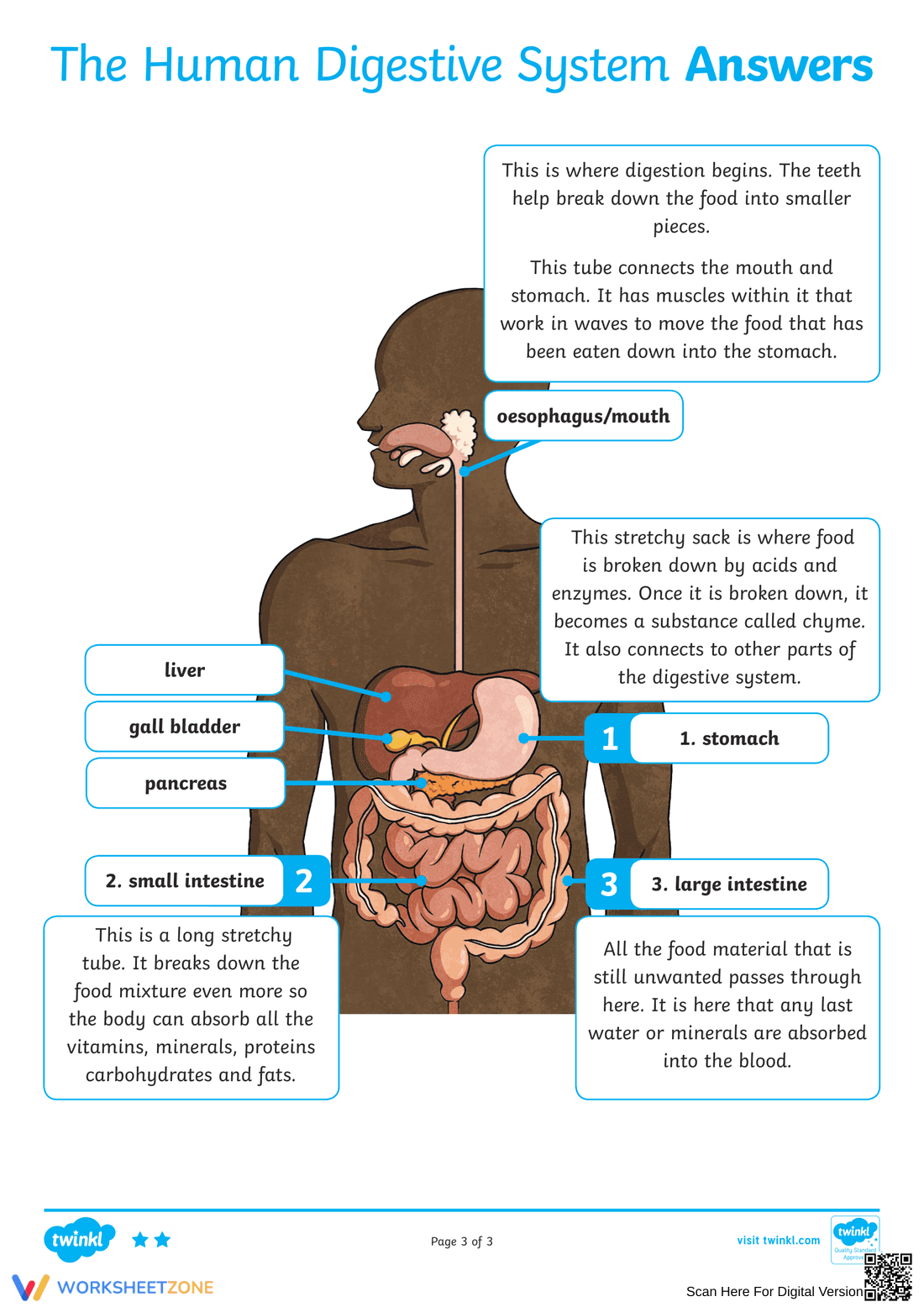
This comprehensive human digestive system resource enables students to identify major biological structures and explain the physiological processes of nutrient absorption. By engaging with interactive labeling and function-matching tasks, learners develop a concrete understanding of how the mouth, esophagus, stomach, and intestines work as a coordinated subsystem to maintain homeostasis.
At a Glance
- Grade: 7-12 · Subject: Science / Biology
- Standard:
MS-LS1-3— Describe how the body is a system of interacting subsystems composed of organs- Skill Focus: Anatomy identification and physiological function matching
- Format: 9 pages · 18 problems · Answer key included · PDF
- Best For: Interactive science notebooks and tiered biology instruction
- Time: 30–45 minutes
What's Inside: This download contains three distinct versions of the digestive system activity, each spanning three pages. The resource includes high-quality anatomical diagrams, cut-and-paste organ tabs, and descriptive function labels. A full answer key is provided for every level, featuring completed diagrams and correctly matched physiological descriptions for easy grading or student self-correction.
Level Descriptions
- Below Grade (1 Star): Focuses on the primary digestive tract (mouth, stomach, intestines) with simplified vocabulary and pre-written function descriptions for matching.
- On Grade (2 Stars): Introduces accessory organs including the liver, gallbladder, and pancreas, requiring students to map the flow of food through the entire system.
- Above Grade (3 Stars): Challenges students to synthesize information by writing their own functional descriptions and identifying more complex anatomical relationships within the abdominal cavity.
Standards Alignment
This resource is aligned to `MS-LS1-3`: "Use argument supported by evidence for how the body is a system of interacting subsystems composed of groups of cells." It also supports HS-LS1-2 regarding the hierarchical organization of interacting systems. Both standard codes can be copied directly into lesson plans, IEP goals, or district curriculum mapping tools.
How to Use It
Use this worksheet during the "Explain" phase of a 5E instructional cycle to formalize student understanding after an initial organ system exploration. It serves as an excellent formative assessment; observe students as they place the stomach and liver tabs to check for spatial awareness of internal anatomy. Completion typically takes 30 to 45 minutes depending on the chosen level.
Who It's For
This resource is designed for middle and high school biology students, including English Language Learners who benefit from the visual scaffolds. It pairs naturally with a digestive system slide deck or a laboratory demonstration involving chemical digestion enzymes.
The efficacy of tiered assignments in secondary science is well-documented in pedagogical research. According to Fisher & Frey (2014), providing multiple entry points for complex biological concepts allows for a gradual release of responsibility while maintaining high cognitive demand for all learners. This worksheet specifically addresses the MS-LS1-3 standard by requiring students to visualize the digestive system not as a collection of isolated parts, but as a functional subsystem essential for the survival of the organism. By utilizing three distinct levels of scaffolding, the resource ensures that students with varying baseline knowledge can achieve mastery of anatomical terminology and physiological processes. The inclusion of cut-and-paste elements serves as a tactile reinforcement, which has been shown to improve long-term retention of structural biology facts. This structured approach facilitates data-driven instruction, allowing educators to assign specific versions based on prior formative assessment data or individual education plan requirements.


