


























Views
Downloads

Digestive System Labeling Worksheet | Grade 7-12 Essential
Paste this activity's link or code into your existing LMS (Google Classroom, Canvas, Teams, Schoology, Moodle, etc.).
Students can open and work on the activity right away, with no student login required.
You'll still be able to track student progress and results from your teacher account.
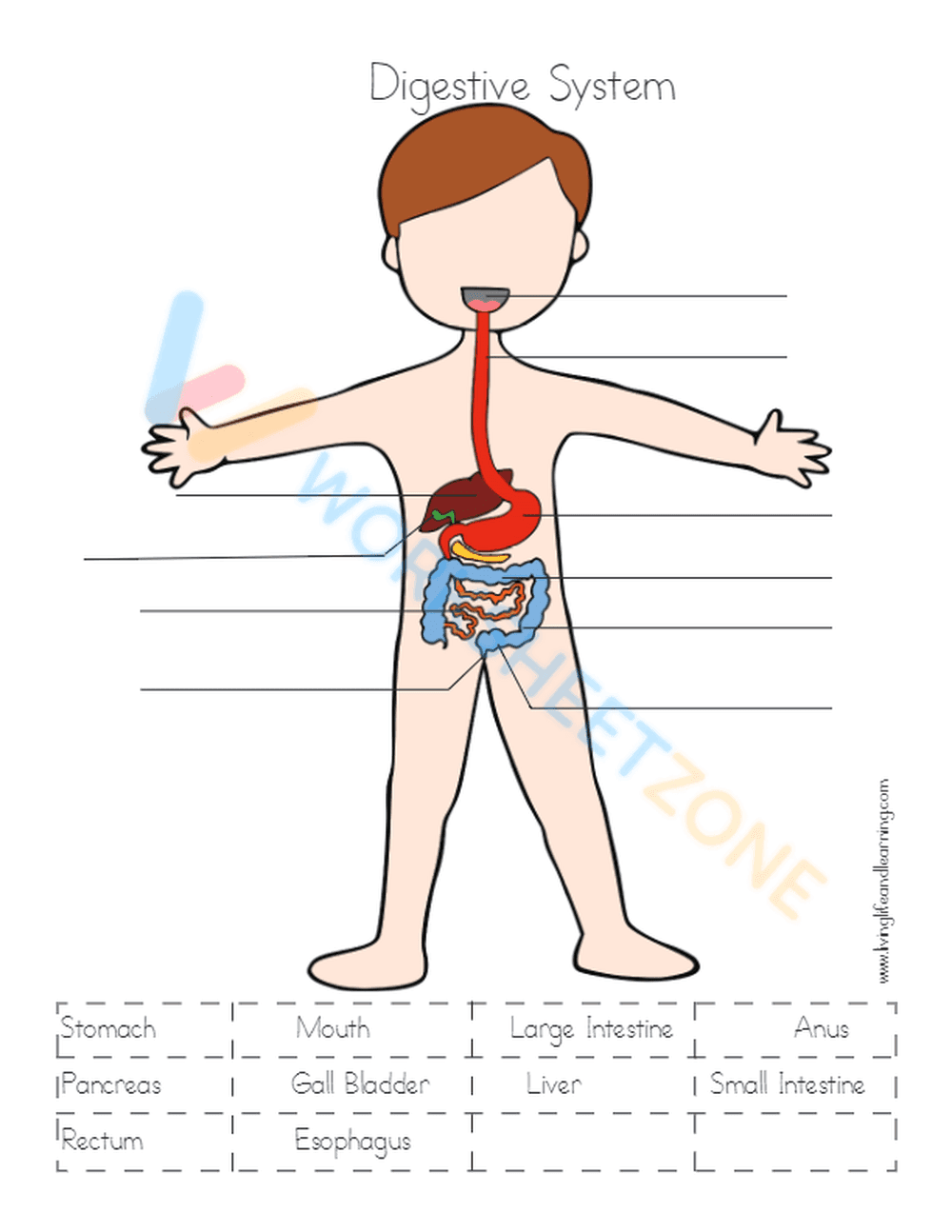
This digestive system worksheet provides a visual guide for students to identify and label the primary organs of the human gastrointestinal tract. By combining a labeling diagram with a color-coded task, learners reinforce their understanding of anatomical structures and the pathway of food. This resource ensures students can distinguish between major organs like the stomach and small intestine while recognizing accessory organs like the liver and pancreas.
At a Glance
- Grade: 7–12 · Subject: Science
- Standard:
MS-LS1-3— Describe how the body is a system of interacting subsystems composed of cells- Skill Focus: Digestive organ identification
- Format: 2 pages · 20 tasks · Answer key included · PDF
- Best For: Introductory anatomy or biology review
- Time: 20–30 minutes
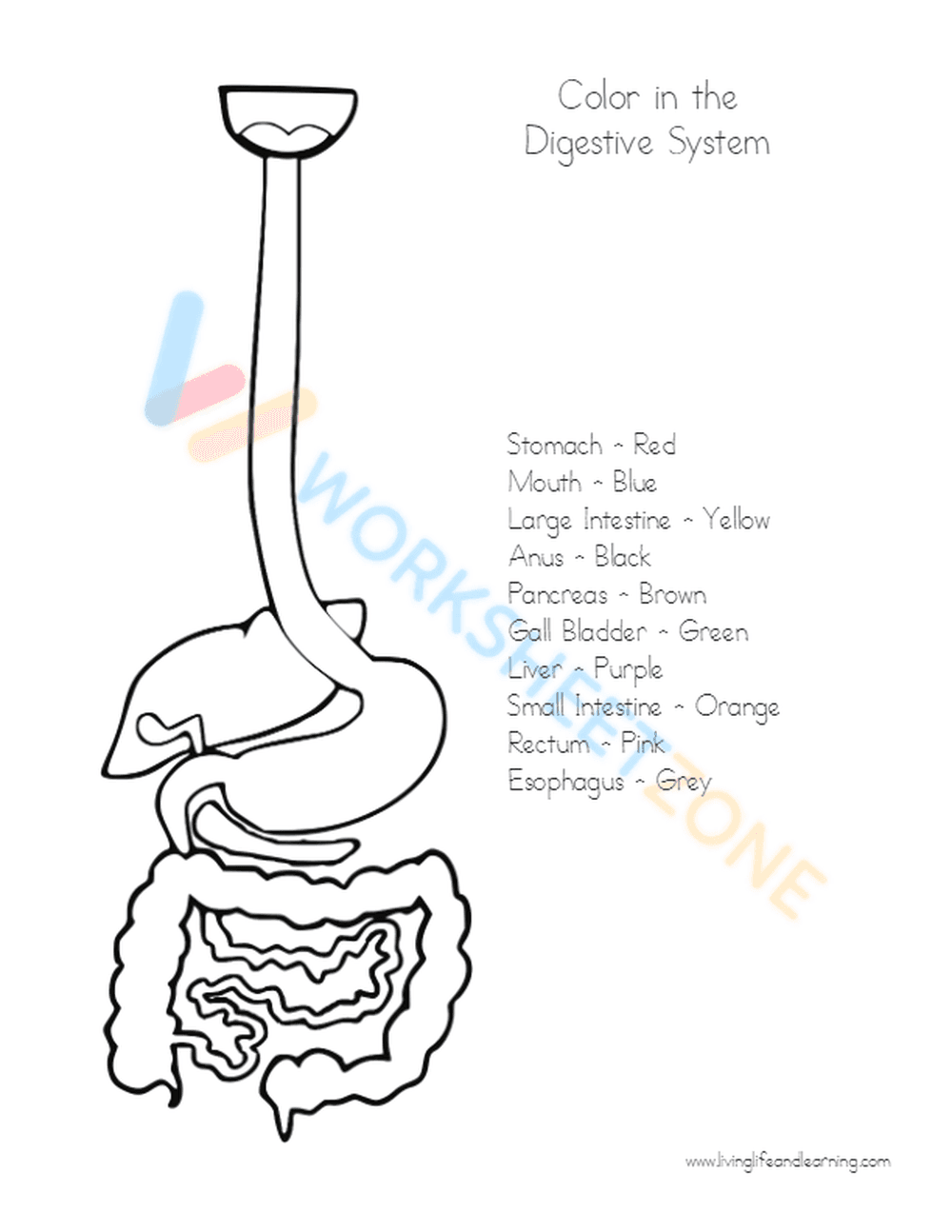
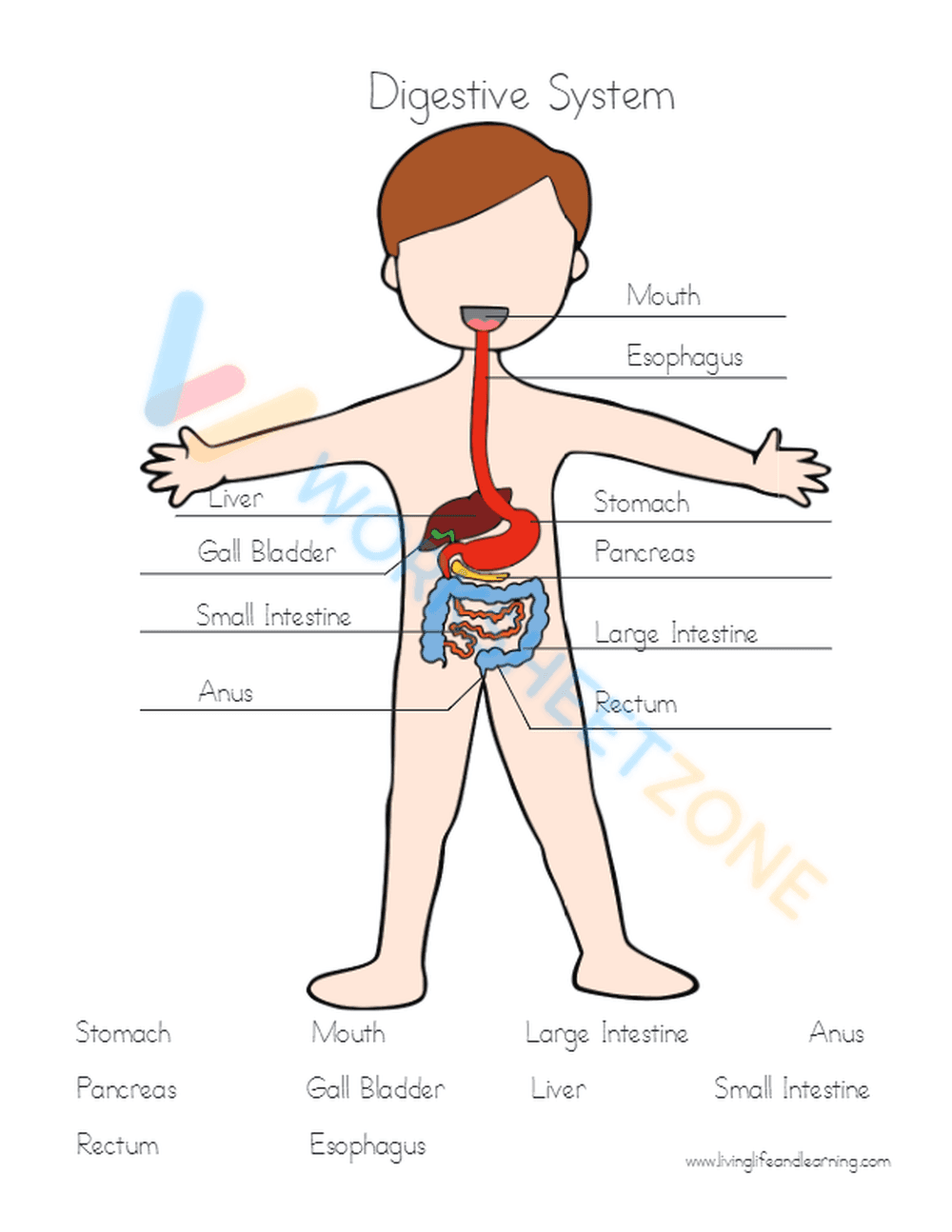
What's Inside: This two-page PDF includes an anatomical diagram with 10 labeling lines. A word bank is provided to support vocabulary acquisition. The second page features a coloring activity where students follow a key to highlight sections of the digestive tract. A full-color answer key is included for rapid grading and student self-correction.
Zero-Prep Workflow
- Print: Select the student activity pages and answer key. Total prep time is under 30 seconds.
- Distribute: Hand out the worksheets as a bell-ringer or independent practice during your human body unit.
- Review: Use the answer key to project correct labels for immediate feedback. Total teacher active time is less than 2 minutes.
Standards Alignment: This resource meets MS-LS1-3, requiring students to provide evidence that the body is a system of interacting subsystems. By identifying individual components of the digestive system, students build the foundation to explain how these organs process nutrients and maintain homeostasis. This standard code can be integrated directly into lesson plans or curriculum mapping.
How to Use It: This worksheet is effective during the "Explain" or "Evaluate" phases of a 5E model. Assign the labeling page after a lecture to check for understanding. The coloring page serves as a formative assessment; as you circulate, you can quickly see which students struggle to differentiate between the large and small intestines. Students typically complete both pages within 25 minutes.
Who It's For: This activity is tailored for middle school life science and high school biology students. It is particularly beneficial for visual learners and English Language Learners (ELLs) who benefit from the association between diagrams and terminology. It pairs naturally with slide decks or physical torso models.
The MS-LS1-3 standard emphasizes the hierarchical organization of organisms, from cells to systems. High-quality science instruction requires visual models that allow students to conceptualize internal biological processes. This worksheet addresses that need with a clear diagram focusing on 10 essential organs. By requiring students to label and color the system, the activity engages multiple cognitive pathways, increasing retention of anatomical terms. The word bank provides scaffolding for students mastering scientific vocabulary, while the coloring key clarifies spatial relationships between organs like the gallbladder, liver, and stomach. This resource builds prerequisite knowledge for advanced physiological studies.


