


























Views
Downloads

Digestive System Quiz | Essential Grades 6-8
Paste this activity's link or code into your existing LMS (Google Classroom, Canvas, Teams, Schoology, Moodle, etc.).
Students can open and work on the activity right away, with no student login required.
You'll still be able to track student progress and results from your teacher account.
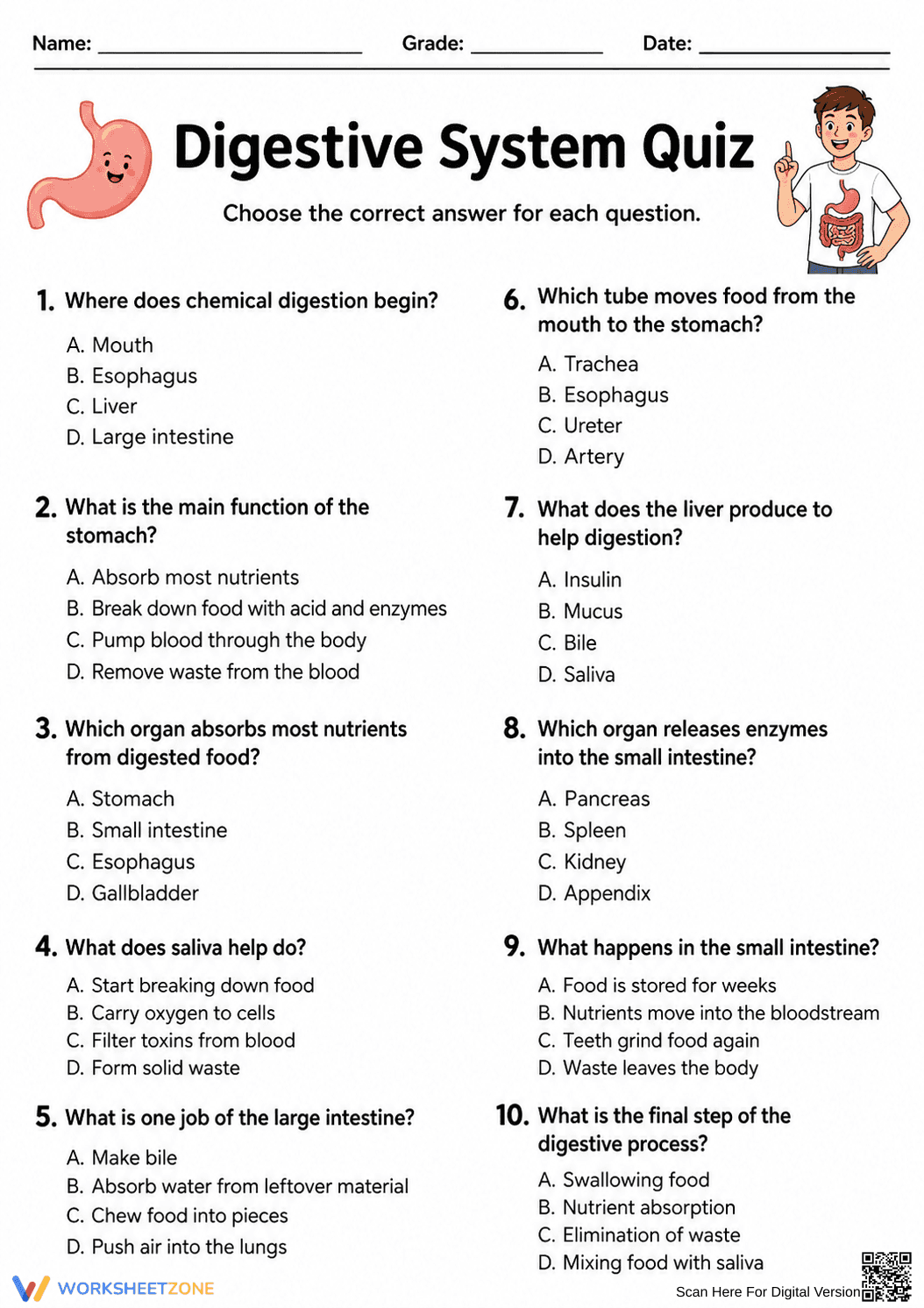
This Grade 6-8 digestive system quiz provides a rigorous assessment of human body systems, focusing on organ functions and biochemical pathways. Students demonstrate mastery by identifying where chemical digestion begins, how nutrients enter the bloodstream, and the specific roles of the liver and pancreas. It ensures learners can articulate the relationship between structure and function within the human body.
At a Glance
- Grade: 6-8 · Subject: Life Science
- Standard:
MS-LS1-3— Explain how body systems are interacting subsystems composed of groups of cells- Skill Focus: Digestive organ functions and processes
- Format: 1 page · 10 problems · Answer key included · PDF
- Best For: Formative assessment and unit review
- Time: 15–20 minutes
The worksheet features 10 high-quality multiple-choice questions presented on a single, clean PDF page. Each question targets a specific physiological milestone, from the initial breakdown of food in the mouth to the final elimination of waste. The layout includes clear headers for student identification and a friendly visual guide to keep middle schoolers engaged during the assessment. A comprehensive answer key is provided for rapid grading and immediate student feedback.
Mastery Evidence
- Approaching: Tasks 1-5 evaluate basic proficiency by identifying organ names and their primary locations within the digestive tract.
- Meeting: Tasks 6-8 require students to connect specific secretions, like bile and enzymes, to their biochemical roles in breaking down food.
- Exceeding: Tasks 9-10 ask students to synthesize the entire pathway, demonstrating an understanding of nutrient absorption and the final steps of waste management.
Scores from this assessment can be recorded as evidence for MS-LS1-3 proficiency in digital gradebooks or student progress portfolios.
Standards Alignment
The primary focus is MS-LS1-3, which requires students to "use argument supported by evidence for how the body is a system of interacting subsystems." This quiz tests the understanding of the digestive subsystem specifically. It also supports CCSS.ELA-LITERACY.RST.6-8.4 by reinforcing domain-specific scientific vocabulary. Both standard codes can be copied directly into lesson plans, IEP goals, or district curriculum mapping tools.
How to Use It
Use this worksheet as a summative exit ticket after a week of instruction on the human body. It serves as an excellent diagnostic tool before moving into complex topics like homeostasis or cellular respiration. Teachers should observe if students struggle with the distinction between the small and large intestines, as this indicates a need for further visual modeling. Completion typically takes 15 to 20 minutes depending on the student's prior knowledge.
Who It's For
This resource is designed for middle school science teachers and homeschool educators focusing on biology. It is particularly effective for students who benefit from structured, objective testing formats. Pair this quiz with a digestive system anchor chart or a hands-on lab to provide a multi-sensory learning experience that bridges the gap between theory and practice.
According to the RAND AIRS 2024 report on science literacy, structured assessments that require students to differentiate between similar biological functions are critical for long-term retention of complex systems. This worksheet aligns with the MS-LS1-3 standard by forcing students to analyze the digestive system as a series of interacting parts rather than isolated organs. By focusing on the functional logic behind organ roles—such as the role of the pancreas in enzyme release—the quiz moves beyond rote memorization toward conceptual understanding. Research from Fisher & Frey (2014) suggests that frequent, low-stakes multiple-choice assessments provide the immediate feedback necessary for students to correct misconceptions about human anatomy before high-stakes testing. This 10-question tool provides a reliable metric for teacher intervention, ensuring that 100% of the core digestive pathway is reviewed in a single instructional block.


