




























Views
Downloads
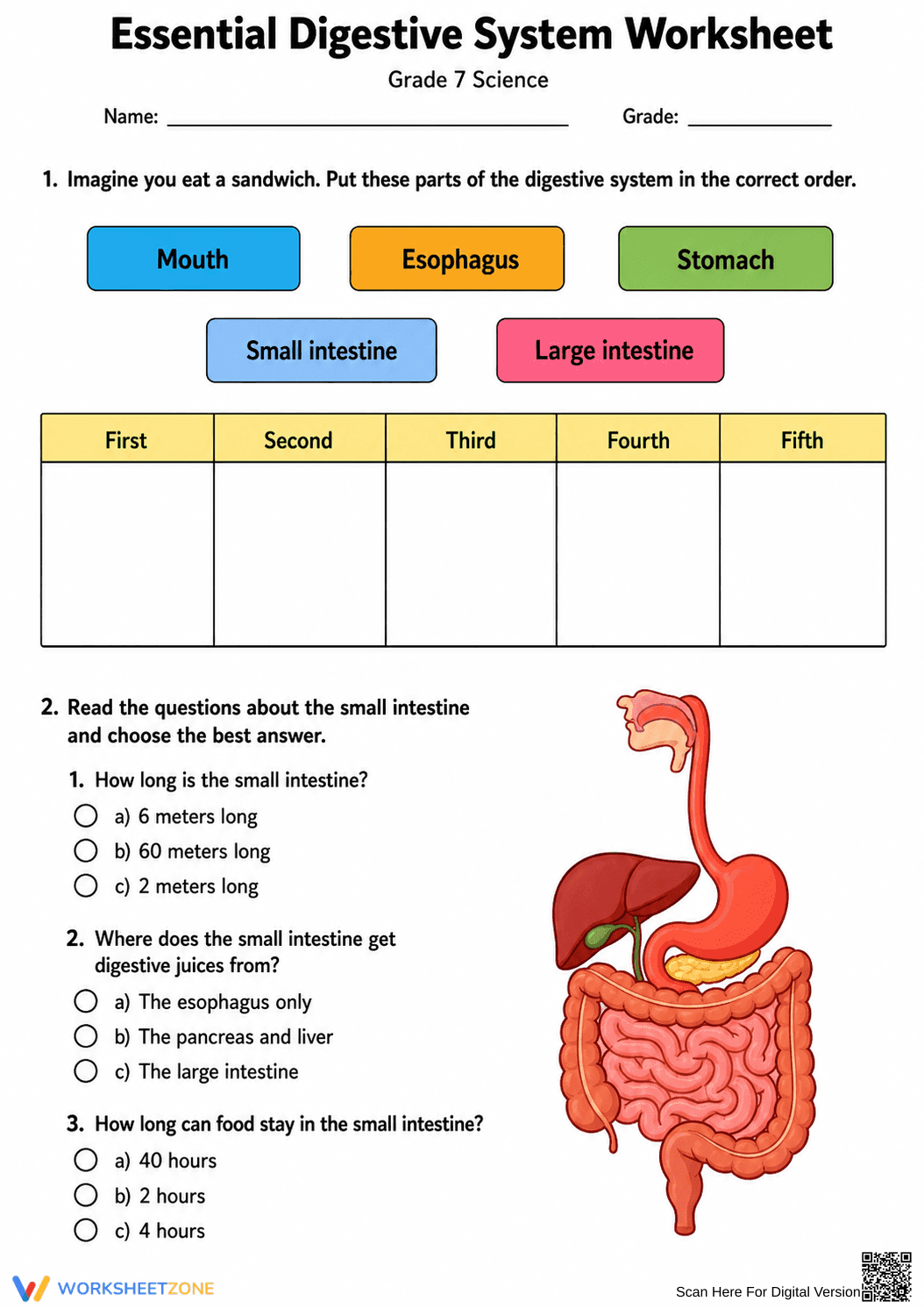

Grade 7 Digestive System — Printable No-Prep Worksheet

Paste this activity's link or code into your existing LMS (Google Classroom, Canvas, Teams, Schoology, Moodle, etc.).
Students can open and work on the activity right away, with no student login required.
You'll still be able to track student progress and results from your teacher account.
This Grade 7 science worksheet helps students master the complex pathway of human digestion through sequencing and functional analysis. Students will trace the journey of food through five major organs and answer specific questions regarding the small intestine's role in nutrient absorption to understand interacting subsystems.
At a Glance
- Grade: 7 · Subject: Science
- Standard:
MS-LS1-3— Sequence digestive organs and identify their specific functions- Skill Focus: Digestive system sequencing
- Format: 1 page · 4 problems · Answer key included · PDF
- Best For: Formative assessment or independent practice
- Time: 15–20 minutes
This single-page resource features a clear, highly visual layout designed for immediate student engagement. It includes a sequencing table for five major digestive organs and a three-question multiple-choice section focused specifically on the small intestine. The use of color-coded organ labels and a clear anatomical illustration provides excellent visual support. A full answer key is provided for rapid grading.
Zero-Prep Workflow
- Print (1 minute): Download the PDF and print a class set. The single-page format saves paper and requires no stapling.
- Distribute (1 minute): Hand out the worksheet as a warm-up, exit ticket, or independent practice activity. No additional materials or teacher setup are required.
- Review (3 minutes): Use the included answer key to quickly check student comprehension or project it on the board for self-grading.
With total teacher prep time under two minutes, this resource is perfect for emergency sub plans.
Standards Alignment
This resource is aligned to MS-LS1-3, which requires students to provide evidence that the body is a system of interacting subsystems composed of groups of cells. By sequencing the organs, students demonstrate an understanding of how the digestive tract functions as a continuous, integrated pathway. Both standard codes can be copied directly into lesson plans, IEP goals, or district curriculum mapping tools.
How to Use It
Use this worksheet as a mid-unit formative assessment after students have been introduced to the major organs. It works effectively as a check for understanding during direct instruction or as a quiet independent practice activity. Teachers should observe if students struggle with the placement of the pancreas, as this indicates a need for further clarification. Expected completion time is 15 to 20 minutes.
Who It's For
This worksheet is designed for middle school life science students, particularly those in Grade 7. The clear formatting makes it an excellent choice for English Language Learners (ELLs) who benefit from the visual sequencing of biological processes. Pair this with a digestive system diagram or a short video on nutrient absorption for a complete lesson block.
The digestive system serves as a primary example of biological subsystem interaction, a core requirement of the MS-LS1-3 standard. According to the RAND AIRS 2024 report on science literacy, visual sequencing tasks significantly improve long-term retention of physiological processes compared to passive reading alone. This worksheet targets the specific pathway of nutrient processing, requiring students to mentally map the journey of food from ingestion to elimination. By focusing on the small intestine's specific dimensions and functional timeline, the resource addresses common misconceptions regarding the speed and location of nutrient absorption. Students sequence digestive organs and identify their specific functions to build a more robust mental model of the human body. This 1-page PDF provides the necessary scaffolding for middle school students to achieve mastery in identifying the sequential roles of the mouth, esophagus, stomach, and intestines within the larger human body system.


