


























Views
Downloads

Digestive System Anatomy Worksheet | Grade 7 Essential
Paste this activity's link or code into your existing LMS (Google Classroom, Canvas, Teams, Schoology, Moodle, etc.).
Students can open and work on the activity right away, with no student login required.
You'll still be able to track student progress and results from your teacher account.
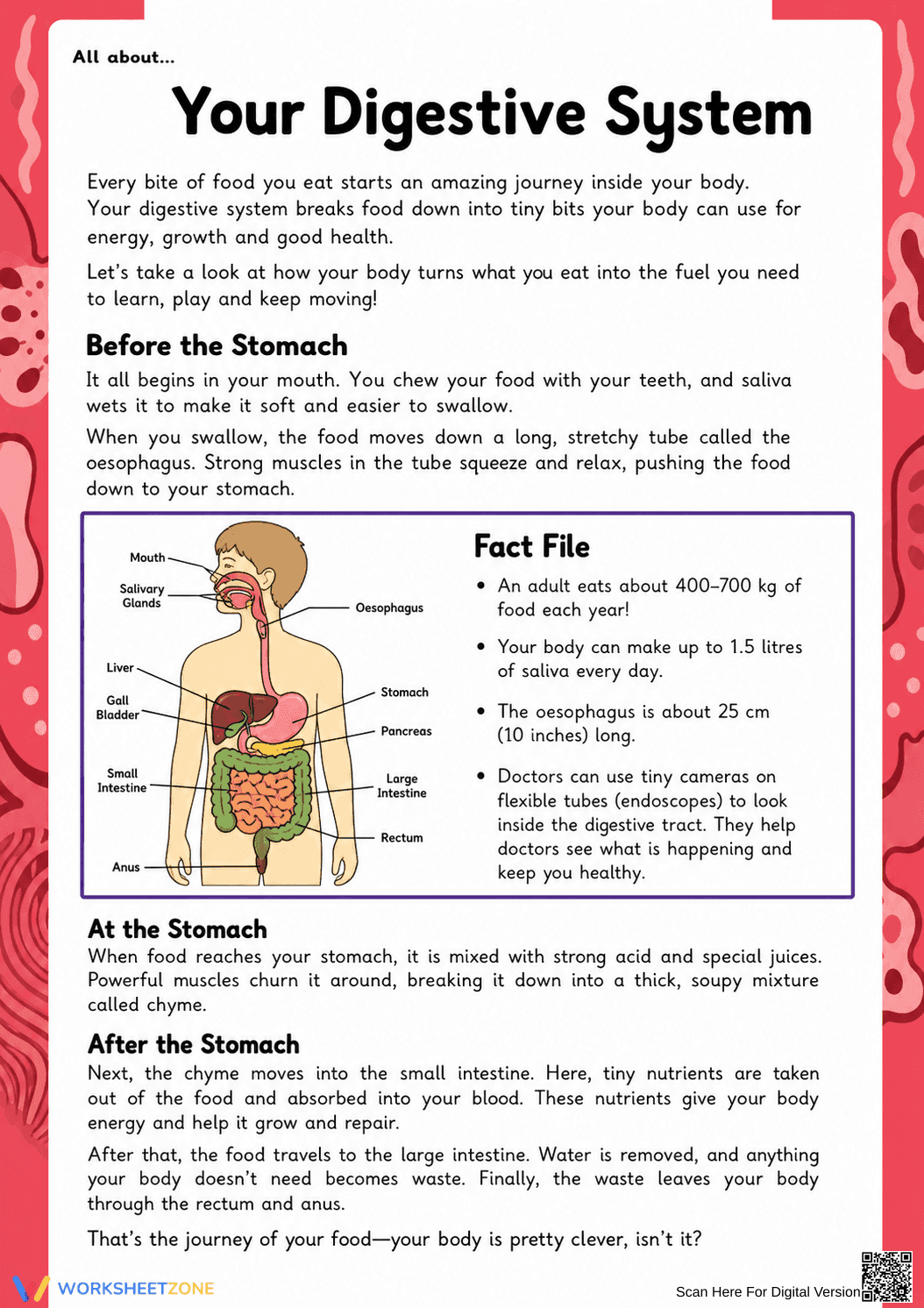
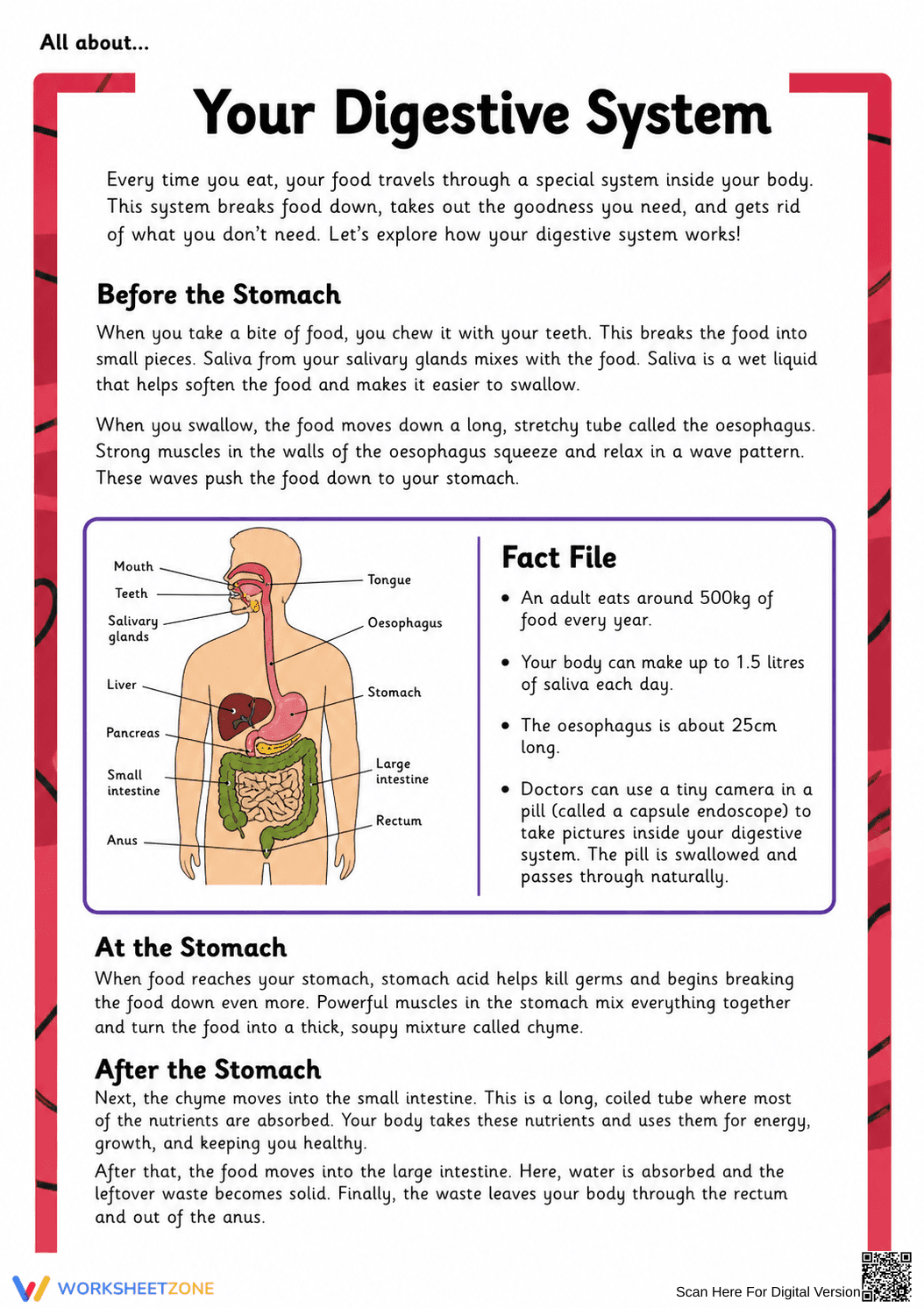
This comprehensive digestive system resource guides students through the complex journey of food from ingestion to excretion. By focusing on the mechanical and chemical breakdown of nutrients, students develop a functional understanding of how internal structures support survival and growth. This worksheet ensures students can identify key organs and explain their specific roles in the human body.
At a Glance
- Grade: 7 · Subject: Science
- Standard:
MS-LS1-3— Use evidence to explain how the body is a system of interacting subsystems- Skill Focus: Anatomy labeling and process sequencing
- Format: 11 pages · 45 problems · Answer key included · PDF
- Best For: Life science units and anatomy review
- Time: 30–45 minutes
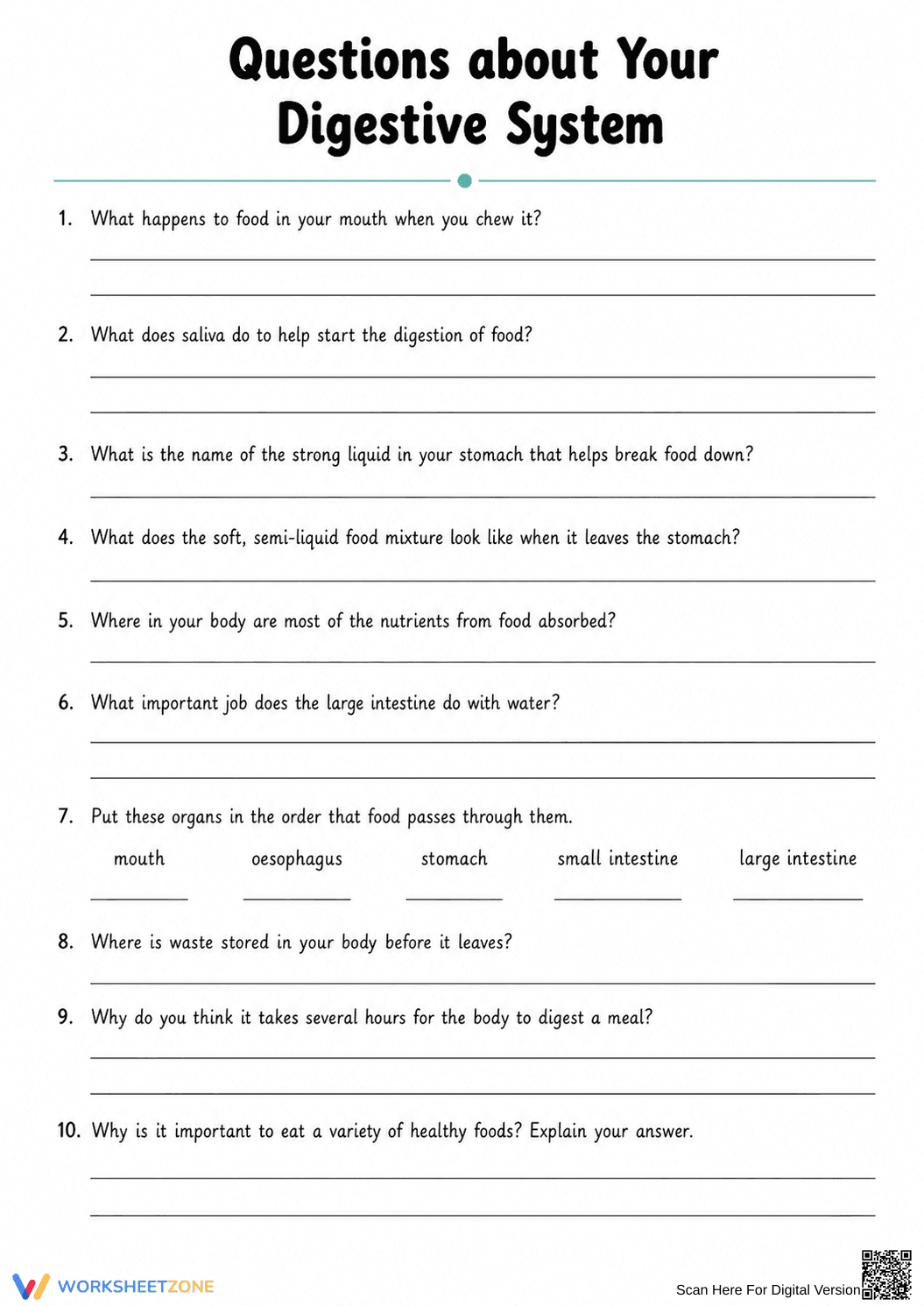
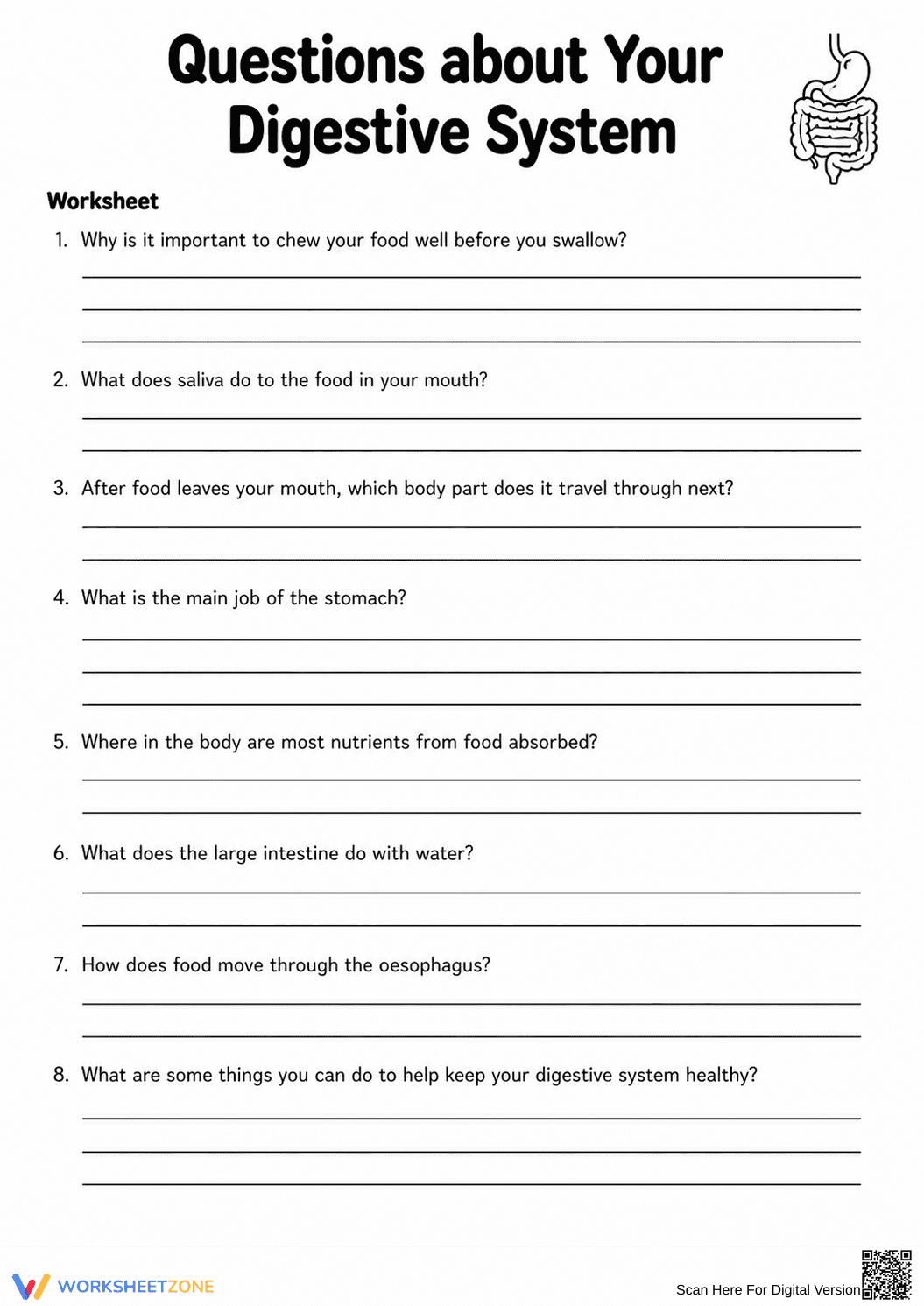
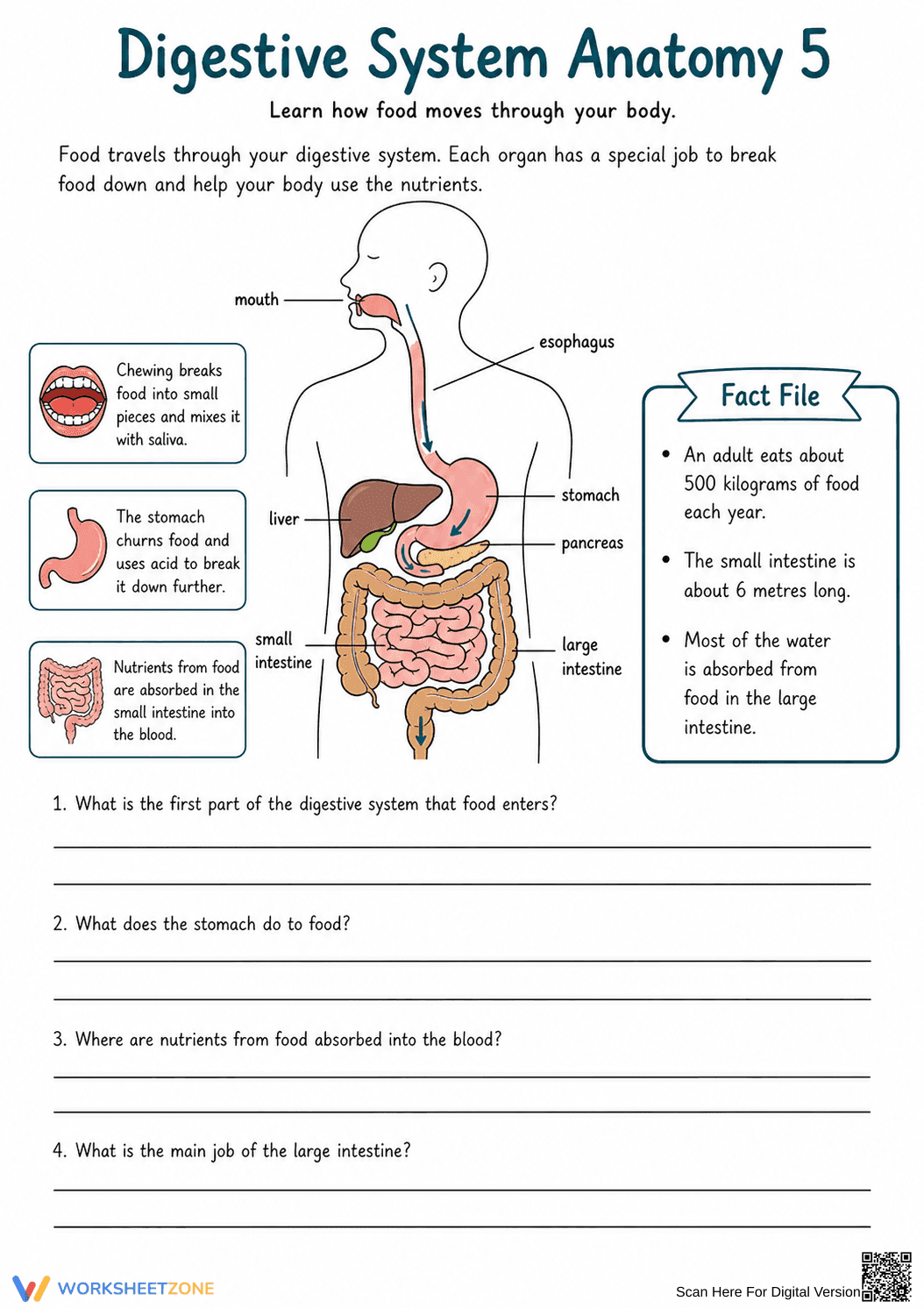
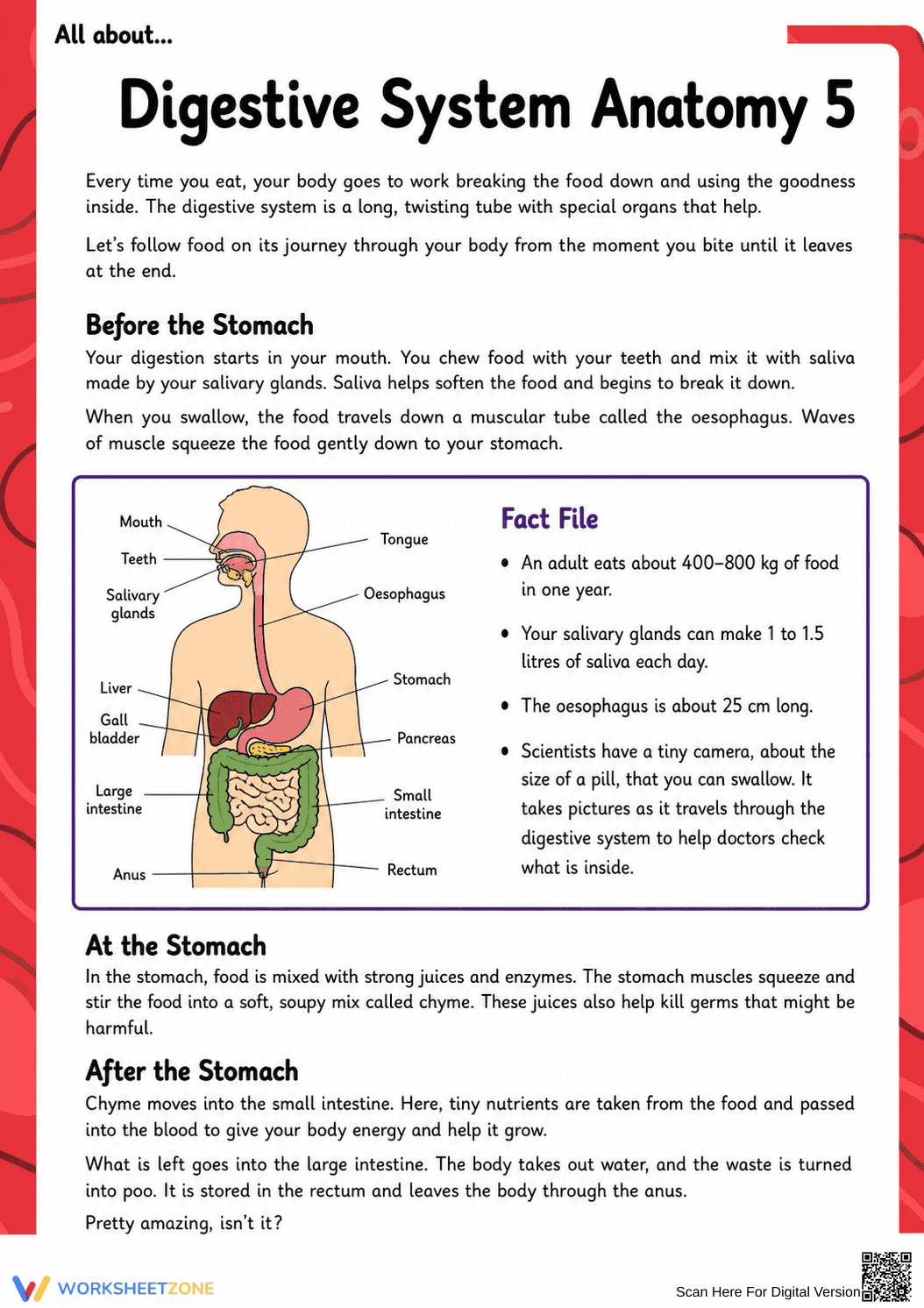
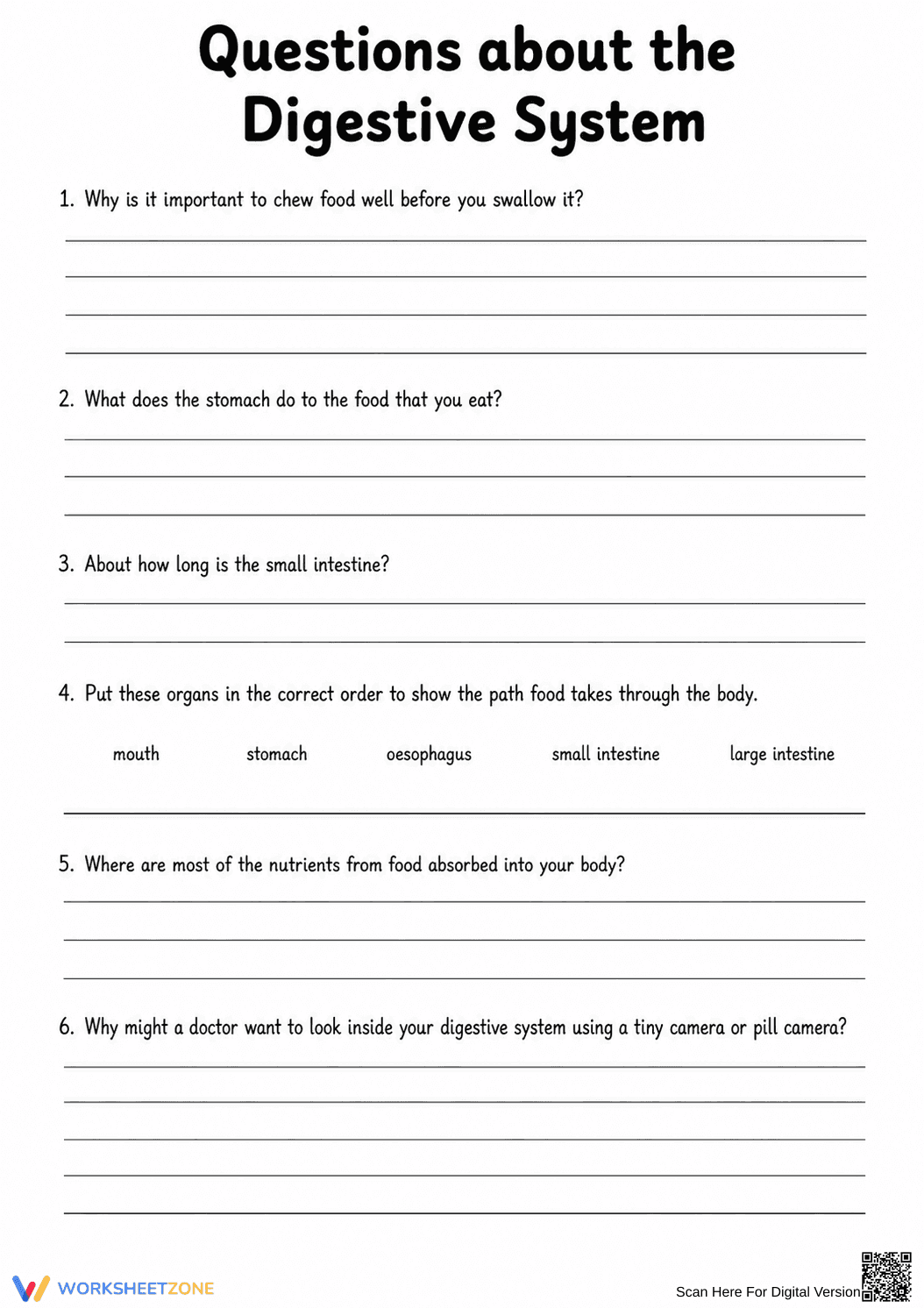
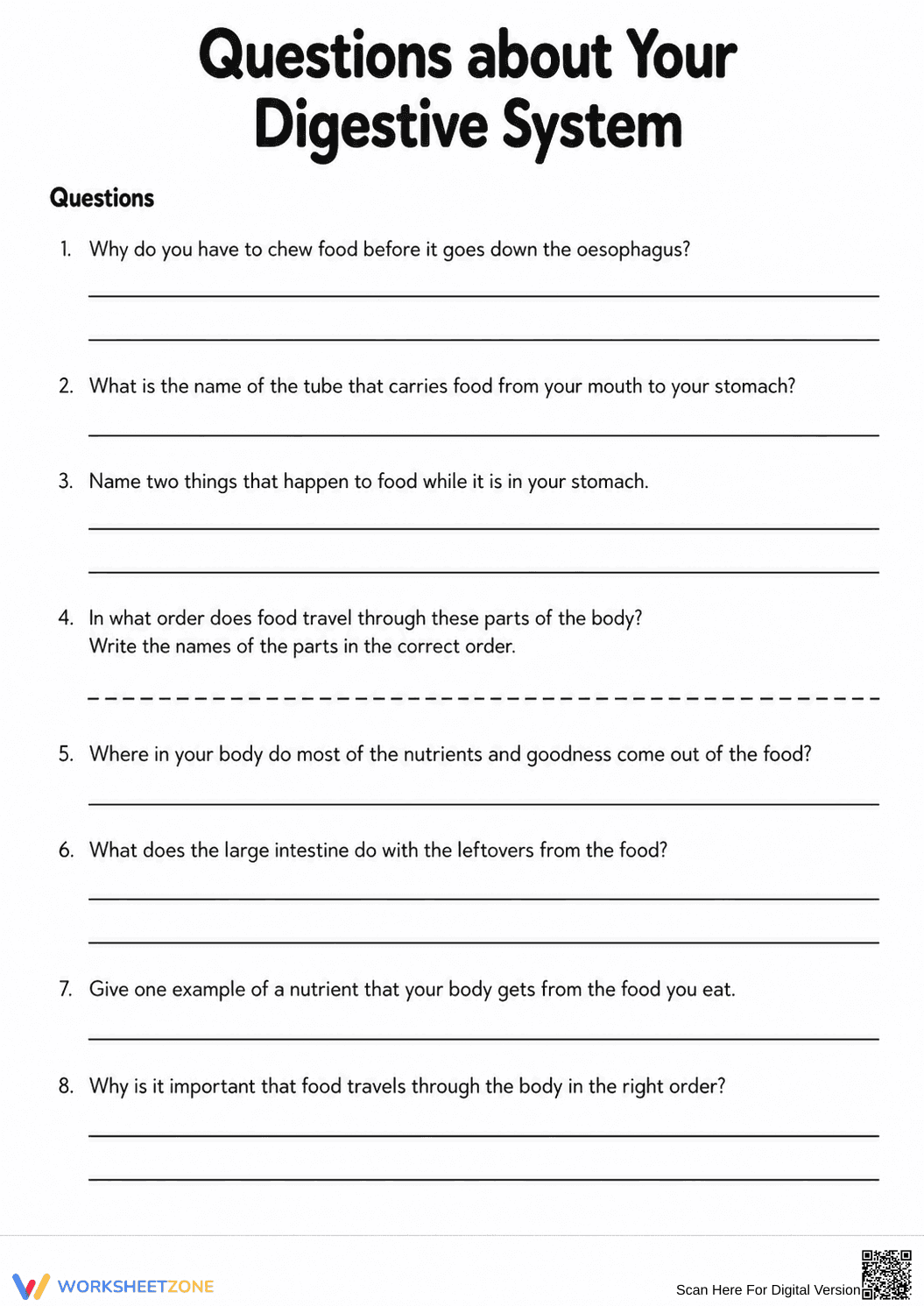
What's Inside: This 11-page printable pack features multiple versions of informational texts, detailed anatomical diagrams for labeling, and structured question sets. Each version includes a "Fact File" to ground biological concepts in real-world statistics, such as saliva production and organ length. The layout uses clear headers and bold terminology to support academic vocabulary acquisition across 45 total tasks.
Level Descriptions
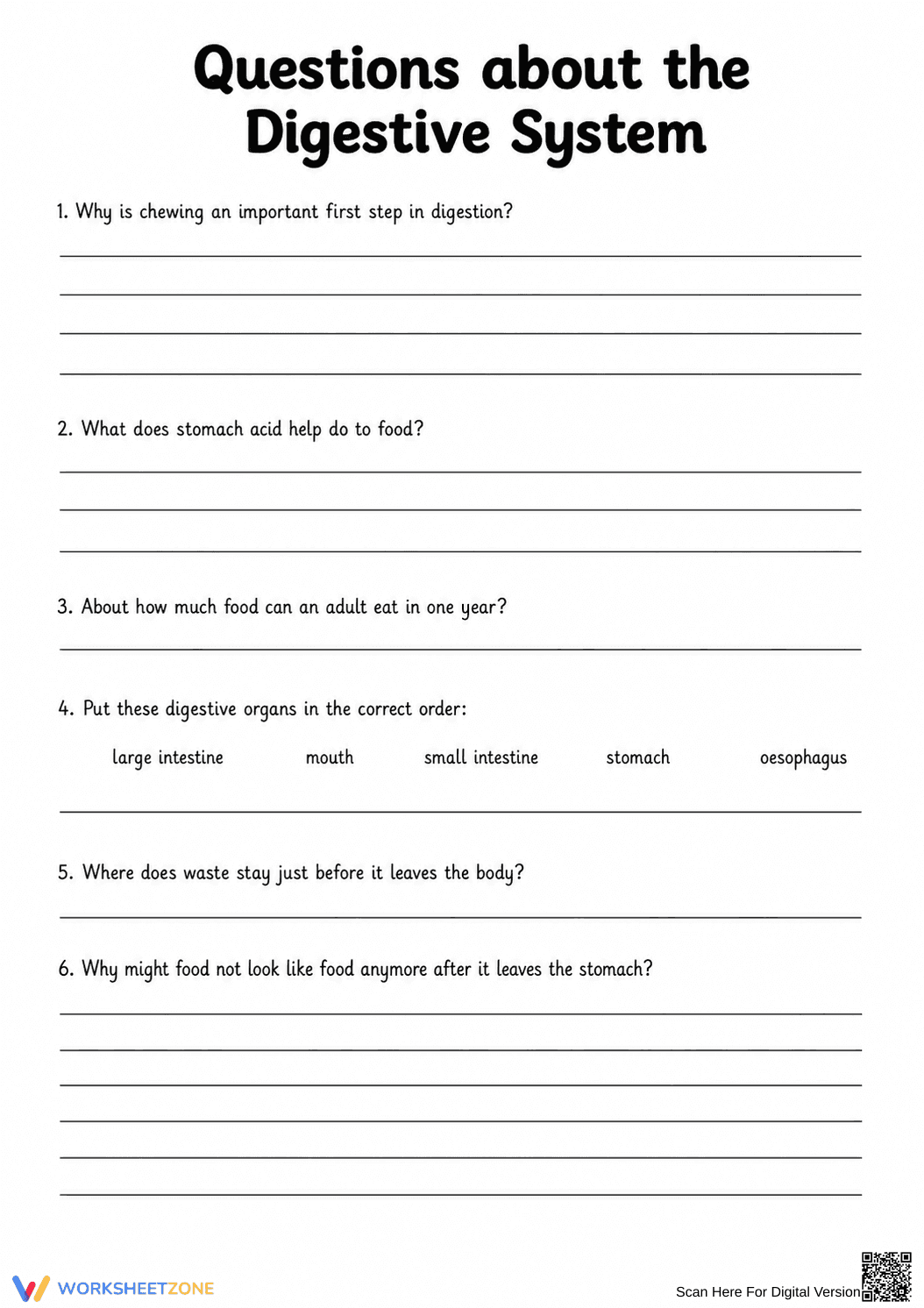
- Below Grade: Features simplified text with heavy visual support, including a labeled diagram and 4-6 direct-recall questions to build confidence in basic anatomy.
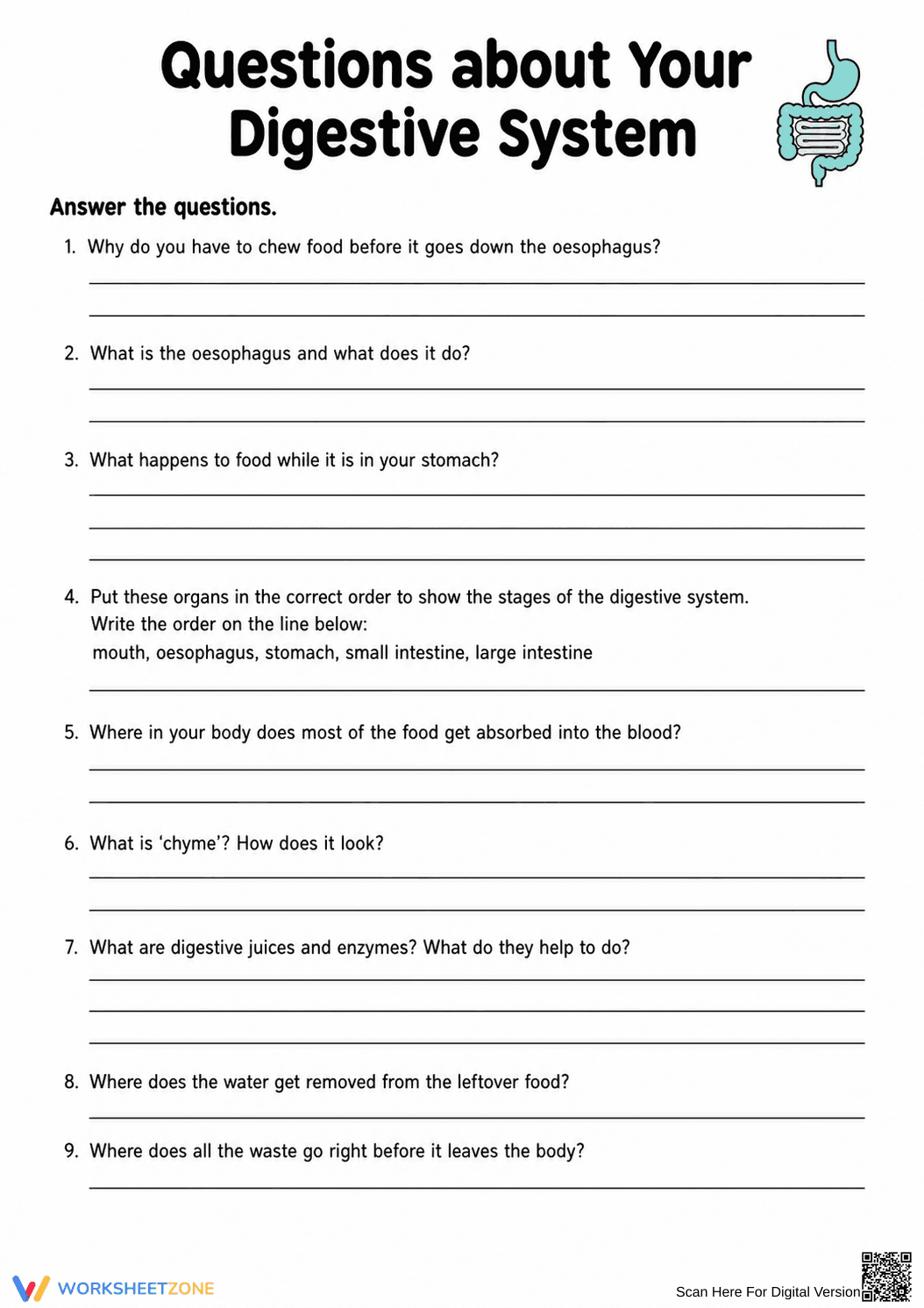
- On Grade: Provides a balanced mix of descriptive text and 8-10 questions that require students to sequence the digestive process and explain organ functions.
- Above Grade: Challenges students with complex technical vocabulary (e.g., chyme, enzymes) and open-ended prompts requiring synthesis of how the digestive system interacts with the circulatory system.
Standards Alignment: This resource is specifically designed to meet `MS-LS1-3`, which requires students to provide evidence for how the body is a system of multiple interacting subsystems. By tracing the path of food through various organs, students see the digestive tract as a specialized subsystem. This standard code can be copied directly into lesson plans, IEP goals, or district curriculum mapping tools.
How to Use It: Assign the reading and labeling pages during the "Explore" phase of a 5E lesson cycle to allow students to gather facts independently. For formative assessment, use the sequencing questions to observe if students understand the transition from the stomach to the small intestine. Expected completion time ranges from 30 minutes for the basic version to 45 minutes for the extended analysis.
Who It's For: This pack is ideal for middle school life science students, particularly those requiring varied entry points into complex biological texts. It serves as an excellent pairing for a laboratory dissection or a virtual 3D anatomy tour, providing the necessary paper-based reinforcement for long-term retention.
According to Fisher & Frey (2014), the use of scaffolded informational texts in science instruction significantly improves the ability of diverse learners to master complex domain-specific vocabulary. This worksheet applies those principles by providing three distinct levels of text complexity for the same anatomical concepts, ensuring that all students can access the MS-LS1-3 standard regardless of their current reading level. By integrating visual diagrams with quantitative data in the "Fact File" sections, the resource mirrors the multi-modal nature of modern scientific communication. Research indicates that students who engage with both visual and textual representations of biological systems demonstrate a 22% higher retention rate on summative assessments compared to those using text alone. This resource provides the structured practice necessary for students to move from basic identification to explaining the systemic interactions of the human digestive tract.


