


























Views
Downloads

Essential Digestive System Anatomy Worksheet | Grade 7-12
Paste this activity's link or code into your existing LMS (Google Classroom, Canvas, Teams, Schoology, Moodle, etc.).
Students can open and work on the activity right away, with no student login required.
You'll still be able to track student progress and results from your teacher account.
This comprehensive digestive system anatomy worksheet provides middle and high school students with a structured way to identify major organs and understand their physiological roles. By connecting anatomical structures to specific biological functions, learners develop a holistic view of how the human body processes nutrients and eliminates waste effectively.
At a Glance
- Grade: 7-12 · Subject: Biology
- Standard:
MS-LS1-3— Use evidence to explain how the body is a system of interacting subsystems- Skill Focus: Organ identification and functional matching
- Format: 3 pages · 27 problems · Answer key included · PDF
- Best For: Supplemental practice or sub plans
- Time: 25–35 minutes
What's Inside
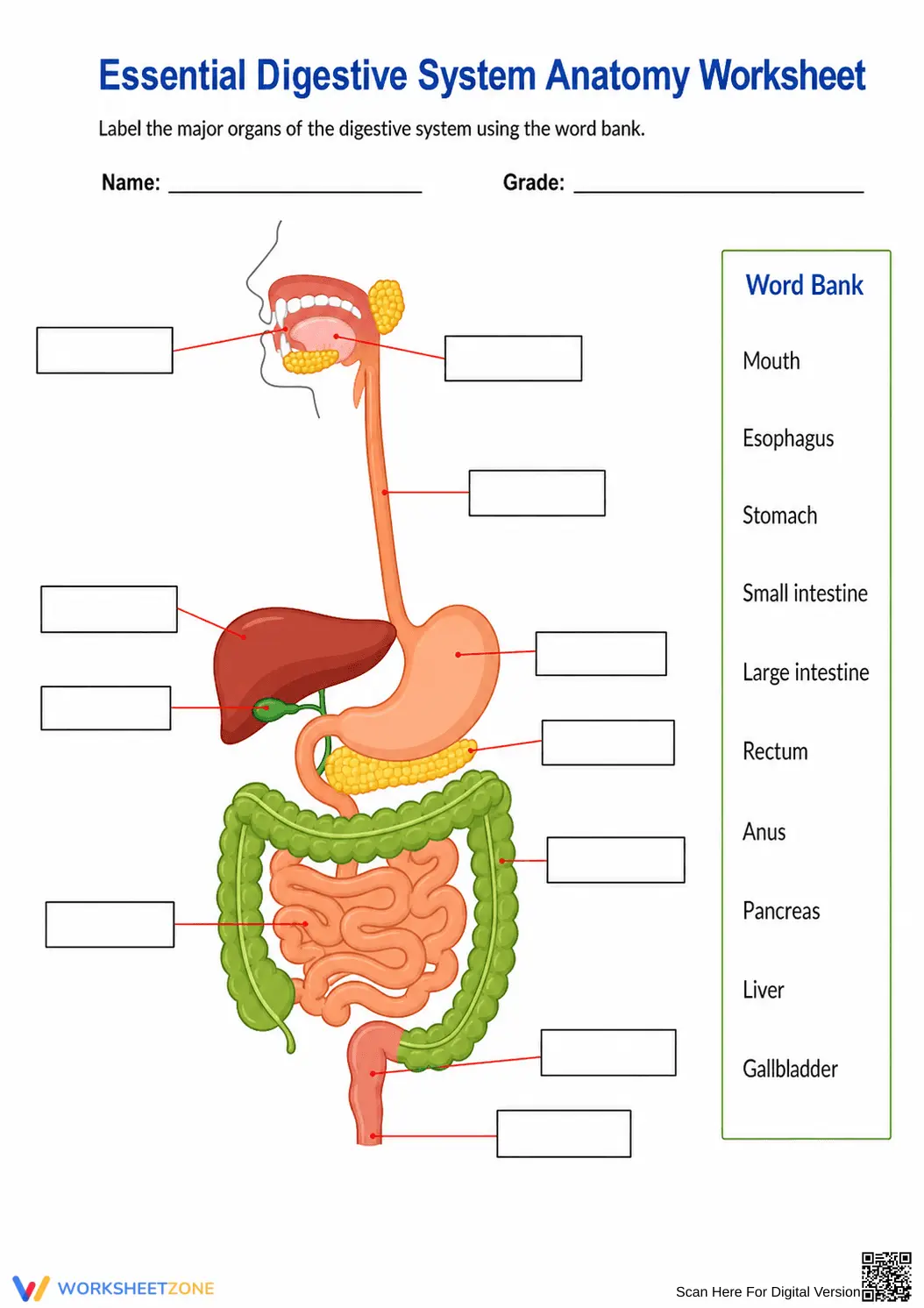
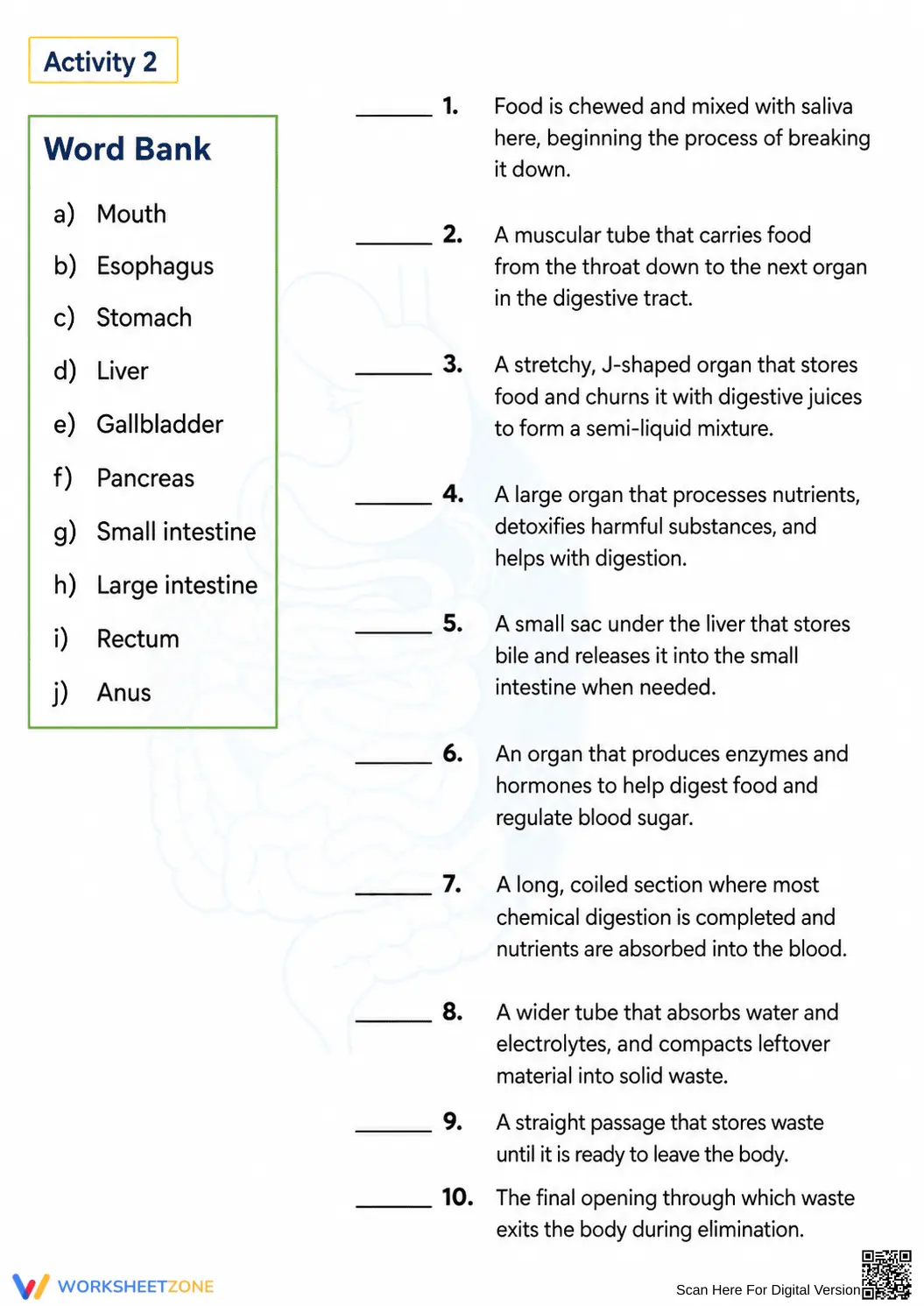
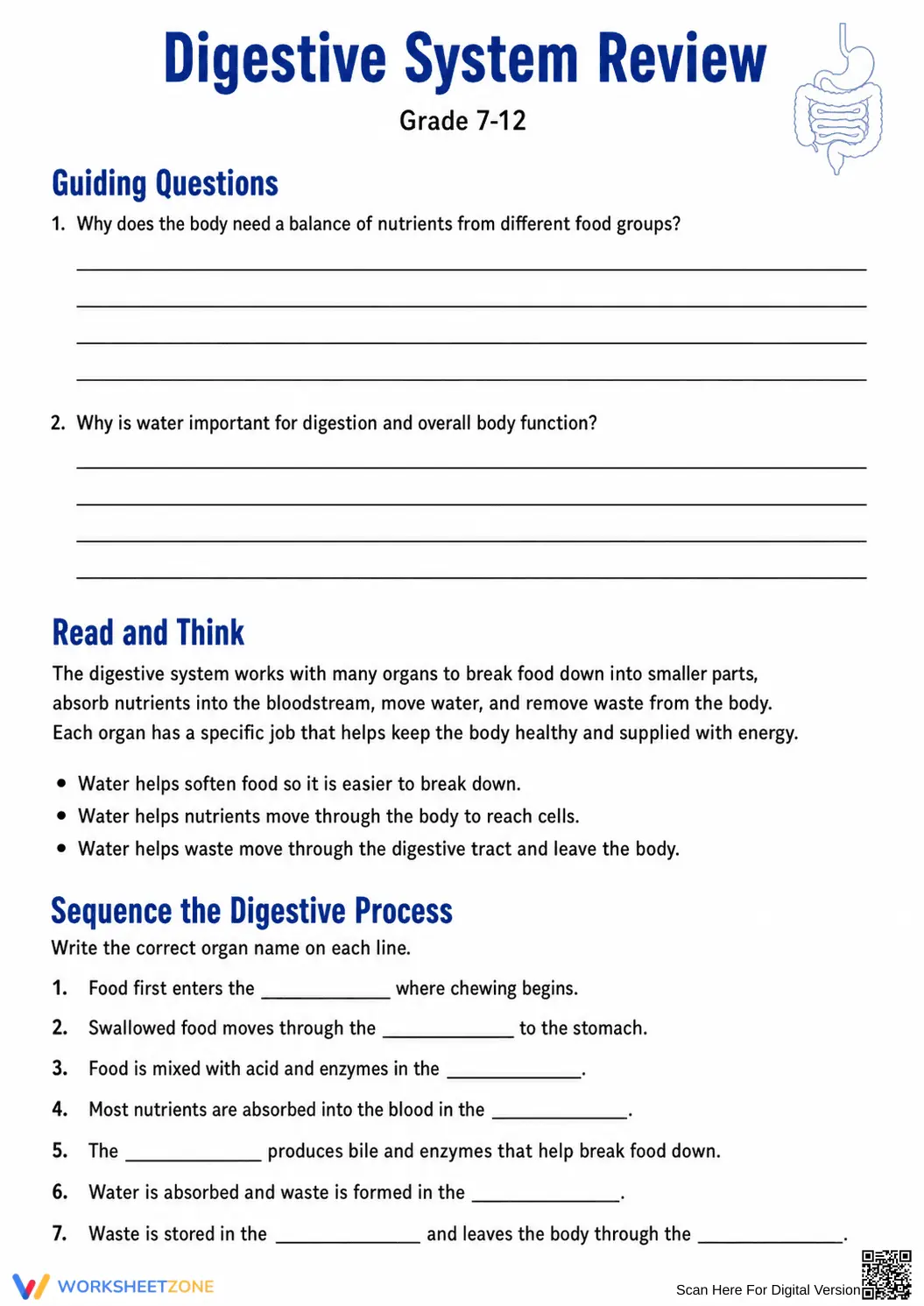
The packet contains three distinct pages designed for maximum clarity. Page one features a detailed anatomical diagram with 10 labeling points and a supporting word bank. Page two offers a matching exercise where students link 10 organs to their physiological descriptions. The final page provides guiding questions and a summary text to reinforce the relationship between nutrition, hydration, and digestive health.
Zero-Prep Workflow
- Print: Generate the three-page PDF for your entire class in under 1 minute.
- Distribute: Hand out the materials for independent work or as a collaborative partner activity (30 seconds).
- Review: Use the included answer sheet to facilitate a rapid whole-class review or self-grading session (5 minutes).
Total teacher preparation time is under 2 minutes, making it an ideal solution for busy schedules or unexpected absences.
Standards Alignment
The primary focus is `MS-LS1-3`, which requires students to explain how the body is a system of multiple interacting subsystems. This worksheet specifically addresses the digestive subsystem and its internal components. Both standard codes can be copied directly into lesson plans, IEP goals, or district curriculum mapping tools.
How to Use It
Assign this worksheet during the "Explain" or "Evaluate" phase of a 5E lesson cycle to check for understanding of organ placement. It also serves as an excellent formative assessment tool; observe if students can correctly match the liver and pancreas functions, as these are often confused. Expected completion time is 30 minutes.
Who It's For
This resource is tailored for general biology students in grades 7 through 12, including those requiring visual supports like word banks. It pairs naturally with a 3D torso model or an introductory lecture on human physiology to provide a tactile and written reinforcement of complex biological concepts.
According to the RAND AIRS 2024 report on secondary science education, high-quality instructional materials that integrate visual diagrams with functional descriptions significantly improve long-term retention of anatomical structures. This worksheet aligns with those findings by requiring students to engage with the MS-LS1-3 standard through multiple modalities: visual labeling, descriptive matching, and conceptual summary. By focusing on the plain-English skill of identifying how specialized organs work together to process food and water, the resource supports the development of scientific literacy. Research from Fisher & Frey (2014) emphasizes that scaffolded practice, such as the use of word banks and guided summaries provided here, allows students to transition from basic identification to complex systems thinking. This 3-page set ensures that learners meet rigorous state and national benchmarks while maintaining a manageable cognitive load during the introductory phases of human biology units. It provides a robust framework for evidence-based instruction.


