


























Views
Downloads

Grade 7-8 Digestive System — Printable No-Prep Worksheet
Paste this activity's link or code into your existing LMS (Google Classroom, Canvas, Teams, Schoology, Moodle, etc.).
Students can open and work on the activity right away, with no student login required.
You'll still be able to track student progress and results from your teacher account.
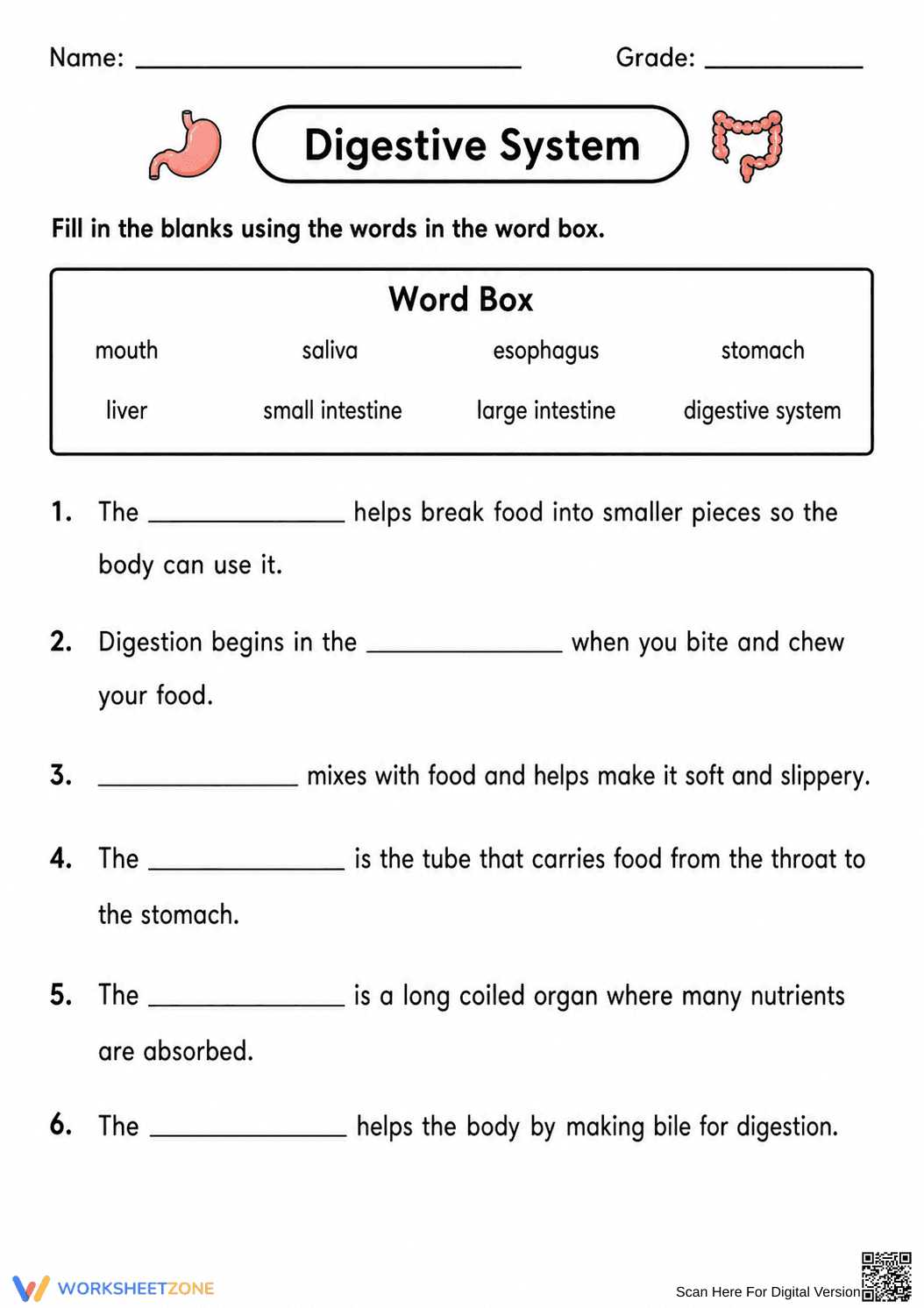
This Grade 7 and 8 science worksheet provides a structured approach to identifying the primary organs and functions of the human digestive system. Students use contextual clues to complete sentences, reinforcing their understanding of how biological subsystems interact to process nutrients. It serves as a foundational tool for mastering complex anatomical concepts.
At a Glance
- Grade: 7-8 · Subject: Science
- Standard:
MS-LS1-3— Describe how the body is a system of interacting subsystems and organs- Skill Focus: Digestive System Vocabulary
- Format: 3 pages · 8 problems · Full answer key included · PDF
- Best For: Introductory lessons, homework, review, and formative assessment
- Time: 15–20 minutes total
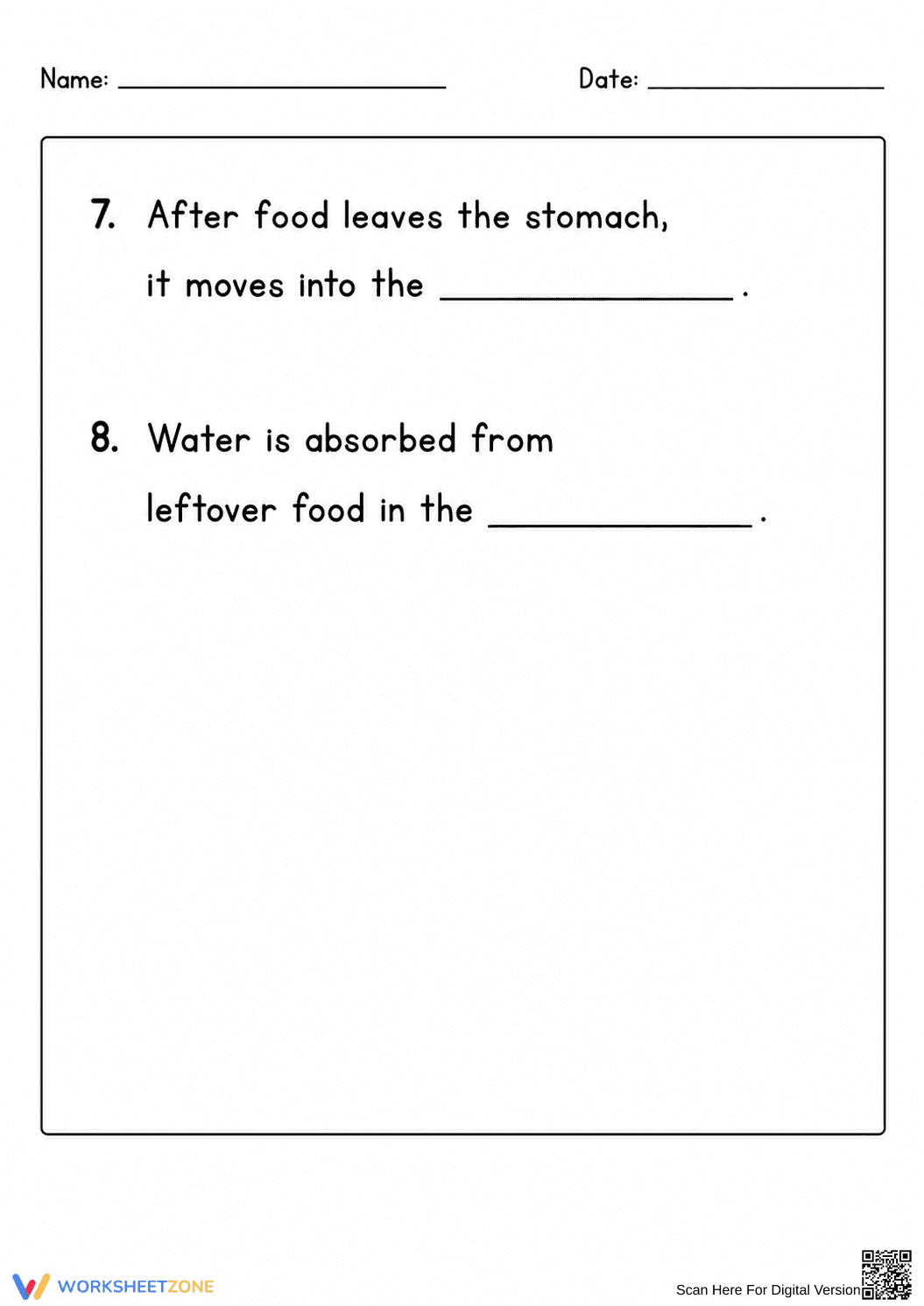
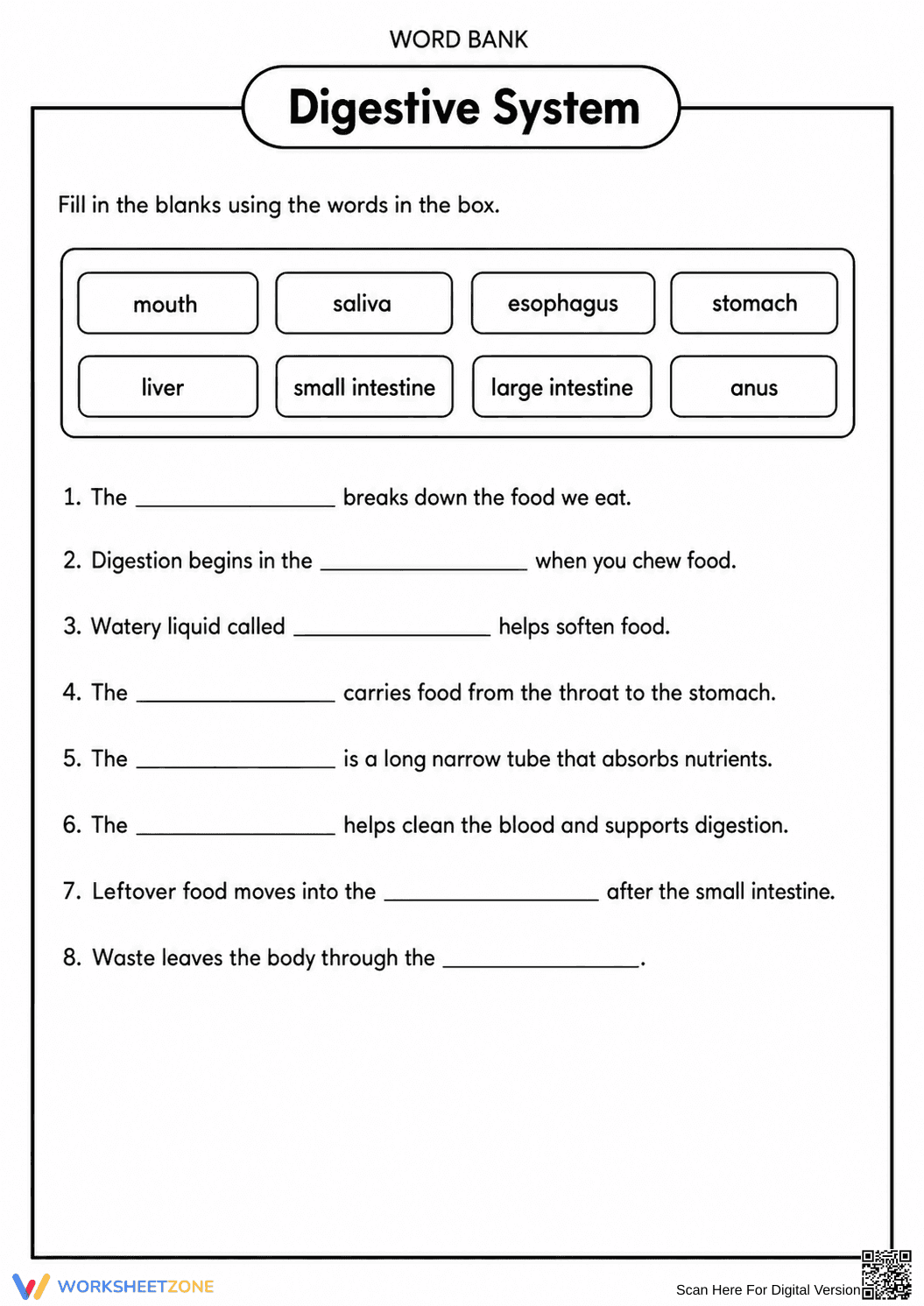
The resource includes three pages of content featuring two distinct versions of the digestive system activity. Each version contains 8 fill-in-the-blank questions supported by a clear word box. Key terms include the esophagus, small intestine, liver, and saliva. The layout is clean and distraction-free, ensuring students focus entirely on the physiological descriptions provided in each prompt.
The zero-prep workflow for this resource is designed for maximum efficiency in busy middle school classrooms. First, print the desired version (1 minute) based on your specific curriculum needs. Second, distribute the single-page handout to students for independent or partner work (10-15 minutes). Finally, review the answers using the provided key to provide immediate feedback (5 minutes).
Standards Alignment
This worksheet is aligned with `MS-LS1-3`, which requires students to understand how the body is a system of interacting subsystems. By identifying the specific roles of organs like the stomach and liver, students gather evidence for how these parts work together to maintain the organism. This standard code can be copied directly into lesson plans, IEP goals, or district curriculum mapping tools.
How to Use It
Use this worksheet during the Explain phase of a 5E lesson cycle to solidify vocabulary after an initial lab or simulation. It also functions effectively as a formative assessment exit ticket to gauge student readiness for more complex diagram-labeling tasks. Teachers should observe whether students can distinguish between the mechanical and chemical digestion cues within the sentences. Completion typically takes 15 to 20 minutes.
Who It's For
This resource is designed for middle school science students, including those requiring literacy support in technical subjects. The word bank provides a necessary scaffold for English Language Learners (ELL) and students with IEPs. It pairs naturally with a digestive system anchor chart or a short informational passage about the human body's nutrient absorption process.
The MS-LS1-3 standard emphasizes the importance of students recognizing the hierarchical organization of body systems. This worksheet facilitates that understanding by isolating the functions of the digestive subsystem through targeted vocabulary practice. According to the RAND AIRS 2024 report on science literacy, providing structured scaffolds like word banks significantly improves the retention of domain-specific terminology in middle school learners. By engaging with 8 specific tasks that describe the journey of food from the mouth to the large intestine, students build the conceptual framework necessary for higher-order biological analysis. This resource ensures that learners can accurately describe the student action of identifying organ roles within a larger system. The inclusion of multiple versions allows for flexible classroom implementation while maintaining rigorous alignment with national science frameworks. Educators can rely on this printable tool to provide consistent, evidence-based practice that supports long-term mastery of human anatomy.


