


























Views
Downloads

Digestive System Worksheet | Grade 6-8 Science Printable
Paste this activity's link or code into your existing LMS (Google Classroom, Canvas, Teams, Schoology, Moodle, etc.).
Students can open and work on the activity right away, with no student login required.
You'll still be able to track student progress and results from your teacher account.
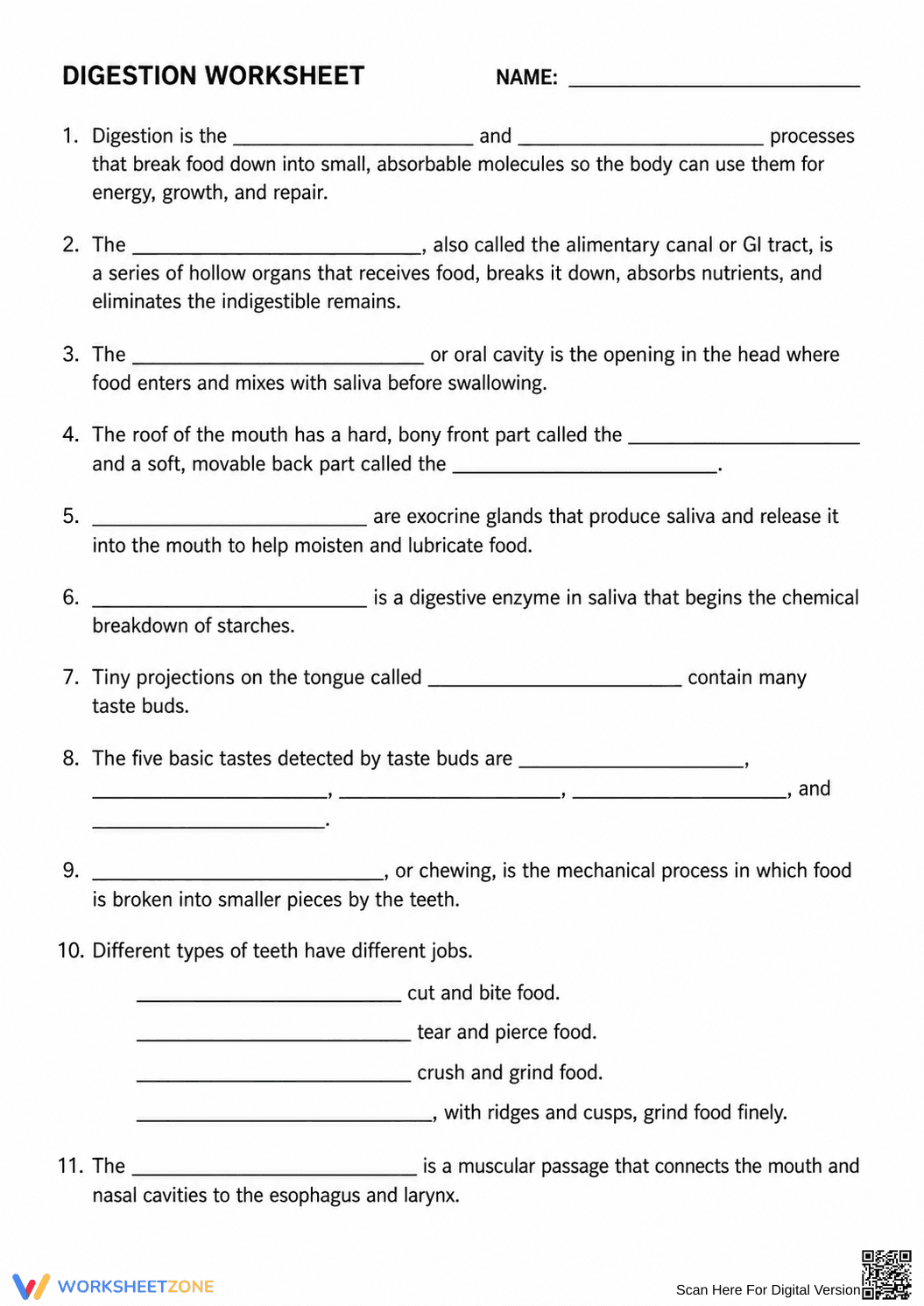
This comprehensive digestive system worksheet provides middle school students with targeted practice to master human anatomy and physiological processes. By completing detailed fill-in-the-blank exercises, learners will solidify their understanding of how organs function together to break down food, absorb nutrients, and eliminate waste.
At a Glance
- Grade: 7 · Subject: Science
- Standard:
MS-LS1-3— Understand how body subsystems interact to function- Skill Focus: Digestive system anatomy and processes
- Format: 5 pages · 34 problems · Answer key included · PDF
- Best For: Independent practice and review
- Time: 30–45 minutes
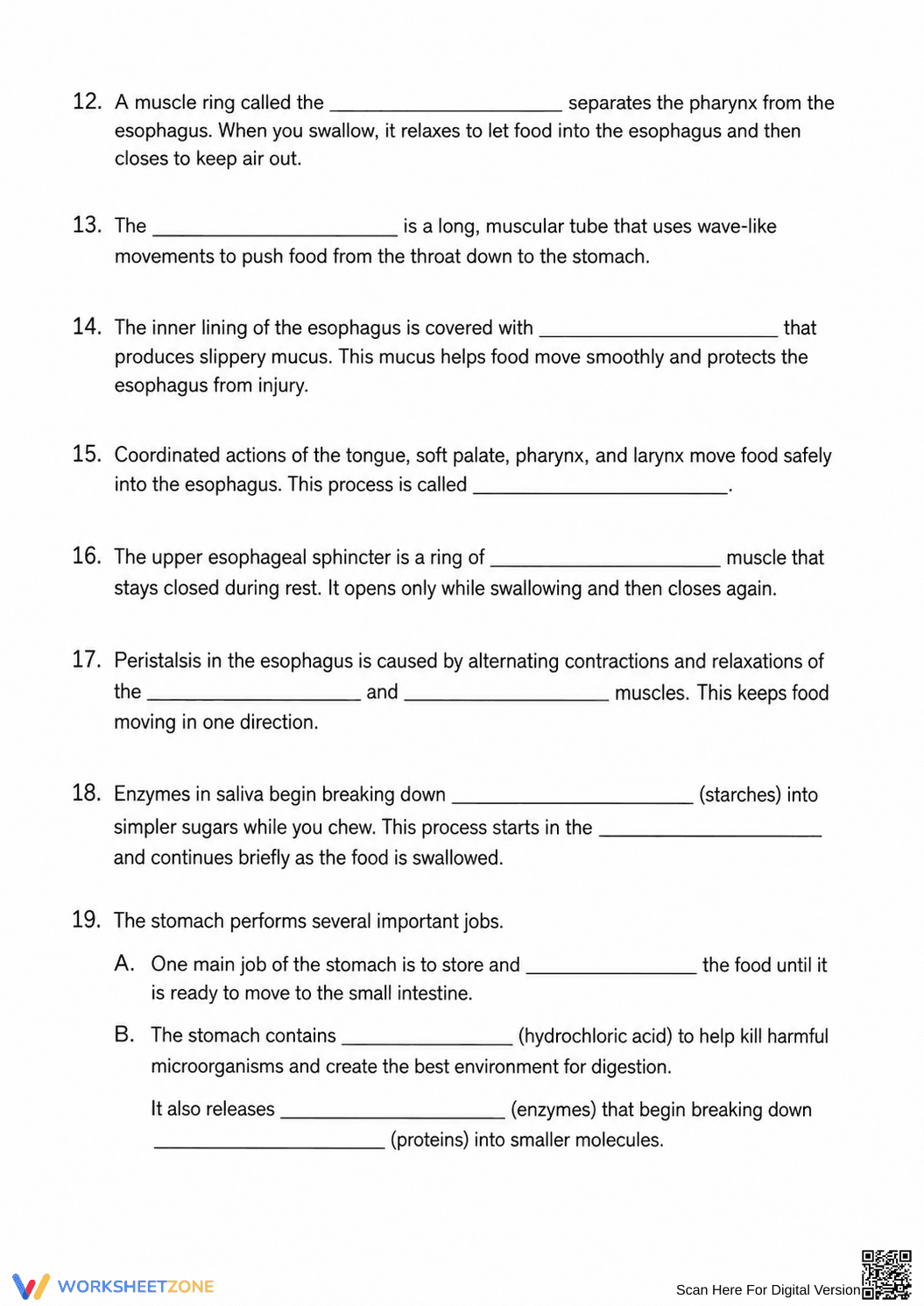
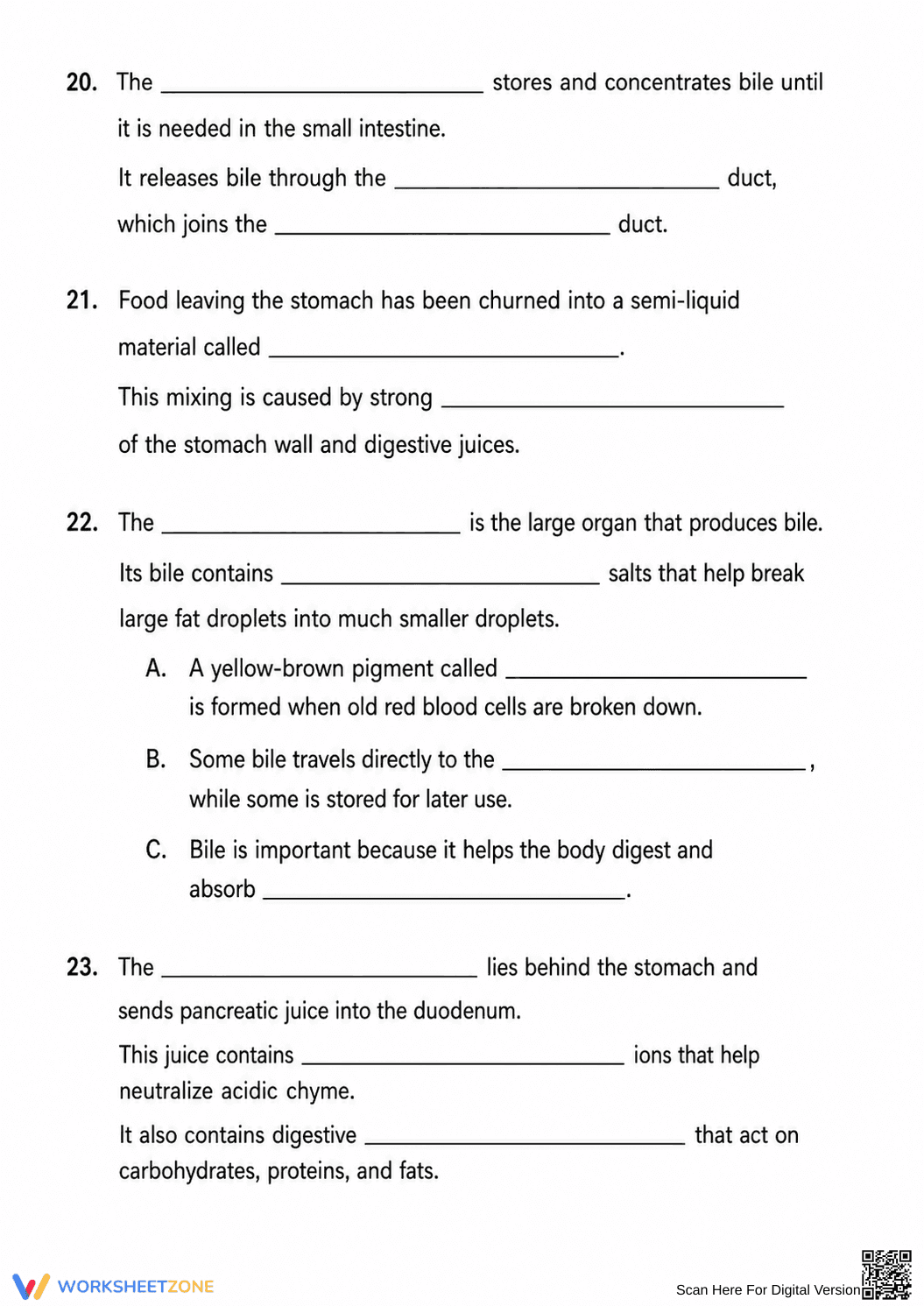
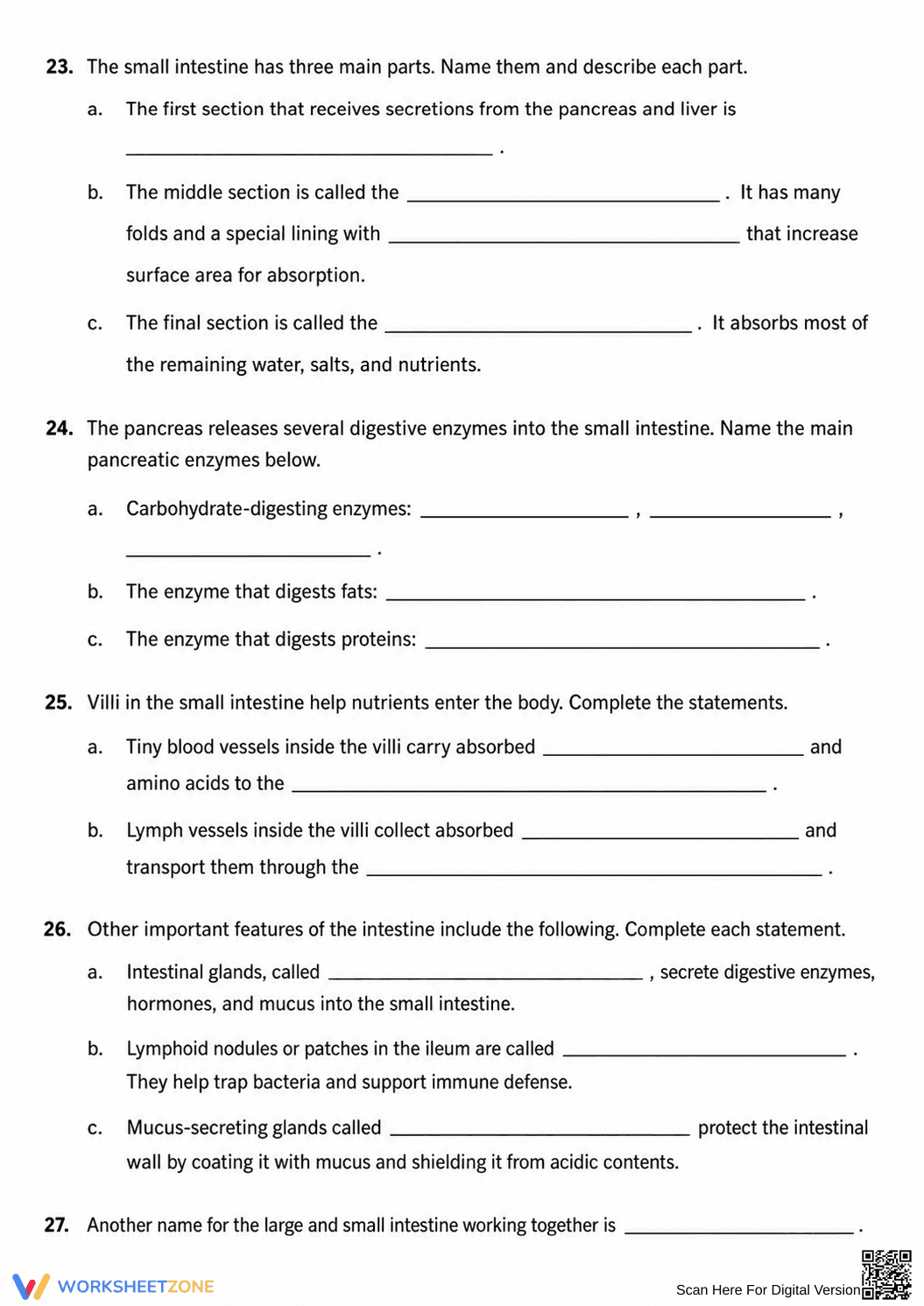
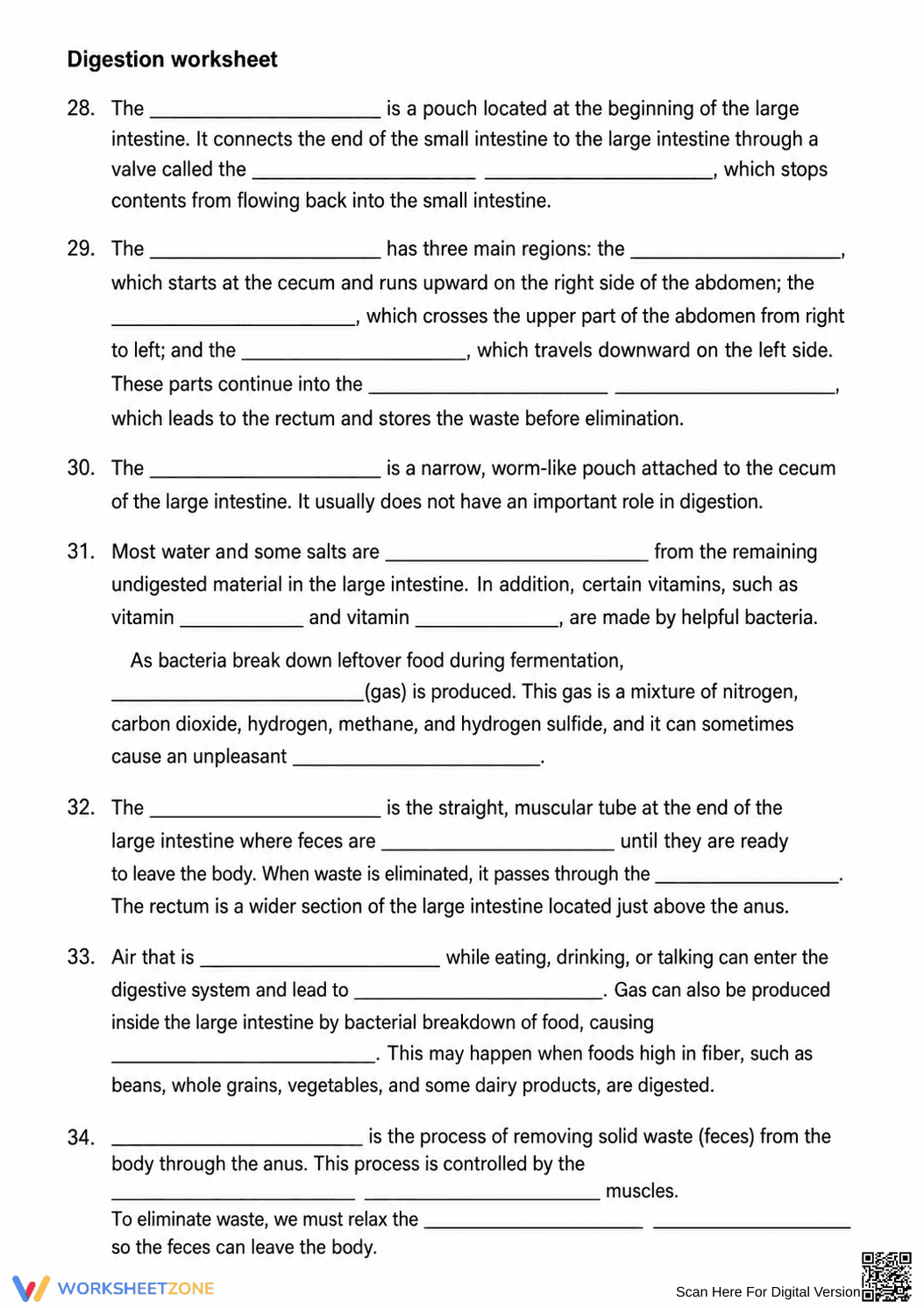
This resource features 34 multi-part fill-in-the-blank questions spread across five structured pages. Students will navigate sequentially through the digestive tract, starting from the oral cavity and salivary glands, moving through the stomach and intestines, and concluding with waste elimination. The extensive problem set requires students to recall specific anatomical terms, enzyme functions, and physiological mechanisms. A complete answer key is provided to streamline grading and support accurate student self-assessment.
- Guided practice: The initial questions focus on familiar structures like the mouth and esophagus, allowing students to build confidence with foundational vocabulary.
- Supported practice: As students progress to the stomach and small intestine, the prompts require deeper connections between organs, enzymes, and nutrient absorption.
- Independent practice: The final sections challenge learners to synthesize their knowledge of the entire gastrointestinal tract, including the roles of accessory organs like the pancreas and liver.
This gradual progression ensures students systematically build their comprehension of complex biological systems.
This worksheet is aligned to MS-LS1-3: "Use argument supported by evidence for how the body is a system of interacting subsystems composed of groups of cells." By detailing the specific roles of each digestive organ, students gather the necessary evidence to understand how the digestive subsystem supports the entire human body. Both standard codes can be copied directly into lesson plans, IEP goals, or district curriculum mapping tools.
Deploy this worksheet as an independent review activity after direct instruction on the human body systems. It serves as an excellent study guide or homework assignment to reinforce complex vocabulary before a unit exam. While students work, teachers can use the activity for formative assessment by observing how easily learners recall specific enzyme names versus general organ functions. Expected completion time ranges from 30 to 45 minutes, depending on the student's prior knowledge and reading level.
This resource is primarily designed for middle school science students in grades 6 through 8. It is easily differentiated for diverse learners by allowing the use of a textbook or interactive notebook as a reference guide during completion. For a comprehensive lesson, pair this worksheet with a visual anchor chart of the human body or a hands-on laboratory demonstration of chemical digestion.
Mastering scientific vocabulary is a critical step in understanding complex biological processes. This worksheet directly supports MS-LS1-3 by helping students understand how body subsystems interact to function. According to Fisher & Frey (2014), explicit vocabulary instruction combined with structured, repeated exposure significantly improves students' ability to comprehend and articulate complex informational texts in the sciences. By requiring learners to actively retrieve and apply specific anatomical terms within the context of the digestive system's sequential processes, this resource moves beyond rote memorization. Students build a robust mental model of human physiology, enabling them to better explain how individual organs collaborate to sustain life. This targeted practice ensures that foundational knowledge is securely embedded, preparing students for more advanced biological concepts in high school and beyond.


