




























Views
Downloads

Digestive System Worksheet | Grade 7-12 Printable

Paste this activity's link or code into your existing LMS (Google Classroom, Canvas, Teams, Schoology, Moodle, etc.).
Students can open and work on the activity right away, with no student login required.
You'll still be able to track student progress and results from your teacher account.
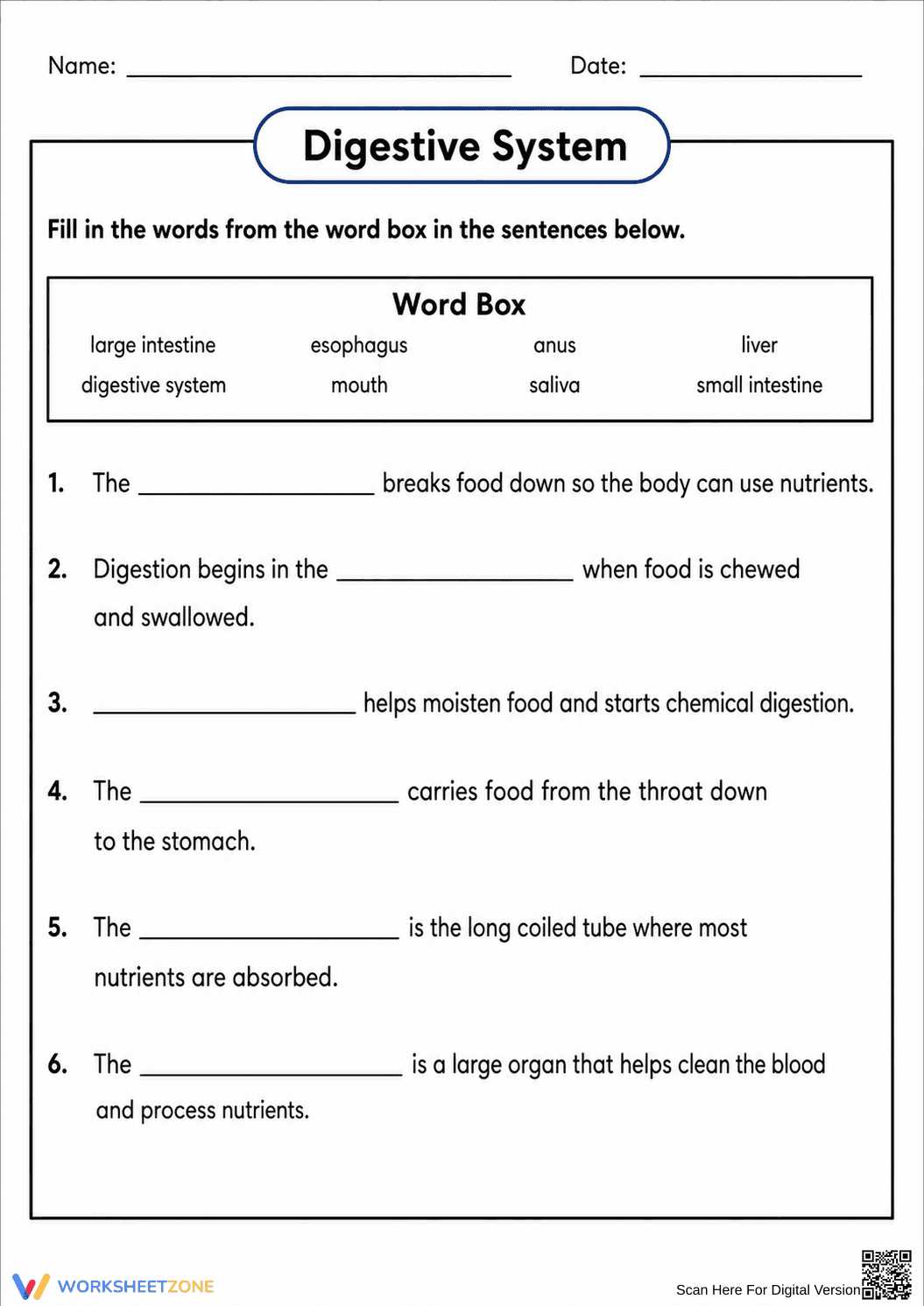
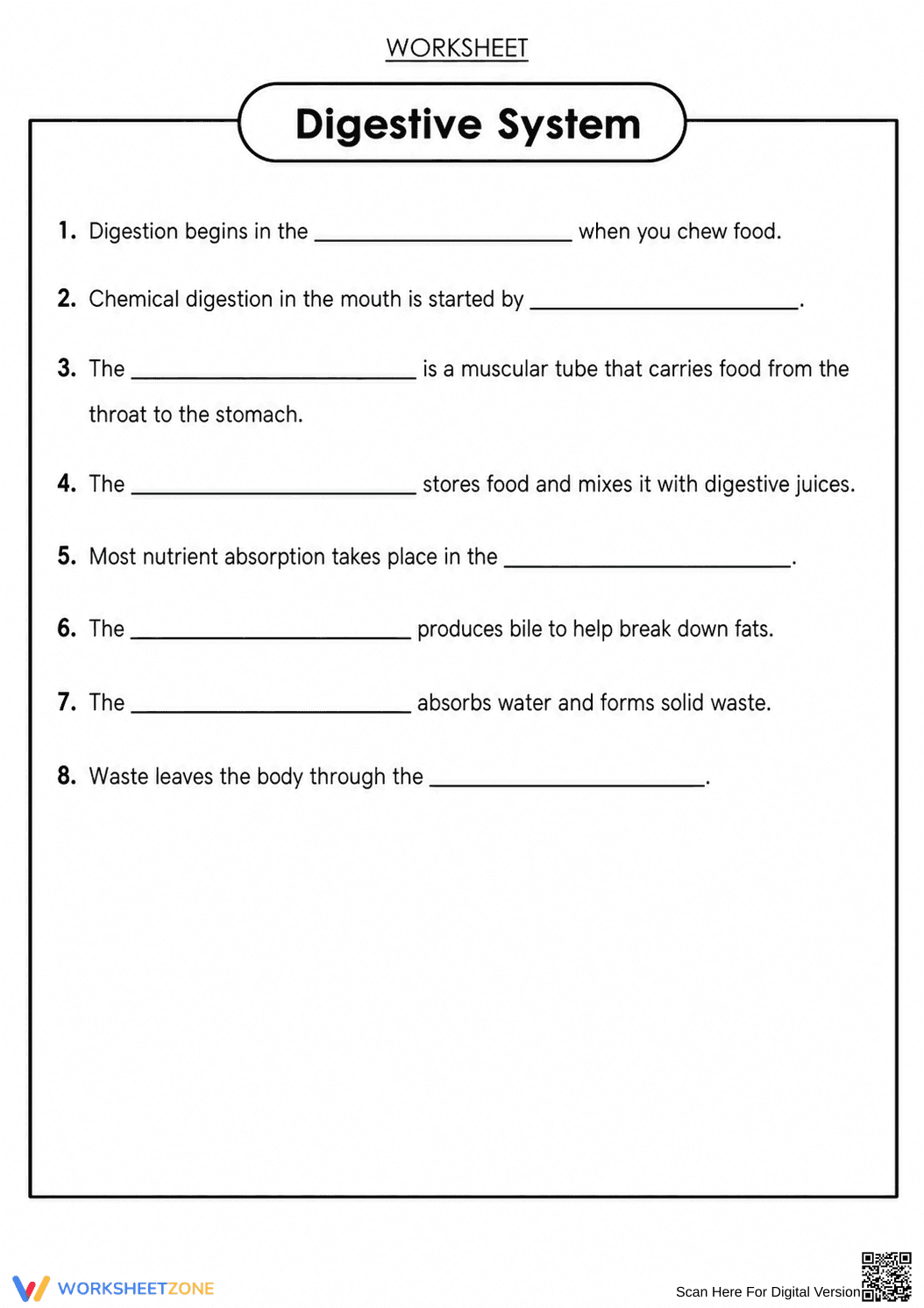
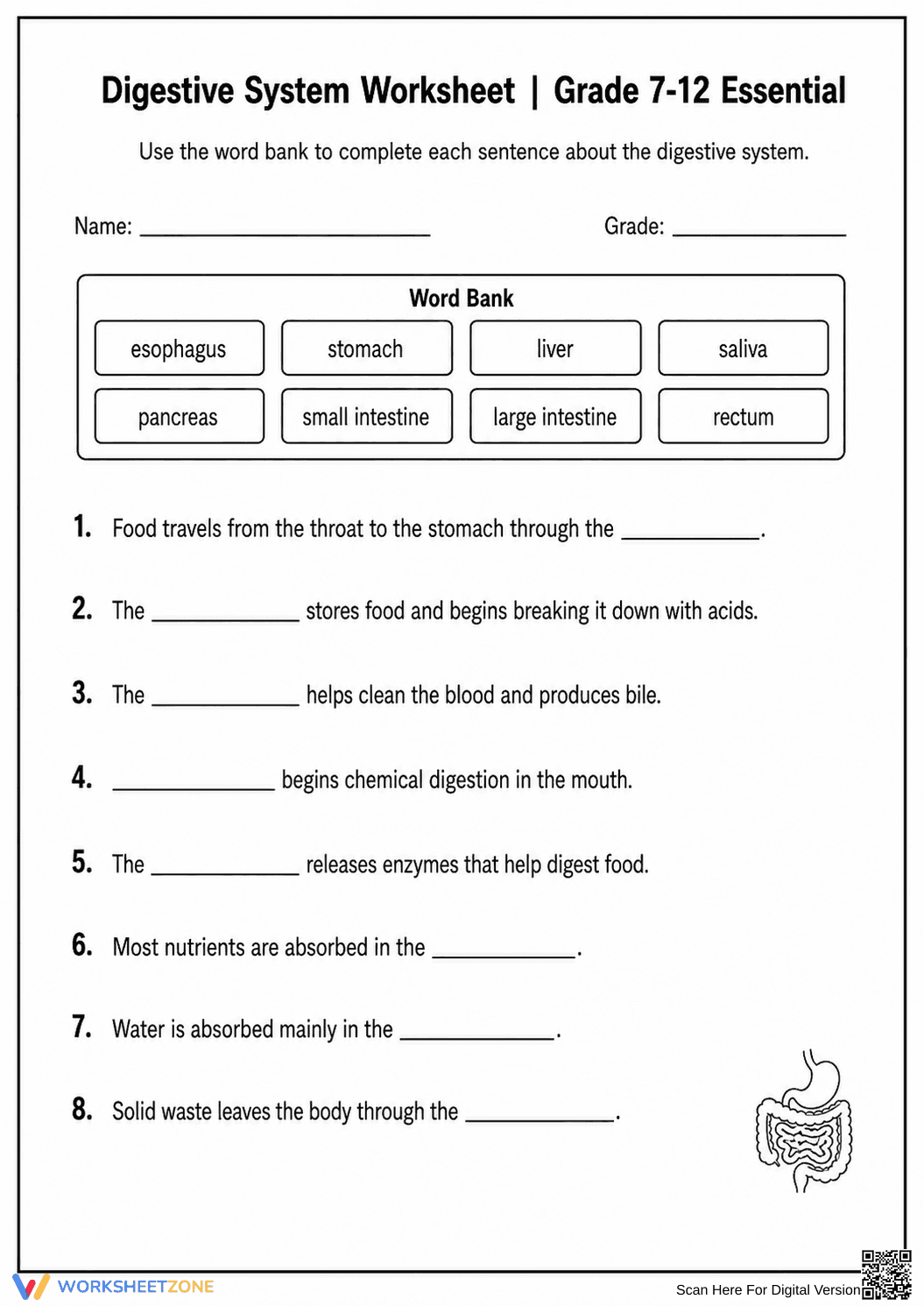
This Grade 7-12 biology worksheet provides students with targeted practice identifying digestive system organs and their specific functions. By matching anatomical terms to their biological roles, learners build a concrete understanding of how the human body processes nutrients and maintains homeostasis.
At a Glance
- Grade: 7-12 · Subject: Biology
- Standard:
MS-LS1-3— Identify specific organ roles and functions within the human digestive subsystem- Skill Focus: Digestive organ identification
- Format: 2 pages · 8 problems · Answer key included · PDF
- Best For: Quick review or sub plans
- Time: 10–15 minutes
This resource features 8 descriptive fill-in-the-blank sentences requiring students to select the correct anatomical term from a provided word box. The layout spans 2 pages to ensure readability and includes a comprehensive answer key for immediate feedback. Key terms covered include the liver, saliva, esophagus, and large intestine, focusing on both mechanical and chemical digestion processes.
Zero-Prep Workflow
- Print: Select the single-sided or double-sided print option for the 2-page document (1 minute).
- Distribute: Hand out the sheets as a bell-ringer, exit ticket, or independent practice activity (1 minute).
- Review: Use the included answer key for peer-grading or whole-class review sessions (5 minutes).
Total teacher prep time is under 2 minutes, making this an ideal emergency sub plan or quick formative assessment tool for busy science classrooms.
The primary focus is MS-LS1-3, which requires students to use argument supported by evidence for how the body is a system of interacting subsystems composed of groups of cells. This worksheet specifically addresses the digestive subsystem and its internal components. Both standard codes can be copied directly into lesson plans, IEP goals, or district curriculum mapping tools.
Assign this worksheet during the independent practice phase of a lesson to solidify vocabulary after a lab or lecture. It also serves as an excellent formative assessment observation tool; notice if students struggle with the distinction between the small and large intestine functions. Expected completion time is 10 to 15 minutes for most middle and high school learners.
Designed for middle and high school biology students, this resource supports general education and ELL learners through the use of a scaffolded word bank. It pairs naturally with a digestive system diagram or a direct instruction lesson on nutrient absorption and the role of the liver in cleaning the blood.
According to the RAND AIRS 2024 report on instructional materials, structured vocabulary practice in science significantly improves long-term retention of complex biological processes. This worksheet aligns with MS-LS1-3 by focusing on the specific student action of identifying organ roles within the digestive system. By providing a clear word bank, the resource reduces cognitive load, allowing students to focus entirely on the functional relationships between the esophagus, stomach, and intestines rather than simple memorization. Consistent exposure to these terms ensures that learners can accurately describe how the digestive system breaks down food and cleans the blood. This 8-task printable provides a necessary foundation for higher-order systems thinking in advanced biology courses, ensuring students are fully prepared for subsequent units on human anatomy and cellular energy.


