




























Views
Downloads

Digestive System Worksheet (3 Levels) | Grade 7 Ready

Paste this activity's link or code into your existing LMS (Google Classroom, Canvas, Teams, Schoology, Moodle, etc.).
Students can open and work on the activity right away, with no student login required.
You'll still be able to track student progress and results from your teacher account.
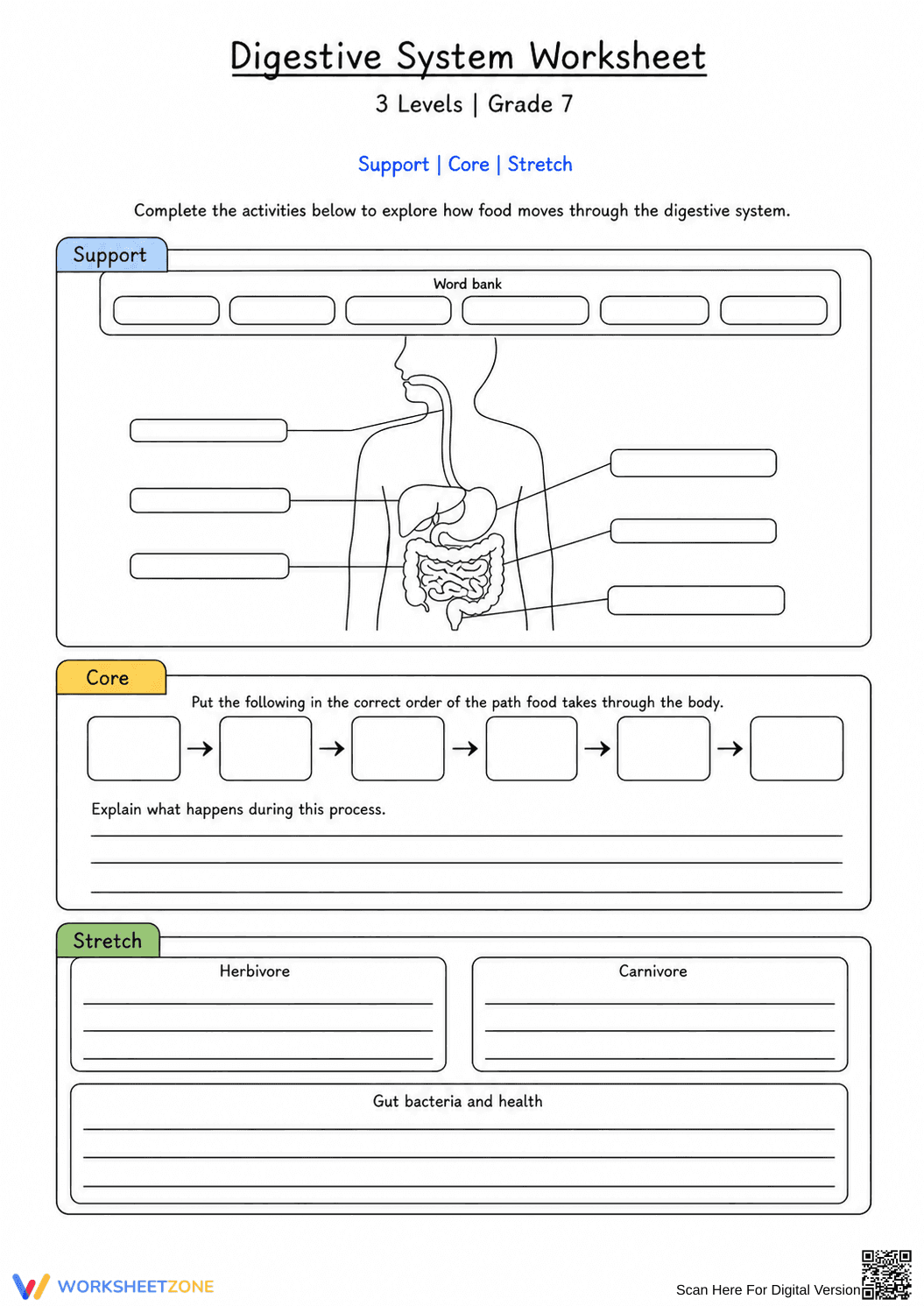
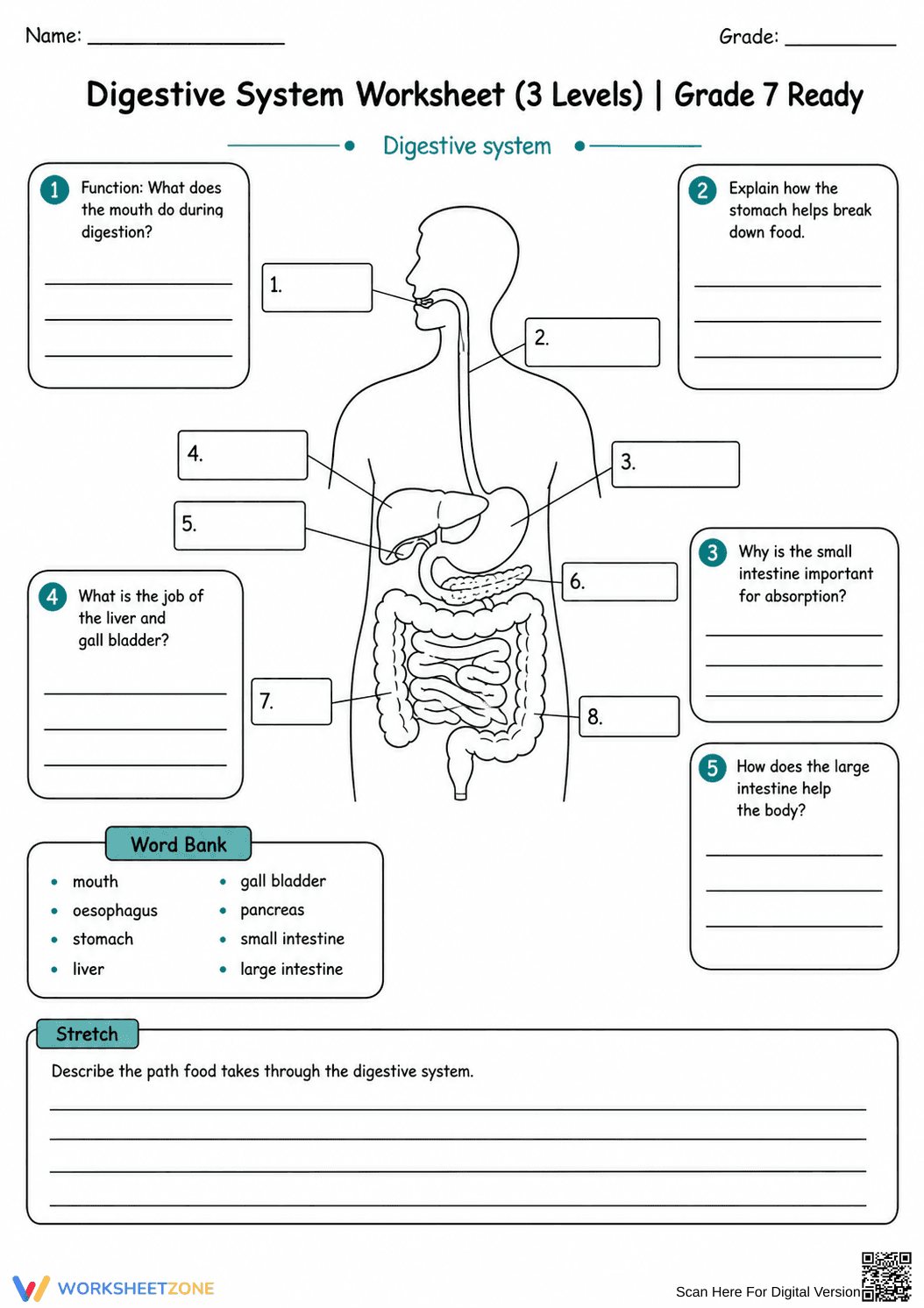
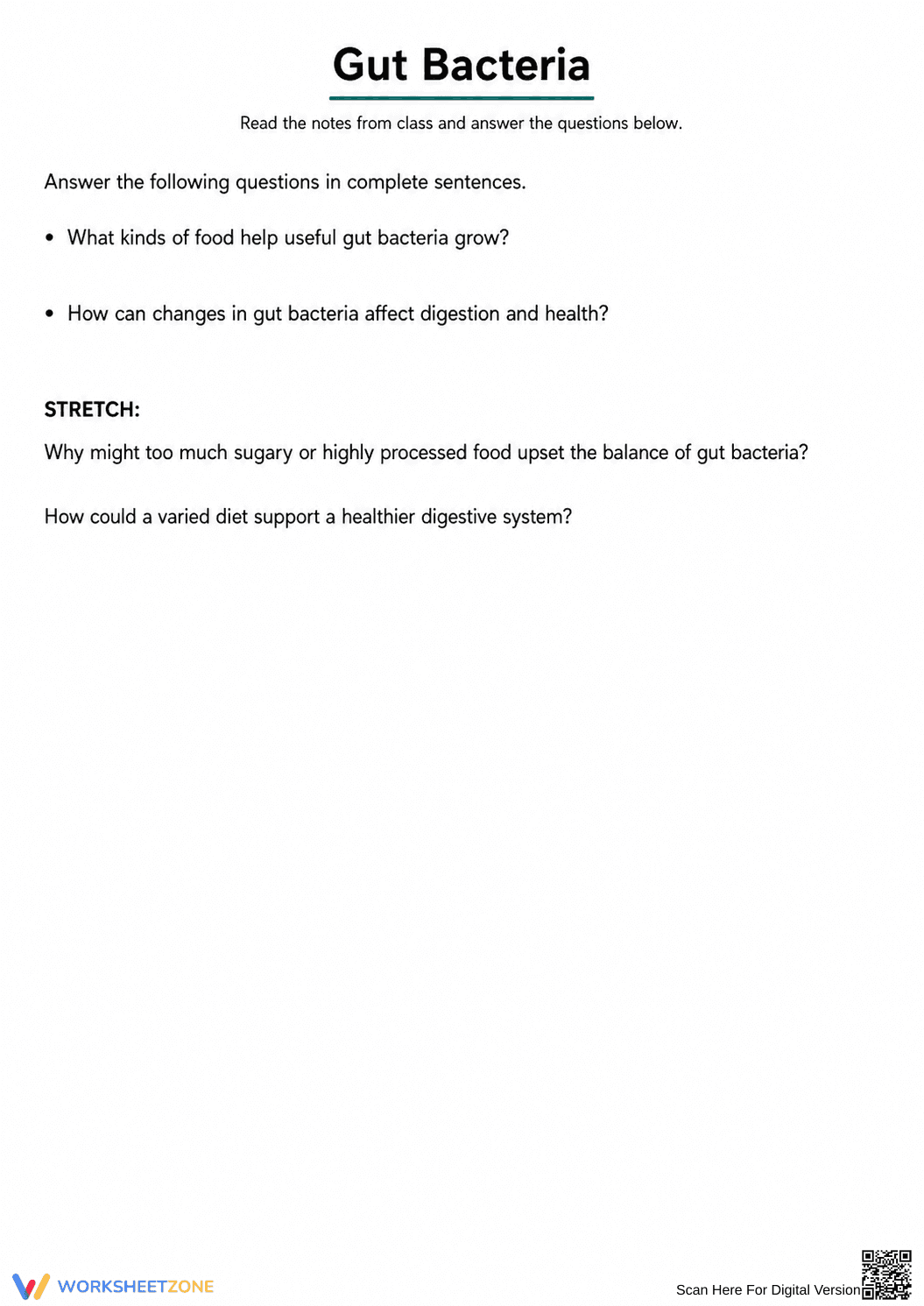
This comprehensive Grade 7 digestive system worksheet helps students identify major organs and understand how the body processes food. By labeling diagrams, matching animal diets, and exploring gut bacteria, learners build a strong foundation in human biology and life processes while developing critical scientific observation skills.
At a Glance
- Grade: 7 · Subject: Science
- Standard:
MS-LS1-3— Understand how the body is a system of interacting subsystems- Skill Focus: Digestive System Anatomy
- Format: 10 pages · 15 problems · Answer key included · PDF
- Best For: Differentiated independent practice
- Time: 30–45 minutes
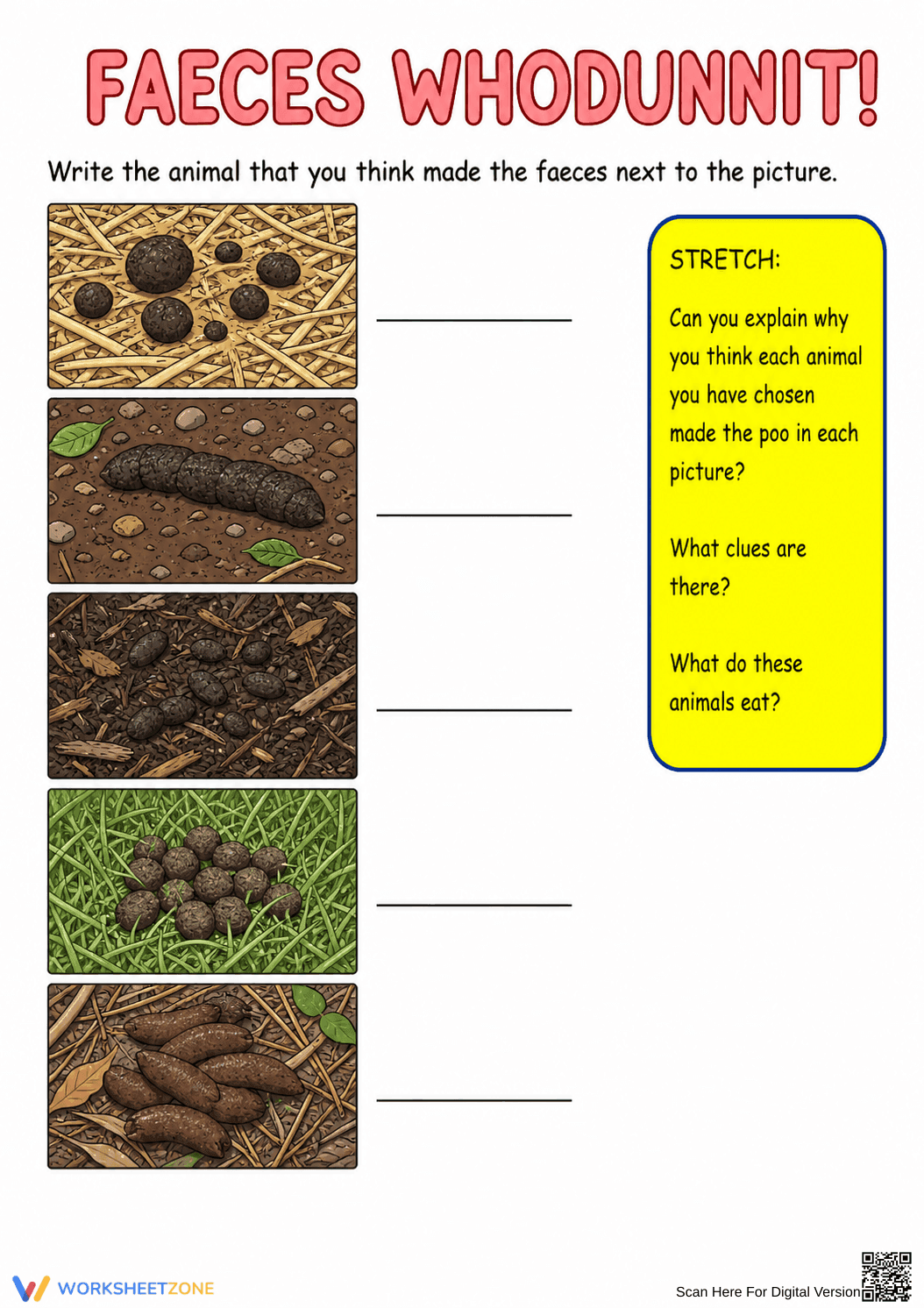
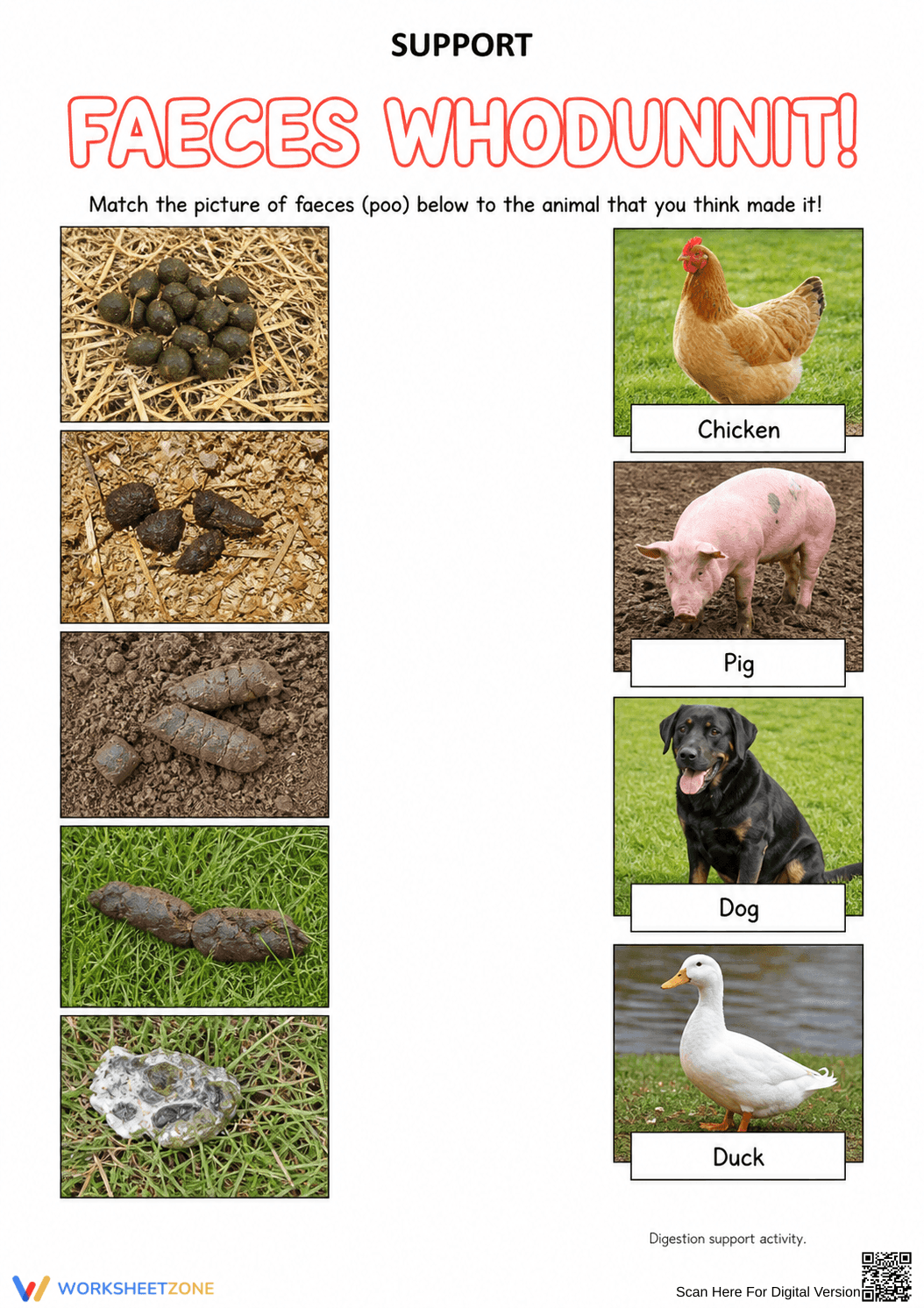
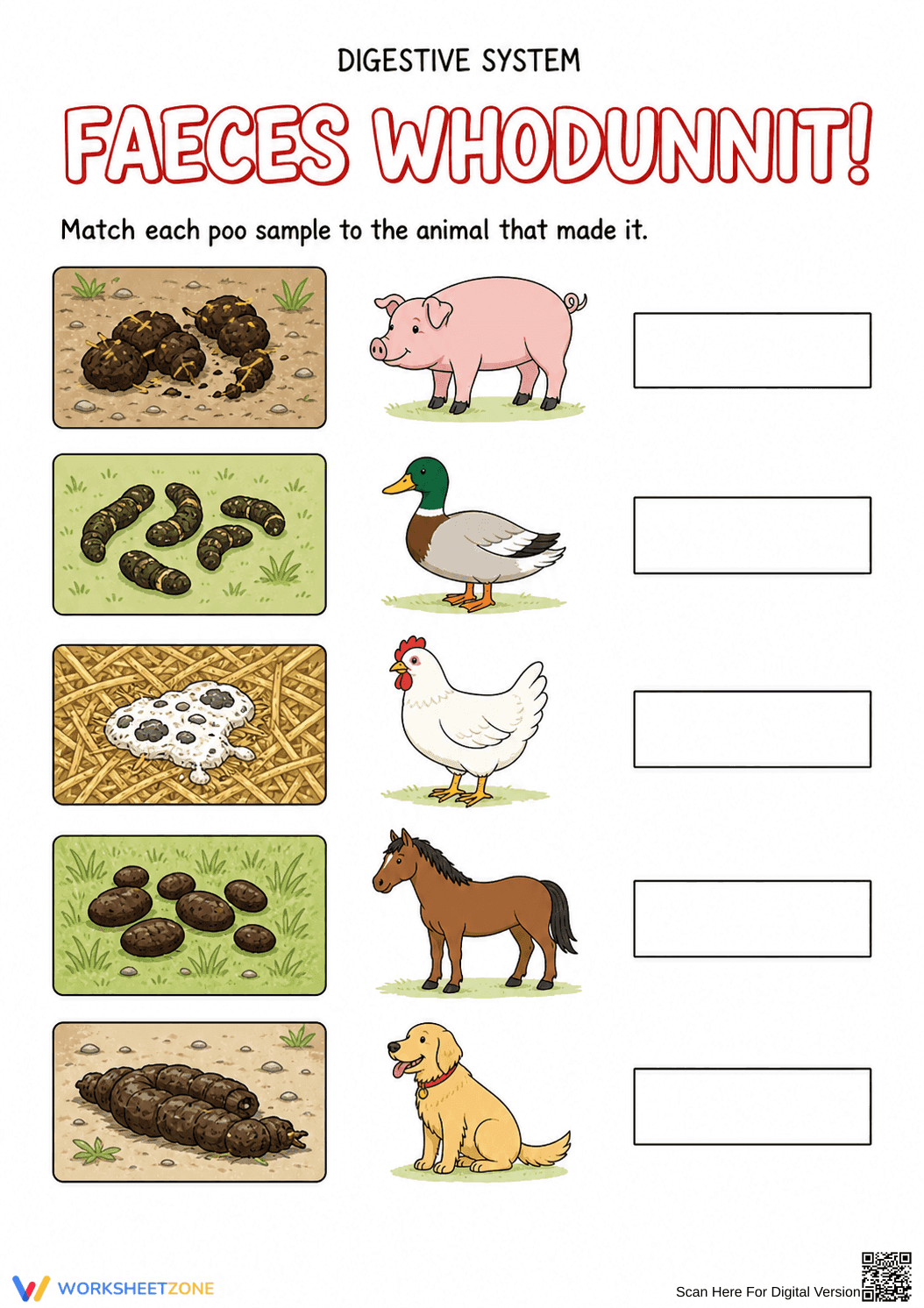
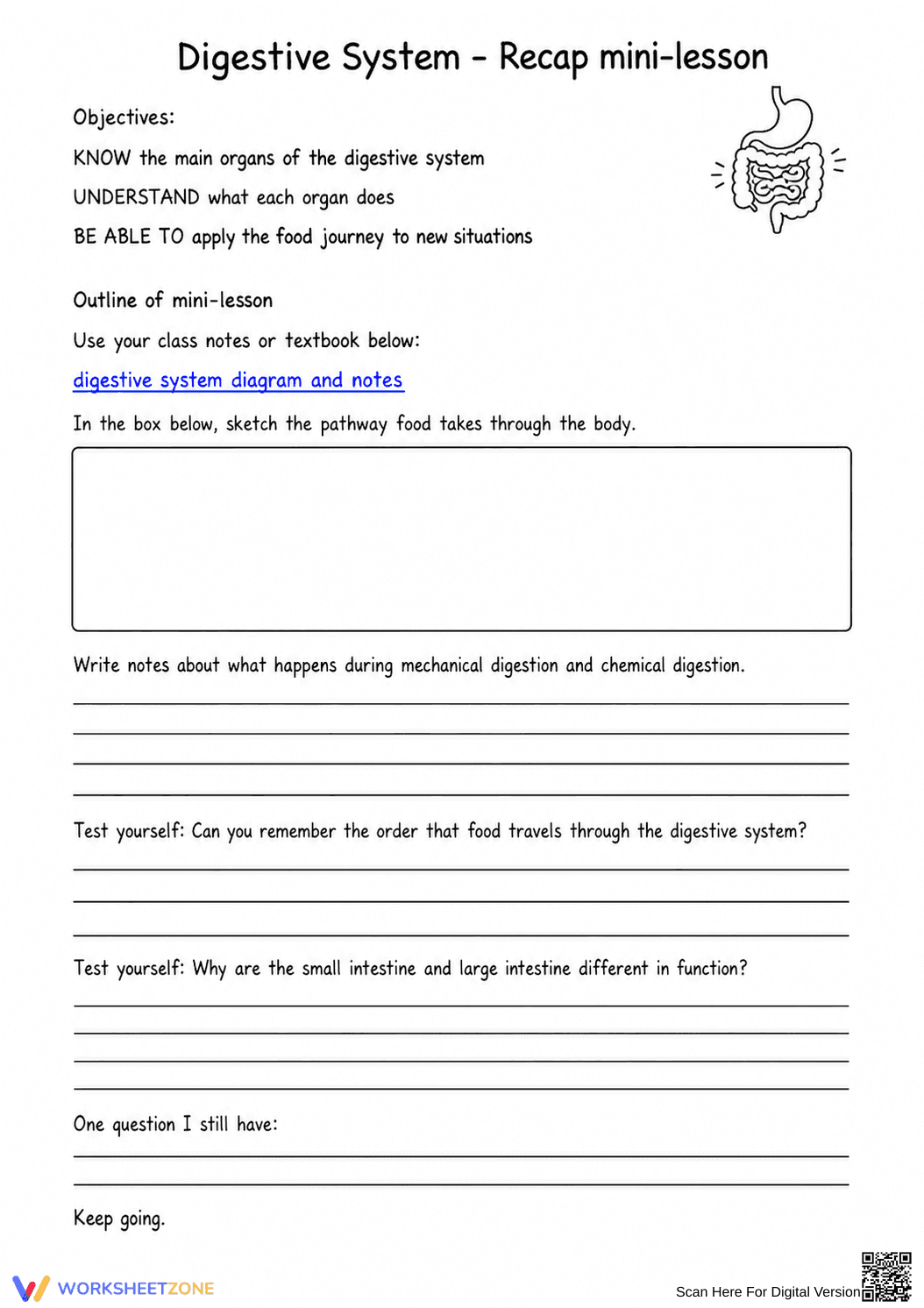
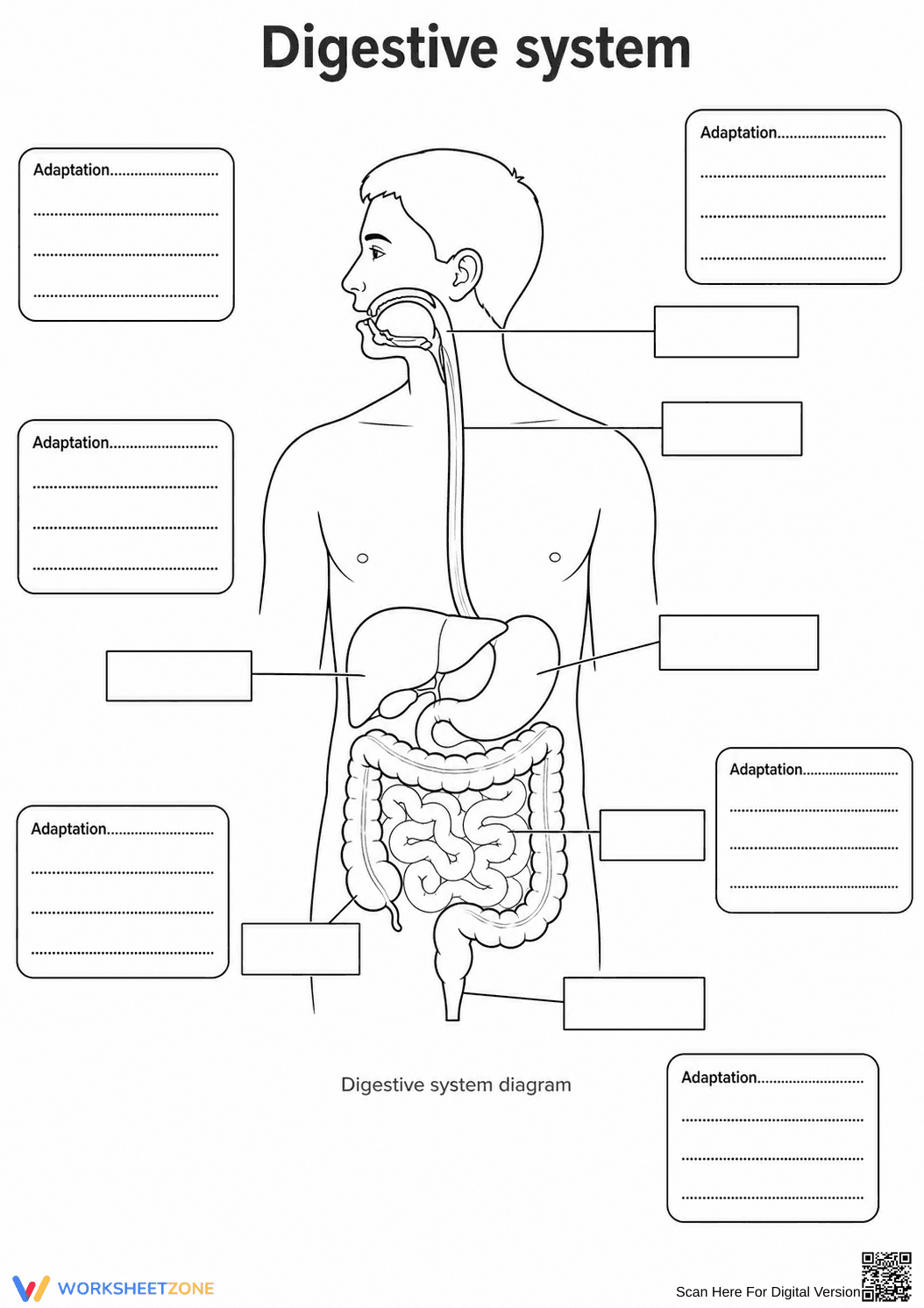
This 10-page packet features engaging task types, including a "Faeces Whodunnit" matching activity, a detailed digestive system diagram, and a mini-lesson on the seven life processes. The resource includes built-in word banks and worked examples. A complete answer key is provided for quick grading.
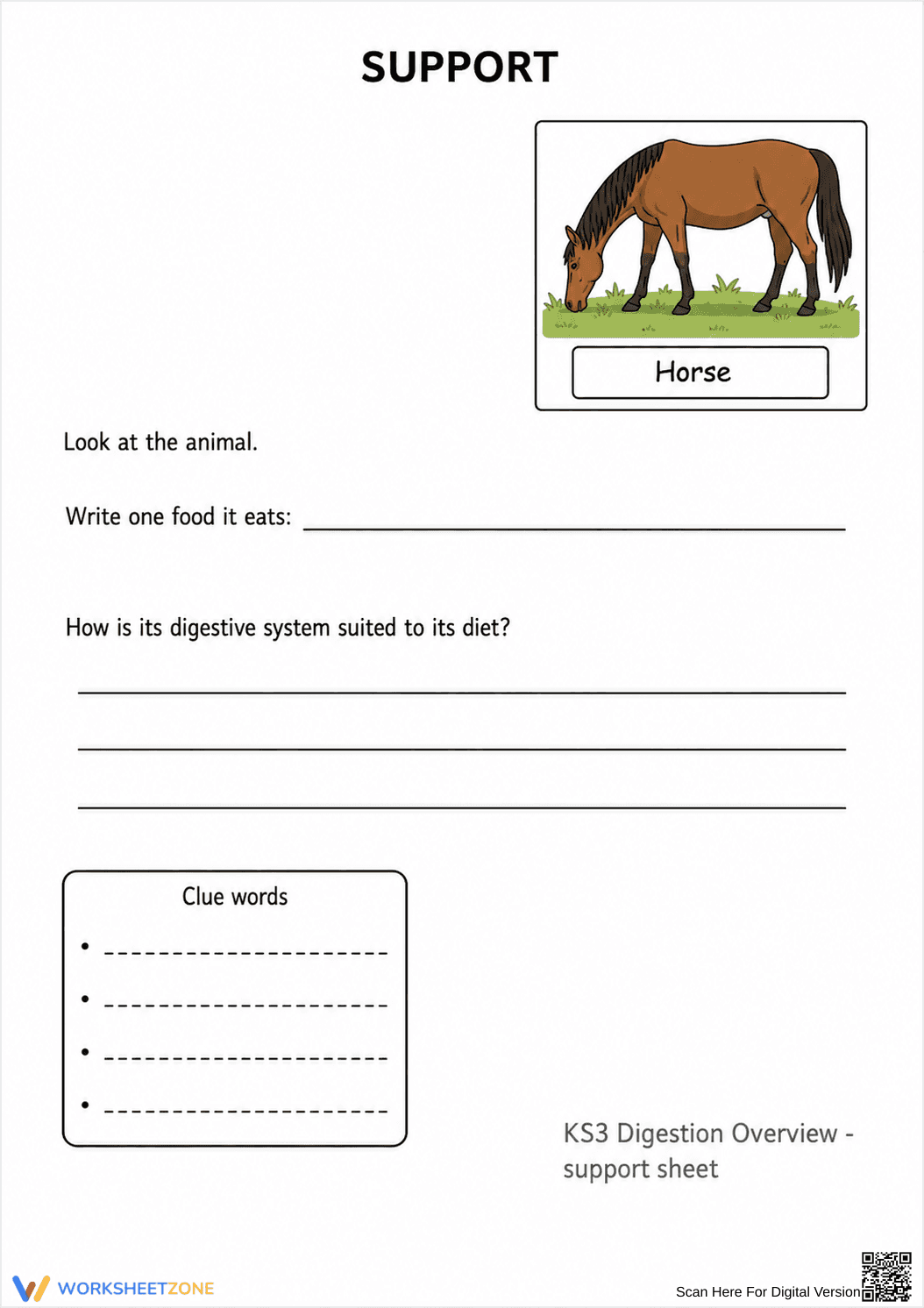
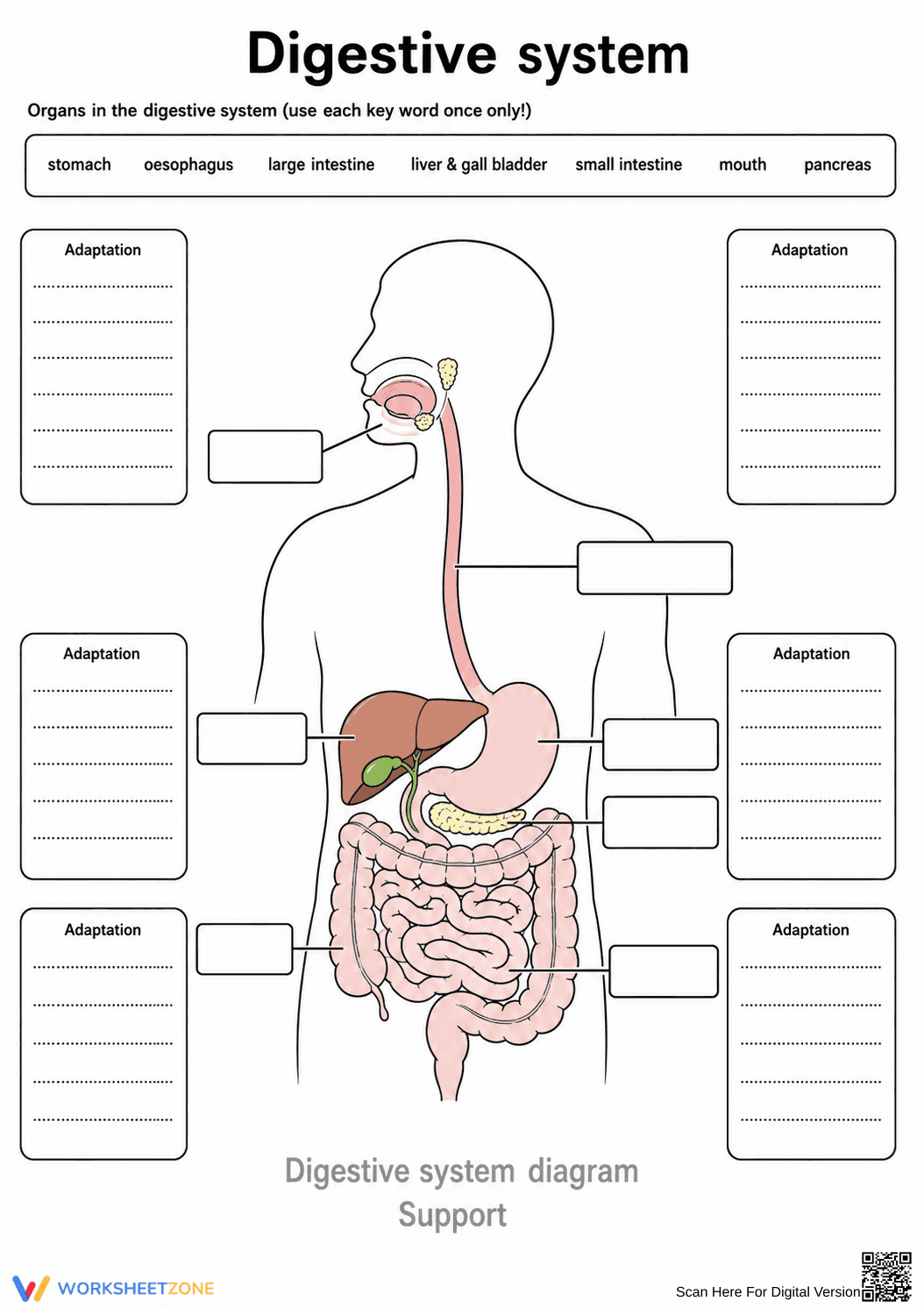
- Below grade: Support sheets provide heavy scaffolding with targeted word banks and simplified matching options.
- On grade: Students recall organ names independently and explain adaptations of the digestive tract.
- Above grade: Stretch questions demand higher-order thinking, analyzing how specific foods impact gut health.
All three versions are included, ensuring every student receives the appropriate level of challenge.
Aligned to MS-LS1-3, this resource requires students to use evidence to explain how the body is a system of interacting subsystems. It also touches upon energy transfer in living organisms. Standard codes can be copied directly into lesson plans or IEP goals.
This resource works perfectly as a post-instruction reinforcement activity. After a lesson on body systems, assign the diagram labeling to solidify vocabulary. Alternatively, use the matching game as a formative assessment tool to gauge understanding of animal diets. Completion time ranges from 30 to 45 minutes.
Designed for Grade 7 science, this packet is ideal for mixed-ability classrooms. The built-in support and stretch options make it accessible for special education and engaging for advanced learners. It pairs naturally with an interactive anchor chart or a hands-on digestion lab.
Effectively teaching complex biological concepts requires intentional scaffolding and clear visual models. Aligned to MS-LS1-3, this resource helps students understand how the body is a system of interacting subsystems. According to a ScienceDirect TpT Analysis, providing differentiated materials within a single lesson significantly increases student engagement and reduces cognitive overload, particularly in middle school science classrooms. By offering three distinct levels of difficulty—from heavily supported word banks to advanced extension questions—teachers can ensure that all learners access the core curriculum without frustration. The inclusion of engaging, real-world applications, such as analyzing gut bacteria and animal diets, further bridges the gap between theoretical anatomy and observable biological processes. This structured approach not only builds foundational vocabulary but also fosters the critical thinking skills necessary for advanced scientific inquiry.


