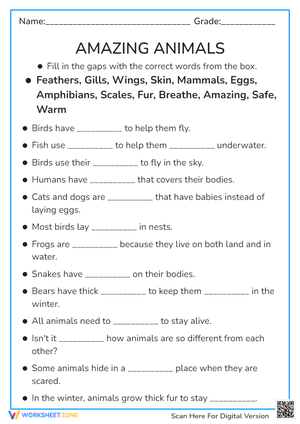
These animal classification printable worksheets for 3rd grade give teachers a print-ready set of resources for the unit where students first sort animals by the physical traits scientists actually use — backbone or no backbone, scales or fur, gills or lungs. The set covers vertebrates and invertebrates, the five major vertebrate classes, and key invertebrate groups including insects, arachnids, and mollusks, with exercises built around sorting, labeling, comparing, and recording observations rather than passively reading definitions.
Vertebrates, Invertebrates, and Why the Backbone Works as an Anchor
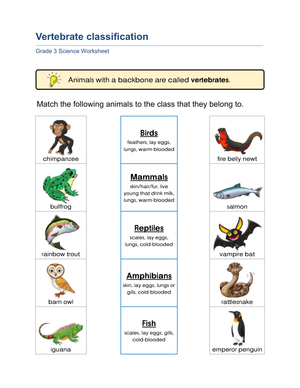
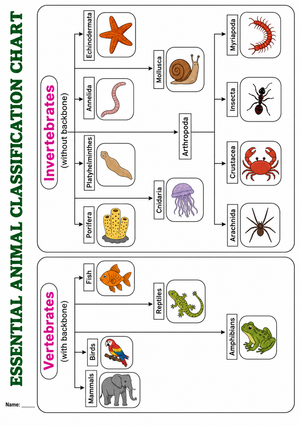
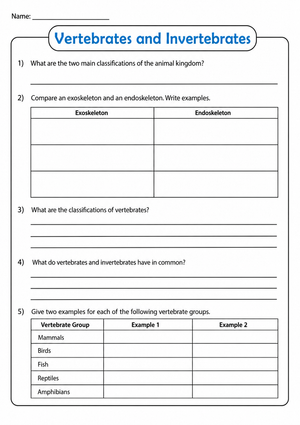
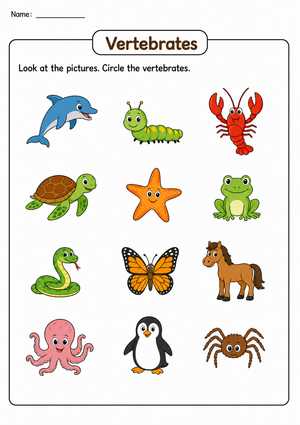
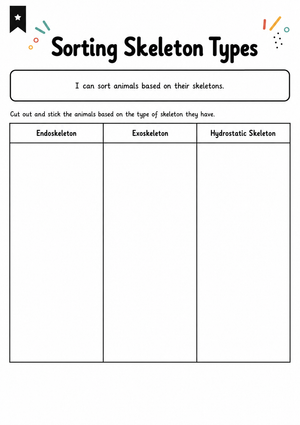
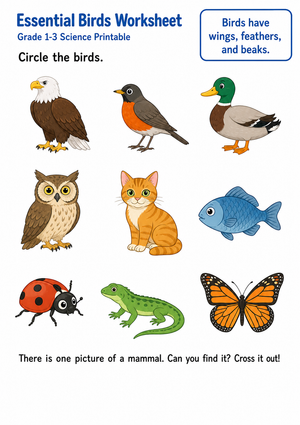
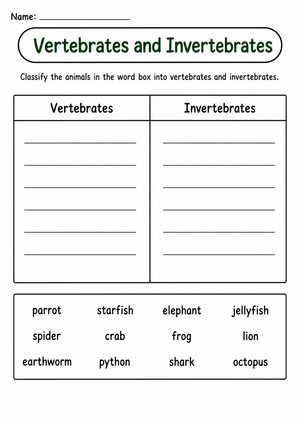
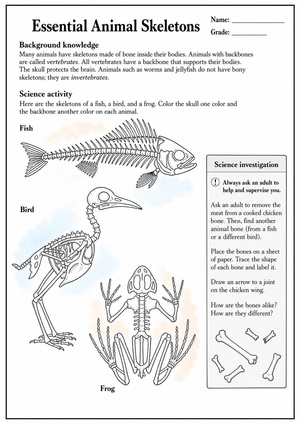
The vertebrate-invertebrate split is the right entry point for this grade because it gives students one concrete question to answer about any animal: does it have a spine or not? That simplicity opens up genuinely productive inquiry. Students who initially lump all "bugs" together start distinguishing the beetle (insect, invertebrate) from the garden snake (reptile, vertebrate) from the earthworm (annelid, invertebrate) — using a single structural criterion rather than general impressions. Each worksheet in this opening section pairs animal images with a sorting frame; students assign each animal to a column, then support their placement by identifying one observable trait that confirms it.
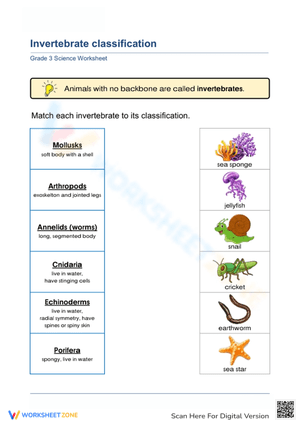
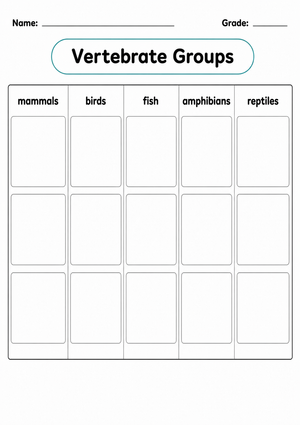
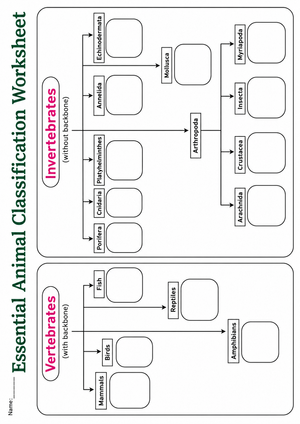
Once the backbone distinction is established, the set moves into the five vertebrate classes — mammals, birds, fish, reptiles, and amphibians — before circling back to invertebrate diversity. Invertebrate coverage focuses on insects, arachnids, and mollusks because those are the groups students can actually encounter on a schoolyard walk or during a brief outdoor observation before returning to the classroom.
Skills These Worksheets Build
The animal classification printable worksheets for 3rd grade target a specific cluster of observational and reasoning skills that students need before they can do anything more sophisticated in life science. The tasks across the set include:
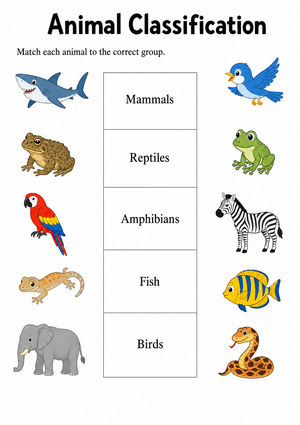
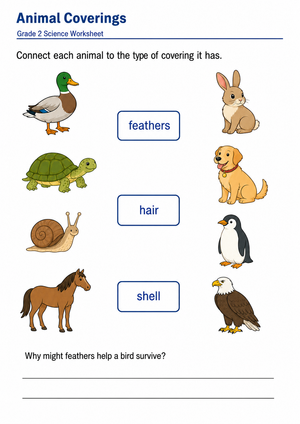
- Sorting by a single observable trait: students place animals into the vertebrate or invertebrate column based on one explicit criterion, training the habit of using evidence over intuition.
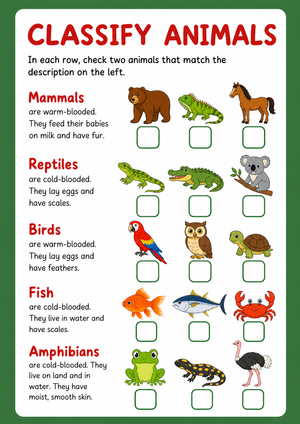
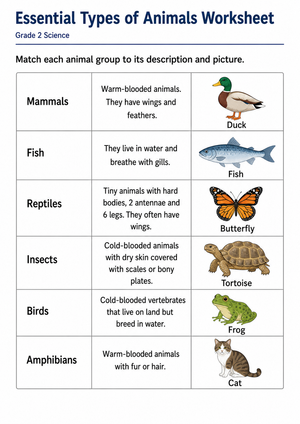
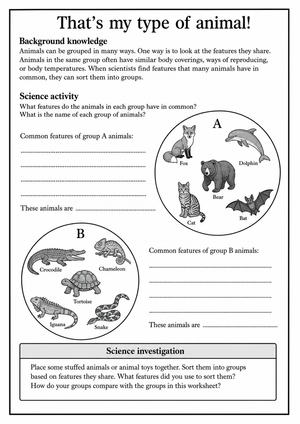
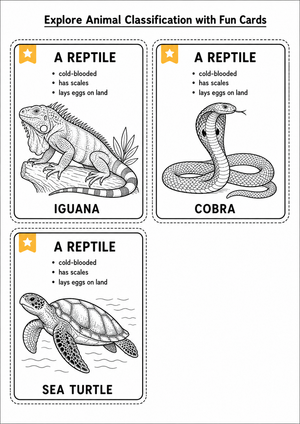
- Matching traits to groups: students read a physical description — "dry, scaly skin; leathery eggs laid on land" — and identify which vertebrate class it describes.
- Labeling body diagrams: insect diagrams ask students to mark the head, thorax, and abdomen, then count the six leg attachment points correctly.
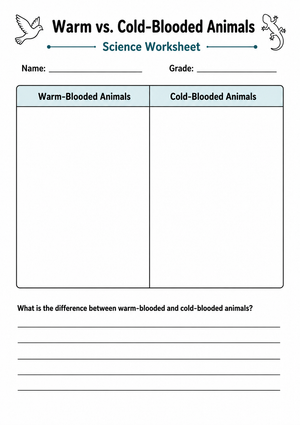
- Comparing two groups in writing: T-chart and Venn diagram exercises set adjacent groups side by side — reptiles against amphibians, insects against arachnids — and ask students to name both shared and distinct features.
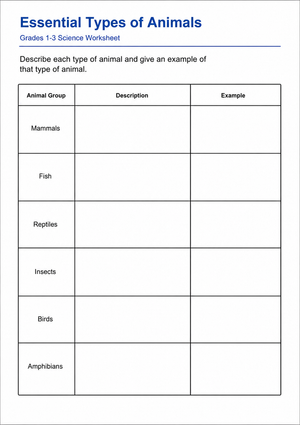
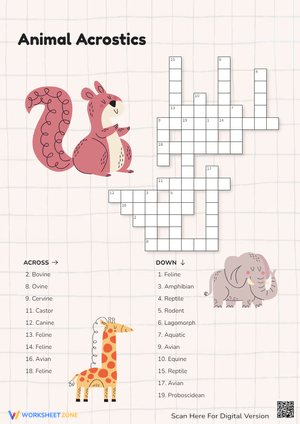
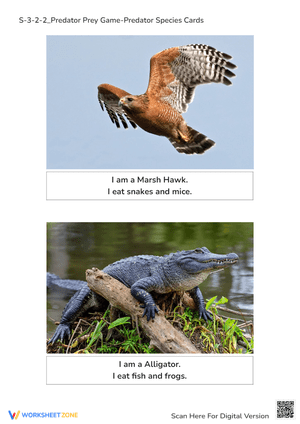
- Classifying from a description: short animal profiles list observable details without naming the animal; students write the group name and a one-sentence justification.
Frequent Student Errors Worth Watching For
The spider-insect mix-up is the most predictable error in this unit. Students know spiders are "bugs," so they assume they belong in the same group as ants and beetles. A worksheet that puts a spider image next to a beetle and asks students to count legs — eight on the spider, six on the beetle — resolves this faster than any verbal explanation. The confusion tends to reappear on assessments, though, if the lesson stopped at counting rather than connecting leg count to the full arachnid profile: eight legs, two body segments, no antennae.
The other reliable misconception involves whales and dolphins. Many 3rd graders classify them as fish because the surface behavior — swimming, living in the ocean — feels more definitive than underlying biology. A comparison worksheet that walks students through the mammal checklist item by item (hair present? warm-blooded? live birth? does the mother nurse her young?) resolves this by making them interrogate each criterion rather than the animal's habitat. Worth noting from actual student work: students who correctly label a dolphin as a mammal on a structured sorting task will sometimes revert to "fish" in open-ended writing weeks later, because the visual-habitat habit takes multiple practice passes to override.
Standard Alignment
These resources connect most directly to NGSS 3-LS3-1, which calls for students to analyze and interpret data showing that organisms have inherited traits and that variation in those traits exists. Every trait students use to classify animals — body covering, reproductive method, thermoregulation — is an inherited characteristic, making classification work the concrete entry point into the broader inherited-traits conceptual progression. In many 3rd-grade units, teachers use the animal classification printable worksheets for 3rd grade first to establish the trait vocabulary (scales, gills, live birth), then return to those same traits when introducing 3-LS3-1 in its full inheritance framing. Several state frameworks also map this content to the LS1.A disciplinary core idea (Structure and Function), so it is worth reviewing your state's vertical alignment before placing these worksheets in the unit sequence.
Building These Worksheets Into Your Science Block
The animal classification printable worksheets for 3rd grade fit most naturally in the guided practice phase — after direct instruction on a group's defining traits and before students move to independent tasks. A typical sequence: introduce the mammal checklist on Monday through class discussion and an anchor chart, use one worksheet for a whole-group think-aloud on Tuesday, then release students to a second worksheet independently on Wednesday. That pattern takes roughly 20 minutes per worksheet and leaves the last five minutes for a class share-out where students work through edge cases together — is a bat a mammal even though it flies? is a whale a mammal even though it swims? Those discussions reveal which students are applying criteria and which are still relying on visual intuition.
The sorting exercises also work well as a five-minute warm-up before a science lesson, especially on review days. Placing three or four animal images on the board and asking students to classify silently before discussion keeps the unit concepts active without requiring a full instructional block.
Adjusting the Set for a Range of Learners
For students who need extra support, provide the characteristic chart as an open reference while they complete sorting exercises. They use it to look up a group's defining traits rather than holding five sets of criteria in working memory simultaneously. The aim is that they internalize the chart across repeated exposures — not that the chart disappears before they are ready for that step.
Students who move quickly through the sorting and matching tasks benefit most from the open-response exercises, where they must explain in writing why a given animal belongs to a particular group. Asking a student to justify why a seahorse is a fish — it breathes through gills, has scales, is cold-blooded, and lives entirely in water — surfaces whether they understand the classification criteria or have simply memorized example animals. An extension: ask early finishers to write their own three-clue animal riddle using traits only, with no animal name visible, for a partner to solve. That task requires thinking backward through the classification system rather than just applying it forward.
Frequently Asked Questions
What makes a reptile different from an amphibian, and why do students consistently confuse them?
Both groups are cold-blooded vertebrates, which is where the confusion starts. The reliable distinctions are skin and eggs: reptiles have dry, scaly skin and lay leathery eggs on land, while amphibians have moist, smooth skin and lay jelly-coated eggs in water. Amphibians also undergo metamorphosis — the tadpole-to-frog transition is a concrete detail that students retain well once they've seen it, and it gives teachers a strong hook for reinforcing the distinction during review.
How are arachnids different from insects, and how do the worksheets help students tell them apart?
Arachnids have eight legs and two body segments (cephalothorax and abdomen); insects have six legs and three body segments (head, thorax, and abdomen). Labeling exercises that ask students to count and annotate legs on side-by-side images of a spider and an ant make this distinction concrete. Counting legs is more reliable than relying on general appearance, since some insects and arachnids look superficially similar at a glance.
Why do scientists classify animals, and how do you explain that purpose to 3rd graders?
Classification lets scientists organize information about millions of species by identifying shared traits that reflect shared biology. For 3rd graders, the most accessible explanation is practical: if you know an animal is a mammal, you already know it breathes air, is warm-blooded, and probably nurses its young — without needing to look up each fact separately. That pattern-recognition payoff resonates with students who are learning to use the classification system rather than just memorize it.
Can these worksheets serve as a summative assessment?
The sorting and matching exercises work best as formative checks during instruction. The written-explanation tasks — where students identify a group and state the traits that support their answer — provide richer data about whether students understand the criteria or are simply recalling examples. For a formal summative assessment at the end of the unit, these resources work well alongside a teacher-created rubric that specifies which traits students are expected to recall without a reference chart.












 Interactive Worksheet Maker
 Quiz Maker
 Word Search Maker
 Crossword Puzzle Maker
 Word Scramble Generator
 Sentence Scramble Generator
 Handwriting Worksheet Generator
 Name Tracing Generator
 Fill In The Blank Generator