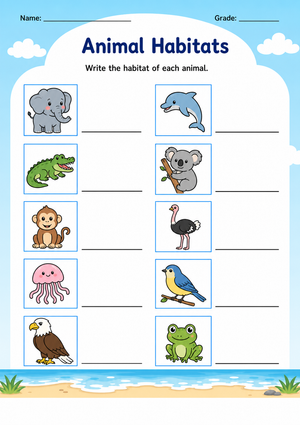
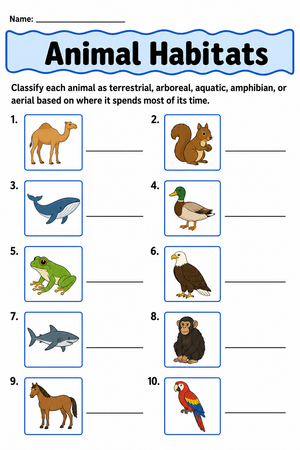
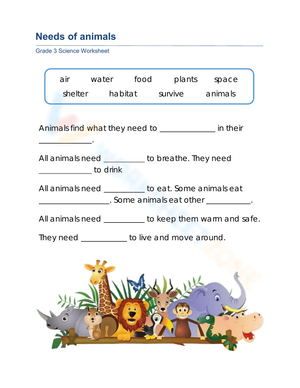
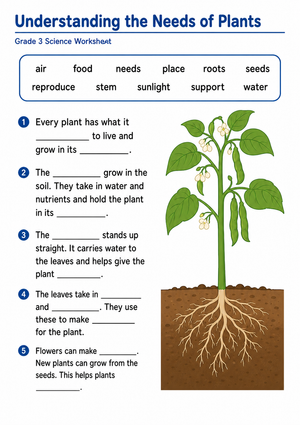
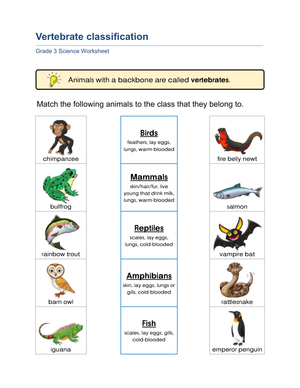
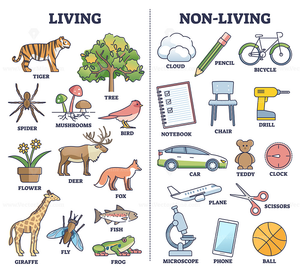
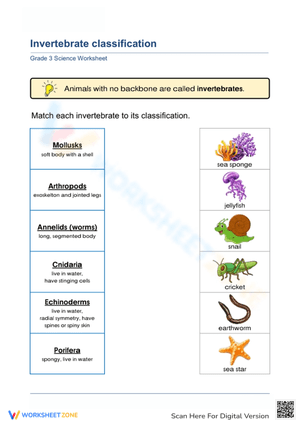
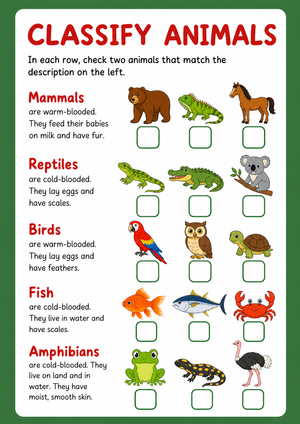
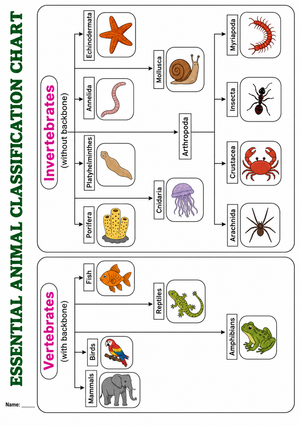
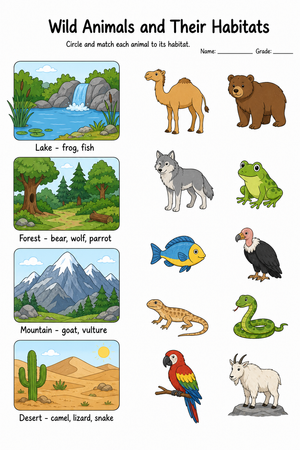
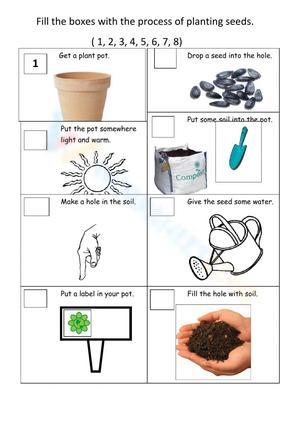
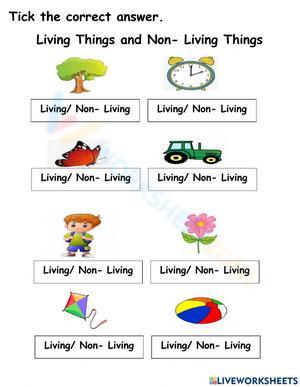
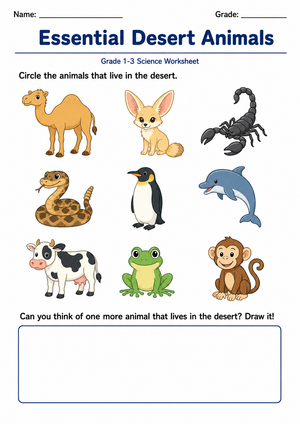
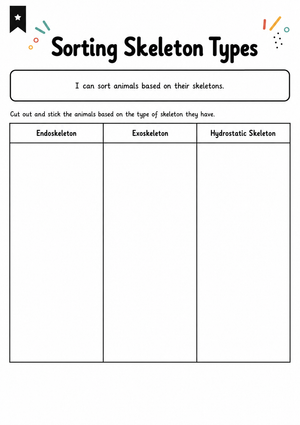
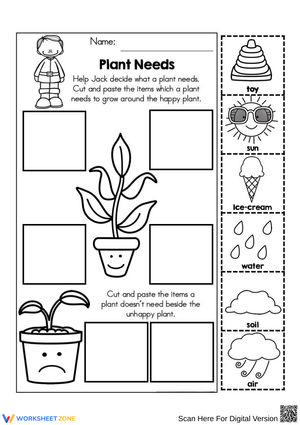
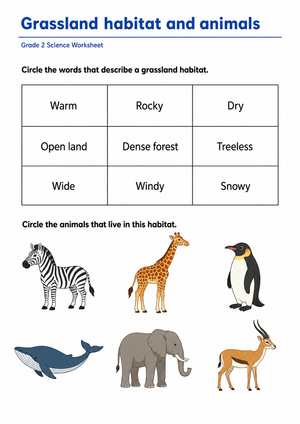
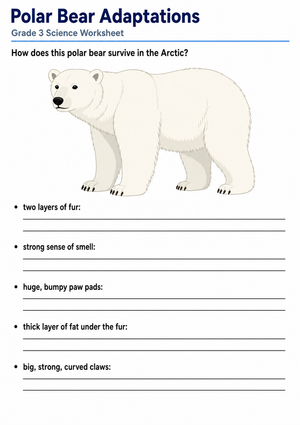
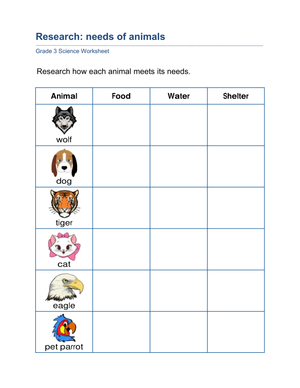
These 3rd grade living and non living things pdf worksheets give students a focused way to practice one of the most deceptively tricky early life science distinctions — sorting objects not just into "living" and "non-living," but into a third category that consistently trips up whole classes: once-living. The set includes criteria-based checklists, cut-and-paste sorting activities, guided observation logs, and vocabulary work built around the specific language of NGSS 3-LS1-1.
Concepts Each Worksheet Targets
The organizing principle across the set is that classification decisions come from applying a consistent set of biological criteria — not from how an object looks, moves, or feels. Students work with both familiar and genuinely ambiguous examples, which keeps the reasoning active rather than letting students rely on memorized answers.
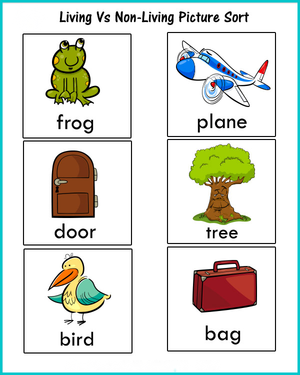
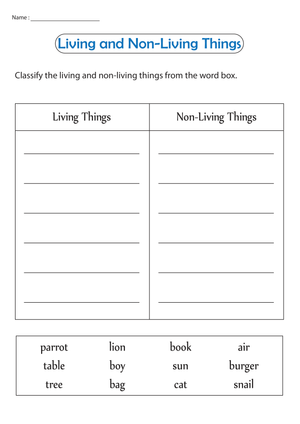
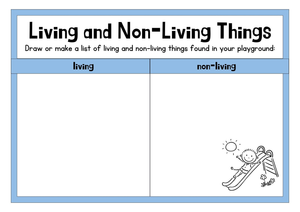
- Living vs. non-living sorting: Students classify images and named objects using the characteristics of life as their filter. Examples include a crystal, a flame, a dried apple chip, and a seed — not just the obvious dog-and-rock pairings students can answer from memory alone.
- Once-living identification: Each worksheet addressing this category pairs manufactured objects with their biological origins. A wooden ruler traces back to a tree; a wool sweater traces back to a sheep. The goal is for the once-living category to feel logical rather than arbitrary.
- Criteria checklists: One worksheet walks students through a seven-question sequence for any object: Does it grow? Does it need energy? Can it reproduce? Students mark their responses and arrive at a classification through the checklist rather than instinct.
- Plant-specific identification: Several worksheets address plants and seeds as a dedicated focus, since dormant seeds, dried leaves, and bare-winter trees are the examples students most reliably misread.
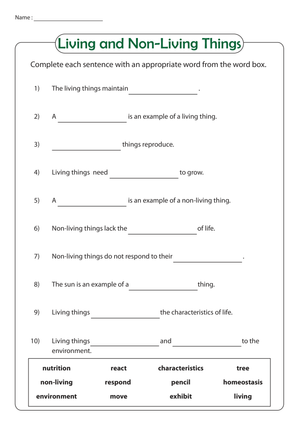
- Vocabulary in context: Terms like organism, dormant, stimuli, and reproduce appear inside sentence-completion and illustration tasks rather than standalone definition matches, which builds retention more reliably at this grade level.
Where Students Consistently Go Wrong in This Unit
Movement is the dominant false positive. A student who correctly identifies a dog as living will often write "living" next to a river or a fire because both appear to grow and consume something. The question that breaks this pattern most reliably: "Can fire have babies?" Once students recognize that fire cannot reproduce, the checklist logic applies cleanly to clouds, candles, and cars. That single question does more instructional work than re-explaining the full criteria list from the top.
The once-living category causes more persistent confusion and takes longer to address. Hold up a sharpened pencil in front of a third-grade class and most students call it non-living without hesitation — it's manufactured, painted, nothing that looks like a tree. Getting them to trace the pencil back to a living forest is the conceptual move that makes the category land. Physical side-by-side comparisons work faster than descriptions: a live twig next to a wooden ruler, a fresh apple next to a dried apple ring. The sorting worksheet that addresses once-living objects works best after that comparison, not before.
These 3rd grade living and non living things pdf worksheets also surface a third error pattern that's easy to miss during whole-class discussion: students who classify a seed packet as non-living because nothing is visibly happening. A germination demo — a bean in a wet paper towel taped to the classroom window — gives students physical evidence to draw on when the worksheet question appears. Without it, dormancy stays abstract vocabulary rather than something students have actually observed.
Where Each Worksheet Fits in the Lesson Cycle
The 3rd grade living and non living things pdf worksheets in this set are structured to function at multiple points across the unit rather than as a single-pass activity. The criteria checklist works best on day one as a whole-class guided exercise — display an object on the board, students fill in the checklist independently, then the class discusses before moving to the next object. That gives you real-time formative data before any textbook reading has happened, and it reveals right away which students are applying logic versus pattern-matching from prior knowledge.
The sorting worksheets land best mid-unit, after direct instruction but before formal assessment. They're reliable Monday warm-ups when returning from a weekend break, because the living/non-living vocabulary fades quickly at this age and a ten-minute sort reactivates the categories without eating into new instruction time. The observation log is the capstone — completed outdoors the day before a quiz, it gives you a direct window into whether students can transfer their classification skills from worksheet examples to novel objects in actual space.
Supporting Different Learners With the Same Worksheets
The criteria checklist worksheet is the most accessible entry point for students who need more support, because the reasoning structure is pre-built. Students apply a pre-set sequence of questions rather than generating the framework themselves. A classroom anchor chart using the same criteria in plain language — "needs food," "can grow," "can make offspring" — keeps lower-confidence students from stalling on unfamiliar examples. These 3rd grade living and non living things pdf worksheets pair naturally with that anchor chart throughout the unit, not only on the day the checklist is introduced.
Students who move through sorting tasks quickly often reveal, on closer inspection, that they've learned to recognize the answer rather than truly apply the criteria. Genuinely ambiguous cases — fire, crystals, or a simple description of a virus as "a tiny thing that copies itself inside living cells" — push these students back to the checklist. Asking them to write two sentences explaining why fire fails the test of life, naming specific criteria from the checklist, separates students who understand the reasoning from those who have memorized the result.
For English language learners working through the reading-passage worksheets, pre-highlighting key science vocabulary before the task begins removes the word-decoding load without simplifying the classification reasoning. The cognitive work stays on the science rather than splitting attention between an unfamiliar word and an already-unfamiliar concept in the same sentence.
Standard Alignment
These worksheets align to NGSS 3-LS1-1, which asks students to develop models to describe that organisms have unique and diverse life cycles but all share birth, growth, reproduction, and death in common. The living/non-living distinction is prerequisite knowledge for this standard: students who cannot reliably identify what qualifies as an organism will misclassify dormant or early-stage organisms when they move into life cycle modeling. In practical terms, this set functions as the unit opener that makes LS1-1 activities more coherent — not as an isolated topic disconnected from the broader life science sequence.
The vocabulary tasks in the set also connect to CCSS ELA-Literacy.RST.2-3, which asks students to read and respond to informational text in science and technical subjects. Several worksheets pair short reading passages about the characteristics of life with follow-up classification tasks, giving teachers a natural cross-curricular application without restructuring the science block.
Frequently Asked Questions
Why do students keep calling fire a living thing?
Fire grows, consumes fuel, and requires oxygen — three behaviors that overlap with living characteristics. Where it fails: no cells, no genetic material, and no biological reproduction. The criteria checklist is the most direct classroom fix. Students work through each question, fire fails enough of them, and the pattern becomes visible. The reproduction question tends to produce a moment of genuine clarity for this age group — the idea of fire "having babies" is ridiculous in a way that makes the reasoning stick beyond the lesson.
How do I explain "dead" versus "non-living" without making it more confusing?
Dead means the object was once part of a living organism — a fallen leaf, a piece of firewood, a dried apple. Non-living (or never-living) means the object never had biological processes at any point — a rock, glass, a plastic bottle. The once-living category consistently needs the most direct teaching time. Physical side-by-side comparisons — a live leaf next to a dried one, a living branch next to a wooden spoon — give students something concrete to return to when the worksheet question appears on its own.
Are seeds living or non-living when they're sitting in a packet on a shelf?
Seeds are living. They contain a dormant embryo waiting for the right conditions — moisture, warmth, oxygen — to activate. The challenge is that dormancy looks like non-life to a third grader who has never watched germination happen. A simple bean-in-a-bag activity taped to the classroom window makes the worksheet question answerable from direct memory. Once a student has watched a seed split and sprout, the word dormant carries genuine meaning rather than functioning as a term to memorize and forget.
At what point in the unit do these worksheets work best as formative checks?
The criteria checklist works best at the start of the unit, before students have had time to memorize category answers — it reveals who is applying logic versus recalling results from a previous grade or lesson. The sorting worksheets serve best mid-unit as structured independent practice checks. The observation log functions well as a pre-assessment task: completed outdoors the day before a quiz, it gives you a clear view of whether students can apply their classifications to novel real-world objects rather than only to the examples covered during direct instruction.












 Interactive Worksheet Maker
 Quiz Maker
 Word Search Maker
 Crossword Puzzle Maker
 Word Scramble Generator
 Sentence Scramble Generator
 Handwriting Worksheet Generator
 Name Tracing Generator
 Fill In The Blank Generator