




























Views
Downloads

Essential Vertebrates Worksheet | Grade 2-4 Printable

Paste this activity's link or code into your existing LMS (Google Classroom, Canvas, Teams, Schoology, Moodle, etc.).
Students can open and work on the activity right away, with no student login required.
You'll still be able to track student progress and results from your teacher account.
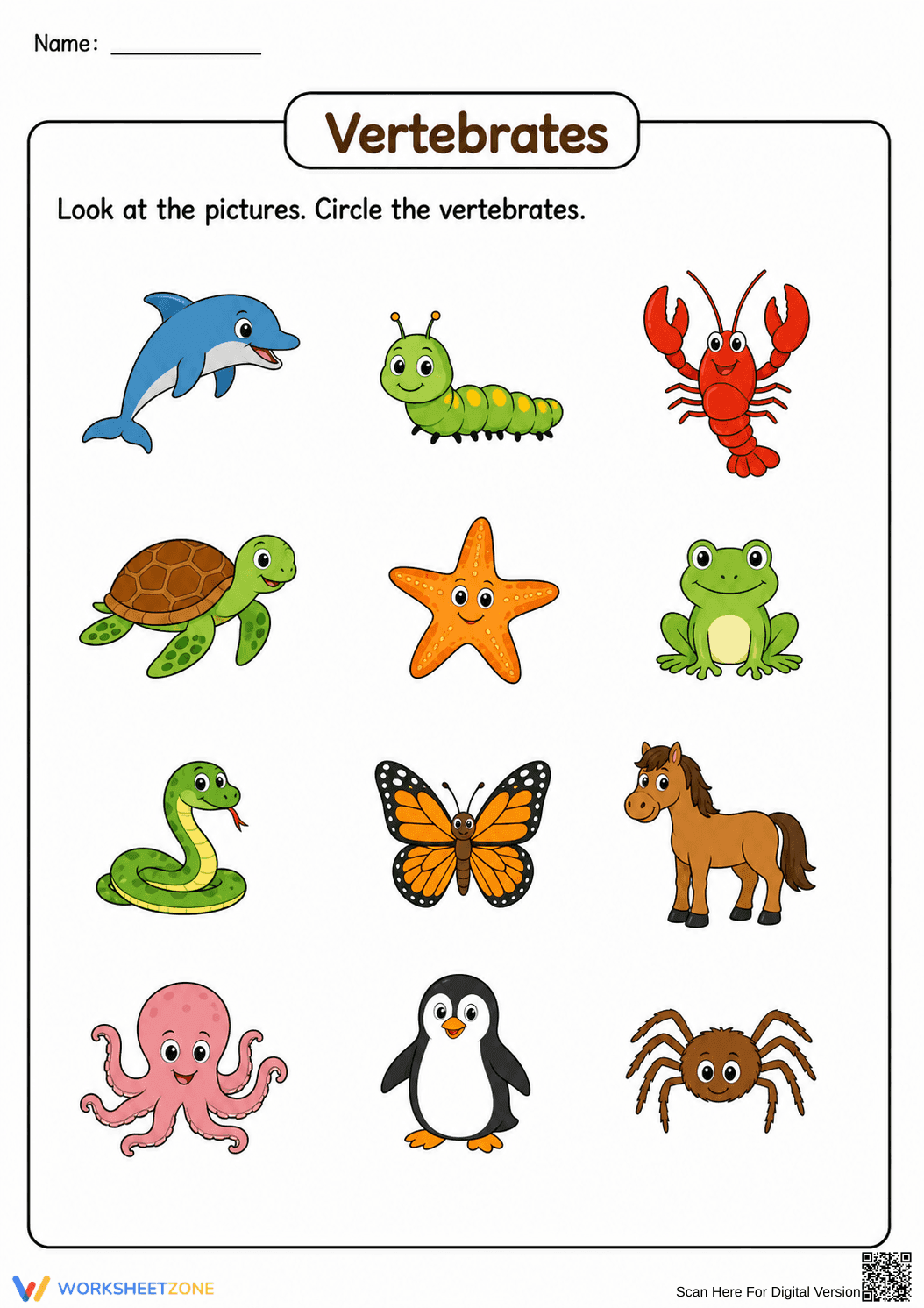
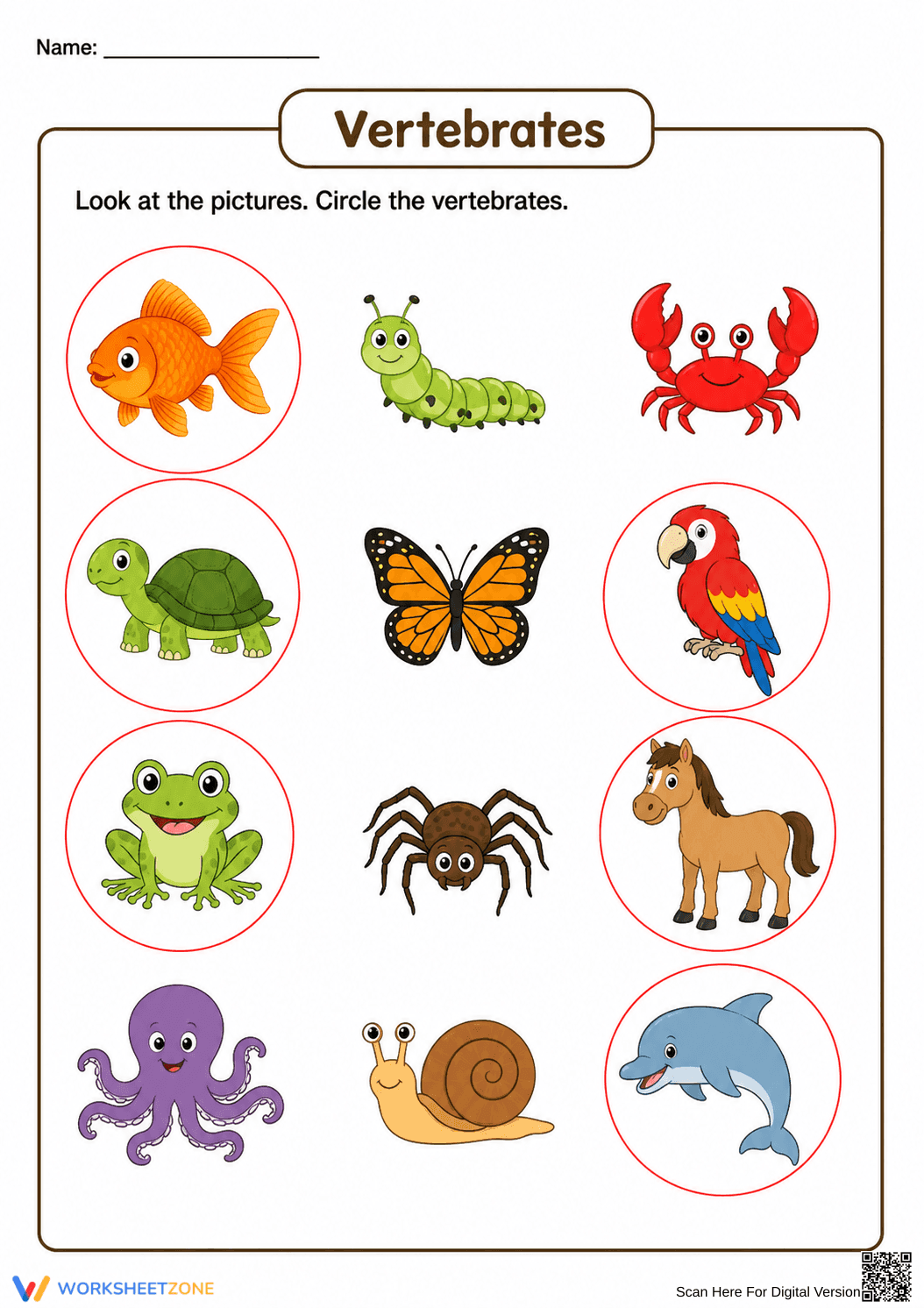
This comprehensive Vertebrates worksheet enables Grade 2-4 students to identify animals with backbones through a series of twelve visual classification tasks. By distinguishing vertebrates from invertebrates, learners build essential biological knowledge regarding internal structures and animal diversity. The activity results in a clear understanding of the physiological differences between major animal groups.
At a Glance
- Grade: 2-4 · Subject: Science
- Standard:
4-LS1-1— Identify internal structures like backbones that support animal survival and growth- Skill Focus: Identifying vertebrate animals
- Format: 2 pages · 12 problems · Answer key included · PDF
- Best For: Introduction to animal classification units
- Time: 10–15 minutes
What's Inside
The PDF package includes a clean, single-page student activity sheet featuring 12 high-quality animal illustrations and a corresponding answer key for rapid grading. The layout provides ample space for students to circle their selections, making it accessible for young learners. The selection of animals includes both common and unique examples to challenge student thinking.
Zero-Prep Workflow
The zero-prep workflow is designed for maximum efficiency. Teachers simply print the single-page PDF (30 seconds), distribute it to students for independent practice (1 minute), and use the provided answer key for rapid review (3 minutes). This process requires less than two minutes of total teacher preparation time, making it suitable for emergency sub plans or quick formative checks.
Standards Alignment
This resource is directly aligned with `4-LS1-1`, which requires students to construct an argument that animals have internal structures that function to support survival and growth. By distinguishing vertebrates, students focus on the backbone as a critical internal structure. Both standard codes can be copied directly into lesson plans, IEP goals, or district curriculum mapping tools.
How to Use It
Use this worksheet as a diagnostic pre-assessment before starting your unit on animal kingdoms to gauge existing knowledge of animal structures. Alternatively, assign it as a quick exit ticket after a direct instruction lesson on the five groups of vertebrates. Observe whether students correctly identify the penguin as a vertebrate while distinguishing it from invertebrates like the spider or butterfly.
Who It's For
This activity is tailored for Grade 2 through Grade 4 students studying life sciences. It is particularly effective for visual learners who benefit from clear pictorial representations over text-heavy descriptions. Pair this worksheet with a physical model of a skeleton to provide additional scaffolding for students requiring more support.
Research from the RAND AIRS 2024 study emphasizes that visual classification tasks significantly enhance conceptual retention in elementary science by allowing students to apply abstract definitions to concrete examples. This Grade 2-4 worksheet leverages this principle by requiring students to analyze twelve distinct organisms and identify the presence of an internal backbone, effectively meeting the requirements of the 4-LS1-1 standard. By distinguishing between vertebrates like horses and penguins and invertebrates like spiders and octopuses, students build a robust mental model of biological hierarchy and internal anatomy. This identification exercise provides essential practice in recognizing internal structures that support survival. Teachers can rely on this science resource as a proven method for bridging the gap between basic observation and scientific categorization. The inclusion of an answer key ensures that students receive immediate feedback, a practice shown by NAEP to be critical for mastery in introductory biology.


