


























Views
Downloads
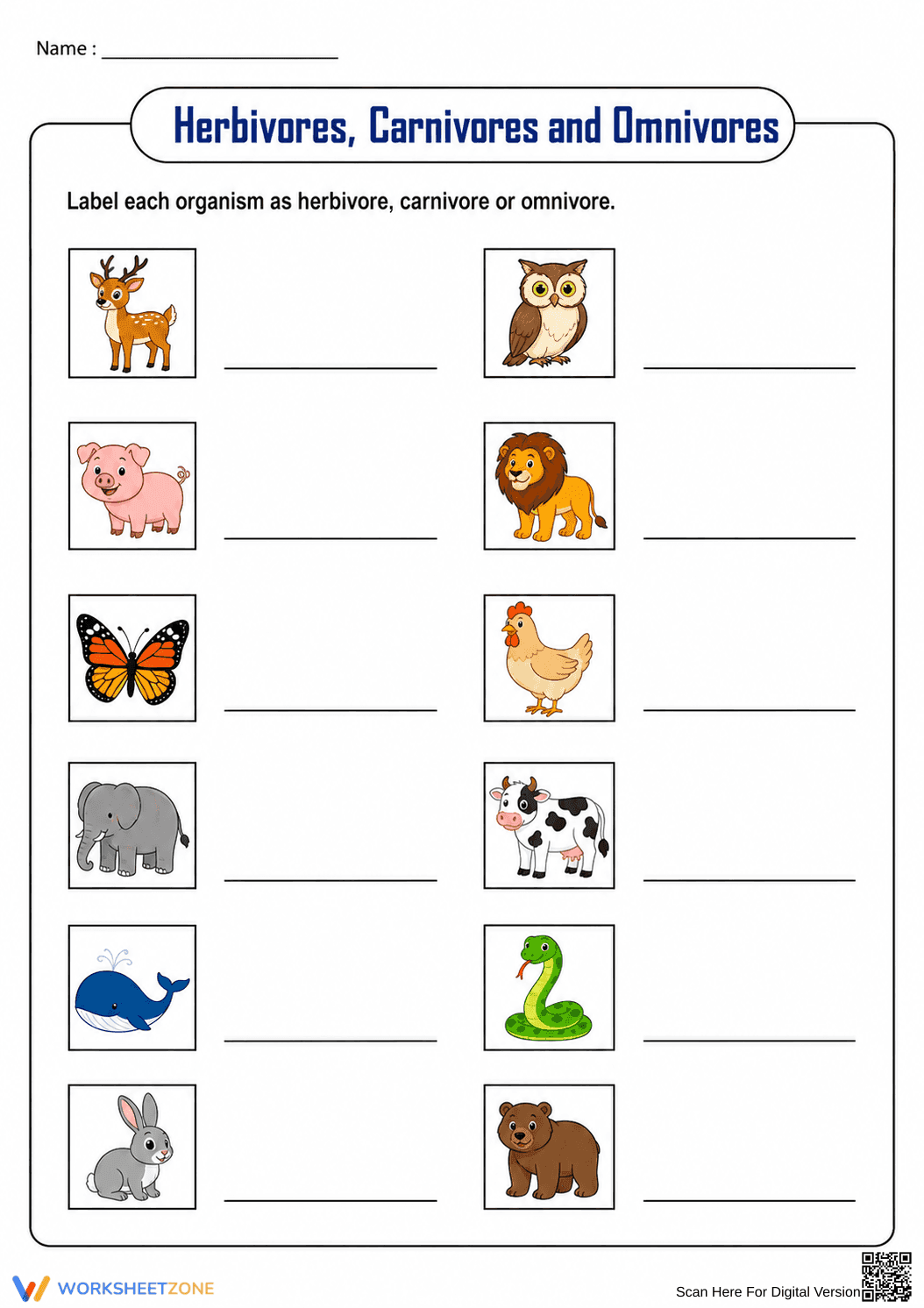

Grade 3 Animal Diets — Printable No-Prep Worksheet
Paste this activity's link or code into your existing LMS (Google Classroom, Canvas, Teams, Schoology, Moodle, etc.).
Students can open and work on the activity right away, with no student login required.
You'll still be able to track student progress and results from your teacher account.
This Grade 3 science worksheet helps students master animal diet classification by identifying organisms as herbivores, carnivores, or omnivores. By evaluating twelve distinct animals, learners build essential biological vocabulary and develop a foundational understanding of how energy flows through ecosystems and food chains.
At a Glance
- Grade: 3 · Subject: Science
- Standard:
3-LS4-3— Categorize animals based on their primary food sources- Skill Focus: Animal Diet Classification
- Format: 1 page · 12 problems · Answer key included · PDF
- Best For: Independent practice and sub plans
- Time: 10–15 minutes
What's Inside
This single-page resource features twelve clear, full-color illustrations of various animals, including mammals, birds, and insects. Each image is paired with a blank line where students write the correct dietary classification. The straightforward layout minimizes distractions, while the included answer key allows for rapid grading or peer review.
Zero-Prep Workflow
- Print: Generate copies of the single-page PDF for your entire class (30 seconds).
- Distribute: Hand out to students for immediate independent practice (1 minute).
- Review: Check answers using the provided key for fast feedback (30 seconds).
This worksheet requires under two minutes of total teacher preparation, making it an ideal solution for emergency sub plans, morning work, or a quick science center activity.
Standards Alignment
This resource is aligned to 3-LS4-3, which asks students to construct an argument that some organisms survive well, some less well, and some cannot survive at all in a particular habitat. Understanding dietary needs is the first step in evaluating habitat suitability. Both standard codes can be copied directly into lesson plans, IEP goals, or district curriculum mapping tools.
How to Use It
Deploy this worksheet during the independent practice phase of a lesson on food chains or ecosystems. It serves as an excellent formative assessment tool: observe whether students can correctly identify the diets of familiar animals like cows and owls before moving on to complex food webs. Expected completion time is 10 to 15 minutes.
Who It's For
This resource is designed for Grade 2 through Grade 4 students studying life science and ecosystems. It is highly effective for visual learners who benefit from clear image-to-text associations. It pairs naturally with an introductory direct instruction lesson on herbivores, carnivores, and omnivores, or alongside an anchor chart detailing animal adaptations.
According to the RAND AIRS 2024 analysis of elementary science instruction, visual classification tasks are critical for developing the mental schemas required for later mastery of complex ecological systems. This worksheet targets the foundational skill of categorizing animals based on their primary food sources, providing 12 specific labeling tasks that align with the NGSS 3-LS4-3 performance expectation. By focusing on observable animal characteristics and known diet patterns, this printable resource ensures students can accurately categorize organisms, a prerequisite for understanding energy transfer in food chains. It provides the structured practice necessary for classroom-ready instruction in modern US science curricula, ensuring educators have reliable tools for foundational biology concepts.


