


























Views
Downloads

Printable Vertebrate Classification: Grade 3 Science
Paste this activity's link or code into your existing LMS (Google Classroom, Canvas, Teams, Schoology, Moodle, etc.).
Students can open and work on the activity right away, with no student login required.
You'll still be able to track student progress and results from your teacher account.
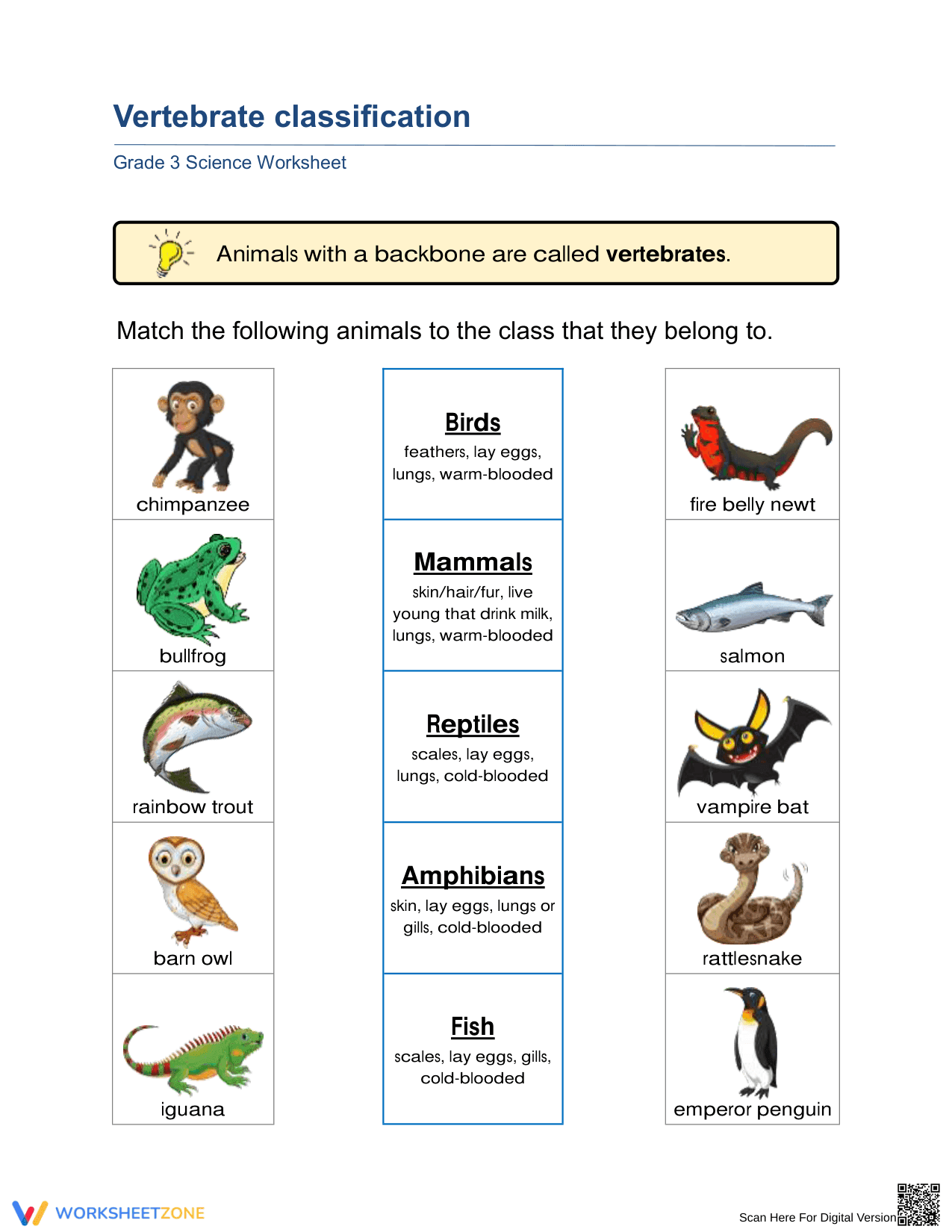
This Grade 3 vertebrate classification worksheet helps students master animal categories through a structured matching activity. Students identify unique characteristics of mammals, birds, reptiles, amphibians, and fish while classifying ten diverse animal species. This resource ensures students can distinguish between vertebrates based on observable physical traits and biological behaviors effectively.
At a Glance
- Grade: 3 · Subject: Science
- Standard:
3-LS3-1— Analyze observable traits to classify animals into specific vertebrate groups- Skill Focus: Vertebrate Classification
- Format: 1 page · 10 problems · Answer key included · PDF
- Best For: Independent practice and quick formative assessment
- Time: 15–20 minutes
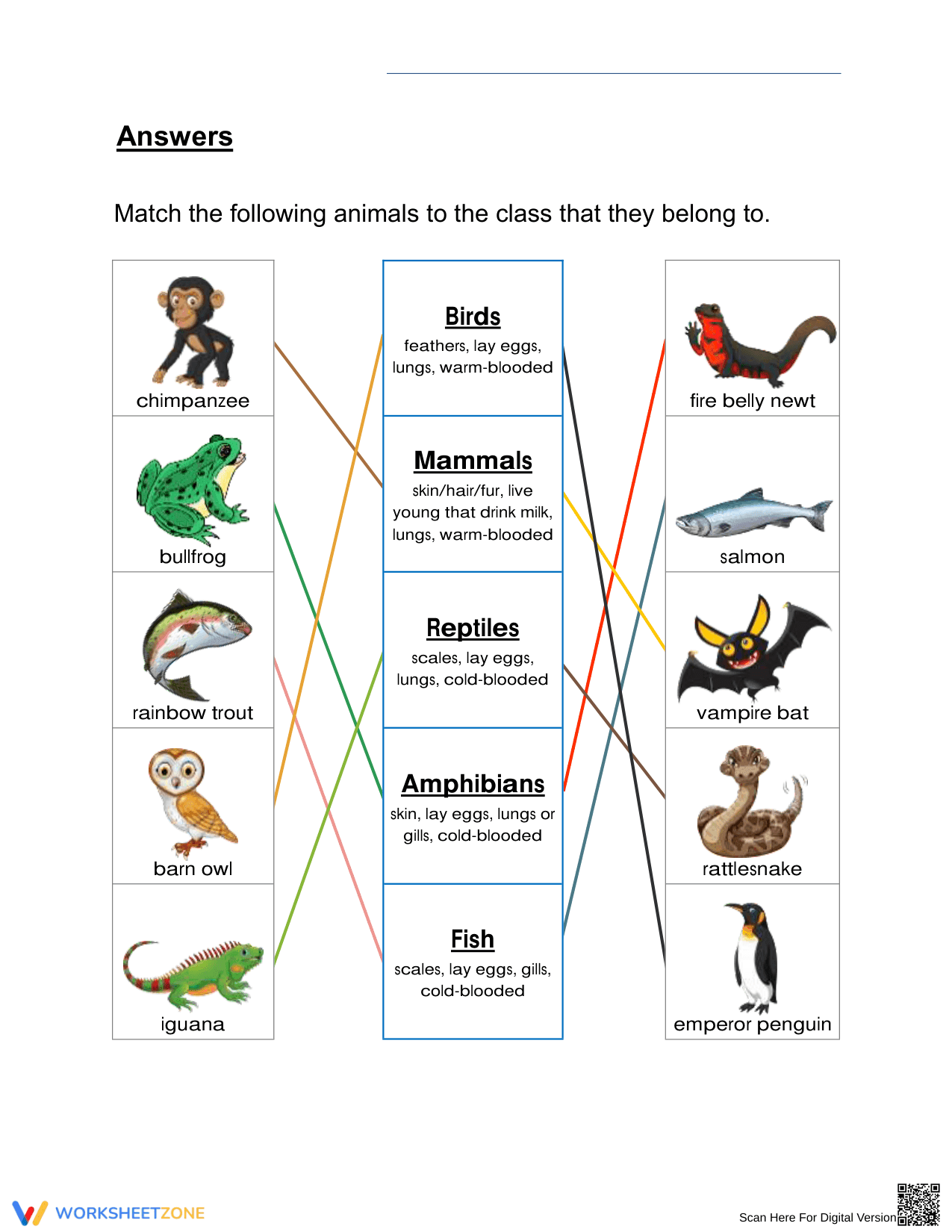
This comprehensive PDF resource includes a primary matching worksheet and a detailed answer key for rapid grading. The worksheet features high-quality illustrations of ten animals, ranging from the chimpanzee to the emperor penguin, paired with concise definitions for the five major vertebrate classes. The layout includes clear visual cues and descriptive text to support learners.
The "print-and-go" design of this resource minimizes teacher workload while maximizing instructional impact. Simply print the single-page worksheet (1 minute), distribute it to students for independent or partner work (30 seconds), and use the included answer key for immediate review or self-correction (30 seconds). Total teacher preparation time is under two minutes, making it an ideal choice for substitute plans.
This resource is directly aligned with 3-LS3-1, which requires students to provide evidence that animals have traits inherited from parents and that variation exists within groups. By identifying specific traits like "scales" or "feathers," students build the foundational knowledge necessary for more complex biological studies. It also supports 3-LS4-3 by examining how traits allow organisms to survive in specific environments. Both standard codes can be copied directly into lesson plans, IEP goals, or district curriculum mapping tools.
Use this worksheet as a mid-lesson check for understanding after introducing the five vertebrate classes. It works exceptionally well during the "Independent Practice" phase of a gradual release model. Teachers should observe whether students use the provided definitions (e.g., "warm-blooded") to justify their matching choices, providing a perfect opportunity for formative assessment and identifying common misconceptions about animals like the vampire bat.
Designed specifically for Grade 3 science classrooms, this worksheet is also suitable for Grade 2 students ready for extension or Grade 4 learners requiring a review of living things. It pairs naturally with an anchor chart detailing animal characteristics or a short reading passage about animal habitats. The visual support makes it accessible for English Language Learners and students with varied reading levels.
Effective classification activities serve as a cornerstone for biological literacy by training students to observe and categorize the natural world. According to the RAND AIRS 2024 report on elementary science pedagogy, structured classification tasks significantly improve long-term retention of biological concepts by reinforcing the relationship between form and function. This worksheet addresses the 3-LS3-1 standard by requiring students to synthesize information about animal traits to determine their taxonomic group. By engaging with 10 distinct examples, students move beyond rote memorization toward a functional understanding of vertebrate diversity. Research from ScienceDirect TpT Analysis suggests that high-quality visual aids in science worksheets increase student engagement and reduce cognitive load during classification exercises. This resource provides a reliable, evidence-based method for assessing student mastery of vertebrate groups within a standard 20-minute instructional block.


