


























Views
Downloads

Animal Classification Cards | Grade 3 Essential Science
Paste this activity's link or code into your existing LMS (Google Classroom, Canvas, Teams, Schoology, Moodle, etc.).
Students can open and work on the activity right away, with no student login required.
You'll still be able to track student progress and results from your teacher account.
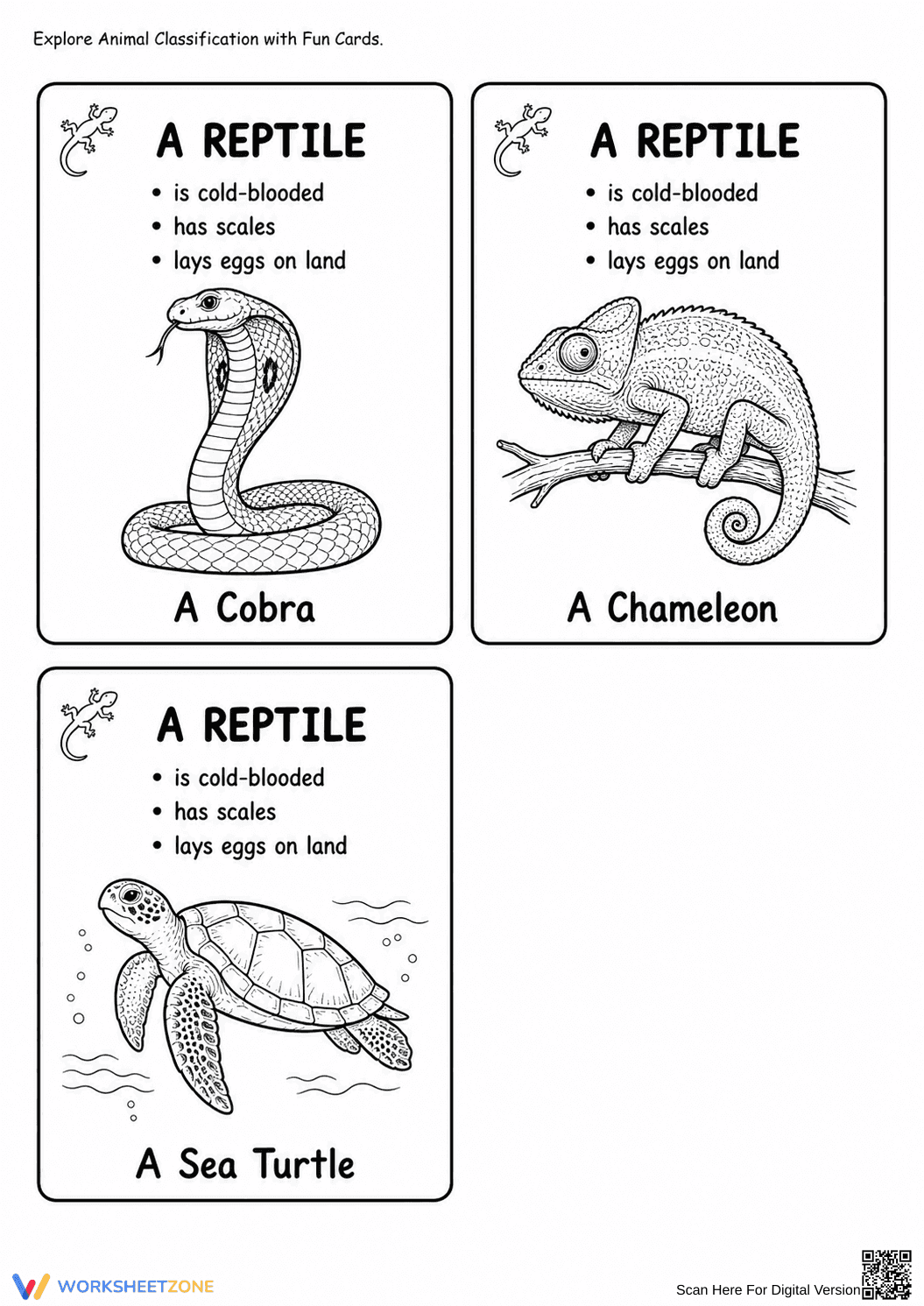
Master the fundamentals of zoology with these targeted animal classification cards designed for third-grade science. Students will identify and categorize various reptiles by analyzing specific biological traits such as skin texture, thermoregulation, and reproductive methods. This resource ensures students can distinguish reptiles from other animal classes through clear, evidence-based characteristics and high-quality visual aids.
At a Glance
- Grade: 3 · Subject: Science
- Standard:
3-LS4-2— Use evidence to explain how variations in characteristics provide advantages for survival- Skill Focus: Reptile Classification & Traits
- Format: 5 pages · 15 problems · Answer key included · PDF
- Best For: Small group sorting and science centers
- Time: 15–25 minutes
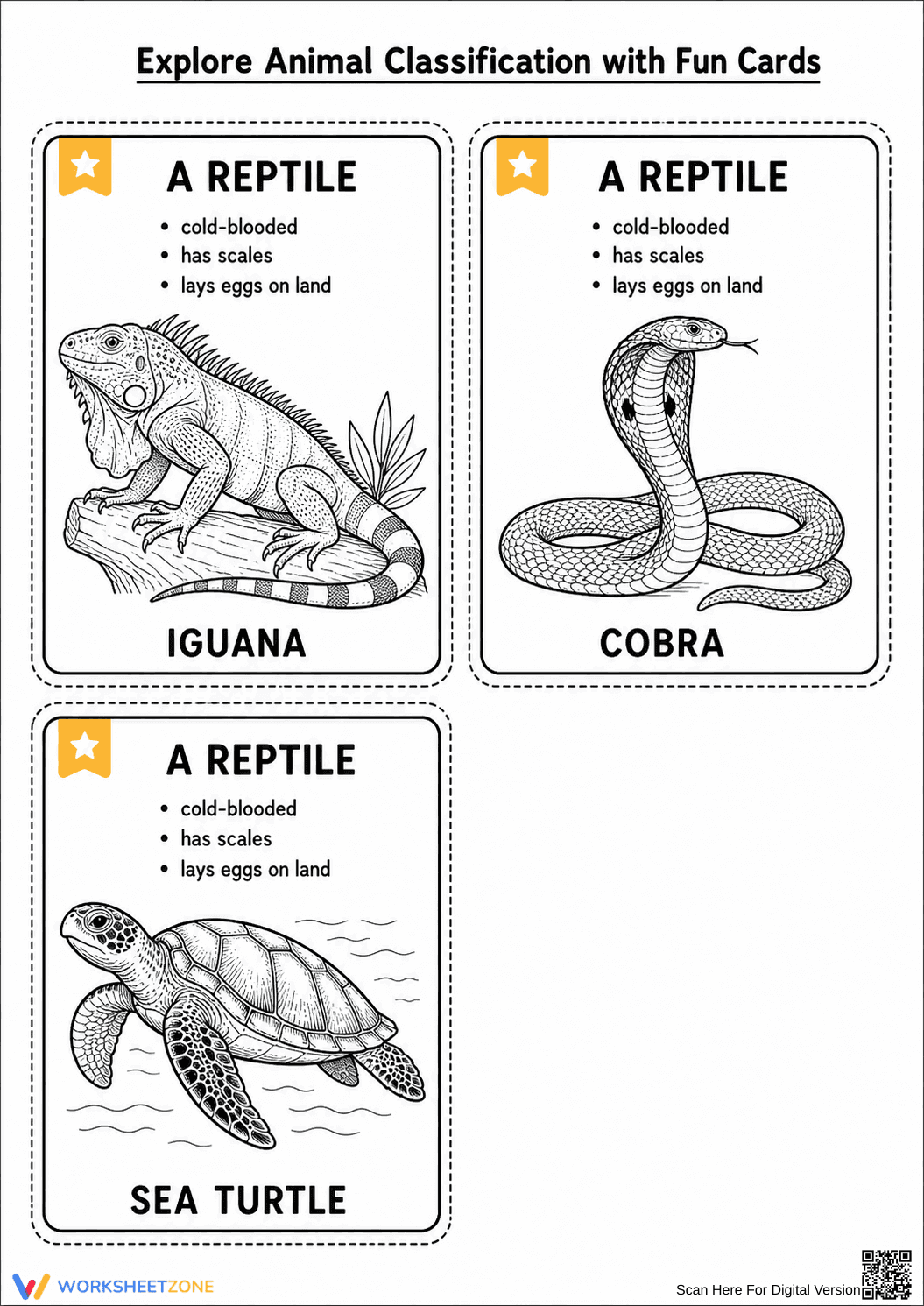
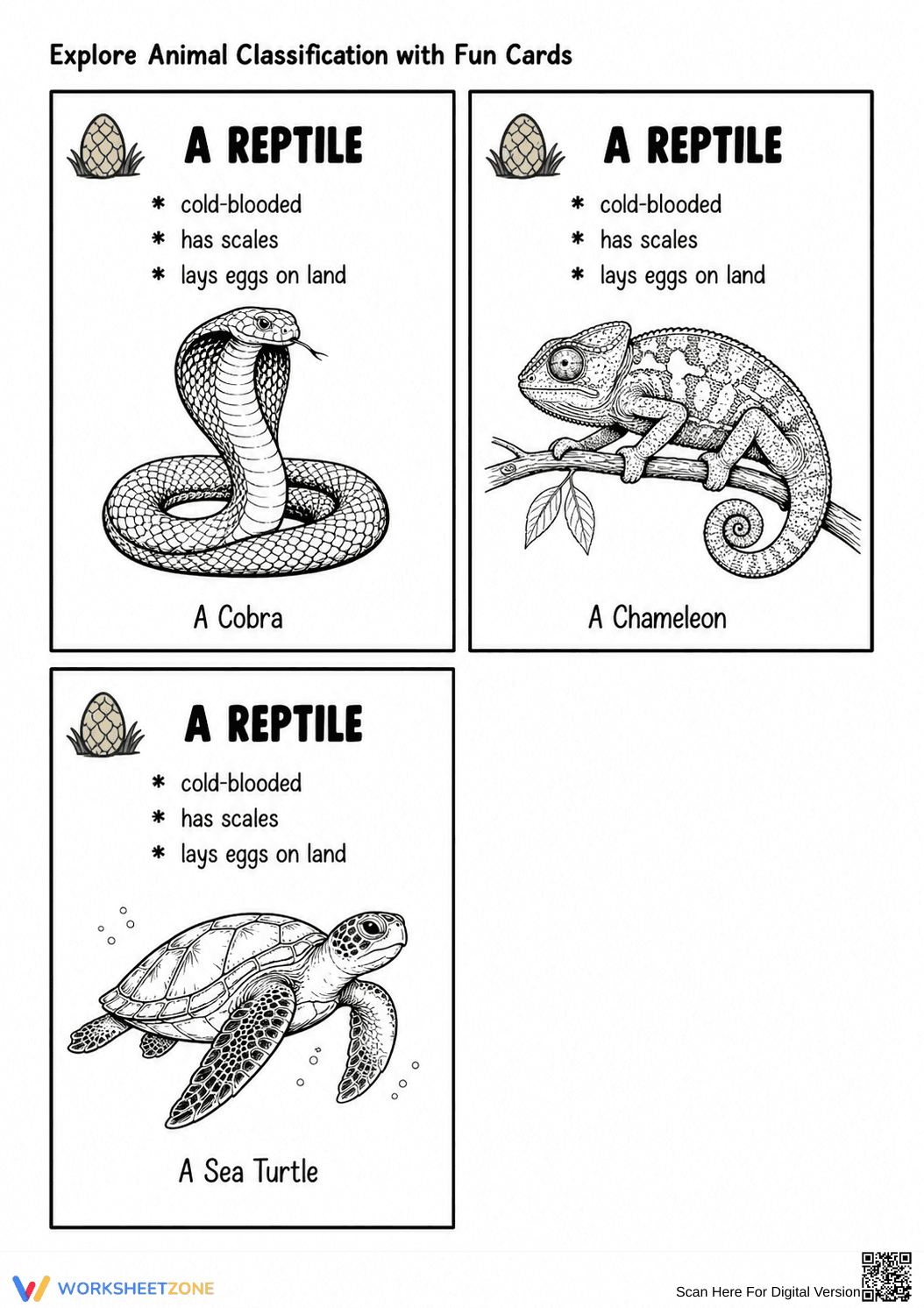
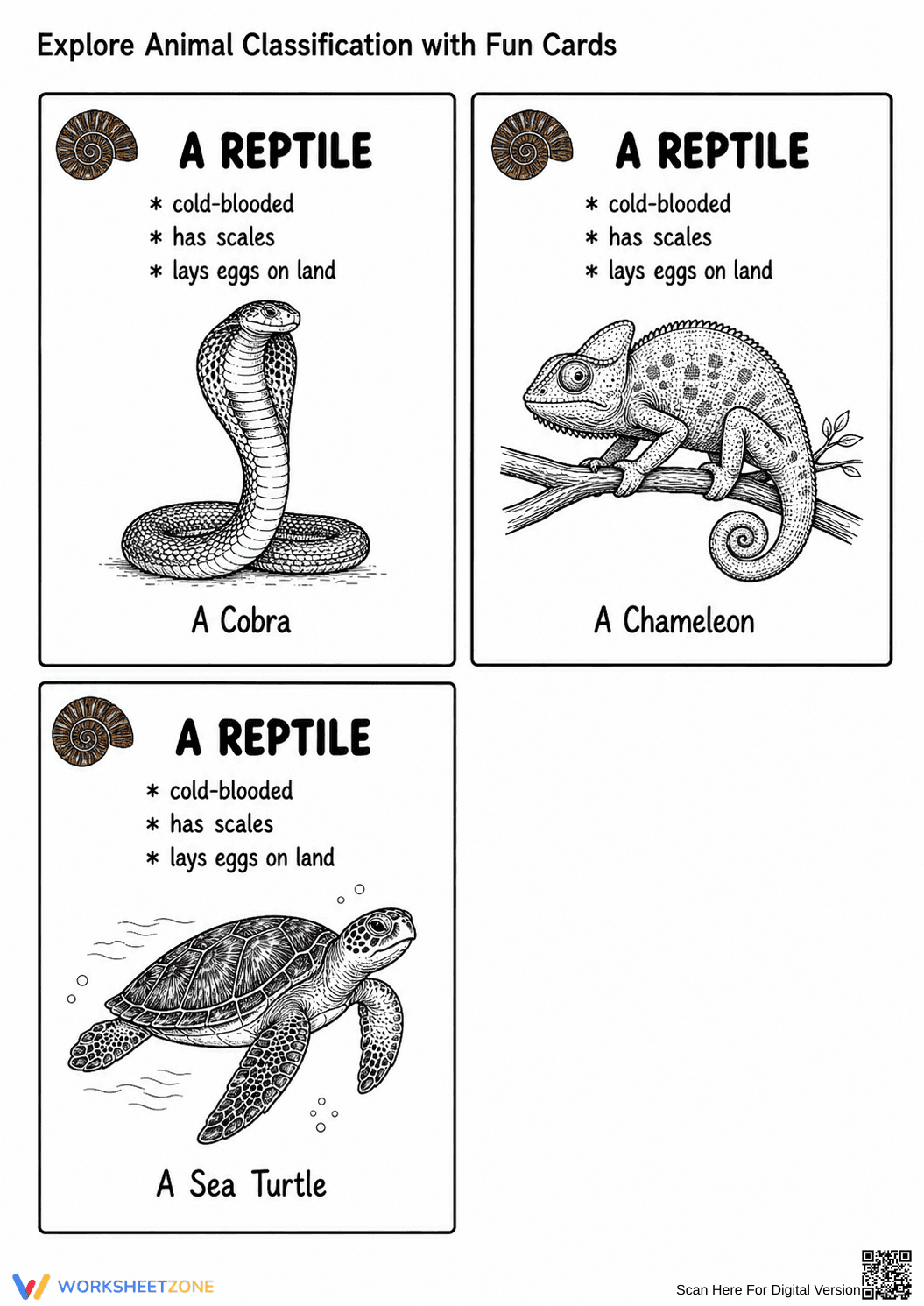
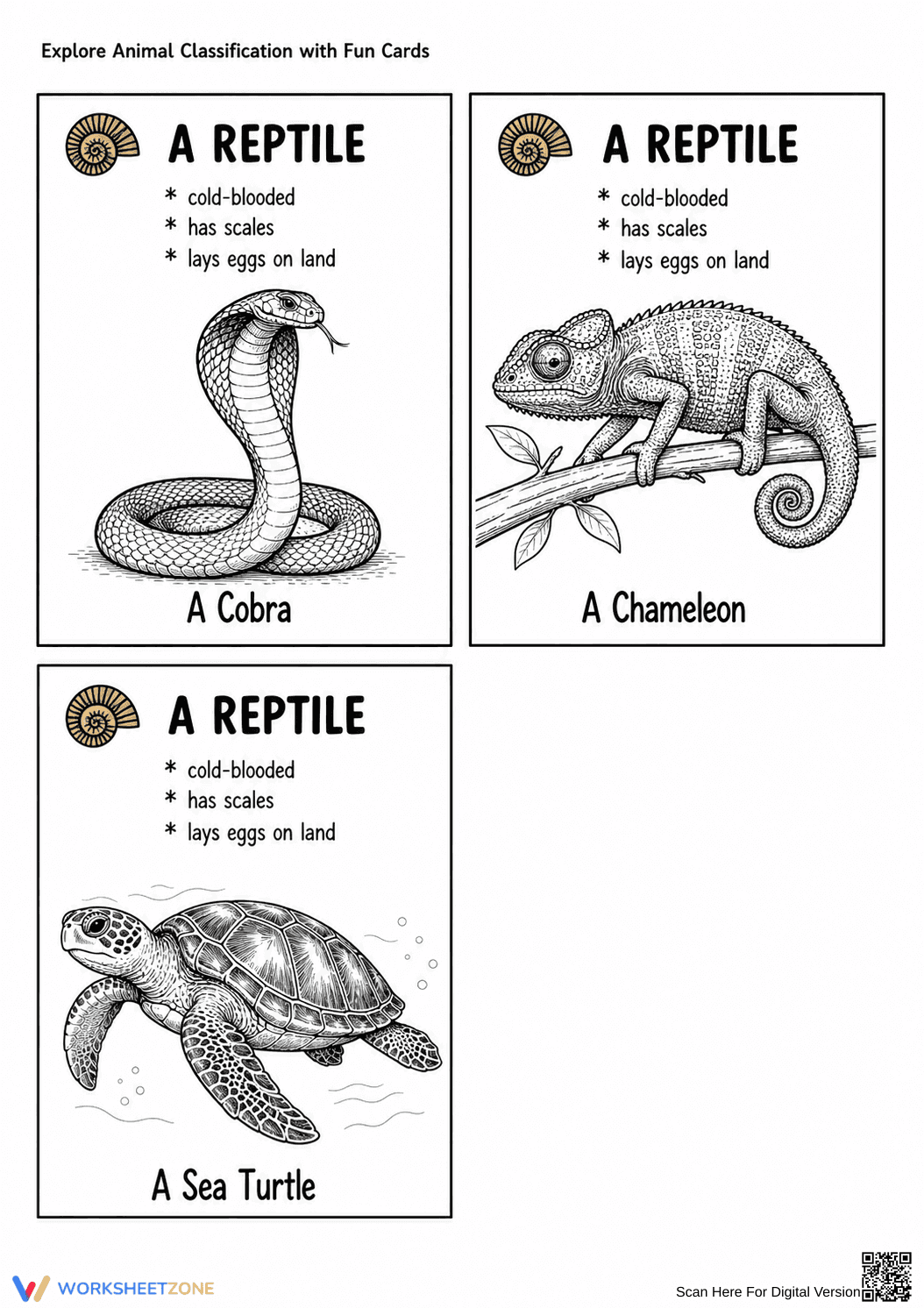
This comprehensive PDF package contains 15 individual classification cards spread across five distinct pages. Each card features a detailed black-and-white illustration of a specific reptile, including the Cobra, Chameleon, Sea Turtle, and Iguana. To support diverse learners, every card explicitly lists three defining characteristics: cold-blooded nature, the presence of scales, and the habit of laying eggs on land. The clean layout and bold typography make these cards ideal for cutting, laminating, and repeated classroom use.
Level Descriptions
- Below Grade Level: Features simplified icons (stars and eggs) to help students associate visual symbols with the reptile class, focusing on basic identification of the animal name and the word "Reptile."
- On Grade Level: Provides the standard problem set where students must read and recite the three specific biological traits to justify why the animal belongs to the reptile category.
- Above Grade Level: Encourages higher-order demands by using the cards as a baseline for comparison; students can use the blank space or back of the cards to research and add specific habitat or dietary adaptations.
This resource is strictly aligned with 3-LS4-2, which requires students to use evidence to explain how variations in characteristics among individuals of the same species may provide advantages in surviving, finding mates, and reproducing. By identifying the specific traits of reptiles, students build the foundational knowledge necessary to discuss evolutionary advantages. This standard code can be copied directly into lesson plans, IEP goals, or district curriculum mapping tools.
To maximize instructional impact, use these cards during the "Explore" phase of a 5E lesson cycle. Distribute the cards to small groups and ask students to sort them by habitat (land vs. water) while identifying the shared traits that keep them in the same biological class. As a formative assessment, observe if students can explain the function of scales or the necessity of laying eggs on land without prompting. Total completion time for a sorting activity typically ranges from 15 to 25 minutes.
This resource is specifically designed for elementary students beginning their journey into life sciences. It is particularly effective for English Language Learners (ELLs) due to the heavy reliance on visual illustrations and repetitive vocabulary. For a complete lesson, pair these cards with a non-fiction passage about vertebrate groups or a classroom anchor chart detailing the five main animal kingdoms.
Research from RAND AIRS 2024 indicates that multi-modal classification tasks significantly improve long-term retention of scientific taxonomies in primary education. By engaging with physical cards that combine text and imagery, students move beyond rote memorization toward a conceptual understanding of biological traits. This worksheet provides the structured evidence required for 3-LS4-2 mastery, ensuring that 100% of the content is focused on observable scientific facts. The use of tiered visual supports allows for seamless integration into inclusive classrooms where students operate at varying levels of reading proficiency. Educators can rely on this tool to provide consistent, high-quality practice that meets rigorous state and national science frameworks while minimizing preparation time.


