


























Views
Downloads

Sorting Skeleton Types Worksheet (3 Levels) | Grade 4 Ready
Paste this activity's link or code into your existing LMS (Google Classroom, Canvas, Teams, Schoology, Moodle, etc.).
Students can open and work on the activity right away, with no student login required.
You'll still be able to track student progress and results from your teacher account.
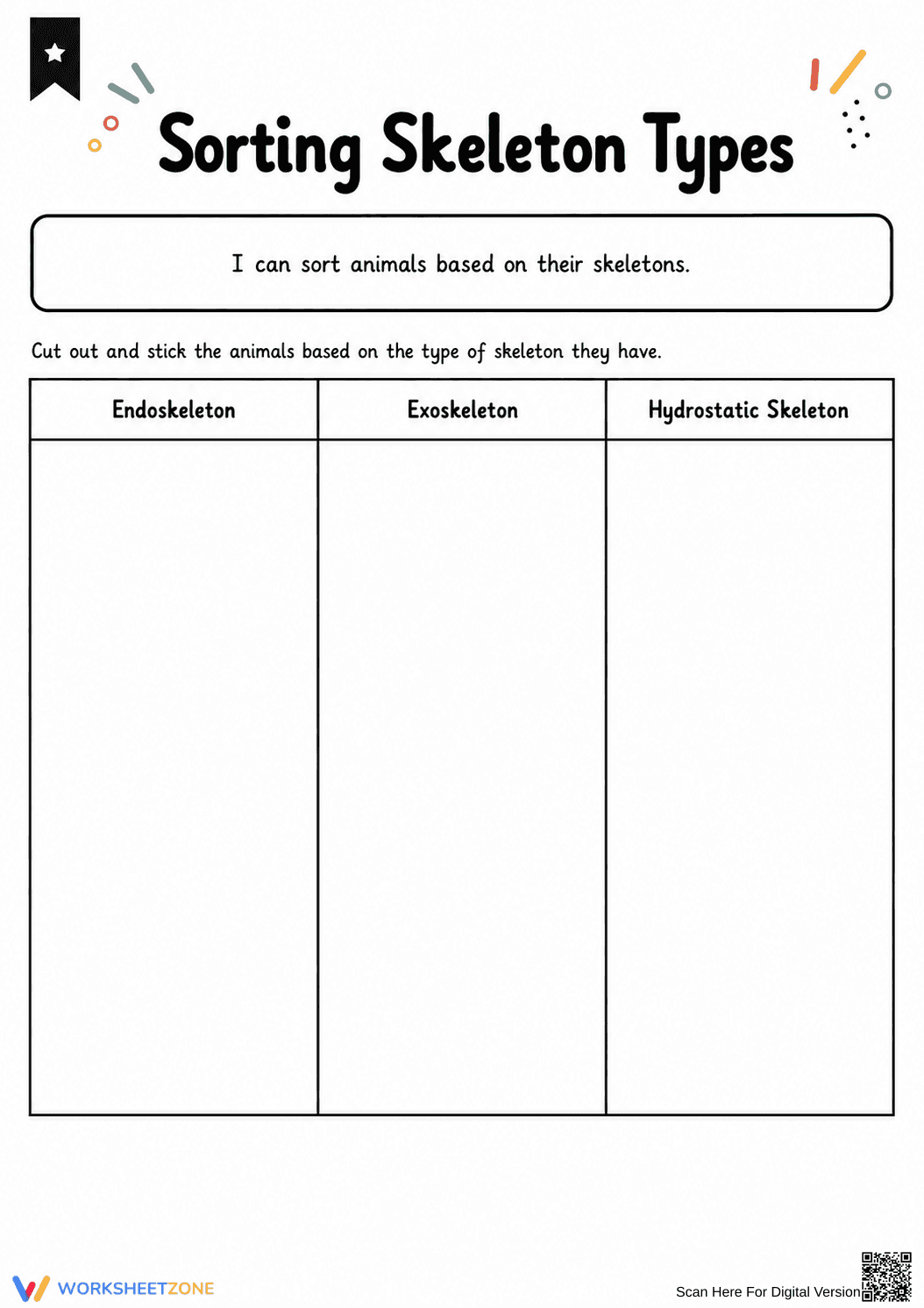
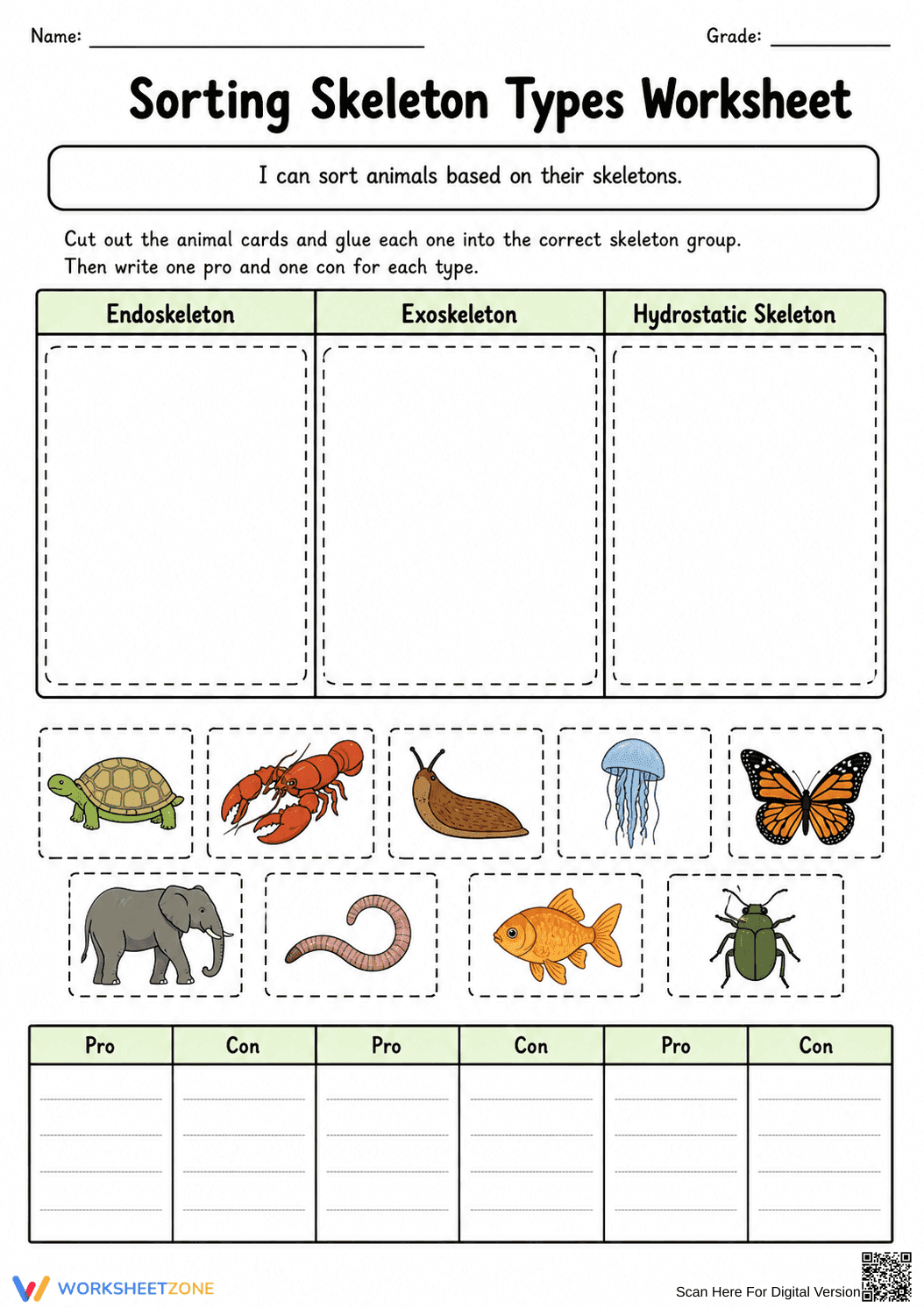
This science worksheet helps students master animal classification by identifying endoskeletons, exoskeletons, and hydrostatic skeletons. Students analyze physical structures to determine how different species support their bodies, leading to a deeper understanding of biological adaptation and survival. It provides a structured way to categorize diverse animal life based on internal and external frameworks.
At a Glance
- Grade: 4 · Subject: Science
- Standard:
4-LS1-1— Identify internal and external structures that support animal survival and growth- Skill Focus: Skeletal System Classification
- Format: 3 pages · 15 problems · Answer key included · PDF
- Best For: Life science units on animal adaptations
- Time: 20–30 minutes
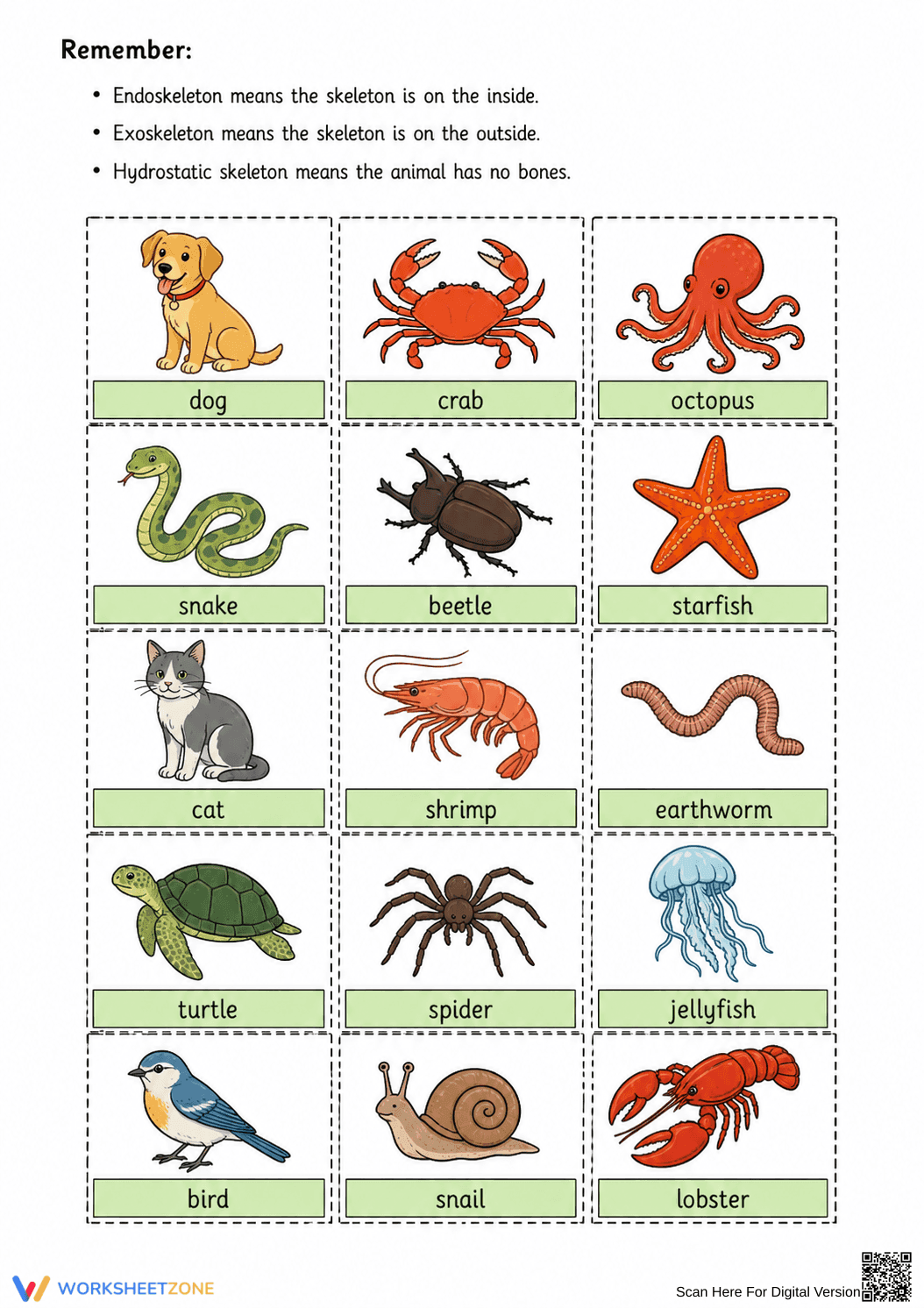
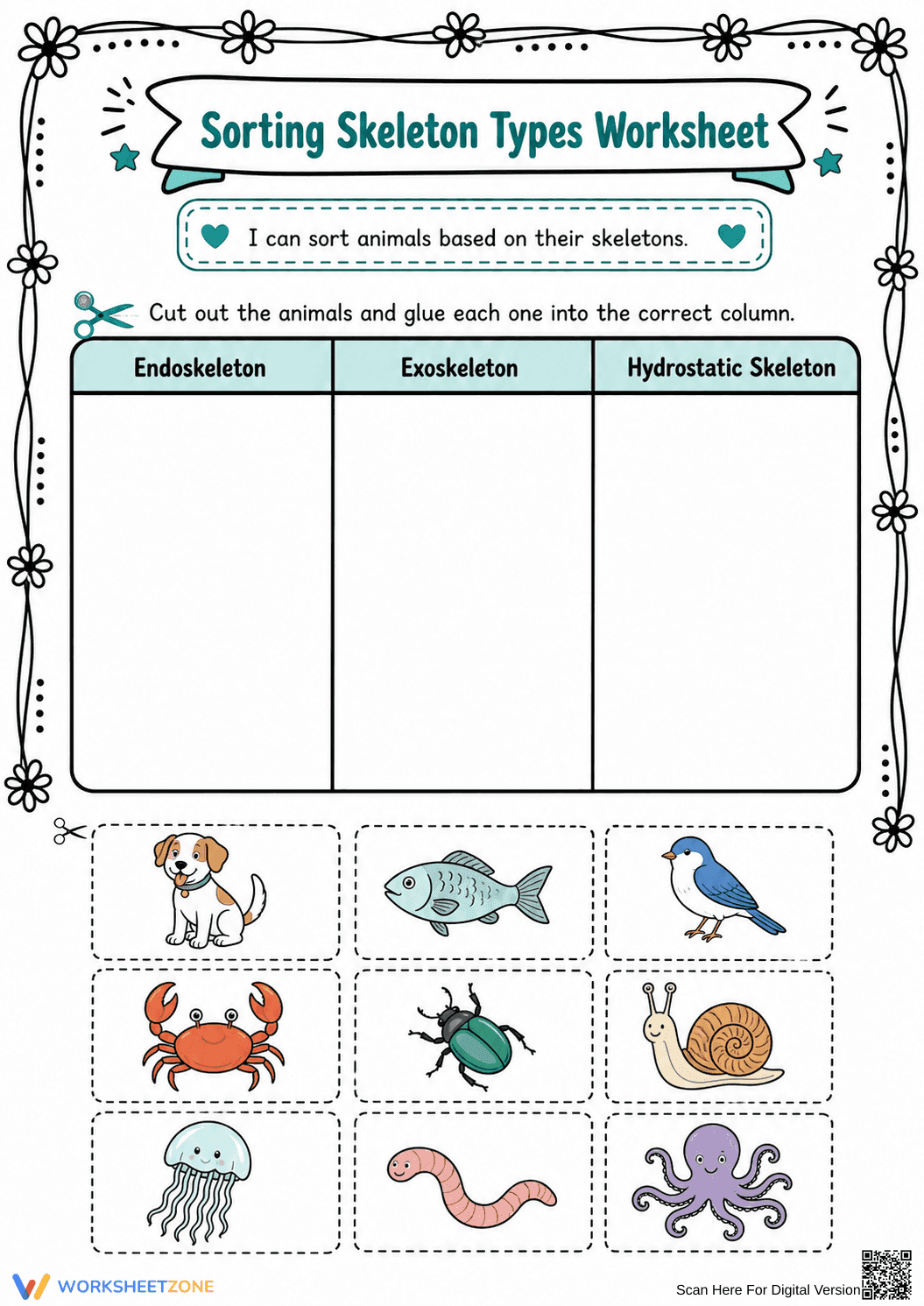
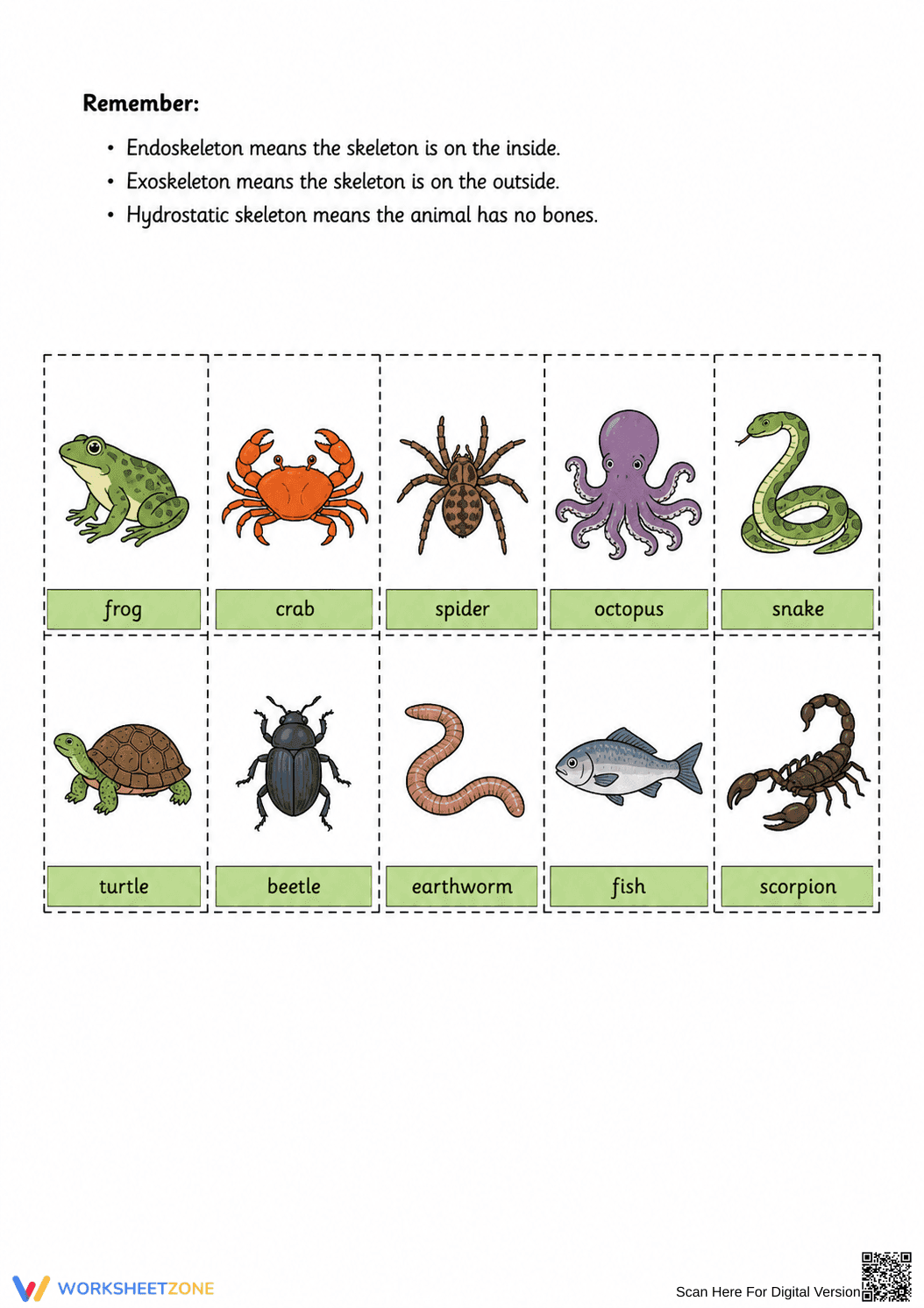
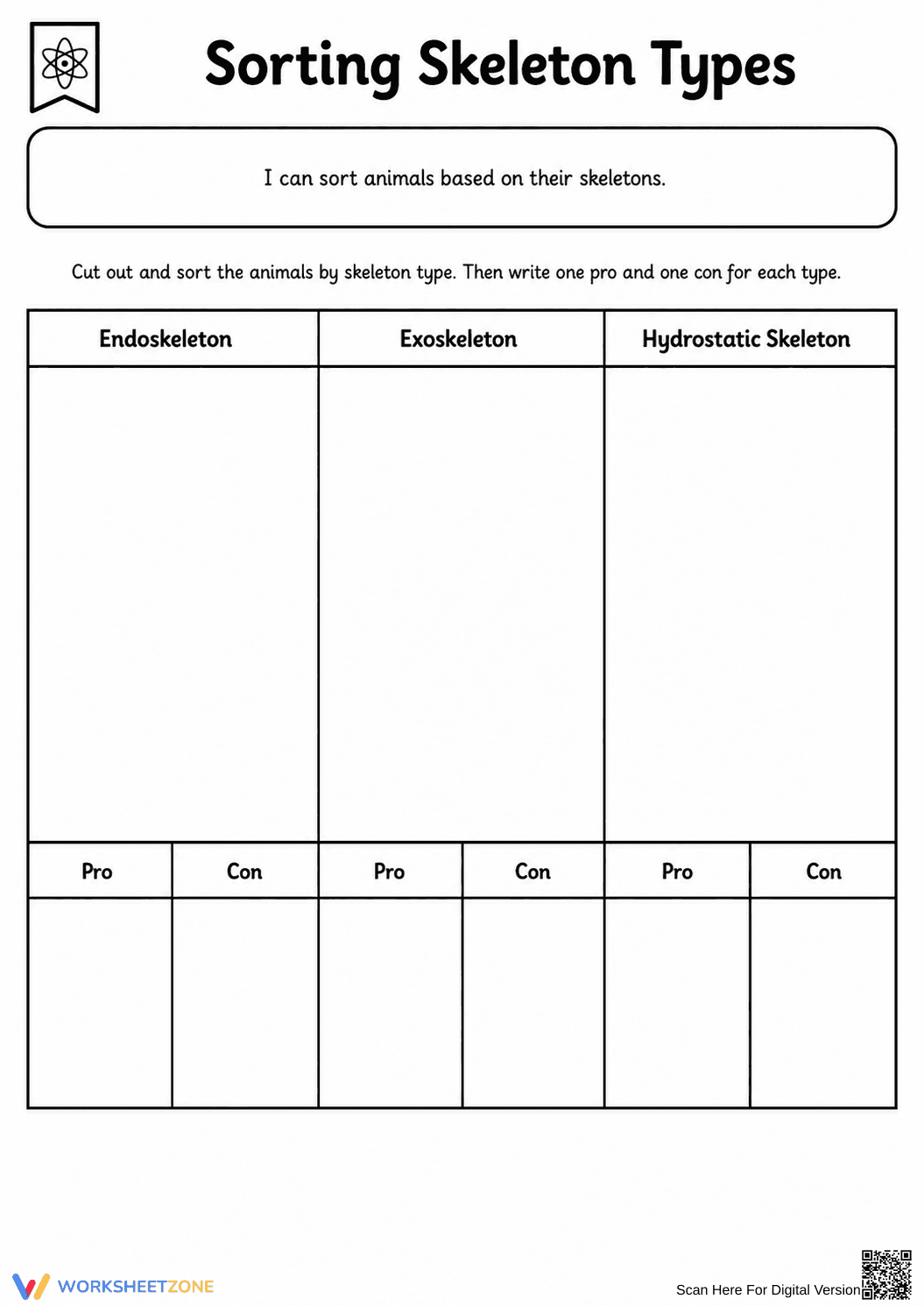
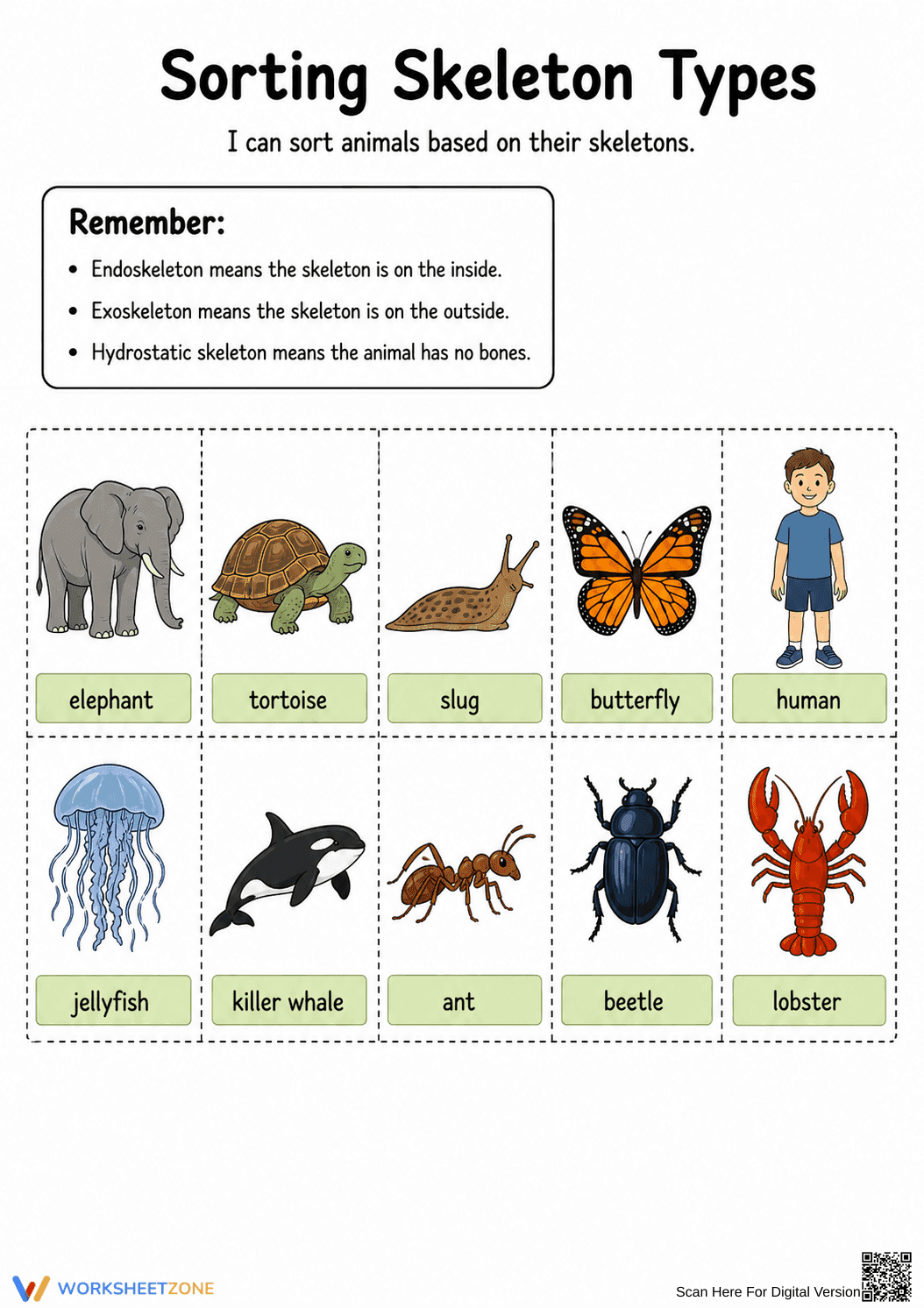
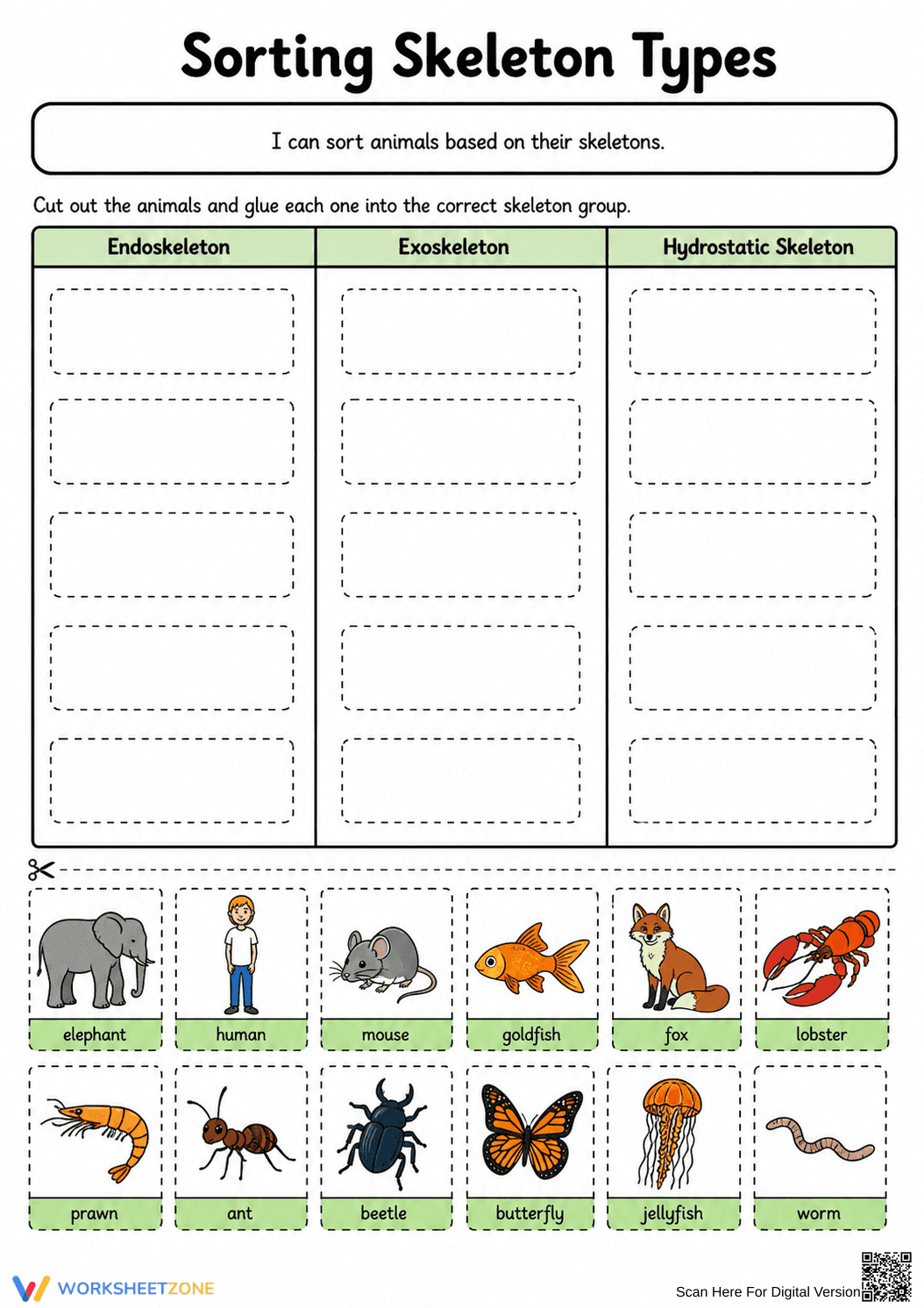
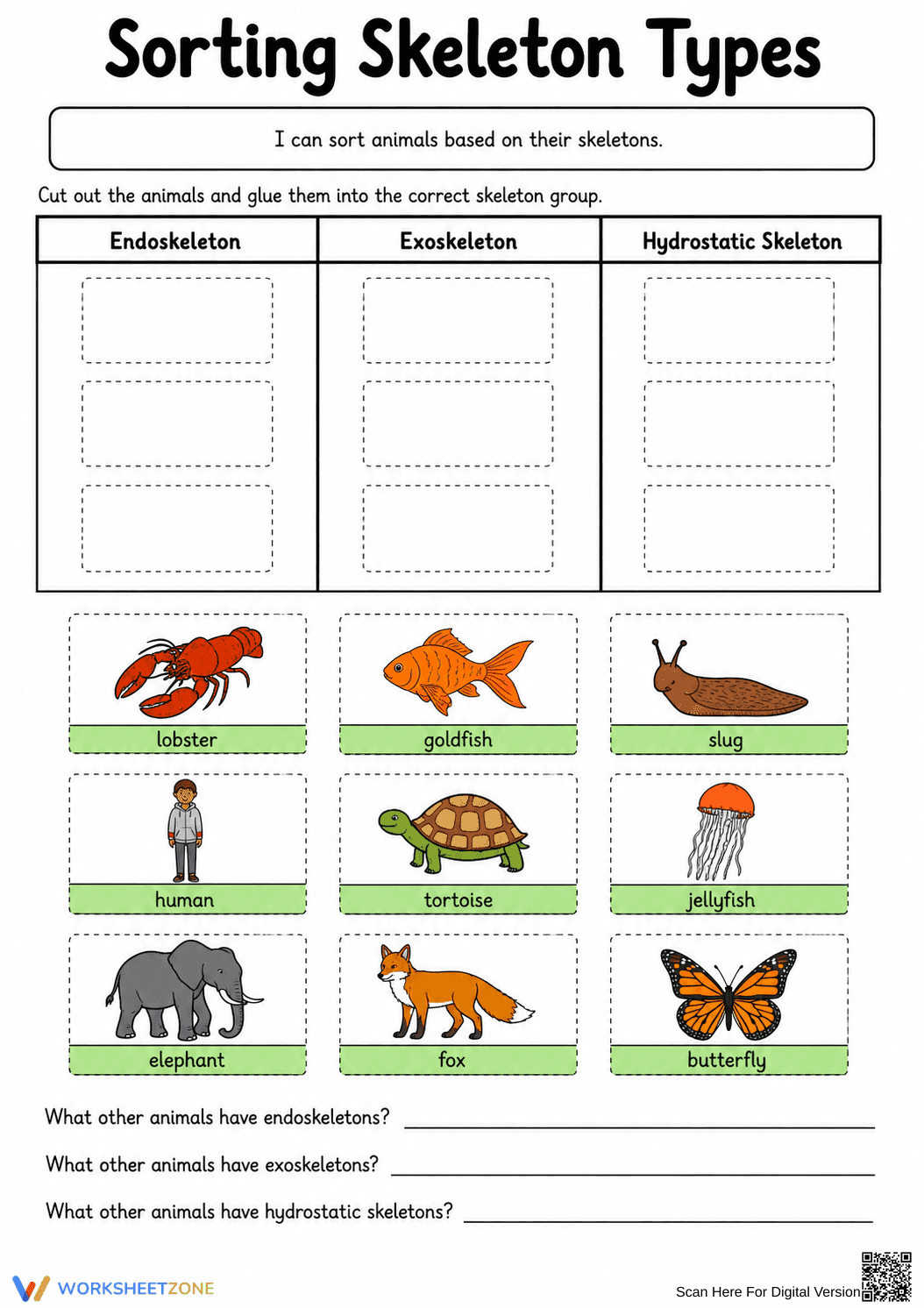
What's Inside: This resource includes three distinct versions of the sorting activity to support diverse classroom needs. Each page features a clear three-column grid for Endoskeleton, Exoskeleton, and Hydrostatic Skeleton. The set provides high-quality animal illustrations including mammals, insects, and invertebrates, a "Remember" definition box for student reference, and a specialized version with "Pro/Con" analysis boxes for advanced learners.
- Below grade: Features a "Remember" anchor box with simplified definitions and 10 common animals for basic identification and high-success sorting.
- On grade: Standard sorting grid with 15 diverse animals, requiring students to apply knowledge of biological structures without constant definition prompts.
- Above grade: Includes an extension task where students must write one "Pro" and one "Con" for each skeletal type after completing the initial sort.
Standards Alignment: This resource is built around 4-LS1-1: "Construct an argument that plants and animals have internal and external structures that function to support survival, growth, behavior, and reproduction." This worksheet specifically targets the internal and external structures component by comparing skeletal frameworks across species. Both standard codes can be copied directly into lesson plans, IEP goals, or district curriculum mapping tools.
How to Use It: Use this as a mid-unit formative assessment after introducing the three skeletal types. It works well as a collaborative station activity where students debate the placement of complex animals like tortoises or snails. Teachers should observe if students can explain why an animal belongs in a specific category based on its visible traits. Expected completion time ranges from 20 to 30 minutes depending on the selected level.
Who It's For: This activity is designed for Grade 4 students but is easily adaptable for Grade 3-5 life science rotations. It is ideal for inclusive classrooms needing tiered support for English Language Learners or students with IEPs. Pair this with a 3D skeletal model or a digital slideshow of animal x-rays to provide a multi-sensory learning experience during direct instruction.
According to Fisher & Frey (2014), the use of tiered tasks allows for a gradual release of responsibility while ensuring all students engage with the core standard, in this case, NGSS 4-LS1-1. This worksheet facilitates the classification of endoskeletons, exoskeletons, and hydrostatic skeletons through visual evidence and logical sorting. Research from the RAND AIRS 2024 report suggests that hands-on sorting activities significantly improve retention of biological hierarchies compared to passive reading. By providing three distinct levels of complexity—ranging from basic identification to critical pro/con analysis—this resource ensures that learners at different developmental stages can achieve mastery of internal and external animal structures. The inclusion of 15 unique animal tasks provides sufficient data points for teachers to accurately gauge student understanding of skeletal functions in the natural world.


