


























Views
Downloads

Essential Basic Needs of Living Things Worksheet | Grade 3
Paste this activity's link or code into your existing LMS (Google Classroom, Canvas, Teams, Schoology, Moodle, etc.).
Students can open and work on the activity right away, with no student login required.
You'll still be able to track student progress and results from your teacher account.
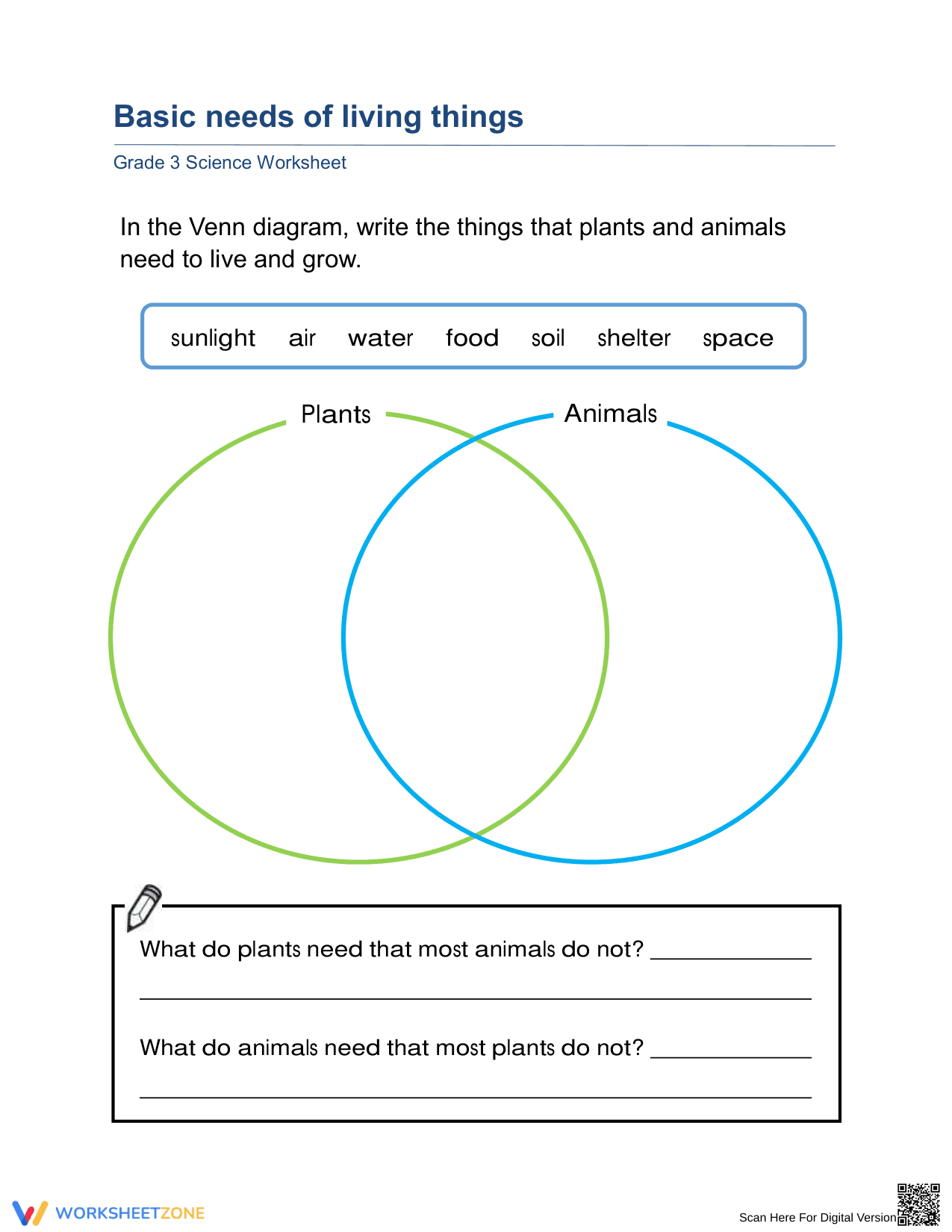
This Grade 3 science worksheet provides a structured way for students to compare the basic survival requirements of plants and animals. By using a Venn diagram and critical thinking questions, learners identify overlapping needs like water and air while distinguishing unique needs like sunlight for plants and food for animals.
At a Glance
- Grade: 3 · Subject: Living Things
- Standard:
3-LS1-1— Describe how organisms have common needs for growth and survival- Skill Focus: Comparing plant and animal survival needs
- Format: 1 page · 9 problems · Answer key included · PDF
- Best For: Independent practice or quick science check
- Time: 15–20 minutes
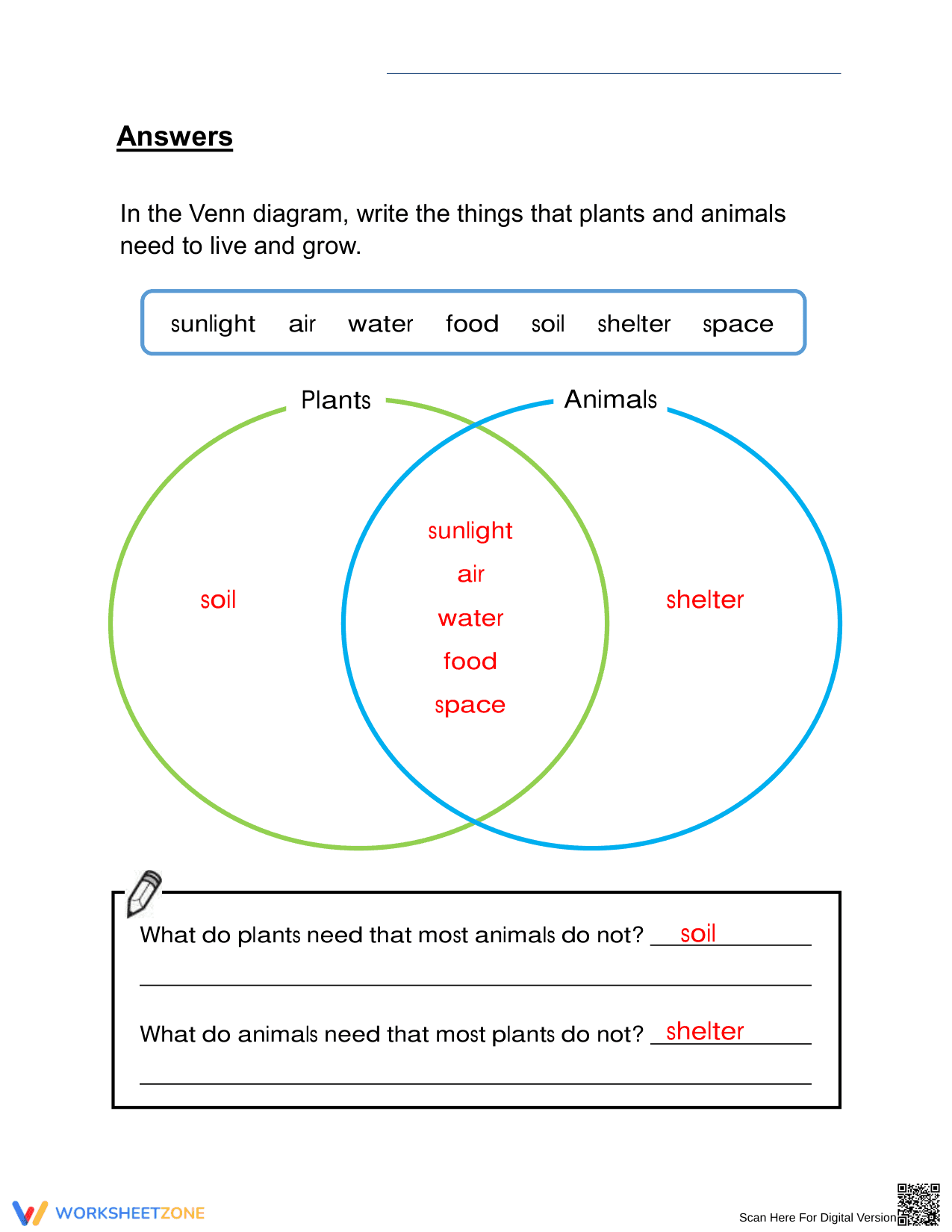
The worksheet features a central Venn diagram with a seven-word bank including terms like sunlight, soil, water, air, food, shelter, and space. Students categorize these items to show shared and distinct needs. Two summary questions at the bottom reinforce the concept by requiring written explanations of the differences between flora and fauna requirements. A full answer key is provided for immediate feedback.
Zero-Prep Workflow
- Print: Generate the single-page PDF for your whole class or small groups (30 seconds).
- Distribute: Hand out the sheets during your life science block or use as a quick morning work task (1 minute).
- Review: Check student diagrams against the included key for rapid assessment (30 seconds).
Total teacher preparation time is under two minutes, making this an ideal sub plan or sudden classroom filler.
Standards Alignment
This activity aligns with 3-LS1-1: "Develop models to describe that organisms have unique and diverse life cycles but all have in common birth, growth, reproduction, and death." While focusing on needs, this worksheet supports the foundational understanding of the environment required for these life cycles to occur. Both standard codes can be copied directly into lesson plans, IEP goals, or district curriculum mapping tools.
How to Use It
Use this as a formative assessment after a direct instruction lesson on ecosystems. Alternatively, assign it as a homework reinforcement task to check for misconceptions about "space" and "shelter." Observe students as they place "soil" and "food" to gauge their understanding of nutrient sources. Completion typically takes 15 to 20 minutes depending on the level of class discussion.
Who It's For
Designed specifically for third-grade classrooms, this resource also supports second-grade enrichment or fourth-grade review for students needing a refresher on biological basics. It pairs naturally with a short informational passage about habitats, a classroom plant-growing experiment, or an introductory lesson on photosynthesis and animal nutrition.
This science resource aligns with the NGSS 3-LS1-1 framework, focusing on the essential requirements for organism survival. By categorizing shared and unique needs, students build a mental model of biological commonalities. According to research from EdReports 2024, high-quality science materials that utilize graphic organizers like Venn diagrams significantly improve conceptual retention in elementary learners. The activity promotes scientific literacy by requiring students to classify data and synthesize findings through written response. This instructional approach ensures that Grade 3 students master the core disciplinary ideas surrounding life cycles and survival mechanisms. It serves as a reliable instrument for evidence-based practice in any standard-aligned science curriculum. Teachers can use the results to identify students who struggle with the concept of interdependence within an ecosystem.


