


























Views
Downloads

Grade 3 Needs of Animals — Printable No-Prep Worksheet
Paste this activity's link or code into your existing LMS (Google Classroom, Canvas, Teams, Schoology, Moodle, etc.).
Students can open and work on the activity right away, with no student login required.
You'll still be able to track student progress and results from your teacher account.
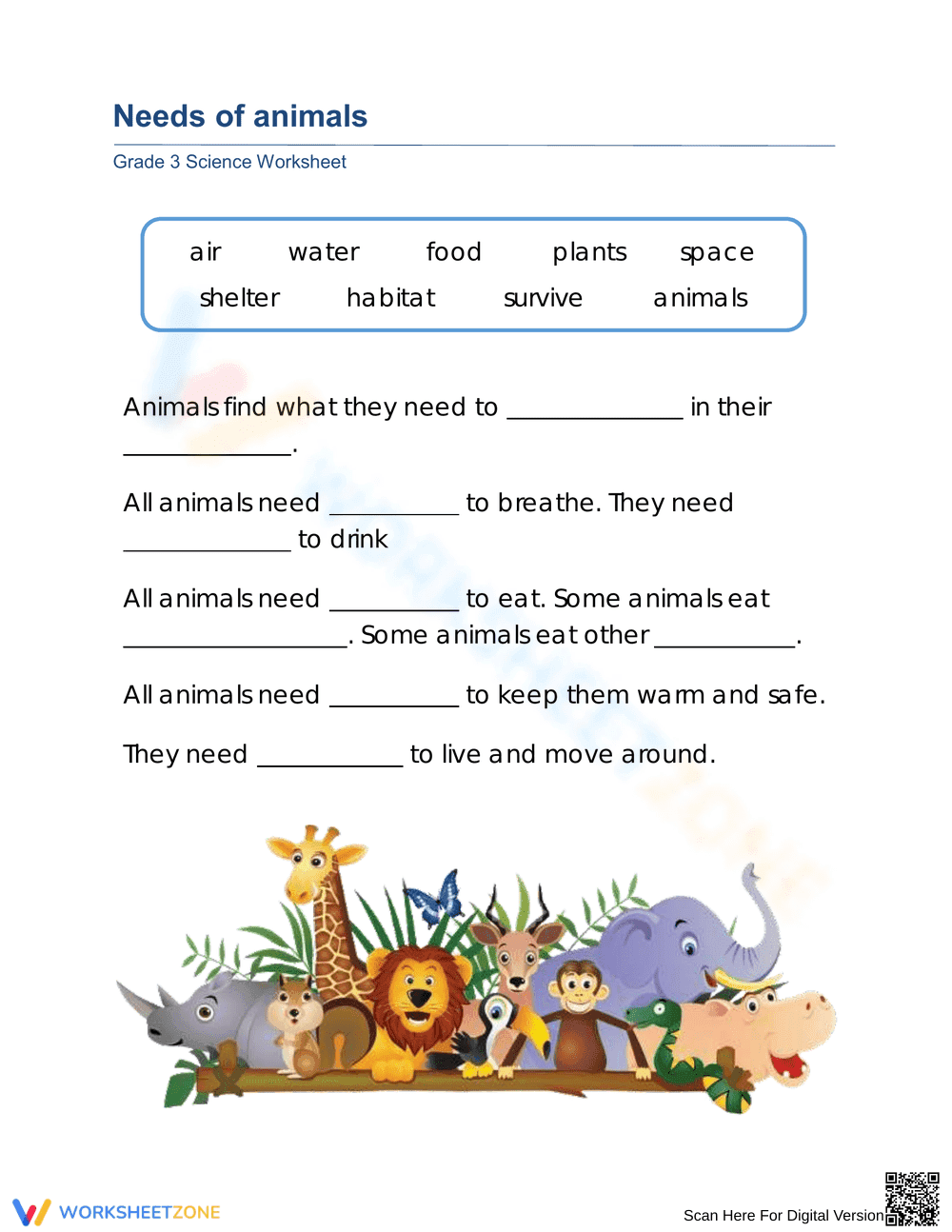
This Grade 3 science worksheet provides a structured approach to understanding how animals survive in their natural environments. Students identify the essential requirements for life, including food, water, air, shelter, and space. By completing the fill-in-the-blank exercises using the provided word bank, learners solidify their grasp of biological interdependence and habitat requirements.
At a Glance
- Grade: 3 · Subject: Living Things
- Standard:
3-LS4-3— Identify that organisms have needs and survive in habitats that meet them- Skill Focus: Animal survival requirements
- Format: 1 page · 9 problems · Answer key included · PDF
- Best For: Science centers or quick formative checks
- Time: 15–20 minutes
What's Inside
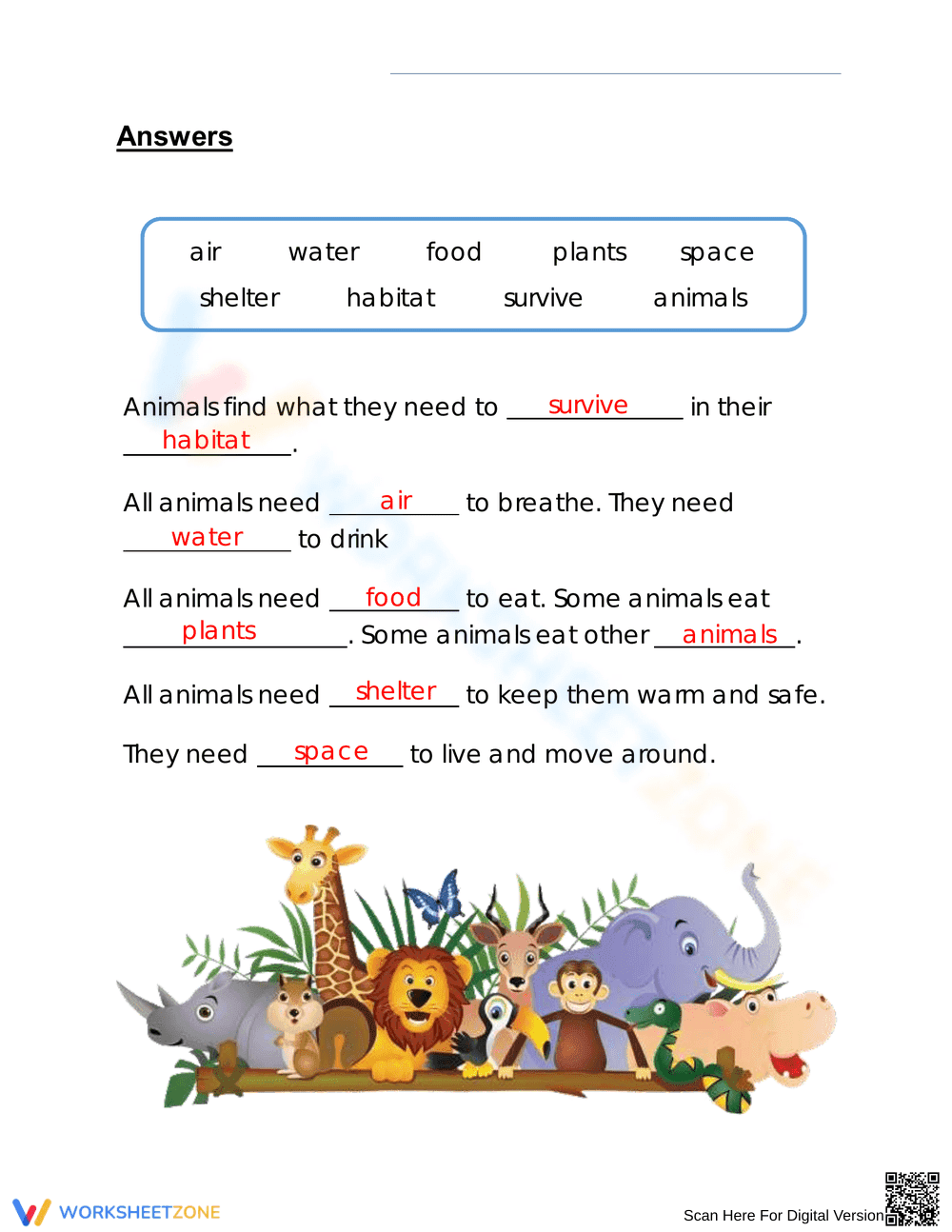
The resource consists of a single-page student activity and a corresponding answer key for efficient grading. It features a word bank containing ten key terms such as habitat, survive, and shelter. Students must apply these terms to nine specific blanks within a series of descriptive sentences that define how animals interact with their surroundings to meet their biological needs.
Zero-Prep Workflow
Teachers can implement this activity in under two minutes of preparation time. Simply print the single-sheet PDF and distribute it to students during your science block. The clear word bank and intuitive sentence structures allow for independent completion, making it an ideal choice for substitute lesson plans. Reviewing the answers as a class takes approximately five minutes using the provided key.
Standards Alignment
This worksheet is aligned with `3-LS4-3`, which focuses on the survival of organisms within specific habitats. By identifying that animals must find food, water, and shelter within their environment, students build the foundational knowledge required to argue how different habitats support diverse life forms. This standard code can be copied directly into lesson plans, IEP goals, or district curriculum mapping tools.
How to Use It
Use this worksheet as a mid-unit check during a science block to ensure students distinguish between different animal needs. It works well as an exit ticket following a lesson on habitats. To use it as a formative assessment, observe if students correctly differentiate between the sources of food—plants versus other animals—as they complete the integrated sentences.
Who It's For
This science activity is designed for third-grade classrooms, but it also serves as an effective intervention tool for older students or a challenge for advanced second graders. It is particularly helpful for English Language Learners who benefit from the visual cues of the animal header and the scaffolding provided by the word bank. Pair this with a non-fiction reading passage about specific biomes for a complete lesson.
Effective science instruction in the elementary years requires moving from simple identification to an understanding of system interactions. This worksheet addresses the 3-LS4-3 standard by highlighting the critical relationship between an animal and its habitat. According to research from EdReports 2024, high-quality science materials must facilitate the development of disciplinary core ideas through clear, scaffolded practice. By focusing on the five basic needs—air, water, food, shelter, and space—this resource ensures students can articulate why certain organisms thrive in specific locations while others do not. The inclusion of a word bank supports vocabulary acquisition, a key component of the Science of Reading applied to technical subjects. This structured approach helps bridge the gap between observation and scientific reasoning, providing a reliable tool for teachers to measure student progress in the life sciences without extensive administrative overhead.


