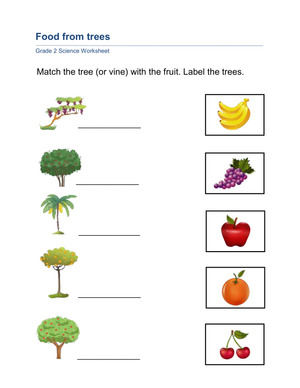
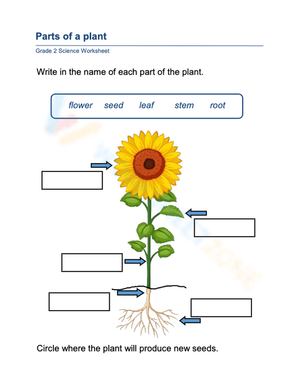
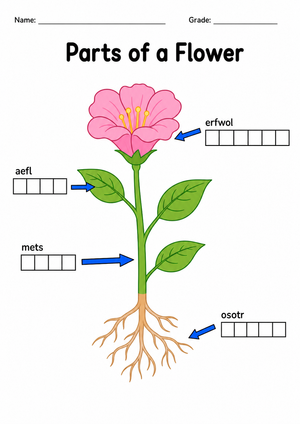
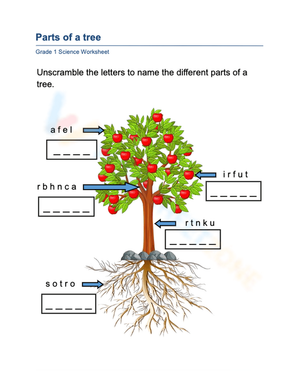
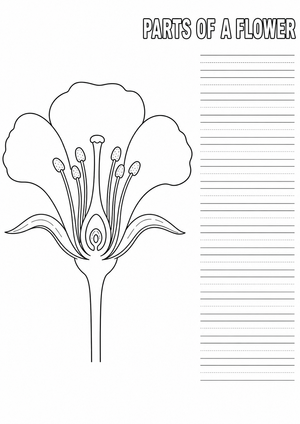
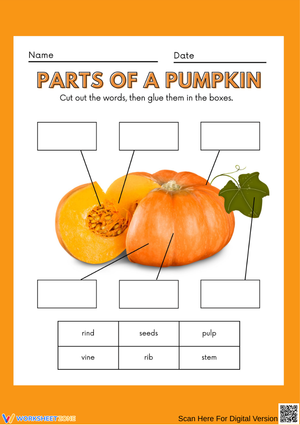
These 2nd grade parts of a plant printable worksheets give students direct, repeated contact with plant anatomy vocabulary right when that vocabulary first becomes load-bearing in second grade science. The set covers roots, stems, leaves, flowers, fruits, and seeds — both identification and function — across four distinct worksheet formats. Teachers get materials ready for whole-group instruction, center rotations, and quick end-of-unit checks without any modification needed.
What's Inside the Set
Four worksheet types, each targeting a distinct skill:
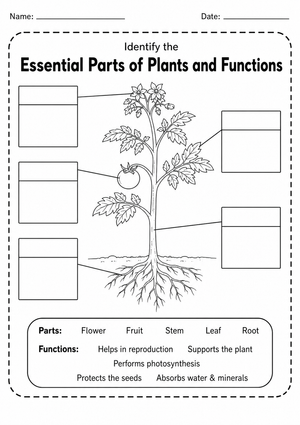
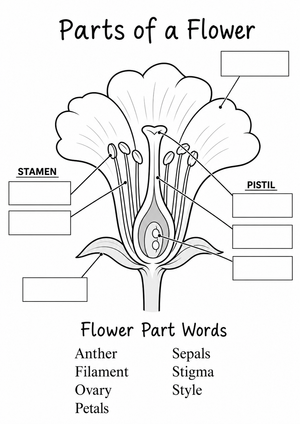
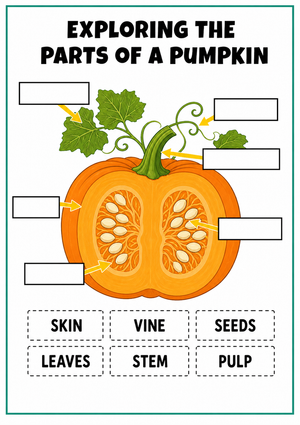
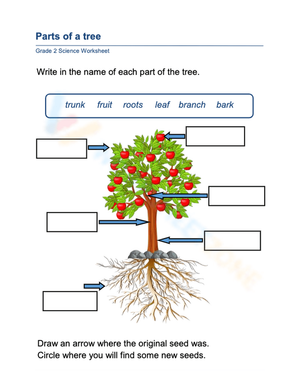
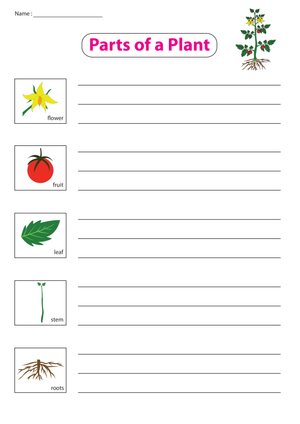
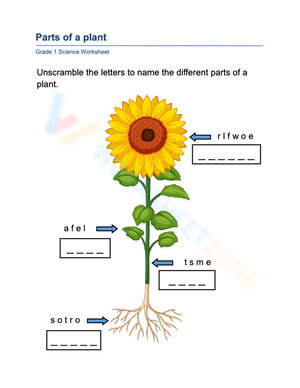
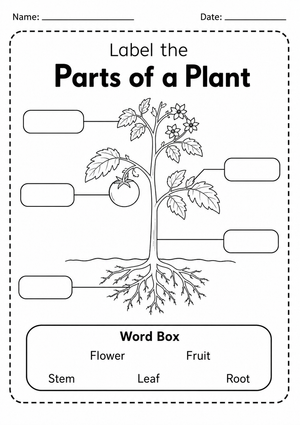
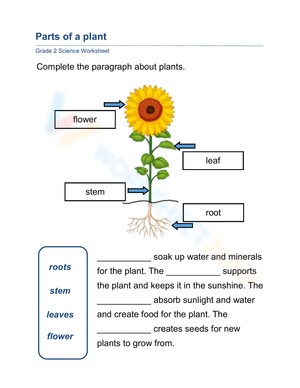
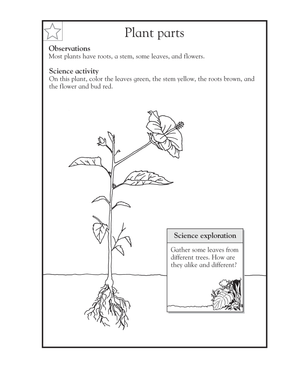
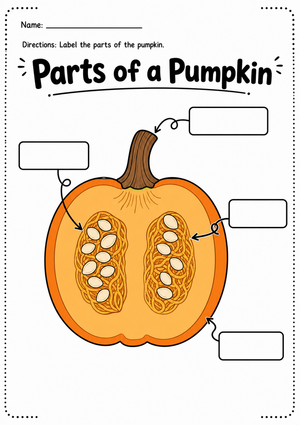
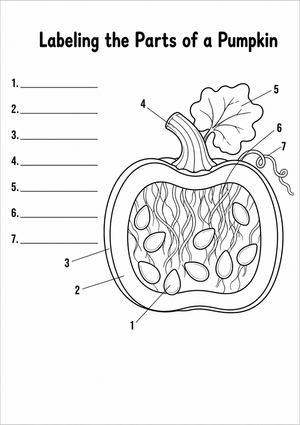
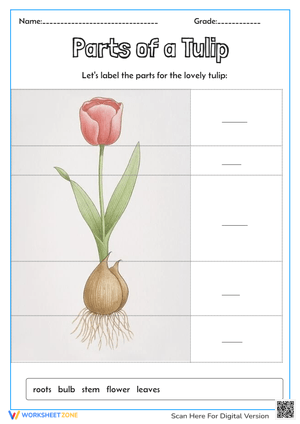
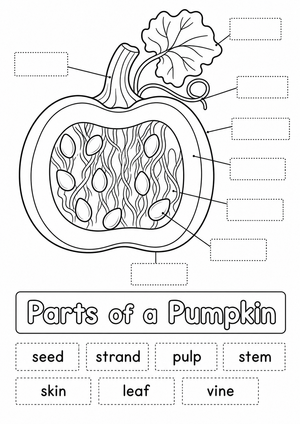
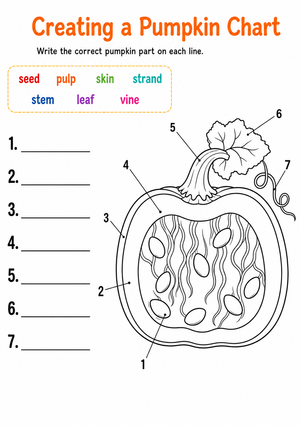
- Anatomy labeling: Students work from a clear plant illustration and a word bank to label each visible structure. Keeping the word bank present lowers the decoding demand so students can focus on connecting vocabulary to anatomy rather than spelling under pressure.
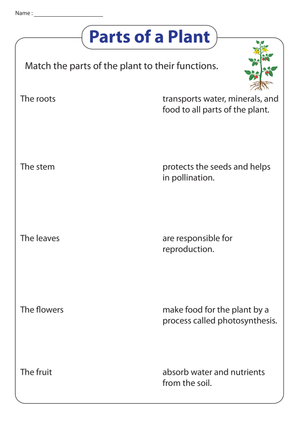
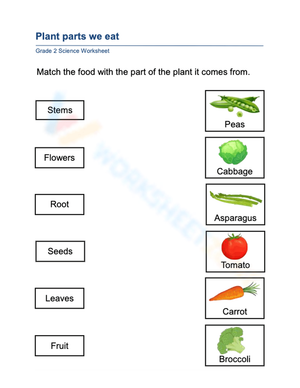
- Function matching: After students can identify parts by sight, they draw lines connecting each structure to a description of its role — for example, linking roots to draws water and minerals from the soil. That matching format makes it immediately visible which connections students have actually internalized and which are still guesswork.
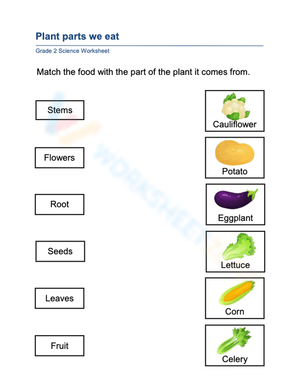
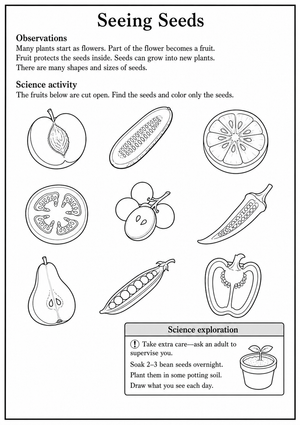
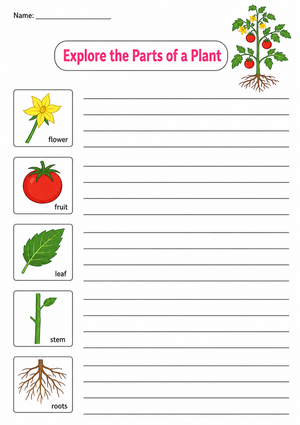
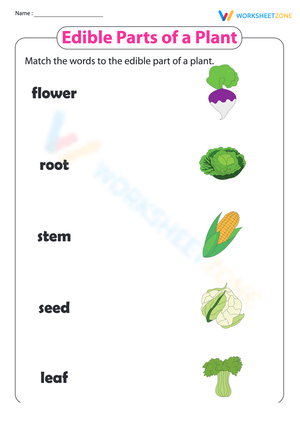
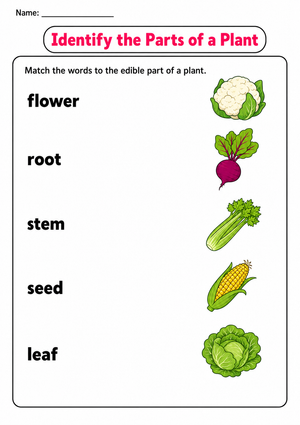
- Edible plant parts sort: Students classify everyday foods — carrots, celery, spinach, tomatoes, apples — by which plant structure they represent. The classifications routinely surprise students (celery is a stem; spinach is a leaf), and that moment of genuine surprise is where retention begins.
- Life cycle sequencing: Students cut and paste images showing plant development from seed to mature, flowering plant. This places individual structures in a developmental context so students understand not just what each part is, but when and why it appears.
Student Errors Worth Catching Before They Stick
The most consistent error in this unit is function transference — students flip the jobs of roots and leaves. They correctly label both parts on a diagram, then turn around and write on a function worksheet that leaves absorb water or that roots produce food. This shows up in first-attempt matching work with predictable regularity, and it matters because confusing structure with function undermines everything that comes next in life science. The function matching format surfaces the error precisely: a student who connects leaves to soaks up water from soil is flagging a misconception worth addressing before the unit assessment, not after.
A secondary issue involves the stem. Students understand that stems hold plants upright — that job is visible and intuitive. Fewer grasp the transport function. Left on their own, students write that a stem "keeps the plant standing" and leave it at that. The plumbing analogy helps: the stem carries water up from roots and sugar down from leaves, and both jobs belong to the same structure. The function matching worksheet reinforces that two-part role better than verbal explanation alone.
Building These Worksheets Into Your Science Week
The labeling worksheet works best as a whole-group anchor activity. Project it, complete it together as a class, and leave the labeled image visible for the rest of the unit. Students who are still building the vocabulary will reference it constantly during independent work. The function matching worksheet follows naturally the next session — once students have the part names solid, they're ready to work out what each one does.
For centers, laminate the function matching and edible plant parts worksheets and supply dry-erase markers. Both hold up through multiple rounds of rotations. The edible plant parts activity pairs well with a short Friday taste test — a carrot stick, a stalk of celery, a spinach leaf — that turns the sorting work into something students mention at home. If you're running a clear-cup bean or radish planting project alongside the unit, have students mark on their 2nd grade parts of a plant printable worksheets which structures they can observe through the plastic each day. Watching the root system develop below the soil line while the stem pushes upward gives students a live reference for what they're labeling on paper, and it closes the gap between abstract vocabulary and visible biology faster than any explanation alone.
Standard Alignment
Plant structure and function formally enters the NGSS framework at fourth grade under 4-LS1-1, which asks students to construct arguments about how internal and external structures support survival, growth, and reproduction. Second grade NGSS life science standards — 2-LS2-1 and 2-LS2-2 — address plant needs and plant-animal interactions rather than anatomy directly. That said, the disciplinary core idea LS1.A is built across grade levels, and most state science frameworks that align to or supplement NGSS introduce plant part vocabulary in second grade as deliberate preparation for that fourth-grade standard. Teachers in states using TEKS, Florida NGSSS, or earlier state-specific frameworks will find more explicit second-grade alignment to plant anatomy. In practical classroom terms, these worksheets sit in the stretch of the unit that builds the vocabulary students need before they can reason about structure-function relationships — which is exactly where second-grade instruction should plant that foundation.
Adjusting the Worksheets for a Range of Learners
For students who struggle with reading load, pair the labeling worksheet with a visual reference card — a labeled plant diagram they keep at their workspace throughout the unit. That removes the word-retrieval bottleneck and lets students focus on the anatomy itself. For the function matching format, reducing the number of answer choices on each side — matching three parts instead of six — lowers the working memory demand without changing the target skill. ELL students tend to move through the diagram-based formats with less friction than text-heavy tasks; the word banks and matching structures carry enough visual context to make the science accessible even when English vocabulary is still developing.
Students who move quickly through the labeling tasks benefit from a writing extension on the back of the edible plant parts worksheet: rather than simply sorting foods into categories, they write one sentence explaining why each food belongs where it does. Explaining why a carrot is a root — it grows underground, stores nutrients for the plant, has no leaves or flowers attached to it — demands a level of conceptual clarity that sorting alone never requires. The 2nd grade parts of a plant printable worksheets in this set give you enough distinct formats that stronger students can push into explanation while others are still working on identification, without anyone sitting idle.
Frequently Asked Questions
Are these worksheets only appropriate for second grade, or can they be used in first or third grade as well?
The vocabulary level and diagram complexity are calibrated for second grade, where students have enough reading fluency to handle science terms with word bank support but aren't expected to explain processes at a cellular level. First graders can work through the labeling format with closer teacher guidance. Third graders who are missing foundational vocabulary — particularly students who transferred mid-year or had an abbreviated first science unit — will find the function matching format useful for quick review, though they'll move through it considerably faster than a second-grade class.
How much time should I budget for each worksheet?
The labeling and function matching worksheets run about 10–12 minutes for most second graders working independently. The life cycle cut-and-paste worksheet takes closer to 20 minutes because of the physical manipulation involved — cutting, sequencing, and pasting all add time. The edible plant parts sort falls in between. Students still building reading fluency will need more time on any format that includes written descriptions, so building in a few extra minutes at centers is worth doing the first time through.
Can these serve as assessments, or are they practice tools?
Both. The labeling and function matching worksheets work well as formative checks — completed at the end of a lesson, they tell you immediately who has the vocabulary and who is still guessing. The 2nd grade parts of a plant printable worksheets in the matching format are especially efficient for formative use because wrong answers are specific and actionable: a student who connects stem to makes food using sunlight has a precise misconception you can address in a two-minute reteach during the next session. For summative purposes, the labeling worksheet with the word bank removed functions as a clean unit-end quiz.
Do the worksheets address non-flowering plants like ferns or mosses?
The set focuses on flowering plants, which is the standard scope for second-grade instruction. Non-flowering plants use different reproductive structures, and introducing that distinction alongside basic anatomy vocabulary tends to overload students who are still sorting out the difference between a stem and a root. The flowering plant model gives students a complete, coherent framework first. The non-flowering distinction is better addressed once students are solid on that foundation, which typically happens in third or fourth grade when the structure-function standard gets its full treatment.












 Interactive Worksheet Maker
 Quiz Maker
 Word Search Maker
 Crossword Puzzle Maker
 Word Scramble Generator
 Sentence Scramble Generator
 Handwriting Worksheet Generator
 Name Tracing Generator
 Fill In The Blank Generator