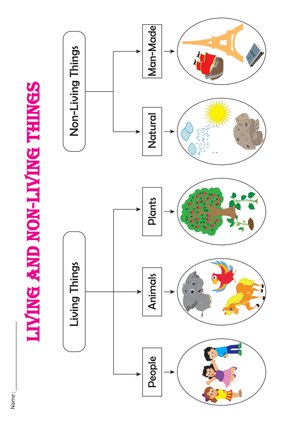
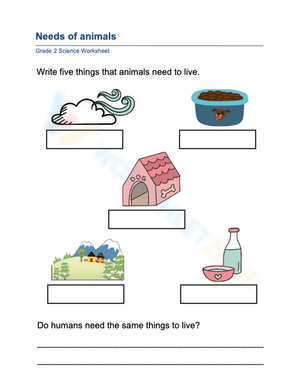
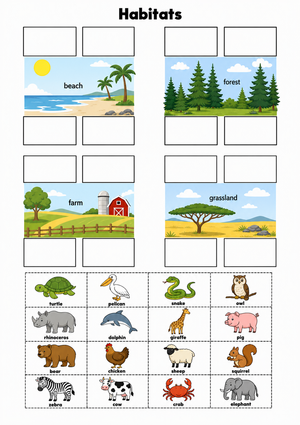
These living and non living things printable worksheets for 1st grade give teachers a targeted set of activities for one of the trickiest foundational distinctions in early science: sorting the world into what grows, eats, breathes, and reproduces versus what simply exists without those processes. Six- and seven-year-olds arrive at this topic with confident intuitions that turn out to be wrong in predictable ways, and the worksheet formats here are built around exactly those places where first-grade thinking runs into trouble.
The Specific Skills Each Worksheet Targets
Each worksheet addresses a different facet of the living/non-living distinction rather than repeating the same sorting task with slightly different images. The set covers:
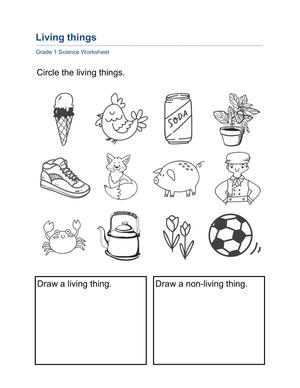
- Sort-and-classify sheets: Students examine picture sets and place each item — dog, bicycle, flower, pencil, mushroom, car — into a living or non-living column. The task reinforces the five characteristics (growth, nutrition, gas exchange, reproduction, response to environment) through repeated categorization.
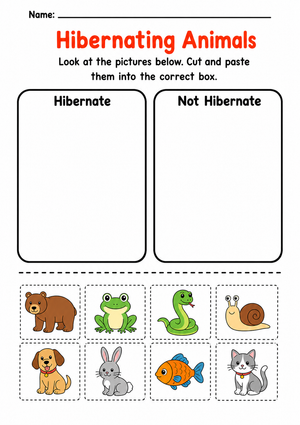
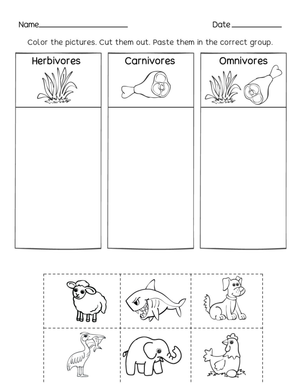
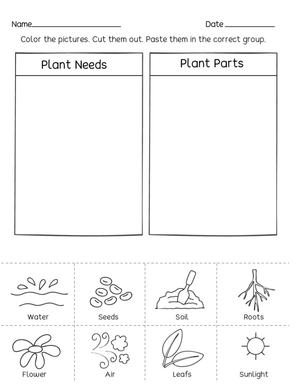
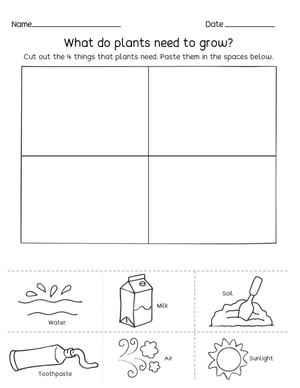
- Cut-and-paste activities: Students sort and physically place picture cards into the correct category. The physical manipulation slows impulsive answering and gives students a moment to reconsider before committing.
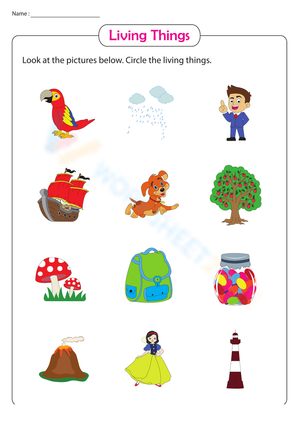
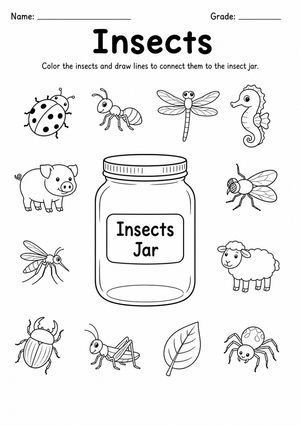
- Scene-based observation sheets: Students examine a detailed outdoor or classroom scene and circle or color only the living things they can identify. These sheets build careful, systematic observation habits that carry into every subsequent science unit.
- Characteristics check sheets: Students evaluate a single pictured object against a checklist — Does it grow? Does it need food? Can it reproduce? — making the decision criteria explicit rather than intuitive.
- Outdoor recording sheets: After a brief schoolyard walk, students return to their seats and draw or label what they noticed, connecting classroom vocabulary to real objects in their immediate environment.
The variety matters because first graders benefit from encountering the same concept in different formats before it solidifies. A student who breezes through the sort-and-classify sheet may still hesitate on the characteristics checklist — which signals incomplete understanding rather than mastery.
Common Student Mistakes Teachers Should Anticipate and Address
The most persistent first-grade error in this unit is classifying moving objects as living. Students who correctly identify a dog as living because "it moves" apply the same logic to a car, a fan, or a balloon drifting across the ceiling. This is not carelessness — it reflects a genuine developmental stage where motion is the most salient feature of the environment. The characteristics checklist worksheet is the most direct tool for addressing this, because it forces students to run through the full set of criteria rather than relying on a single cue.
A second cluster of errors involves fire, clouds, and water. Many first graders argue passionately that fire is alive because it grows and consumes. Water presents the opposite problem: students who know that living things need water sometimes conclude that water itself must be living. Spending two or three minutes on these edge cases before independent work dramatically reduces the surprised looks during the debrief. The scene-based observation sheets are useful here — including a river or a candle in the scene prompts exactly the kind of productive confusion that a focused lesson can resolve.
Dead things — a fallen leaf, a dried insect, a cut flower — reliably generate the richest classroom conversation in the entire unit. Students correctly sense that a wilting flower was once alive, and sorting it as non-living feels wrong to them. That discomfort is productive. A brief discussion before the worksheet establishes the rule: dead things are classified as non-living because they no longer carry out life processes, even though they once did.
Fitting These Worksheets Into Your Lesson Plans
The sort-and-classify and cut-and-paste sheets work best early in the unit, when students need repeated low-stakes exposure to the categories before they can articulate the reasoning behind them. Place one at a science center during the first two days — two students working together will narrate their choices aloud, which surfaces misconceptions without any teacher-directed questioning. The characteristics check sheet works better mid-unit, after students have absorbed the vocabulary, because the yes/no checklist demands precise use of terms like reproduce and respond. Reserve the outdoor recording sheet for a lesson where you have an extra ten minutes before or after recess, when transitioning students from outside back to their seats would otherwise be lost time.
For end-of-unit assessment, the scene-based observation worksheet gives teachers a fast window into what each student has actually internalized. Students who circle only the obvious choices — the dog, the tree — but miss the moss on the rock or the worm near the garden bed are revealing something specific about the depth of their understanding that a multiple-choice quiz would not capture.
Standard Alignment
These worksheets support NGSS 1-LS1-1, which asks first graders to use materials to solve a problem by mimicking how plants or animals use their external parts to survive, grow, and meet their needs. At its instructional core, 1-LS1 asks students to observe, describe, and categorize living things — which is exactly what the sort, classify, and characteristics sheets demand. The living and non living things printable worksheets for 1st grade set also supports the NGSS Science and Engineering Practice of "Obtaining, Evaluating, and Communicating Information" through the recording and scene-based tasks, where students translate direct observation into documented evidence.
Differentiating These Worksheets for a Range of Learners
Students who are still building reading fluency work best with the picture-based sort-and-classify and cut-and-paste sheets, since both tasks require no reading at all. For students ready to push further, the characteristics check sheet becomes more rigorous when you ask them to write one sentence explaining their reasoning for the item that gave them the most trouble — that single sentence reveals far more about conceptual understanding than a checked box. The outdoor recording sheet is naturally tiered: emergent writers draw and label with one word, while more advanced students produce a full sentence or small labeled diagram for each item they observe.
The living and non living things printable worksheets for 1st grade set also works well across mixed-ability partners during center time. A student who grasps the concept quickly will often explain their reasoning to a partner still working through the logic, and that peer explanation tends to deepen both students' understanding — the explainer refines their thinking by putting it into words, while the listener receives the concept in first-grade vocabulary rather than teacher vocabulary.
Frequently Asked Questions
Are these worksheets appropriate for kindergarten?
The picture-based sort-and-classify and cut-and-paste formats work well in kindergarten, particularly during the second half of the year when students have sufficient fine motor control for cutting and pasting. The characteristics checklist involves vocabulary — reproduce, respond, exchange gases — that most kindergarteners have not encountered formally, so that worksheet is better reserved for first grade or used with heavy verbal support alongside the checklist.
Should I introduce the five characteristics before students begin the first worksheet?
Yes, briefly. A five-minute anchor chart session before the first sort-and-classify sheet prevents the most common misclassifications. Write the five characteristics in student-friendly language — it grows, it needs food and water, it breathes, it makes more of its kind, it reacts when something happens to it — and leave the chart visible while students work. Students will glance at it throughout; that is the point.
How do I handle student debates about fire and water?
Lean into the debate rather than shutting it down. These are scientifically legitimate edge cases. For first grade, the practical answer is to run through the checklist: fire grows, but does it drink water? Can it reproduce independently? The checklist resolves what intuition cannot, and working through a hard case together is more instructionally valuable than simply telling students the answer. The living and non living things printable worksheets for 1st grade characteristics sheet is built precisely for this kind of guided reasoning.
How do I address the "dead things" question when it comes up?
Expect it — and welcome it — during any lesson using the scene-based or sort-and-classify worksheets. The clearest explanation for first graders: a dead thing used to carry out life processes but no longer does, so we classify it as non-living now. A dried insect was living; it is not living now. A cut flower was living; once it stops growing and responding, it crosses the line. Students accept this reasoning when it follows directly from the checklist they have already been using.