


























Views
Downloads
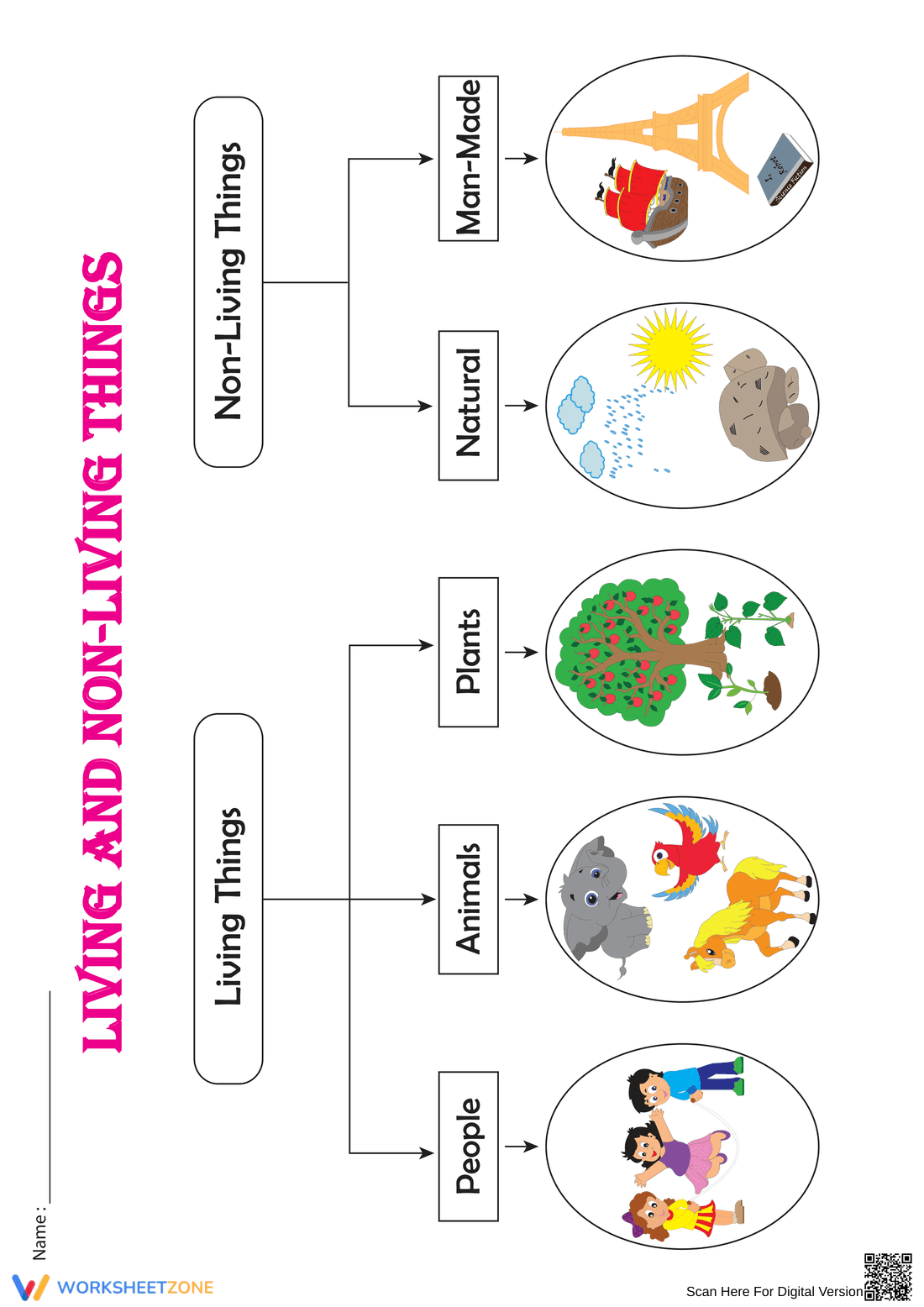

Grade 1 Living and Non-Living Things Chart | Essential Ready
Paste this activity's link or code into your existing LMS (Google Classroom, Canvas, Teams, Schoology, Moodle, etc.).
Students can open and work on the activity right away, with no student login required.
You'll still be able to track student progress and results from your teacher account.
Identify biological characteristics and environmental origins using this visual classification chart. Students distinguish between living organisms and non-living objects by observing people, animals, and plants alongside natural and man-made structures. This resource establishes the foundational understanding of life science required for advanced ecosystem analysis and biological categorization in early elementary science curriculum paths.
At a Glance
- Grade: 1 · Subject: Living Things
- Standard:
1-LS1-1— Identify and categorize organisms based on observable traits and survival needs- Skill Focus: Living vs Non-living Classification
- Format: 1 page · 1 chart · Answer key included · PDF
- Best For: Visual aid for early life science
- Time: 5–10 minutes
This single-page visual resource features a bifurcated classification tree. The left branch illustrates living things through three distinct sub-categories: people, animals, and plants, each paired with vibrant icons. The right branch organizes non-living things into natural and man-made categories, providing concrete examples like rocks and monuments. This structured layout serves as a permanent reference for science journals or classroom centers.
Implement this resource in under two minutes with a simple three-step workflow. First, print the color PDF (1 minute). Second, distribute copies to students or project the chart during direct instruction (30 seconds). Third, review the examples as a whole-class activity to activate prior knowledge (30 seconds). The self-explanatory visual hierarchy makes this an ideal component for emergency sub plans or independent science station rotations.
This chart aligns with primary standard `1-LS1-1` by providing the visual scaffolding necessary for students to analyze how plants and animals meet their survival needs. By categorizing people, animals, and plants separately from inanimate objects, students build the prerequisite knowledge for understanding biological structures and functions. This standard code can be copied directly into lesson plans, IEP goals, or district curriculum mapping tools.
Utilize this chart during the "Engage" phase of a 5E science lesson to spark discussion about the requirements of life. Have students locate one item in the classroom that belongs in the "Man-Made" category and one that qualifies as a "Plant." For formative assessment, observe students as they attempt to sort new classroom objects into the chart's hierarchy. Expect students to spend five to ten minutes exploring the visual relationships.
This resource is designed for Grade 1 students and English Language Learners who benefit from visual icons paired with clear labels. It serves as an excellent modification for students requiring visual organizers to process scientific concepts. Pair this classification chart with a nature walk observation log to reinforce the distinction between biological organisms and physical objects.
The distinction between living and non-living systems forms the core of early biological literacy. According to ScienceDirect TpT Analysis, visual classification tools like this chart significantly improve retention of categorical hierarchies in Grade 1 learners by reducing cognitive load during the initial acquisition of life science vocabulary. By organizing entities into people, animals, plants, natural objects, and man-made structures, the resource aligns with cognitive development theories advocating for concrete-to-abstract instructional sequences. Students who master these classifications at the primary level demonstrate higher proficiency in later units covering ecosystems and adaptations. This visual scaffold provides the evidentiary basis for `1-LS1-1` mastery, ensuring students can differentiate between sentient organisms and inanimate matter with high accuracy. The inclusion of natural versus man-made distinctions further supports cross-curricular connections between science and social studies. This foundational knowledge serves as a critical bridge between kindergarten observations and secondary biological studies.


