


























Views
Downloads
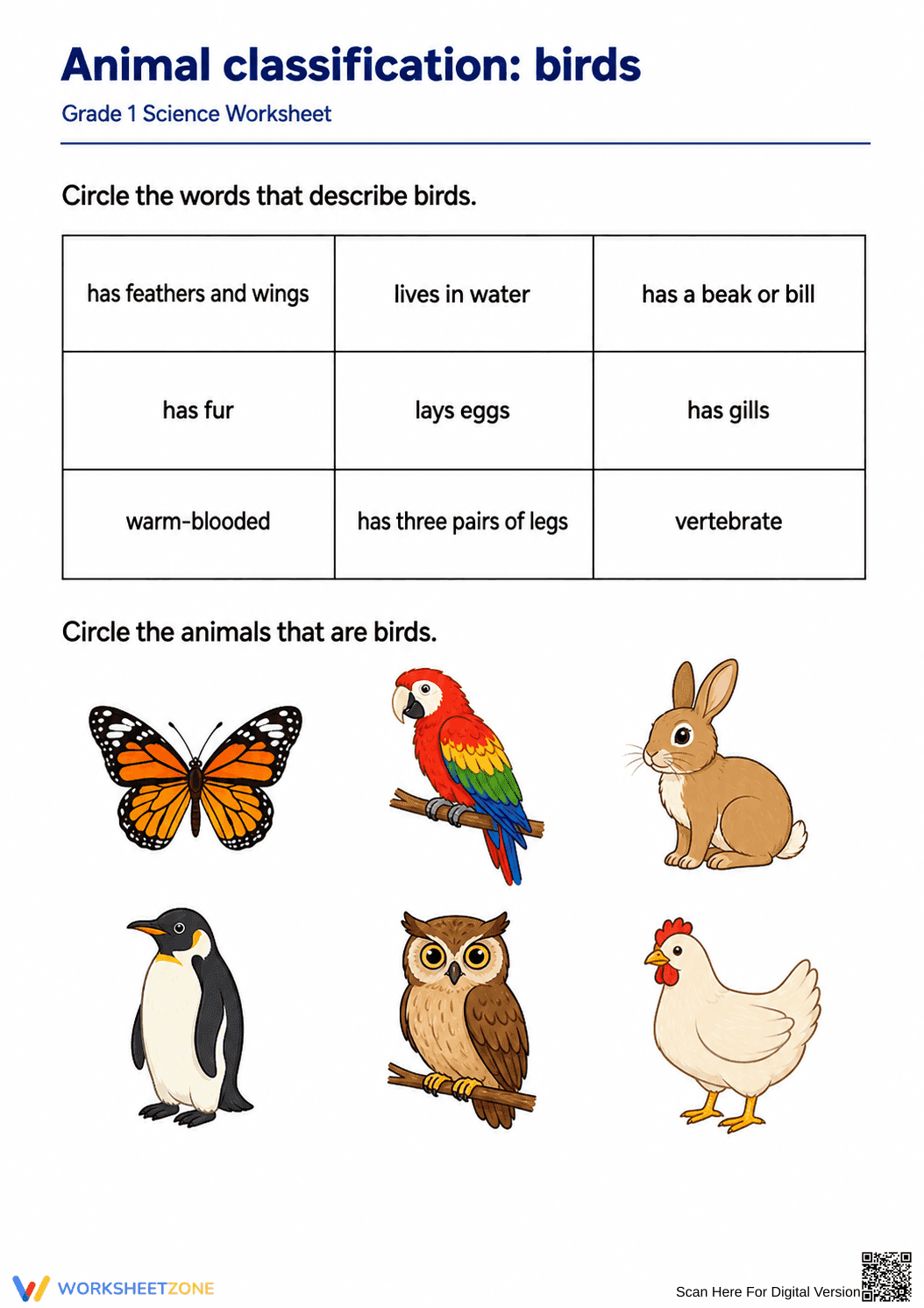
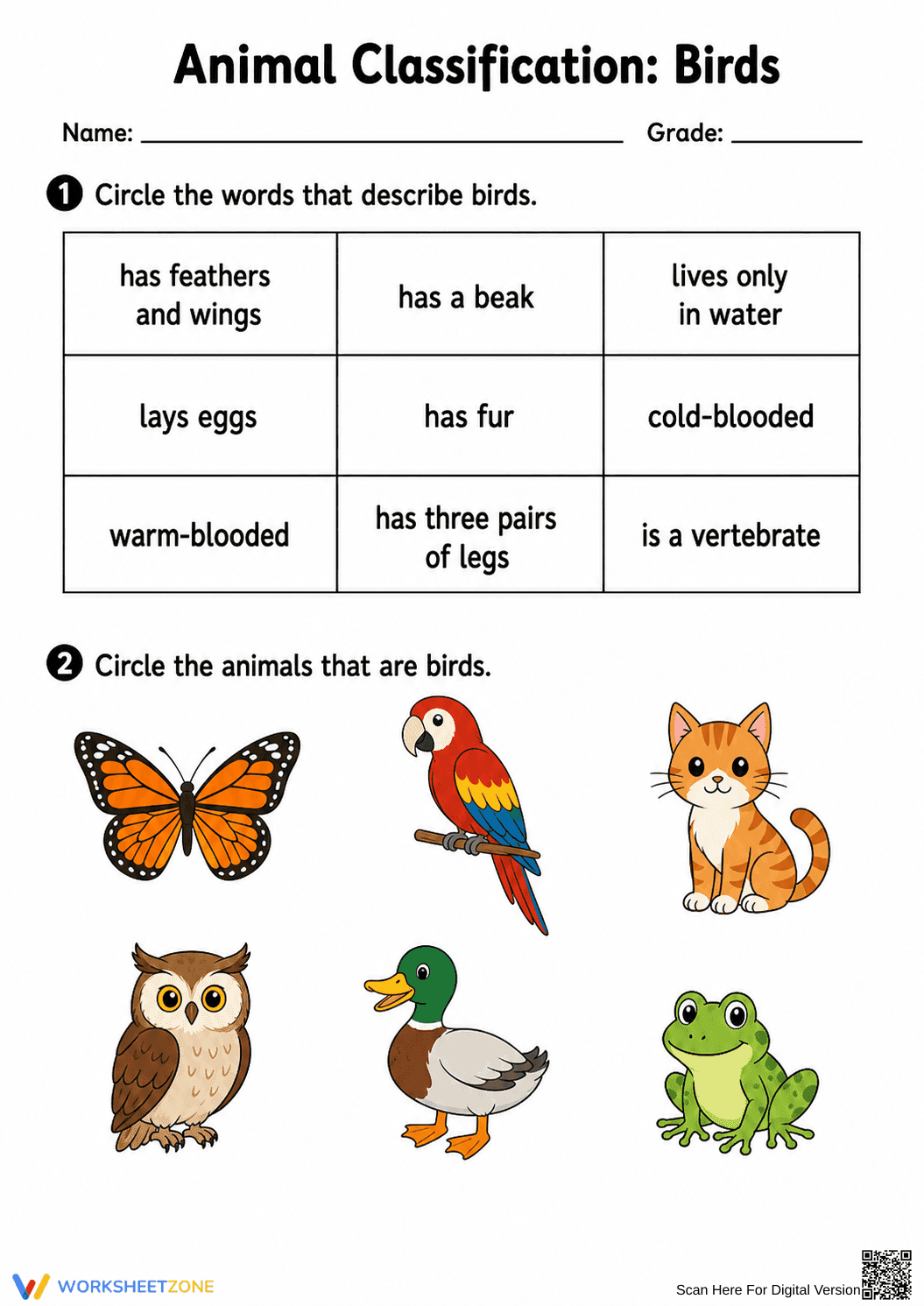

Animal Classification: Birds Worksheet | Grade 1 Essential
Paste this activity's link or code into your existing LMS (Google Classroom, Canvas, Teams, Schoology, Moodle, etc.).
Students can open and work on the activity right away, with no student login required.
You'll still be able to track student progress and results from your teacher account.
This printable Grade 1 science worksheet helps young learners master animal classification by focusing on the unique characteristics of birds. Students evaluate traits and identify animals to build a foundational understanding of biological groups. By identifying feathers and beaks, students develop critical observational skills essential for early life science mastery.
At a Glance
- Grade: 1 · Subject: Science
- Standard:
1-LS1-1— Use observations of animal parts to identify how they survive and grow- Skill Focus: Animal classification and bird characteristics
- Format: 2 pages · 15 tasks · Answer key included · PDF
- Best For: Introduction to life science and classification
- Time: 15–20 minutes
What's Inside
The package includes a focused student activity page and a comprehensive answer key for immediate feedback. The worksheet features two tasks: a nine-item characteristic grid where students evaluate traits like "has feathers" or "warm-blooded," and a six-image animal selection section. This structured layout ensures that students encounter both text-based descriptions and visual representations of birds.
Zero-Prep Workflow
The zero-prep design is ideal for busy educators and substitute teachers. First, print the single student page in under 30 seconds. Next, distribute the worksheets to your class; the clear headings require no additional teacher explanation. Finally, use the included answer key to review results as a whole group or for rapid individual grading. Total teacher preparation time is less than two minutes, providing a high-impact learning experience with minimal administrative overhead.
Standards Alignment
This resource aligns with 1-LS1-1, focusing on how animals use their external parts to survive. By identifying beaks and feathers, students learn how these specific features categorize an animal as a bird. This foundational knowledge supports higher-level classification skills. This standard code can be copied directly into lesson plans, IEP goals, or district curriculum mapping tools.
How to Use It
Use this worksheet as a formative assessment after a direct instruction lesson on animal groups. Alternatively, assign it as a quick exit ticket or a transition activity during science rotations. Teachers should observe whether students can successfully distinguish between the insects and birds to gauge their grasp of scientific categorization.
Who It's For
This resource is tailored for Grade 1 students beginning their journey into animal taxonomy. It is particularly effective for visual learners who benefit from the clear animal illustrations and the organized grid layout. The worksheet pairs naturally with a classroom anchor chart on animal groups or a short informational text about bird habitats and life cycles.
Scientific classification at the primary level is a critical precursor to advanced biological understanding, as noted in Fisher & Frey (2014). This Grade 1 science resource utilizes standard 1-LS1-1 to guide students through the identification of bird-specific traits across 15 structured tasks. By evaluating physical characteristics such as beaks, feathers, and egg-laying, students move from simple observation to evidence-based categorization. Research suggests that early exposure to taxonomic structures improves cognitive organization and scientific literacy in later grades. This worksheet provides the essential practice needed to cement these concepts through a blend of verbal and visual cues. The inclusion of a clear answer key supports the instructional model, allowing for immediate correction of misconceptions regarding warm-blooded vertebrates. Educators can reliably use this tool to document student progress toward foundational NGSS benchmarks in life science. The structured approach ensures that learners can successfully distinguish birds from other animal classes based on observable evidence.


