


























Views
Downloads

Grade 1 Animal Homes — Printable No-Prep Worksheet
Paste this activity's link or code into your existing LMS (Google Classroom, Canvas, Teams, Schoology, Moodle, etc.).
Students can open and work on the activity right away, with no student login required.
You'll still be able to track student progress and results from your teacher account.
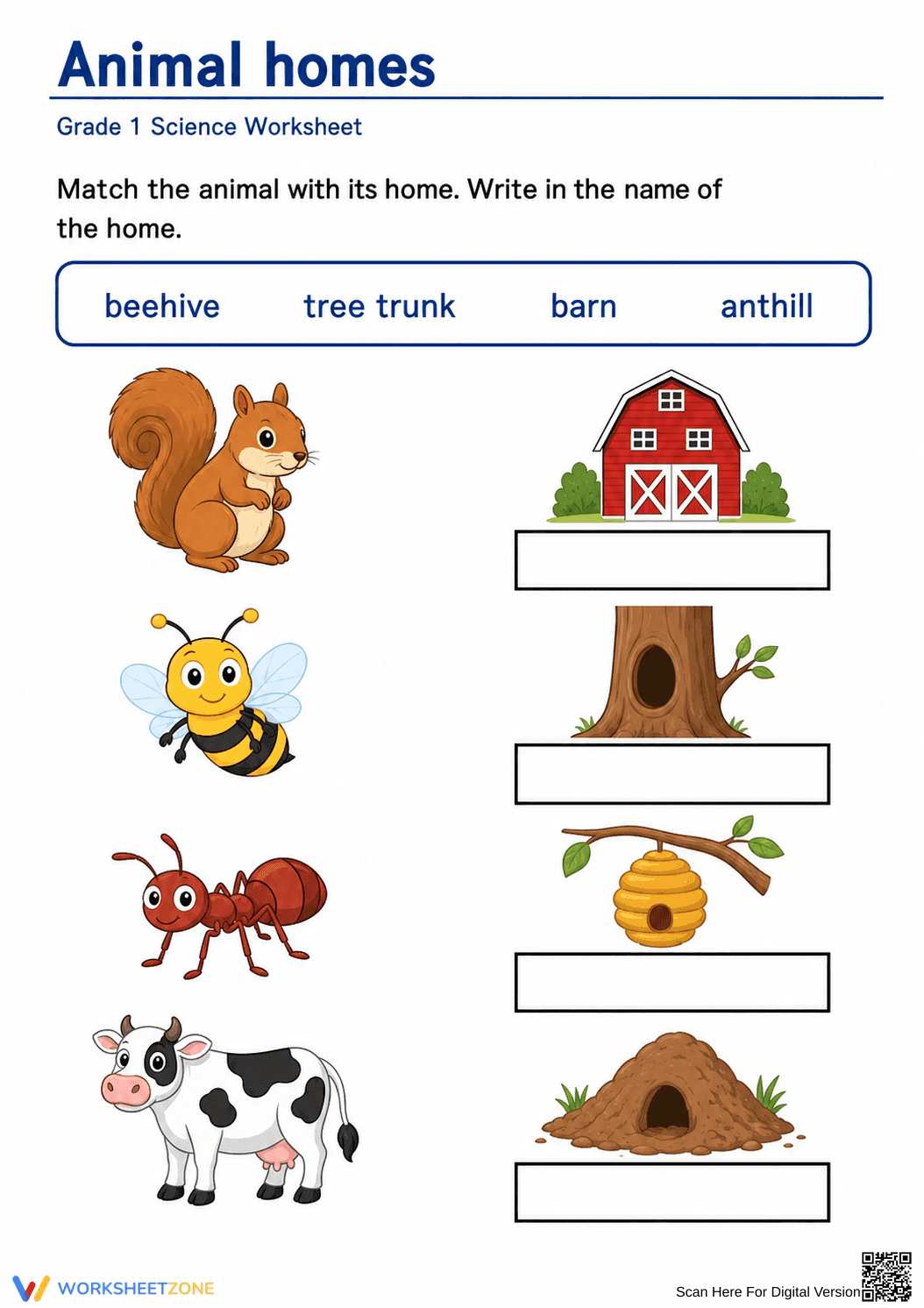
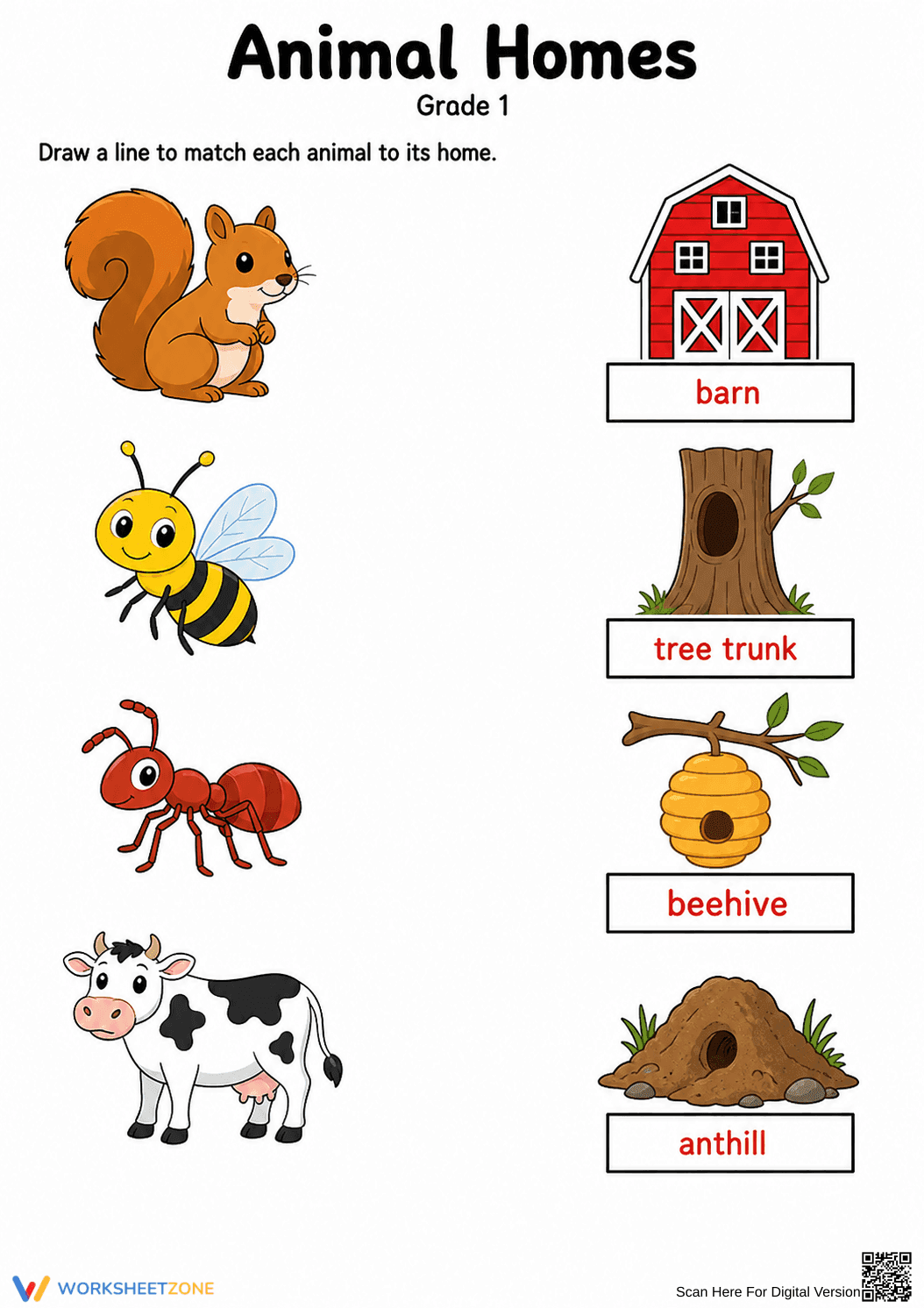
This Grade 1 animal homes worksheet helps young learners connect animals to their specific habitats through a structured matching activity. Students observe illustrations of four common animals and identify the corresponding shelters that meet their survival needs. By bridging visual recognition with vocabulary, this resource builds a foundational understanding of ecology.
At a Glance
- Grade: 1 · Subject: Living Things
- Standard:
1-LS1-1— Identify that animals live in specific environments that meet their basic survival needs- Skill Focus: Habitat matching and vocabulary
- Format: 1 page · 4 problems · Answer key included · PDF
- Best For: Independent science center or quick review
- Time: 10–15 minutes
What's Inside
This science resource contains a single-page student activity and a full answer key. The worksheet features four animal illustrations—a squirrel, a bee, an ant, and a cow—paired with four natural or human-made homes. A word bank with beehive, tree trunk, barn, and anthill supports early spelling and conceptual links.
Zero-Prep Workflow
Integrate this resource immediately with three simple steps. First, print the single-page PDF in under 30 seconds. Second, distribute the worksheets for a 10-minute session where students use the word bank to label habitats. Finally, review the answers as a group. This efficiency makes it an ideal choice for emergency sub plans, requiring less than two minutes of teacher prep time.
Standards Alignment
The primary alignment is to 1-LS1-1, which requires students to observe how animals utilize their environment as a shelter. By identifying that a squirrel requires a tree trunk or a bee requires a beehive, students are observing survival strategies. Both standard codes can be copied directly into lesson plans, IEP goals, or district curriculum mapping tools.
How to Use It
Use this worksheet during the Explain phase of a 5E lesson on animal needs to verify that students can distinguish between different types of animal shelters. It serves as an excellent formative assessment tool: watch for students who struggle to match the squirrel to the tree trunk. The worksheet typically requires 12 minutes for completion.
Who It's For
This activity is perfectly leveled for first-grade students, providing necessary scaffolding through the use of a word bank and clear, recognizable icons. It is particularly beneficial for English Language Learners who are building their scientific vocabulary. For extension, pair this resource with a short informational passage about local wildlife to deepen the connection.
The 1-LS1-1 standard focuses on the relationship between an animal’s structures and its survival in a habitat. This worksheet operationalizes this skill by matching domestic and wild animals to the structures they use for refuge. According to a RAND AIRS 2024 analysis, structured matching tasks with visual scaffolds significantly improve retention of categorical biological data in early learners. By isolating the variable of "home type," this resource allows Grade 1 students to demonstrate mastery of habitat identification without heavy cognitive load. The inclusion of an anthill and beehive introduces students to colonial insects, a key concept in the NGSS progression. This evidence-based approach ensures that students are not just memorizing names, but understanding the functional necessity of animal dwellings as defined in NAEP frameworks for scientific literacy.


