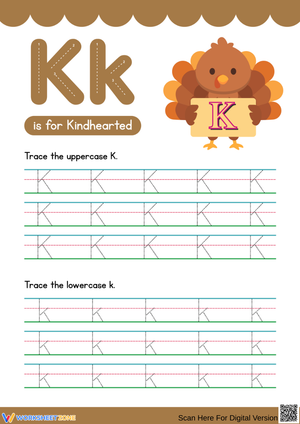
Teaching a single letter well takes more than one page. Letter K worksheets work best when they move students through tracing, uppercase and lowercase pairing, and /k/ sound practice in a planned sequence instead of a one-off activity. Here is how US preschool and kindergarten teachers can pull real formation and phonics gains from letter K practice.
What Letter K Worksheets Actually Teach
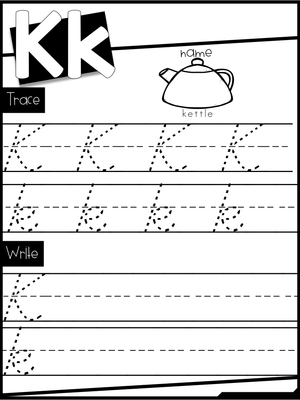
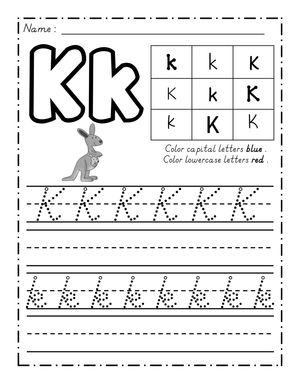
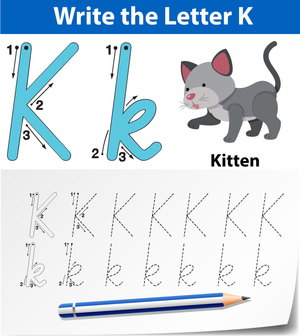
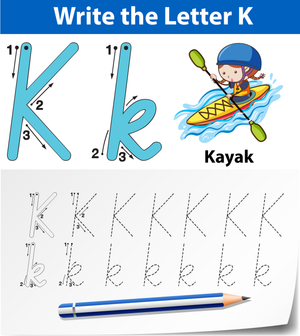
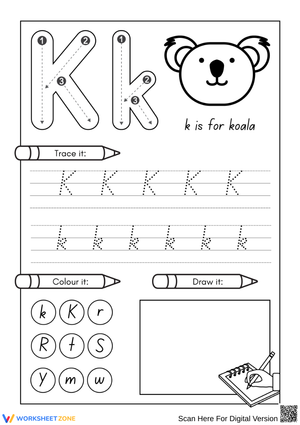
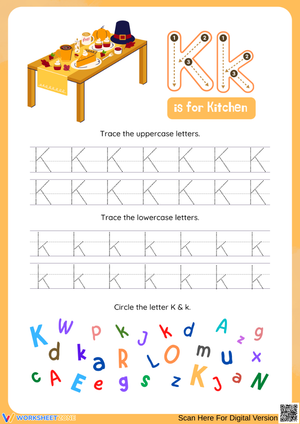
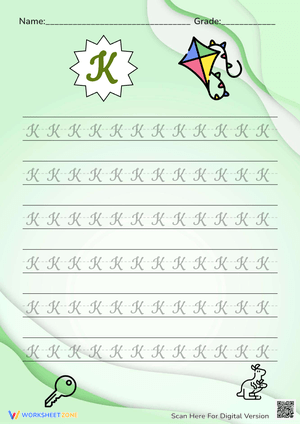
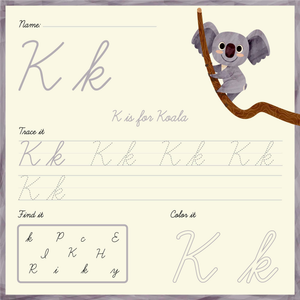
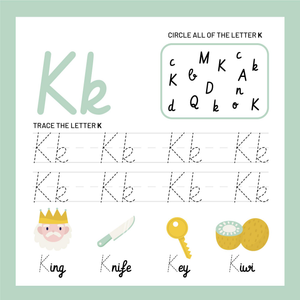
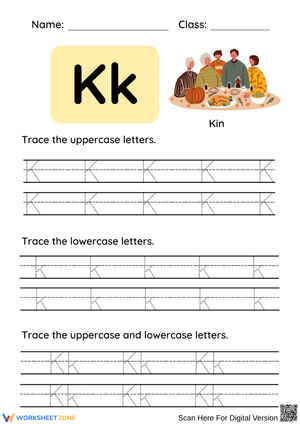
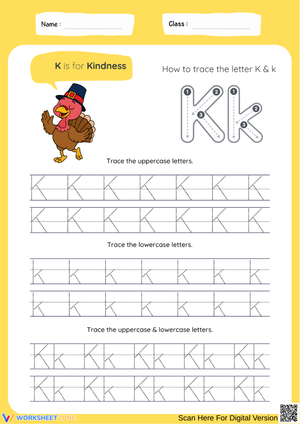
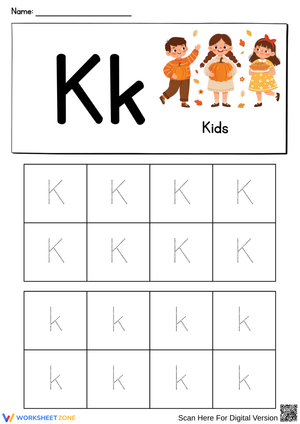
Letter K worksheets give young students focused practice on three skills at once: tracing correct stroke order, pairing the uppercase K with lowercase k, and matching pictures to the /k/ sound. Instead of treating the letter as a single lesson, a strong worksheet set stacks these layers so students build formation, recognition, and sound awareness in the same short session.
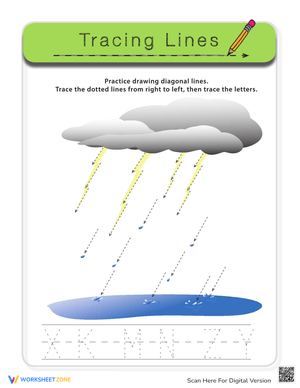
Letter K is a useful point in the alphabet sequence because its shape, a vertical line plus two diagonal strokes, asks students to control angled lines. Straight-line letters like L, T, and I usually come first. K lets you check whether a student is ready to manage diagonals before you move on to harder letters like M, N, and W.
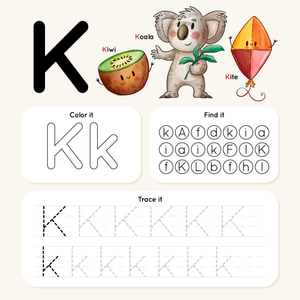
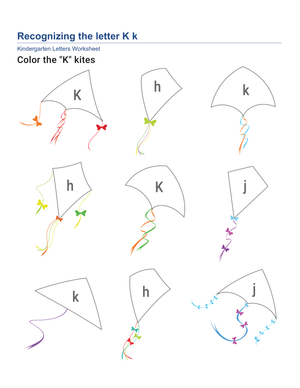
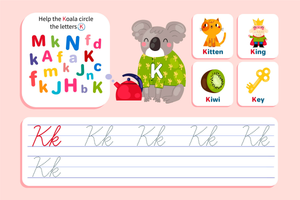
The value of a dedicated K page is repetition without boredom. A worksheet that mixes tracing rows, a find-and-circle the K task, and a picture match keeps a five-year-old engaged longer than a single row of letters. Look for pages that vary the task within one sheet so students stay on the letter for several minutes at a time.
Where Letter K Fits in a Letter-of-the-Week Rotation
Most US classrooms teach K inside a letter-of-the-week rotation, alongside phonics and fine-motor centers. When K comes up, plan the week so tracing pages, sound sorts, and independent writing each get their own day rather than piling onto one worksheet.
A workable five-day plan looks like this: introduce the letter and model stroke order on day one, run guided tracing on day two, add /k/ picture-sound matching on day three, move to independent writing on day four, and use a quick formation check on day five. Spreading the work keeps young writers from getting overwhelmed and gives you five data points instead of one.
- Day 1: Model uppercase and lowercase K formation.
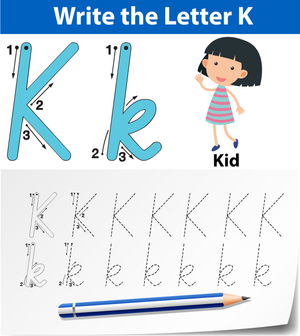
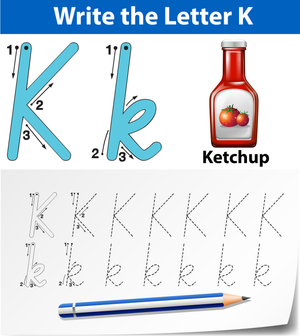
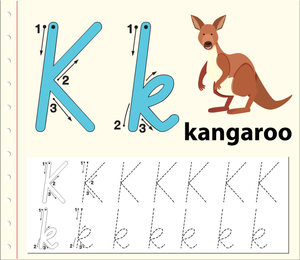
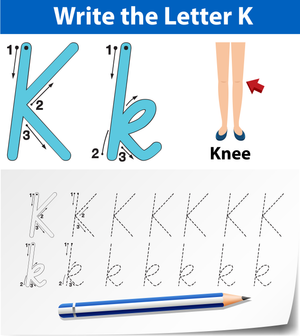
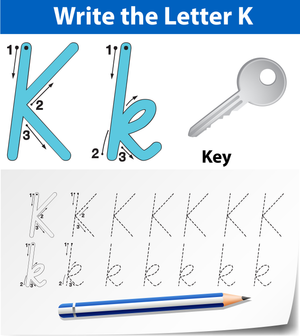
- Day 2: Guided tracing with stroke-order arrows.
- Day 3: /k/ sound picture matching (kite, king, kangaroo).
- Day 4: Independent letter writing.
- Day 5: Formation and recognition check.
Moving From Tracing to Independent Writing
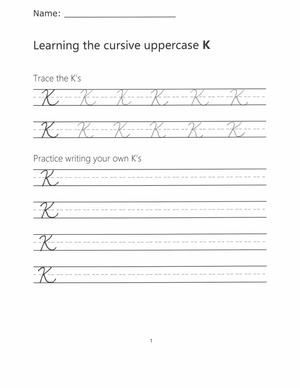
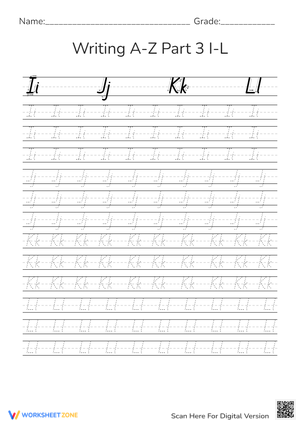
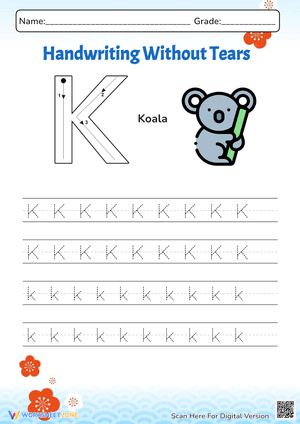
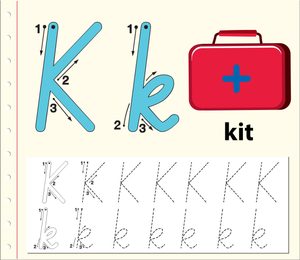
Tracing comes before independent writing for a reason: it lowers the pressure while students learn where each line starts and stops. On a letter K page, uppercase formation runs top to bottom for the vertical line, then two diagonals that meet at the middle of that line. Lowercase k follows the same logic on a shorter frame.
The most common K error isn't the vertical line, it's where the diagonals meet. Students who join the two diagonals too high or too low produce a shape closer to an R or an X. Watch the meeting point specifically: if both diagonals touch the vertical at the same middle spot, the letter reads clearly. Correcting that single contact point fixes more sloppy K's than piling on extra tracing repetitions.
Move a student to independent writing once they can trace K with the correct start points two or three times without prompting. Keep the tracing page nearby as a reference so they can self-check rather than guess.
Pairing Letter K With the /k/ Sound
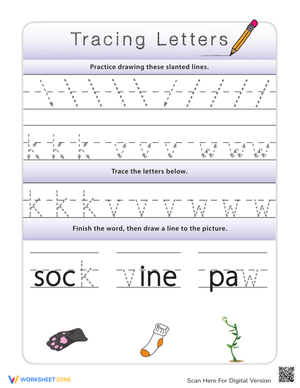
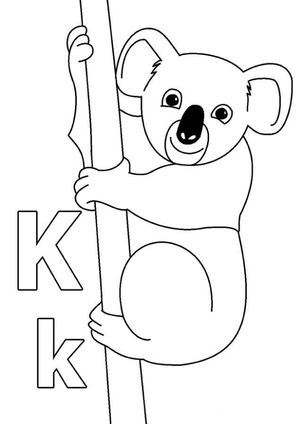
Formation and phonics work better together than apart. While students practice writing K, tie the letter to its /k/ sound with picture cards or a simple sort. Kite, king, kangaroo, key, and koala all give a clean initial /k/ that students can hear and repeat.
Watch for the c/k overlap. Both letters can spell the /k/ sound, so keep early K practice to words that actually start with the letter K rather than words like cat or cup. This keeps the letter-sound link clean while students are still forming the connection between the shape and the sound.
Say the sound as students trace. Pairing the motor action of writing K with saying /k/ out loud links the shape and the sound in the same moment, which helps the letter stick. A quick call-and-response, you say the letter, students say the sound and trace, turns a quiet worksheet into an active drill.
Formative Assessment Tied to RF.K.1.D
Quick checks tell you whether K instruction stuck. Show a student a K and a k and ask them to name each; then ask them to write both from memory. Thirty seconds per student gives you a clear read on recognition and formation.
CCSS ELA-Literacy Reading: Foundational Skills, Kindergarten (RF.K.1.D) requires kindergartners to recognize and name all uppercase and lowercase letters by the end of the school year. Letter K worksheets support that benchmark by isolating one letter at a time, giving students the repeated recognition and formation practice they need before the year-end goal.
Log each check so you can spot students who need another round. A letter that a student misses twice is worth another small-group session before you move the whole class forward.
Frequently Asked Questions
1. What is the correct stroke order for uppercase and lowercase K?
For uppercase K, draw the vertical line top to bottom first, then add the upper diagonal and the lower diagonal so both meet at the middle of the vertical. Lowercase k follows the same order on a shorter body, with the diagonals meeting lower on the line.
2. How many practice sessions do students need to master a letter like K?
It varies, but many students need several short sessions across a week rather than one long one. Spacing three to five brief practices, tracing, sound work, and independent writing, usually beats a single sitting for retention.
3. What words reinforce the /k/ sound alongside letter K worksheets?
Use words that clearly start with K: kite, king, kangaroo, key, and koala. Keep early practice to K-initial words and hold off on c-spelled /k/ words so the letter-sound link stays clean.
4. How do letter K worksheets support RF.K.1.D?
RF.K.1.D asks kindergartners to recognize and name every uppercase and lowercase letter. Focused K worksheets give students the isolated recognition and formation reps that build toward that year-end expectation, one letter at a time.
5. When should a student move from tracing to independent writing?
Move them once they can trace K with correct start points two or three times without prompts. Keep a tracing page nearby so they can self-check as they begin writing the letter on their own.