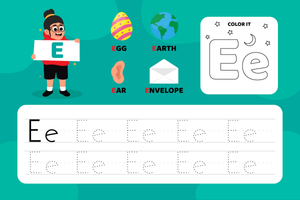
Where Letter E Fits in Your Alphabet Sequence
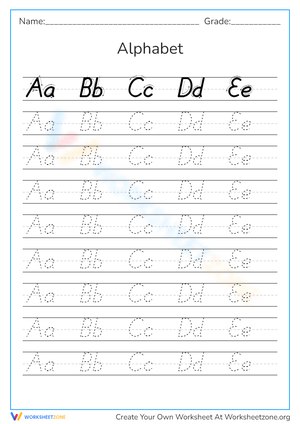
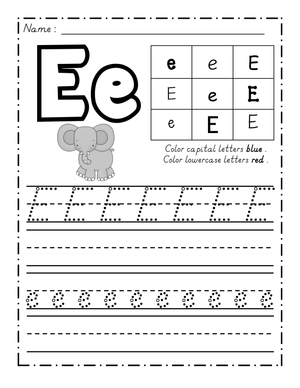
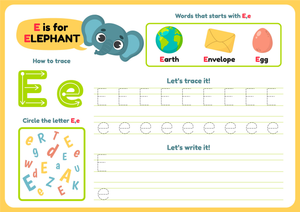
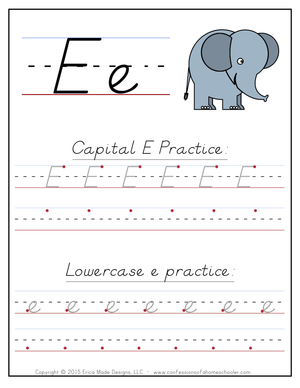
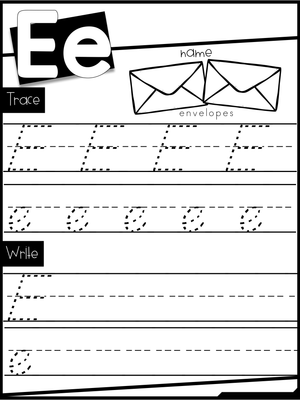
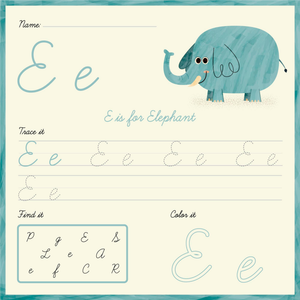
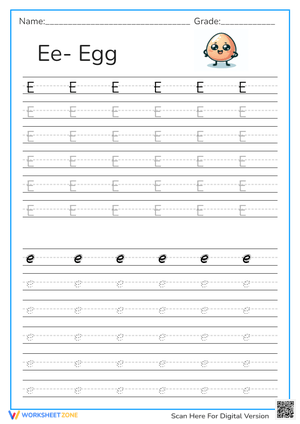
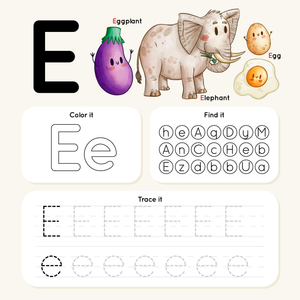
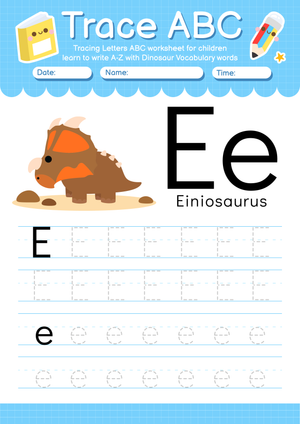
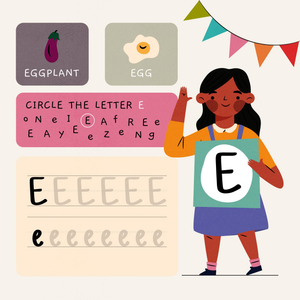
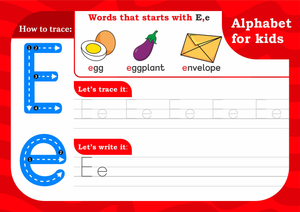
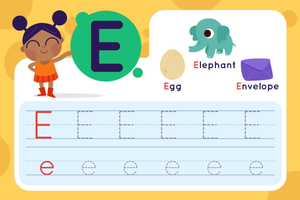
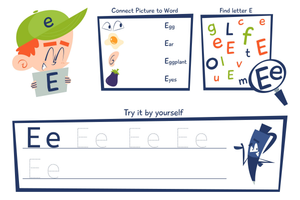
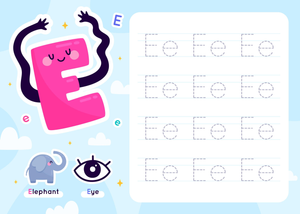
Letter E rarely earns its keep when it's taught in isolation. In most preschool and kindergarten classrooms, E lands in the first half of a systematic alphabet sequence, close to the early vowels, which means your students are already primed to connect it to sounds they're beginning to blend. Good letter E worksheets should reflect that placement. They give kids repeated exposure to the letter name, the short and long e sounds, and the motor pattern for forming both uppercase and lowercase e, all in one pass.
When you plan an alphabet unit, treat each letter page as one node in a larger progression rather than a standalone activity. A worksheet that isolates E from the rest of the sequence can still build recognition, but the payoff grows when you tie it back to letters you've already introduced and preview the ones coming next. That framing keeps practice cumulative instead of disposable.
Building Letter Name, Sound, and Formation Together
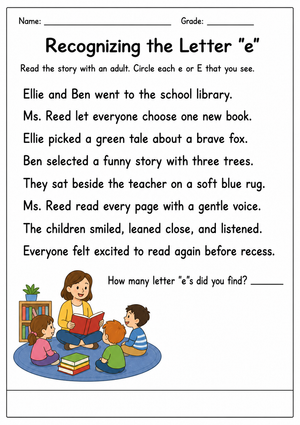
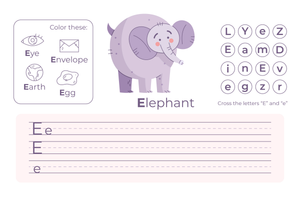
Researchers describe five interrelated letter-knowledge outcomes: letter-name knowledge, letter-sound knowledge, letter-name fluency, letter-sound fluency, and letter writing. A single letter E worksheet can touch several of these at once if you use it deliberately. Have students name the letter as they trace it, say its sound as they write it, and then read a short word that starts with e before they finish the page.
Here's the detail many teachers miss: handwriting practice during kindergarten activates the same brain regions students later use for visual letter recognition. When a child forms the lowercase e by hand, they're not just building a fine motor habit, they're strengthening the exact neural pathway that helps them recognize that letter while reading. That's why a tracing task and a reading task aren't competing priorities. Formation practice is reading practice, and letter E worksheets that ask kids to write the letter are doing double duty.
Pairing Letter E With Short and Long E Phonics
Because E carries two common vowel sounds, it's a natural bridge from letter recognition into early decoding. Once students can name and form the letter reliably, pair the worksheet with a quick short e sound sort using words like egg, bed, and net, then contrast them with long e words like bee and me. You don't need a separate phonics block for this. A two-minute sound routine attached to the worksheet keeps letter-sound knowledge growing alongside formation.
For kindergarten readers who are just starting to blend, keep the emphasis on short e first, since it appears in more decodable CVC words. Save the long e patterns for a later pass so you're not asking students to hold two sounds for the same letter before the first one is secure.
Supporting Students Who Reverse or Confuse Letters
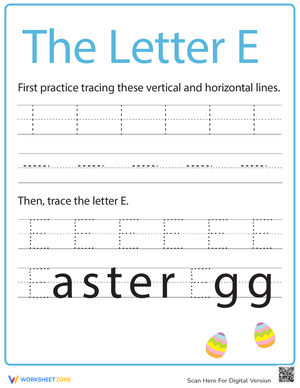
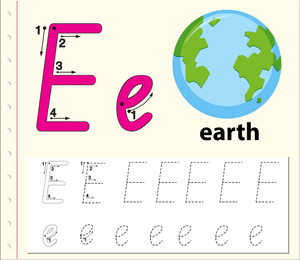
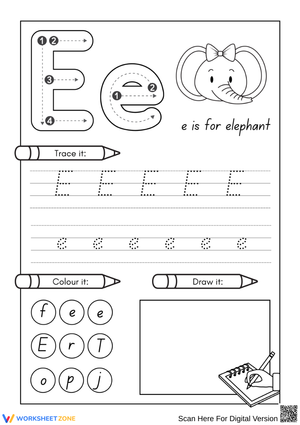
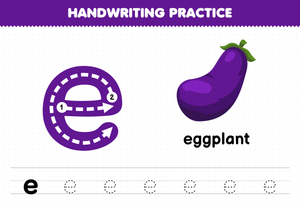
Lowercase e is a friendlier shape than b, d, or p, but plenty of early writers still confuse it with a or with a backwards c. When you spot that pattern in a small group, slow the worksheet down. Use a single clear starting point, verbal cues for the stroke order, and a highlighter to mark the first line before students trace over it. Repeating the same formation language every time gives kids a script they can say to themselves.
Intervention pages work best in short, frequent doses. A student who reverses letters benefits more from three minutes of focused E practice on four days than from one long session, because the motor pattern needs repetition to stick.
Classroom Implementation
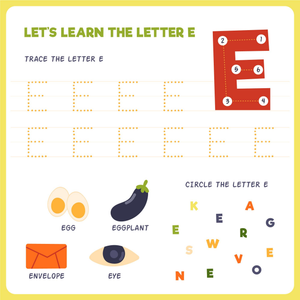
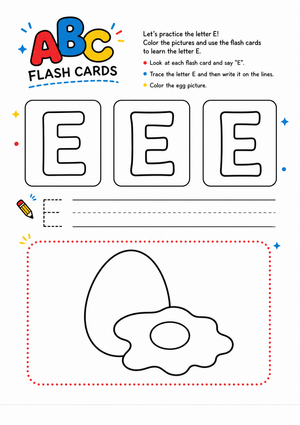
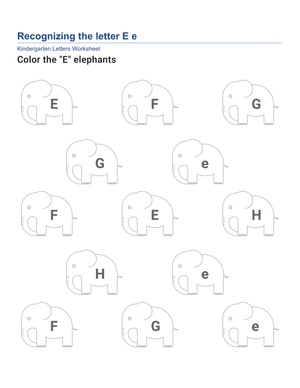
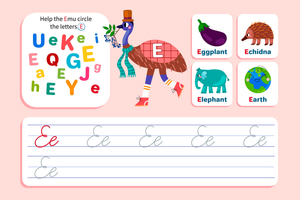
Letter E worksheets flex to fit almost any part of your day. Drop one into a literacy center where students trace, then stamp or build the letter with playdough. Use a lighter version as morning work so kids arrive to a predictable, independent task. Send a formation page home as low-stakes homework that parents can support without special training.
In small-group intervention, keep a stack of E pages ready for the students who need another rep while the rest of the class moves ahead. The key is consistency of routine, not novelty. When the format stays familiar, students spend their attention on the letter instead of on figuring out the directions.
Using a Completed Page as Formative Assessment
A finished letter E worksheet is a quick window into three things at once. Scan for name knowledge by asking the student to point to and name the letter, check sound knowledge by having them give the e sound, and read the formation directly from the page. Look at stroke direction and letter orientation, not just whether the shape is roughly right.
Sort completed pages into a fast three-pile system: secure, developing, and needs reteaching. That sort tells you who's ready to move on in the alphabet sequence and who needs another short session before you introduce the next letter. Because the same page carries name, sound, and formation evidence, you get a lot of instructional signal from a single sheet.
Frequently Asked Questions
1. What age or grade level are letter E worksheets appropriate for?
They fit best in preschool and kindergarten, roughly ages four to six, when students are learning letter names, sounds, and formation. They also work well for first-grade intervention and small-group review for students who need more time with the alphabet.
2. How do letter E worksheets support both handwriting and phonics goals?
A single page can build name knowledge, sound knowledge, and formation together. Because writing a letter by hand reinforces the brain pathway used to recognize it while reading, tracing and sound practice support each other rather than compete for time.
3. How can teachers use letter E worksheets for students who struggle with reversals?
Slow the page down with one clear starting point, consistent stroke-order language, and a highlighted first stroke to trace over. Short, frequent practice sessions across several days help the correct motor pattern stick better than one long session.
4. How often should letter formation practice happen during the week for retention?
Brief daily or near-daily practice beats occasional long sessions. A few minutes of focused formation on most days of the week gives students the repetition they need without turning handwriting into a chore.
5. How do letter E worksheets fit into a full A-Z classroom alphabet unit?
Treat E as one step in a systematic sequence rather than a standalone task. Connect it to letters already taught, preview upcoming ones, and keep name, sound, and formation practice cumulative so each letter reinforces the whole alphabet.