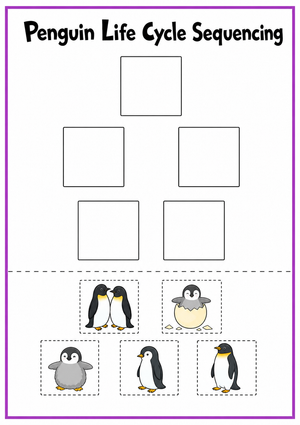
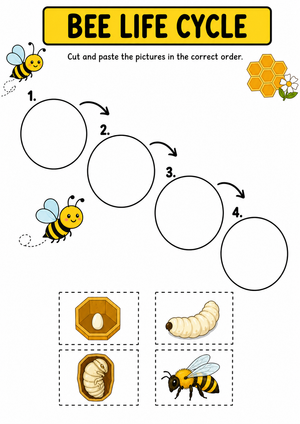
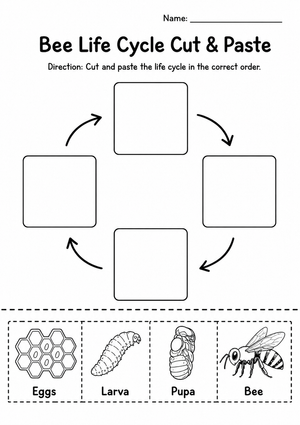
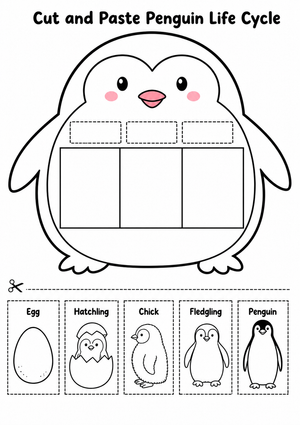
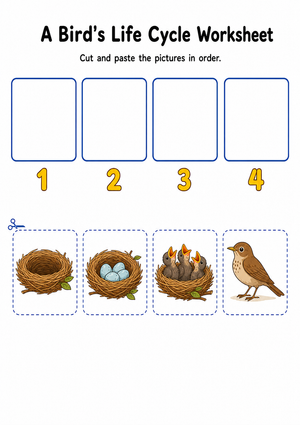
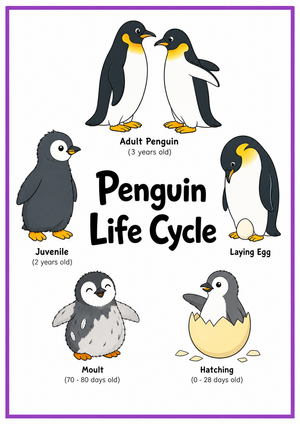
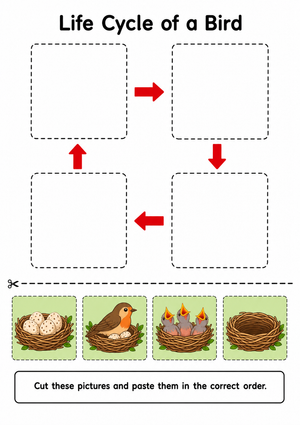
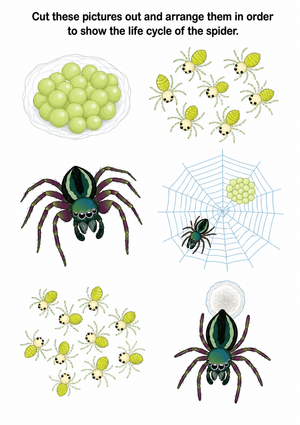
These animals life cycle printable worksheets for kindergarten give teachers a structured way to bring one of science's most visual concepts into the hands of students who are still learning to talk about what they observe. Four of the most classroom-ready cycles — butterfly, frog, chicken, and honeybee — each get dedicated worksheets across multiple formats: cut-and-paste sequencing, labeled diagrams, life cycle wheels, and open drawing logs. The set covers enough variety to anchor a two-week unit or fuel individual science center rotations.
What Each Worksheet Targets
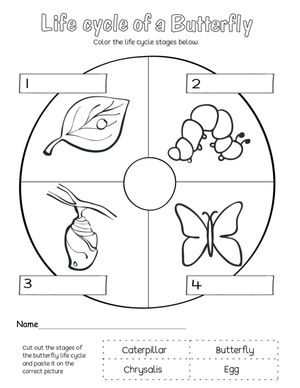
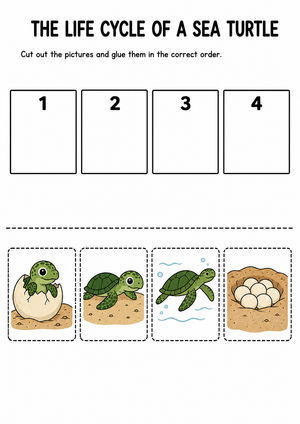
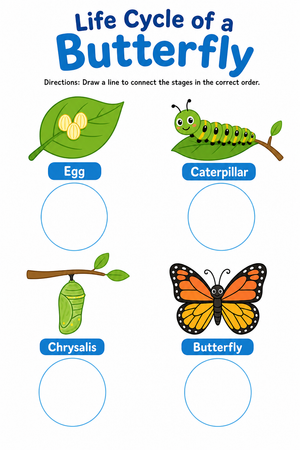
The core skill is sequencing: students must place stages in order, identify what comes before and after a given stage, and recognize that the cycle repeats rather than ends. Each worksheet isolates a single animal so students are not switching contexts mid-activity. The butterfly worksheets work through all four stages — egg, larva, pupa, adult — with distinct illustrations that make the chrysalis stage clearly different from the caterpillar, which matters because that pairing trips up more five-year-olds than any other step in the set.
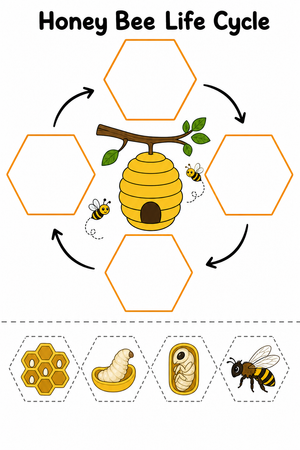
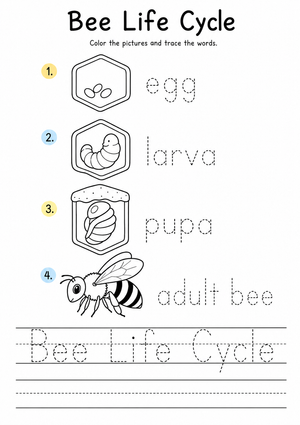
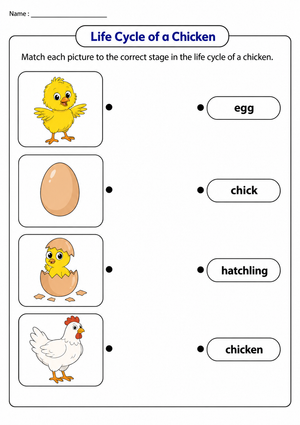
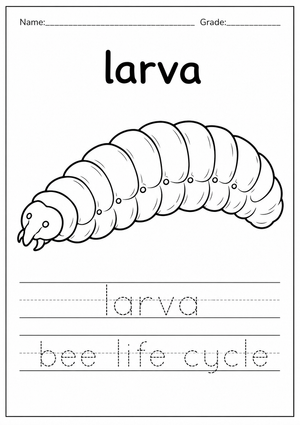
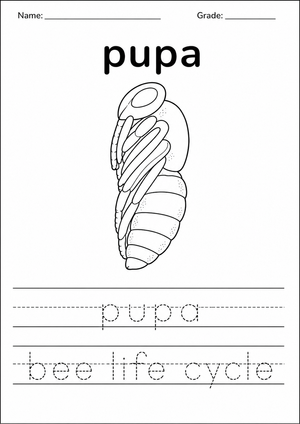
The frog sequence introduces the added complexity of an aquatic-to-land transition, asking students to match each stage to a simple habitat clue. Chicken worksheets are intentionally the most straightforward — egg, chick, hen or rooster — which makes them useful for introducing the concept before moving to cycles with more stages. The bee worksheets bring in the vocabulary words larva and pupa in print form, seeding the language students will need when those terms appear again in first and second grade.
Labeling and vocabulary tracing pages run alongside the sequencing work. Students trace or write stage names — egg, tadpole, froglet, adult — next to the corresponding image. This builds the written connection to terms students are already using orally, which early literacy research identifies as a key bridge between spoken and print language at this age.
Errors Worth Watching For When Students Complete the Set
The most consistent error across all four cycles is treating the sequence as a straight line rather than a repeating loop. A student who correctly orders egg → caterpillar → chrysalis → butterfly will often draw an arrow from the adult back to nothing — or worse, draw the butterfly dying — because linear narrative structure has been practiced in every story they have heard. The life cycle wheel format directly confronts this, but even with a circular template some students need a pointed conversation: "What does the adult butterfly do before it dies?" That question, asked during the activity rather than after, produces the correction far more reliably than reteaching it whole-group the following day.
A second error involves confusing the chrysalis with a cocoon. Children who have encountered silk moth references in picture books carry that vocabulary in and apply it to butterfly materials. The difference is worth naming explicitly before distributing the worksheets — not as a correction after students have already labeled their diagrams with the wrong word.
On the frog worksheets, students frequently skip the froglet stage and jump directly from tadpole to adult. The froglet illustration — a tadpole with emerging legs — is easy to misread as a variation of the tadpole rather than a distinct stage. Asking students to circle the legs in the image before they begin sequencing reduces that skip considerably.
Standard Alignment
These worksheets support NGSS K-LS1-1 (From Molecules to Organisms: Structures and Processes), which asks kindergarten students to observe patterns in how plants and animals live and grow. The sequencing activities directly address the expectation that students recognize observable patterns in animal development — not explain the biology in depth, but identify and order what they see. That distinction matters for lesson planning: teachers do not need to cover cellular change to meet this standard. Ordering illustrations and naming stages is the target performance.
Kindergarten placement of this standard reflects a deliberate developmental choice. Five- and six-year-olds are at a stage where pattern recognition is a primary cognitive tool, and the visual regularity of a three- or four-stage cycle fits cleanly into that strength. The worksheet formats work with that by keeping each stage in a consistent visual frame, reducing the mental effort of comparing across stages so students can focus on the sequence itself rather than decoding the images.
Fitting These Worksheets Into Your Science Block Without Losing Momentum
The cut-and-paste sequencing worksheets work best as a follow-up to a short read-aloud — ten to fifteen minutes of whole-group introduction, then students move to the activity while the vocabulary and images are still fresh. The animals life cycle printable worksheets for kindergarten are formatted for individual center use, but the first time through any new animal cycle, pair students so they narrate the sequence before picking up scissors. That "tell it before you cut it" step catches confusion early and prevents the frustration of a student who has already glued everything down in the wrong order.
Observation log worksheets belong alongside a live specimen — a caterpillar kit, mealworms, or tadpoles from a local pond. Give students five minutes at the start of science time to draw what they see before any whole-group instruction begins. The act of drawing focuses attention on actual change, which is exactly what the standard asks students to do, and the completed logs create a week-by-week record students can flip through when the unit wraps up.
Life cycle wheels work well as a Friday review. Students who have spent the week on sequencing activities can assemble the wheel and quiz a partner — "spin it and tell me what comes next" runs about thirty seconds per exchange, and it fits cleanly into the transition window before lunch or pickup without requiring new setup.
Adjusting the Set for a Range of Learners in the Same Room
Students who are not yet cutting independently can receive the sequencing pieces pre-cut, which shifts the cognitive focus entirely to ordering rather than fine motor management. That is not a lesser version of the activity — it is a redistribution of where the work happens. Students who need a greater challenge can add a written sentence or a drawn detail for each stage rather than simply placing images in order.
The animals life cycle printable worksheets for kindergarten include both labeled and unlabeled versions of the diagram pages. Students working on letter formation use the tracing version; students ready to write independently use the blank lines. Teachers running a mixed-readiness group can distribute both versions simultaneously without any student noticing they have a different sheet.
For students who are moving slowly through the concept, the chicken cycle is the most accessible entry point — three stages, a familiar animal, no anatomical transformation that requires explanation. Confirm those students can sequence and explain the chicken cycle without prompting, then introduce the frog, and leave the butterfly for when sequencing feels automatic rather than effortful.
Frequently Asked Questions
Which animal cycle should I introduce first?
Start with the chicken. The three-stage sequence — egg, chick, adult bird — is the shortest and uses an animal most students already recognize from books, farms, or grocery store conversations. Once students can explain the chicken cycle without looking at their worksheet, the additional stages in the frog and butterfly cycles feel like an expansion rather than a brand-new concept.
Do I need a live specimen for these worksheets to work?
No, though the observation logs are much stronger alongside one. The sequencing and labeling worksheets stand on their own. If live caterpillars or tadpoles are available, the animals life cycle printable worksheets for kindergarten work alongside them as a record-keeping tool. If live specimens are not an option, the illustrated diagrams carry the lesson without them.
How do I handle students who already know the butterfly cycle from preschool?
Move them to the bee worksheets first. The bee cycle uses the same four-stage structure but introduces larva and pupa as written vocabulary rather than caterpillar and chrysalis. Students who breeze through the butterfly materials usually pause on the bee worksheet because the terminology is unfamiliar, which puts them back in genuine learning territory instead of comfortable repetition.
Can these worksheets serve as assessment?
The cut-and-paste worksheets work well as a quick formative check — a completed, correctly ordered sequence tells you a student can apply the concept independently. For end-of-unit evaluation, a blank template where students draw and label a cycle entirely from memory gives cleaner evidence of retention than a sequencing activity where the images themselves provide hints.












 Interactive Worksheet Maker
 Quiz Maker
 Word Search Maker
 Crossword Puzzle Maker
 Word Scramble Generator
 Sentence Scramble Generator
 Handwriting Worksheet Generator
 Name Tracing Generator
 Fill In The Blank Generator