


























Views
Downloads
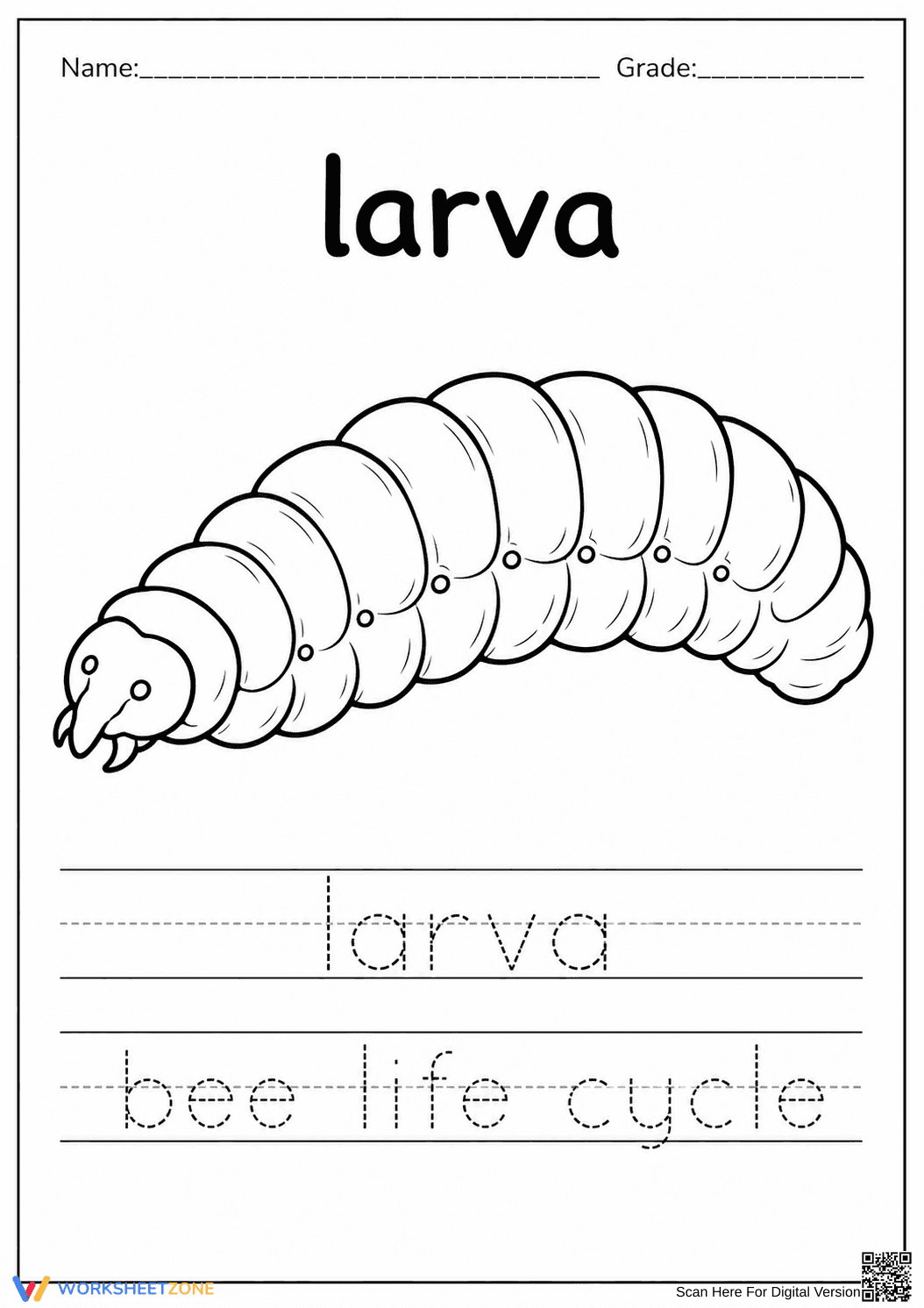

Grade 1 Bee Larva Tracing — Printable No-Prep Worksheet
Paste this activity's link or code into your existing LMS (Google Classroom, Canvas, Teams, Schoology, Moodle, etc.).
Students can open and work on the activity right away, with no student login required.
You'll still be able to track student progress and results from your teacher account.
This Grade 1 bee larva tracing worksheet provides a focused way for students to learn about the second stage of the honeybee life cycle. By combining scientific observation with fine motor practice, students develop a deeper understanding of how insects grow and change while mastering essential vocabulary.
At a Glance
- Grade: 1 · Subject: Science
- Standard:
K-LS1-1— Use observations to describe patterns of what animals need to survive- Skill Focus: Bee life cycle vocabulary and tracing
- Format: 1 page · 2 tasks · No answer key needed · PDF
- Best For: Morning work or science centers
- Time: 10–15 minutes
What's Inside
Inside this resource is a large, detailed illustration of a honeybee larva, ideal for coloring or close visual observation. Below the image are two primary tracing tasks. The first line features the word "larva" in a dashed primary font, and the second includes the phrase "bee life cycle." The clean, distraction-free layout is specifically designed for early learners mastering letter formation, spacing, and basic science terminology.
Zero-Prep Workflow
This zero-prep workflow takes less than two minutes of teacher preparation. First, print the single-page PDF for your entire class in under 30 seconds. Second, distribute the sheets during your science block or as a quiet morning activity. Third, review the larva stage briefly as students complete their tracing and coloring. This worksheet is an excellent, self-explanatory option for emergency sub plans.
Standards Alignment
The primary standard addressed is K-LS1-1, which requires students to use observations to describe patterns of how animals grow and survive. By observing the larva illustration, students recognize a specific developmental phase. It also supports foundational literacy standards regarding lowercase letter formation. Both standard codes can be copied directly into lesson plans, IEP goals, or district curriculum mapping tools.
How to Use It
Use this worksheet during the explore phase of a lesson on insects or as an independent center activity. After reading a picture book about bees, provide this sheet to reinforce the specific vocabulary. It also serves as a quick formative assessment tool; observe pencil grip, letter formation, and whether students can define a larva while they work. Completion typically takes 10 to 15 minutes, making it a perfect fit for busy classroom schedules.
Who It's For
This resource is designed for Kindergarten and Grade 1 students. It is particularly helpful for students requiring fine motor support or English Language Learners who benefit from direct visual-to-word associations. Pair this worksheet with a bee life cycle anchor chart or a classroom garden visit to provide a complete and engaging science experience for all early learners.
This educational resource aligns with the K-LS1-1 standard, focusing on the observable patterns in animal life cycles, specifically the honeybee. By integrating handwriting practice with biological concepts, the worksheet supports the gradual release of responsibility model as described by Fisher & Frey (2014). Research indicates that tactile engagement, such as tracing and coloring, reinforces vocabulary retention in early childhood learners. The inclusion of the larva stage allows students to differentiate between growth phases, a fundamental skill in early life science. According to Fisher & Frey (2014), providing visual anchors alongside linguistic tasks helps bridge the gap between abstract scientific concepts and concrete literacy skills. This 1-page printable serves as a high-utility tool for educators seeking to maximize instructional time without extensive preparation. It provides a clear, structured path for students to master both fine motor control and specific scientific terminology within a single, focused learning session.


