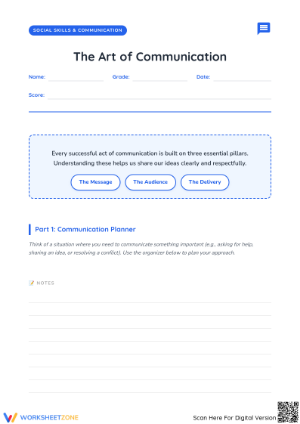
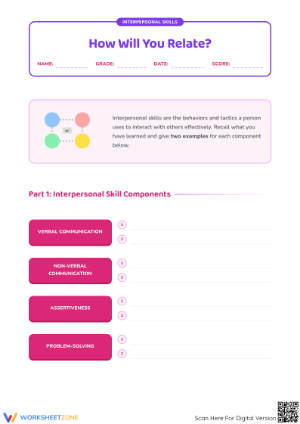
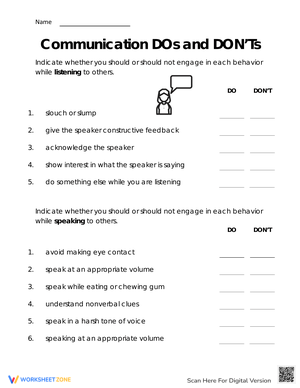
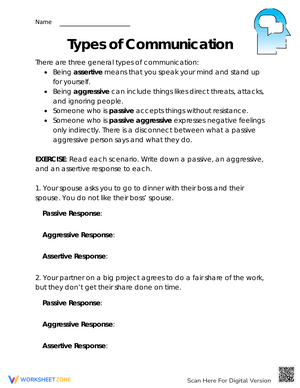
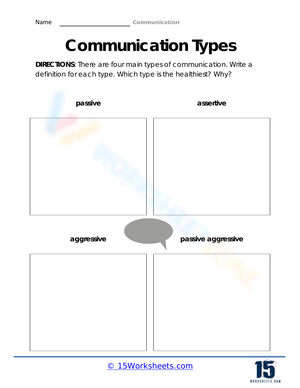
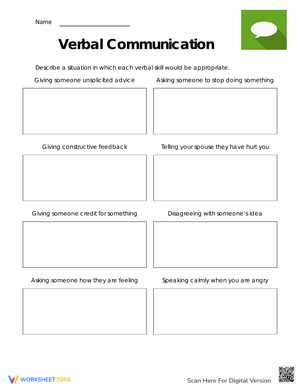
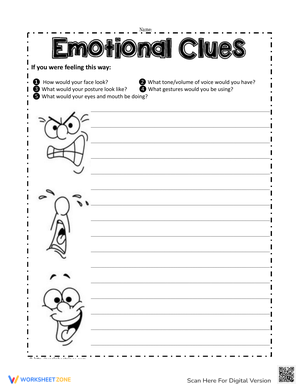
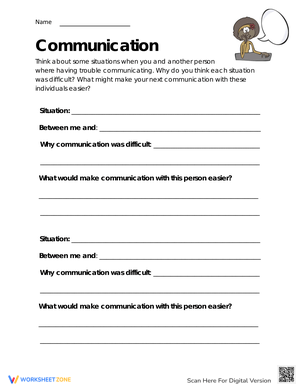
5th grade teaching communication skills printable worksheets work best when they turn a broad SEL goal into one concrete classroom move. In upper elementary classrooms, students are expected to explain ideas clearly, listen without interrupting, respond to disagreement respectfully, and keep group work moving. Many students can describe those expectations, but they still need guided practice to use them during partner talk, recess problems, or project teams. A strong printable gives teachers a quick way to model the language, rehearse it, and revisit it later.
That practical focus lines up with the prefetched research for this task. Communication skills include clear speaking, active listening, cooperation, and constructive conflict resolution. For grade 5, the most useful pages are not vague reflection prompts. They are short tasks tied to realistic situations students actually face in class: asking a partner for clarification, disagreeing without sarcasm, giving a classmate a turn to speak, or asking an adult for help before frustration turns into conflict.
What students should practice on communication worksheets
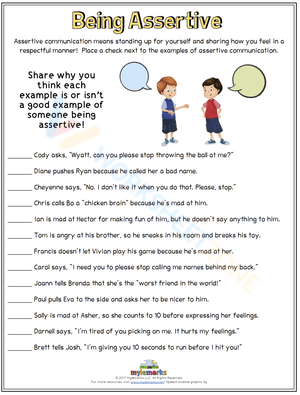
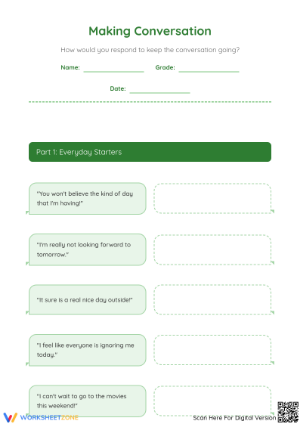
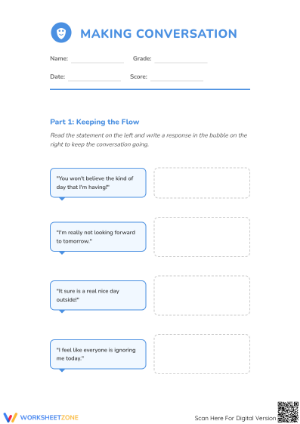
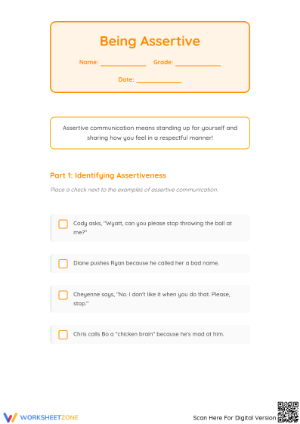
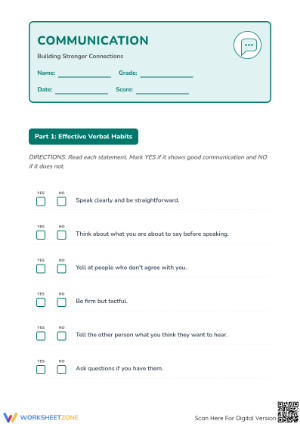
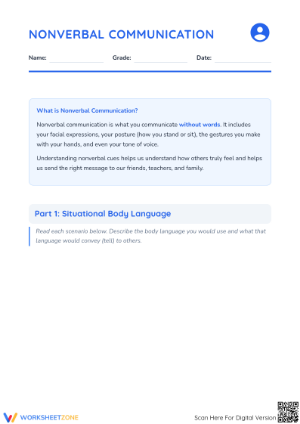
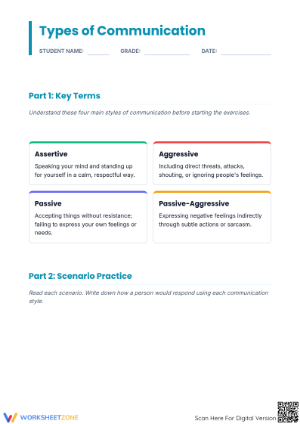
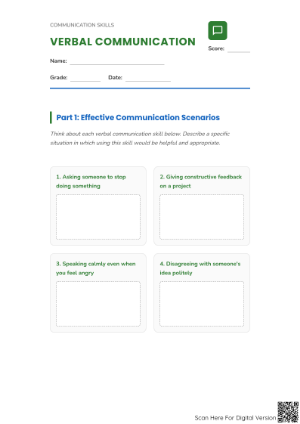
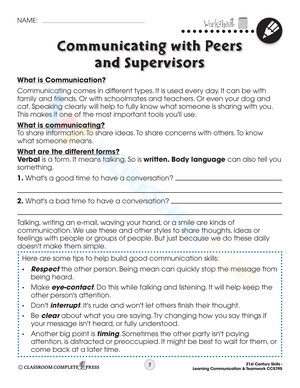
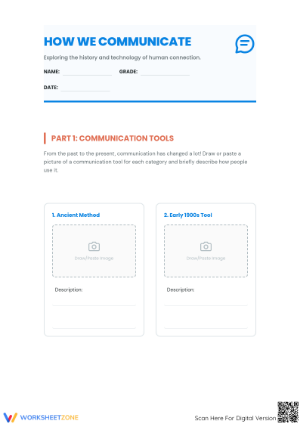
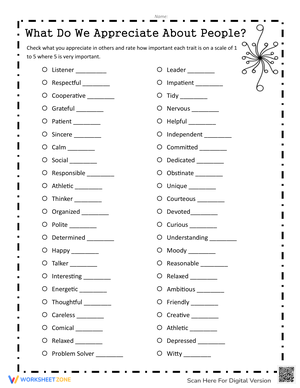
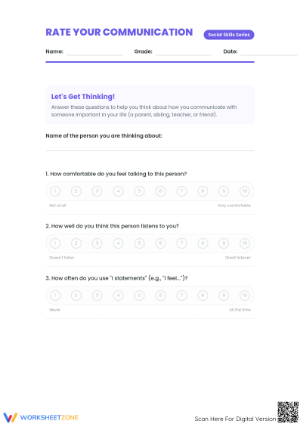
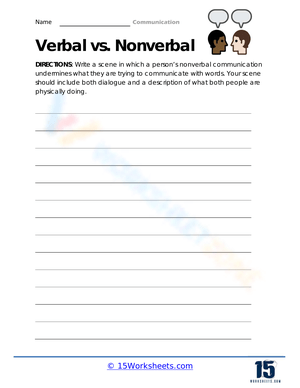
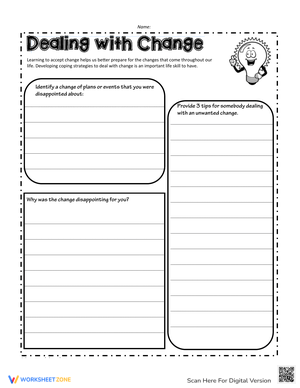
Fifth graders benefit from explicit work on both the language and the habits behind good communication. That means the worksheet should help students notice what respectful talk sounds like, not just tell them to be kind. Many teachers want printables that include sentence stems, short scenarios, and quick self-checks because those formats make an abstract skill visible. Students can sort responses, revise a weak statement, or choose the best follow-up question in a way that feels manageable during a short SEL block.
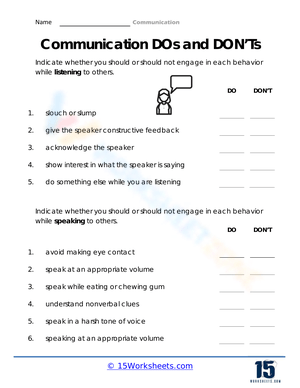
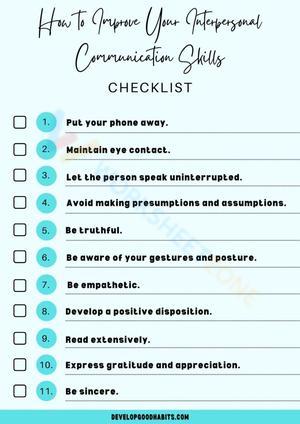
- Teach active listening with prompts about eye contact, waiting, paraphrasing, and asking one clarifying question.
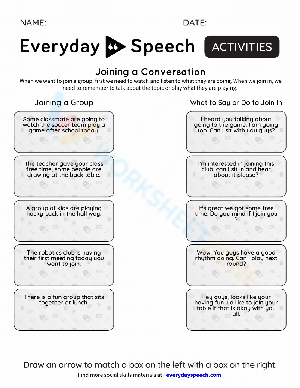
- Build speaking skills with sentence stems for sharing ideas, joining a group, disagreeing politely, and asking for help.
- Support teamwork with short scenarios about dividing jobs, staying on topic, and responding when someone feels left out.
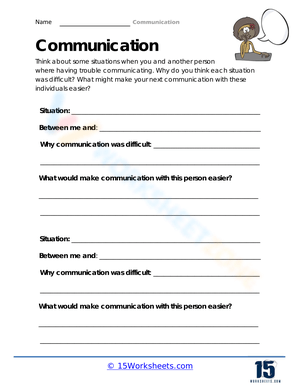
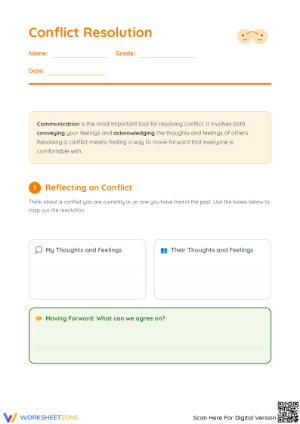
- Reinforce conflict-resolution language with examples tied to recess issues, line disputes, group projects, and classroom misunderstandings.
The goal is classroom-ready language that carries into discussion, collaboration, and repair after a disagreement. When a printable keeps the response task short, teachers can spend more time hearing students practice the words out loud and less time managing lengthy written work. That balance fits grade 5 well because students can think through nuanced situations, but they still need a clear structure to use better language consistently.
Easy ways teachers can use these printables
Teachers usually need communication-skills materials that slide into routines they already have. A printable is most useful when it can be picked up quickly for a 10-minute mini-lesson, a counseling small group, a substitute plan, or a behavior intervention folder. The same worksheet can also work as partner practice if the directions are clear and the response task stays short. That flexibility matters in grade 5 because communication instruction often happens in brief windows rather than a stand-alone course.
- Use one page in morning meeting to introduce a weekly discussion norm and practice one sentence stem aloud.
- Place a scenario worksheet in a small group when students need extra support with listening, turn-taking, or respectful disagreement.
- Add a printable to a substitute folder so classroom expectations stay consistent even when routines shift.
- Keep review sheets in behavior intervention folders for students who need quick reteaching after peer conflict.
- Send a familiar format for independent practice when you want students to reflect before a class meeting or conference.
How these worksheets support conflict resolution without overpromising
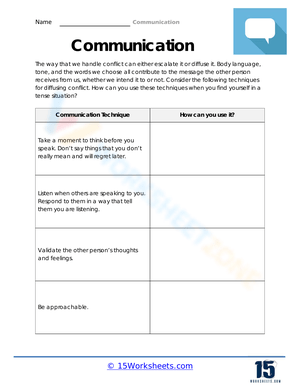
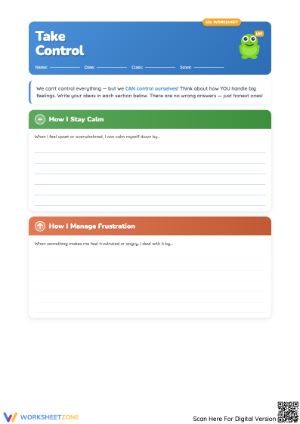
Communication worksheets can improve the conditions for smoother peer interactions, but teachers should use them with realistic expectations. A printable will not solve every conflict by itself. What it can do is give students a repeatable structure for naming the problem, listening to another perspective, and choosing language that lowers tension. That is useful in upper elementary because many peer issues start with tone, interruption, exclusion, or assumptions about intent.
When a worksheet is paired with brief discussion, it helps students practice the exact phrases that make repair more likely: “Can you explain what you meant?” “I see it differently because...” “I need a turn to finish my idea.” “Let’s ask the teacher before this gets bigger.” Those lines are concrete enough to transfer into group work and classroom conversations. Over time, that repeated practice can make class meetings, partner tasks, and peer feedback sessions run with fewer resets.
Frequently Asked Questions
1. What communication skills should 5th graders practice most?
Focus on the skills students use every day in class: active listening, clear speaking, respectful disagreement, asking clarifying questions, cooperative group language, and early conflict-resolution steps. Those areas match the common school situations where grade 5 students need support, especially partner work, class discussion, and peer problem-solving.
2. How can teachers use printable communication worksheets during SEL time or morning meeting?
Use one short page as the anchor for a mini-lesson. Read the scenario aloud, model the best response, let students complete the task with a partner, and then rehearse one sentence stem as a class. This keeps morning meeting or SEL time active and makes the worksheet part of discussion rather than a separate assignment.
3. What worksheet activities help students practice active listening and respectful speaking?
Useful formats include choosing the best response in a scenario, rewriting rude or vague statements, matching sentence stems to school situations, and completing a quick self-check after partner talk. The strongest pages keep the reading manageable and ask students to practice language they can use the same day.
4. How do communication-skills printables support conflict resolution in upper elementary classrooms?
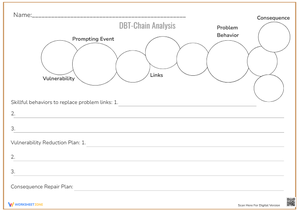
They give students a simple structure before emotions take over. A well-designed page can help students identify the problem, consider another perspective, choose respectful wording, and decide when adult help is needed. That does not eliminate conflict, but it gives teachers a consistent way to reteach and practice better responses.