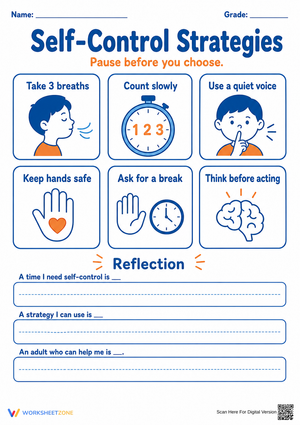
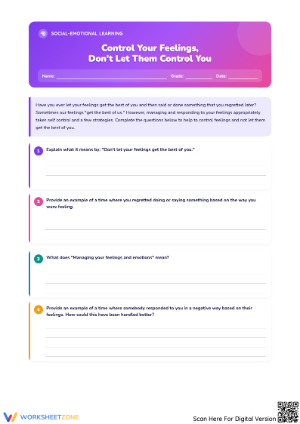
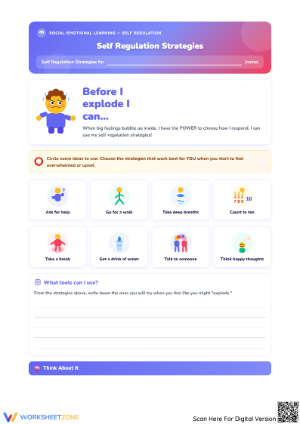
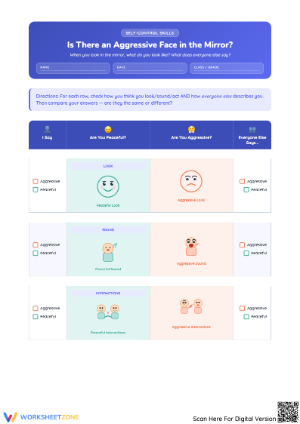
The best printables work as part of instruction, not as a punishment packet. With the Worksheetzone's 5th grade self control worksheet collection, teachers can pull practice sheets into morning meeting, counseling groups, centers, fast-finisher bins, or behavior support folders. That flexibility matters because self-control is rarely one isolated lesson. It shows up during partner work, independent reading, recess carryover, and end-of-day fatigue. They turn a broad SEL goal into a short, teachable routine that students can see, discuss, and apply.
What students should practice on a strong self-control worksheet
Students this age respond well to realistic school scenarios, reflection prompts, and short planning tasks that ask them to think before they act. Instead of repeating a rule like be respectful, a useful page helps students identify what happened, what they felt, what they wanted to do first, and what choice would help the situation go better. That structure moves the work from compliance to decision-making.
Effective worksheets often target four repeatable moves: identifying triggers, naming emotions without getting stuck there, sorting what a student can control, and choosing a next step. Grade 5 learners can also handle simple self-monitoring, such as checking whether they paused, used respectful words, or returned to a task after a setback. These tasks match everyday classroom needs because students often lose self-control during peer conflict, transitions, and independent work. When the worksheet mirrors those moments, the practice feels relevant instead of abstract.
Worksheet formats that work well for grade 5 learners
Upper elementary students usually engage more when the worksheet format feels active rather than babyish. A mix of page types keeps self-control practice fresh and gives teachers options for different settings. The most useful 5th grade self control worksheets often include short text, space to write, and a clear task that can be finished in one sitting.
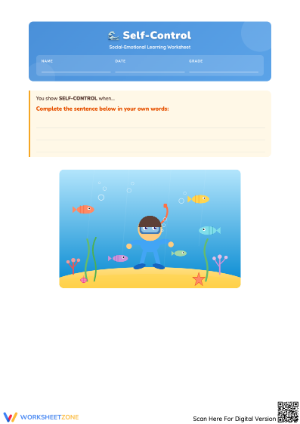
- Scenario pages: Students read a realistic classroom problem and choose a better response.
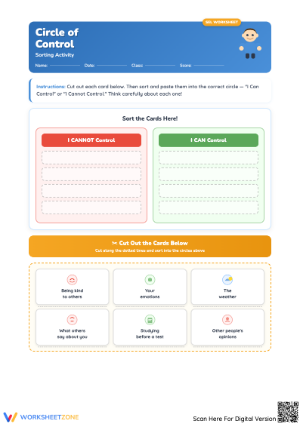
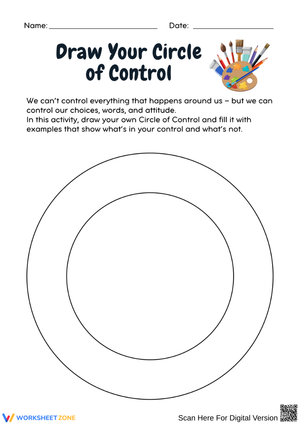
- Circles of control: Students separate what they can change from what they cannot control.
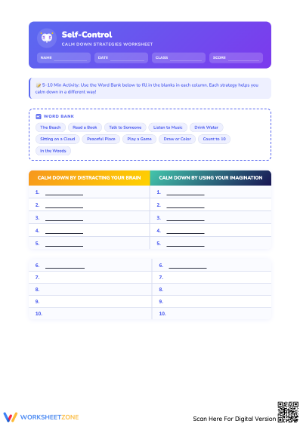
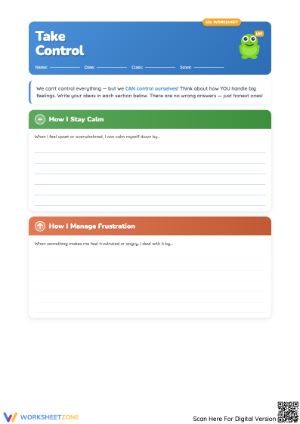
- Pause-and-plan sheets: Students stop, name the problem, and write one action they will try next.
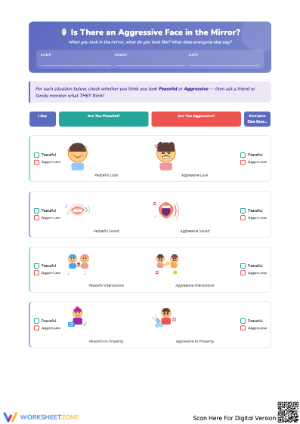
- Reflection checklists: Students review how they handled a difficult moment after recess, group work, or a transition.
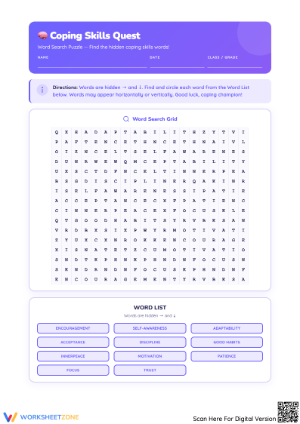
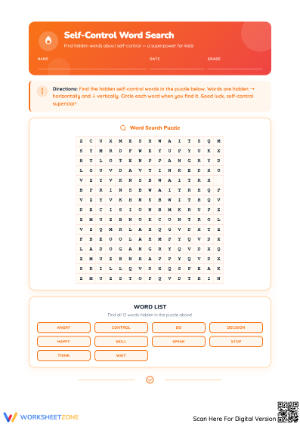
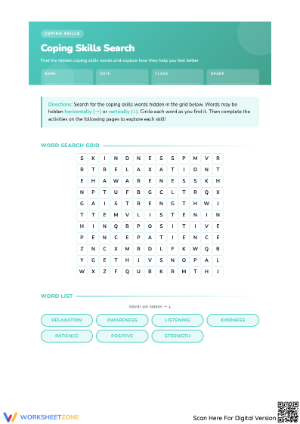
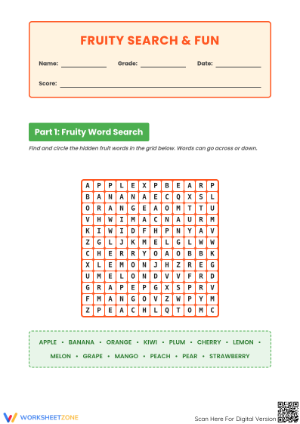
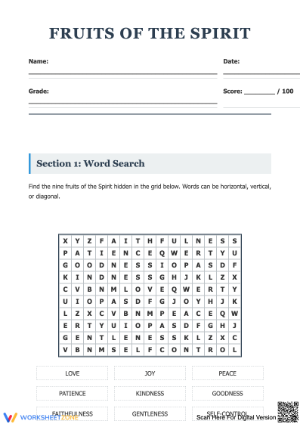
- Word searches or lighter practice pages: These can reinforce SEL vocabulary for centers, sub plans, or calm starts without replacing deeper discussion.
Teachers can also rotate formats by purpose. A whole class lesson may start with a scenario page, while a counseling check-in may work better with a short reflection planner. Students on a behavior intervention plan may benefit from repeated use of one simple template so the routine becomes familiar. The format should match the moment, the amount of time available, and how much support the student needs.
Classroom Implementation
Self-control worksheets work best when they are placed inside routines teachers already use. In a morning meeting or SEL block, the page can launch a five-minute partner discussion before students write. In small groups, it can focus attention on one common challenge such as blurting, shutting down during hard work, or arguing over roles in a team task. During counseling check-ins, a worksheet can capture patterns over time so students see which triggers appear again and which strategies actually help.
A practical grade 5 move is to keep the written task short and make the follow-up even shorter. When students spend three minutes completing a pause-and-plan page and two minutes rehearsing what they will say or do next time, the worksheet becomes rehearsal instead of paperwork. That matters because upper elementary students often know the expected behavior already. What they need is repeated practice retrieving the strategy quickly under classroom pressure.
To avoid busywork, teachers should connect the page to a real event and a visible next step. If the class struggled during a noisy transition, use a worksheet that asks students to name the trigger and choose one calmer response for the next transition. If a few students keep reacting during partner disagreements, use a scenario page before the next collaborative task. The follow-up can be as simple as a quick reminder card, a class anchor phrase, or a teacher check-in after independent work. The worksheet should point forward, not just document the problem.
The CASEL SEL Framework PDF from 2020 describes self-management as managing emotions, thoughts, and behaviors to achieve goals. For grade 5 teachers, that is a helpful reminder that self-control worksheets should teach a repeatable process, not just ask students to circle the right answer after a conflict.
That is also why discussion and modeling matter. A printable page can name the steps, but students still need to hear what self-talk sounds like, see how to pause before reacting, and practice using respectful language in realistic situations. The source titled CASEL: What Is the CASEL Framework? supports this broader instructional lens. In classrooms, that means the worksheet is one tool inside a larger SEL routine that includes teacher language, predictable expectations, and chances to try the skill again.
Frequently Asked Questions
1. What should a 5th grade self-control worksheet teach?
It should teach a short process students can use in real situations: notice the trigger, pause, name the feeling, think about choices, and pick a better response. Fifth graders do best when the page uses realistic school scenarios instead of generic behavior reminders.
2. How can teachers use self-control worksheets without turning them into busywork?
Connect the worksheet to a classroom moment students actually experienced, then follow it with a fast discussion, modeling, or rehearsal. If students complete the page and never use the language again, the value drops quickly. The strongest use is write, talk, practice, and revisit.
3. Are these worksheets better for whole class use or small groups?
They can work in both settings. Whole class lessons are useful when many students need shared language for transitions, partner work, or respectful disagreement. Small groups and counseling check-ins are a better fit when a narrower issue keeps repeating for the same students.
4. What SEL skills connect to self-control in grade 5?
Self-control connects closely to emotional regulation, reflection, goal-directed behavior, and peer problem-solving. In the CASEL framework, these skills sit within self-management, which helps students handle emotions, thoughts, and behaviors in ways that support learning and relationships.












 Interactive Worksheet Maker
 Quiz Maker
 Word Search Maker
 Crossword Puzzle Maker
 Word Scramble Generator
 Sentence Scramble Generator
 Handwriting Worksheet Generator
 Name Tracing Generator
 Fill In The Blank Generator